
Understanding the difference between 2D and 3D shapes helps you recognize flat forms like circles and squares, which only have length and width, from solid objects like cubes and spheres that also have depth and volume. 3D shapes give clues about real-world forms through shading and surface features. Grasping these basics improves your ability to identify shapes and their functions. Keep exploring, and you’ll discover even more about how shapes relate to the world around you.

Prime made for students and young adults
- Fast, free delivery for dorm and study essentials
- Prime Video and Amazon Music included
- Member-only deals
Key Takeaways
- 2D shapes have only length and width, while 3D shapes include depth and volume.
- Recognizing outlines helps identify 2D shapes; shading and shadows reveal 3D form.
- 2D shapes feature angles and symmetry; 3D shapes have surface curvature and volume.
- 2D drawings often depict cross-sections of 3D objects, aiding spatial understanding.
- Differentiating flat and volumetric shapes supports grasping size, structure, and spatial relationships.
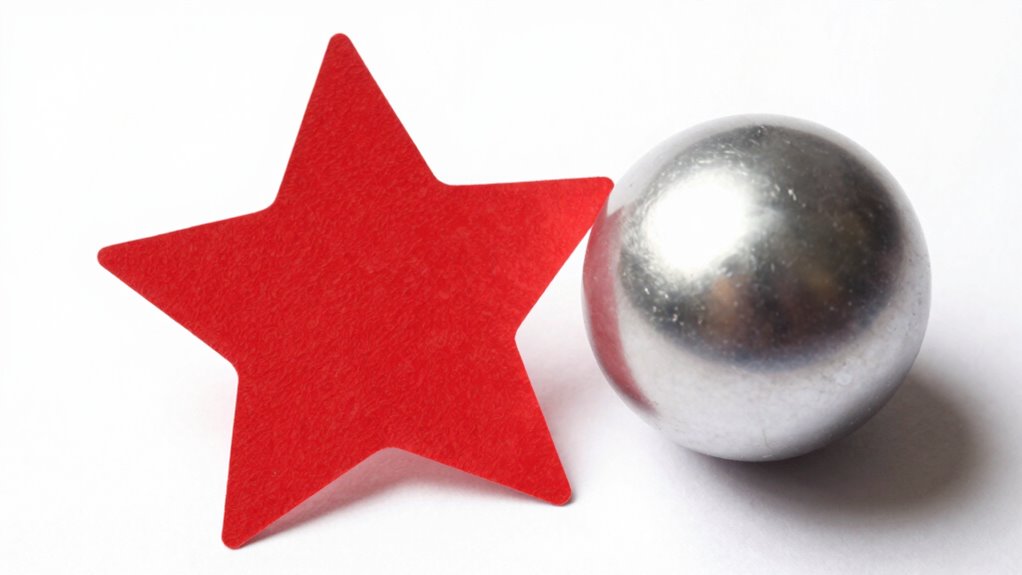
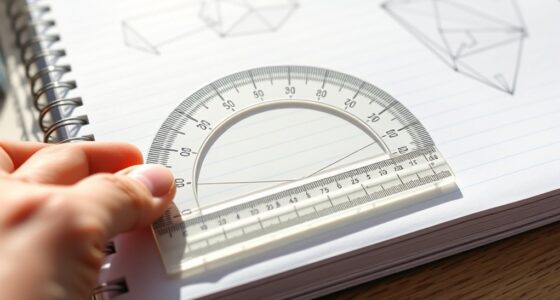
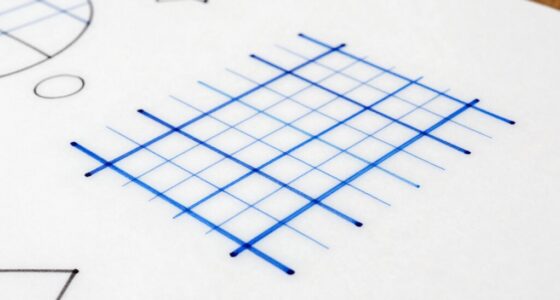
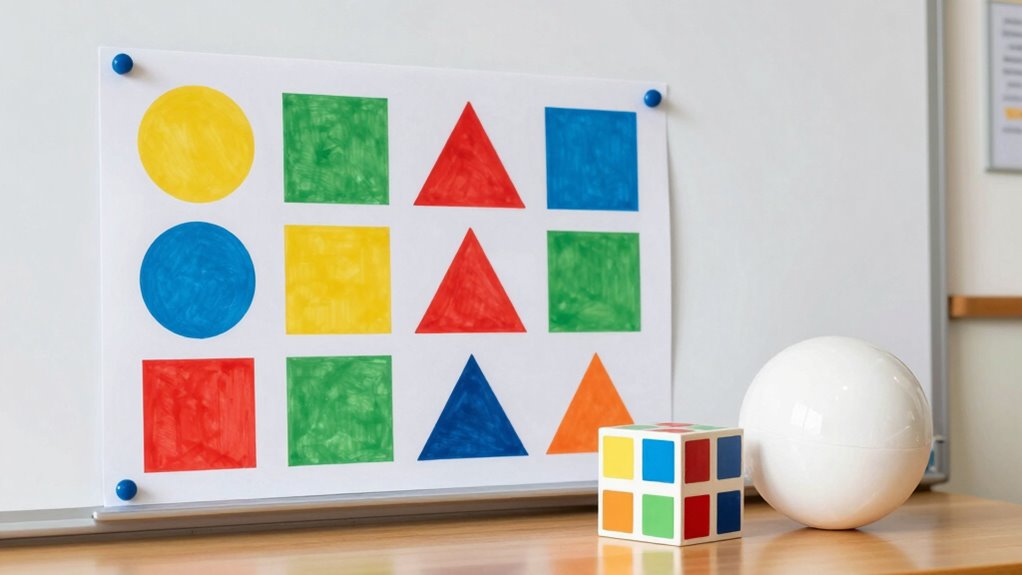
Understanding the difference between 2D and 3D shapes is fundamental when exploring geometry. When you look at objects or drawings, recognizing whether they’re flat or have depth helps you grasp their shape properties and how they relate to the world around you. Two-dimensional shapes, or 2D shapes, have only length and width. Think of a drawing of a circle, square, or triangle—you see their outlines on a flat surface. Their shape properties include features like angles, sides, and whether they are symmetrical. Since they lack depth, your visual perception of 2D shapes relies on their outlines, colors, and internal angles. You interpret their size and position based on proportions and relative scale, but you don’t perceive any volumetric detail.
On the other hand, three-dimensional shapes, or 3D shapes, add depth to the picture. Imagine a cube, sphere, or cone—these objects aren’t just flat; they have volume and surface area. When you observe 3D shapes, your visual perception adjusts to include the sense of depth, making it easier to understand their real-world form. You notice how light and shadow fall on their surfaces, giving clues about their shape properties. For instance, a cube’s faces are flat, equal squares, while a sphere’s surface curves smoothly in all directions. These qualities influence how you perceive their size and spatial relationship, which is essential for understanding their function in real life. Recognizing how visual perception influences shape understanding enhances your ability to interpret objects accurately. Additionally, understanding spatial awareness helps in visualizing how these shapes exist and interact in space. Developing a good sense of depth perception is crucial for accurately judging distances and dimensions in everyday situations.
Knowing the key differences helps you connect simple drawings to real objects. For example, understanding that a circle in a drawing is a 2D shape helps you recognize it as a cross-section of a sphere or a cylinder in 3D. Visual perception plays an essential role here; your brain interprets the shape’s properties based on how they appear in two dimensions and anticipates the third dimension. This skill is fundamental as you move from basic shapes to more complex forms, such as in engineering, art, or architecture. Recognizing whether a shape is flat or volumetric allows you to make better judgments about size, space, and structure. Ultimately, grasping these differences gives you a solid foundation for exploring more advanced geometric concepts and applying them practically in everyday life.
As an affiliate, we earn on qualifying purchases.
Frequently Asked Questions
How Do 2D and 3D Shapes Differ in Real-World Applications?
In real-world applications, 2D and 3D shapes differ based on shape classification and geometric properties. You’ll find 2D shapes like circles and squares in design, emphasizing area and perimeter, while 3D shapes like cubes and spheres focus on volume and surface area. Understanding these differences helps you select appropriate shapes for architecture, manufacturing, or art, ensuring your projects are both functional and visually appealing.
Can 2D Shapes Be Transformed Into 3D Shapes? How?
Think of transforming 2D shapes into 3D as adding depth to a drawing, like giving it a new dimension. You can do shape transformation by extruding, folding, or stacking 2D shapes, creating a dimensional comparison. For example, a square becomes a cube, and a circle turns into a cylinder. This process helps you visualize how flat shapes evolve into solid objects, bridging the gap between 2D and 3D understanding.
What Tools Are Best for Creating 3D Shapes as a Beginner?
As a beginner, the best tools for creating 3D shapes are user-friendly software like Tinkercad, SketchUp, or Blender. These programs offer helpful software tutorials to guide you through the process. Focus on understanding basic design principles like shape, proportion, and symmetry while practicing. Start with simple projects, explore tutorials online, and gradually build your skills to create more complex 3D models confidently.
How Do Perspective and Depth Influence Shape Perception?
Perspective and depth profoundly influence how you perceive shapes, creating illusion effects that alter their appearance. When you view objects with depth cues like shading and overlapping, your brain interprets spatial perception, making 2D shapes seem three-dimensional. This understanding helps you recognize how artists and designers manipulate perspective to create realistic or surreal effects, enhancing your ability to interpret and craft visual illusions in both digital and physical spaces.
Are There Common Mistakes Beginners Make When Studying These Shapes?
Think of learning shapes as building a house—mistakes happen if you overlook details. Beginners often fall into visualization errors, misjudging how shapes appear in space, or make measurement mistakes, leading to distorted drawings. These slip-ups are common but fixable. Focus on practicing with real objects and double-checking your measurements. With patience, you’ll improve your perception and create more accurate representations of 2D and 3D shapes.
geometric shape puzzles for kids
As an affiliate, we earn on qualifying purchases.
As an affiliate, we earn on qualifying purchases.
Conclusion
Now that you know the difference between 2D and 3D shapes, you’re practically a shape wizard! Understanding these basics helps you see the world in a whole new way—like having a superpower that reveals hidden dimensions everywhere you look. Keep exploring, and soon you’ll be able to spot 3D objects in your daily life faster than a superhero spots trouble. Remember, mastering shapes isn’t just useful—it’s the key to revealing a universe of creativity and fun!
As an affiliate, we earn on qualifying purchases.
As an affiliate, we earn on qualifying purchases.
Fall Picks
fall essentials
As an affiliate, we earn on qualifying purchases.