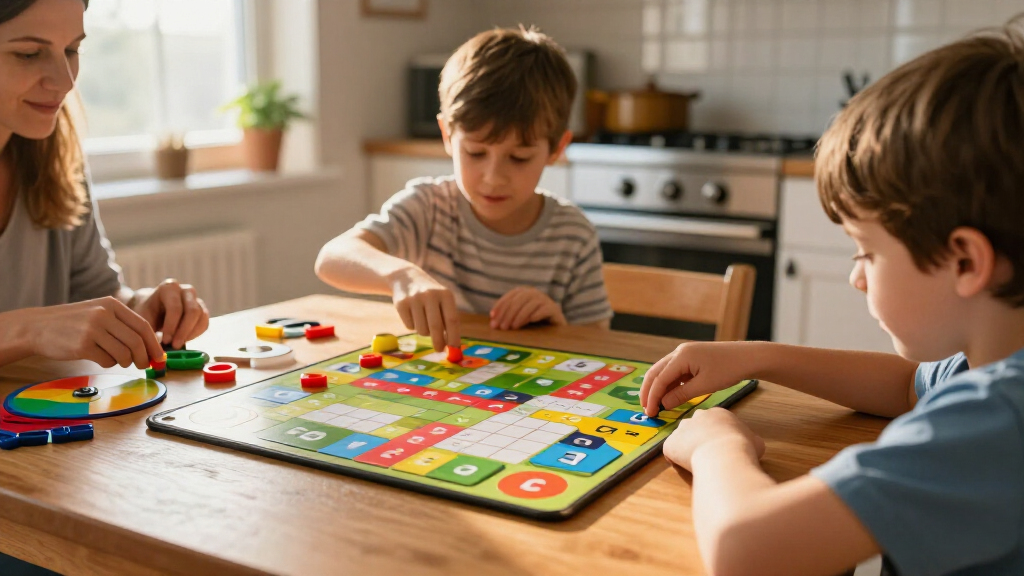

For a strong all-around choice, I recommend Outfoxed!, which pairs cooperative play with deduction and careful listening. Zingo! stands out for preschoolers building language and matching skills, while Race Across the USA gives older kids a more focused way to explore geography. The main tradeoff is choosing between a game that teaches one skill directly and one that makes learning part of a broader play experience. Age, reading ability, attention span, and how many people will play together can all change which option fits best. Read on for my full comparison of these educational board games for kids and the best match for different needs.

Prime made for students and young adults
- Fast, free delivery for dorm and study essentials
- Prime Video and Amazon Music included
- Member-only deals
Key Takeaways
- Outfoxed! is my best overall pick because cooperative deduction gives children a shared goal without making the game depend on reading or academic speed.
- Zingo! and the Alphabet Matching Memory Game suit early learners, but Zingo adds spoken-language practice while Alphabet Matching focuses more narrowly on letter recognition and memory.
- Race Across the USA is the clearest subject-focused choice for older children; its geography emphasis may appeal less to kids who prefer number, word, or mystery challenges.
- Number Hunter and Math Island both target math, but buyers should match their number skills and appetite for focused practice to the game rather than choosing by subject alone.
- Several familiar family games, including Chutes and Ladders and Cootie, can introduce turn-taking and basic concepts, but they offer less direct academic practice than the lineup’s dedicated learning games.
| Chuckle & Roar Alphabet Matching Memory Game for Kids Ages 3+ |  | Best for Letter Recognition | Brand: Chuckle & Roar | Age range: 3 years and up | Players: Up to 4 | VIEW LATEST PRICE | See Our Full Breakdown |
| Hasbro Gaming Cootie Bug-Building Game |  | Best for First-Time Players | Brand: Hasbro Gaming | Recommended age: 3 years and up | Players: 2–4 | VIEW LATEST PRICE | See Our Full Breakdown |
| Scholastic Race Across the USA Geography Board Game for Kids, Ages 8+ |  | Best for Geography Learning | Brand: University Games | Age recommendation: 8+ | Players: 2–4 | VIEW LATEST PRICE | See Our Full Breakdown |
| Number Hunter Math Board Game for Kids 5-7, 1st Grade & Kindergarten |  | Best for Early Math Practice | Brand: Clever Fox Play | Minimum age recommendation: 5 years | Players: 2–5 | VIEW LATEST PRICE | See Our Full Breakdown |
| Hasbro Gaming Chutes and Ladders Board Game, 2 to 4 Players, Gift for Kids, Preschool Classroom Games, Ages 3+ (Amazon Exclusive) |  | Best for Counting Beginners | Brand: Hasbro Gaming | Age recommendation: 3 years and up | Players: 2–4 | VIEW LATEST PRICE | See Our Full Breakdown |
| Hasbro Gaming Clue Junior: Case of the Broken Toy |  | Best for Early Deduction | Recommended age: 5 years and up; one listing bullet also says 8+ | Players: 2–6 | Theme: Mystery | VIEW LATEST PRICE | See Our Full Breakdown |
| ThinkFun Zingo! Bingo Preschool Game for Ages 4 and Up |  | Best for Pre-Readers | Age range: 4–10 years | Players: 2–6 | Included components: 6 double-sided Zingo! cards, 72 double-sided tiles, Zingo! Zinger with easy cleanup unit, and parent’s guide | VIEW LATEST PRICE | See Our Full Breakdown |
| Learning Resources Math Island Addition & Subtraction Game | 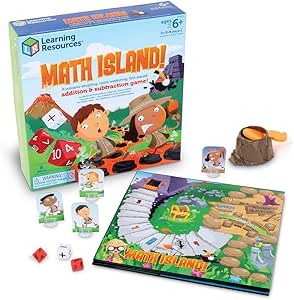 | Best for Hands-On Math Practice | Age range: 6–10 years | Players: 2–4 | Math skills: Counting, addition, and subtraction up to 20 | VIEW LATEST PRICE | See Our Full Breakdown |
| Hasbro Gaming Scrabble Junior Board Game |  | Best for Growing Spellers | Age range: 5 years and up | Players: 2–4 | Game mechanics: Word-building and progression | VIEW LATEST PRICE | See Our Full Breakdown |
| Outfoxed! Cooperative Mystery Board Game |  | Best Cooperative Mystery | Brand: Gamewright | Game type: Cooperative mystery board game | Players: 4 | VIEW LATEST PRICE | See Our Full Breakdown |
| Sequence for Kids Strategy Game |  | Best for Early Strategy Without Reading | Brand: Jax | Players: 2–4 | Recommended age: 3–6 years | VIEW LATEST PRICE | See Our Full Breakdown |
| educational board games for kid | Players | Included components | Brand | Model number |
|---|---|---|---|---|
| Chuckle & Roar Alphabet Matchi | Up to 4 | Cards | Chuckle & Roar | 62011 |
| Hasbro Gaming Cootie Bug-Build | 2–4 | 4 bodies, 4 heads, 24 legs, 4 eye pieces, 4 mouth pieces, 4 head accessories, spinner board, plastic spinner and base, label sheet, and game guide | Hasbro Gaming | F3100 |
| Scholastic Race Across the USA | 2–4 | Game board, cards, airplane pawns | University Games | 00701 |
| Number Hunter Math Board Game | 2–5 | — | Clever Fox Play | — |
| Hasbro Gaming Chutes and Ladde | 2–4 | — | Hasbro Gaming | — |
| Hasbro Gaming Clue Junior: Cas | 2–6 | Gameboard, 6 character pawns, 6 furniture tokens, 7 white bases, 7 yellow bases, detective notepad, die, label sheet, and game guide | — | C1293953 |
| ThinkFun Zingo! Bingo Preschoo | 2–6 | 6 double-sided Zingo! cards, 72 double-sided tiles, Zingo! Zinger with easy cleanup unit, and parent’s guide | — | — |
| Learning Resources Math Island | 2–4 | Game board, 4 character pieces, volcano popper, 2 number dice, 1 operation die, and instructions | Learning Resources | LER5025 |
| Hasbro Gaming Scrabble Junior | 2–4 | Double-sided gameboard, 4 tokens, 105 letter tiles, and game guide | — | — |
| Outfoxed! Cooperative Mystery | 4 | Board game | Gamewright | CSG-OUTF |
| Sequence for Kids Strategy Gam | 2–4 | Folding game board, 42 playing cards, 84 colored chips, instructions | Jax | — |
More Details on Our Top Picks
Chuckle & Roar Alphabet Matching Memory Game for Kids Ages 3+
For preschoolers beginning to connect letter shapes with names, this is a more focused learning pick than Chutes and Ladders, which centers on counting during a roll-and-move race. Matching uppercase and lowercase cards gives children a direct way to practice recognizing letters, while remembering card locations adds a simple memory challenge. Solo play is possible, and the game can also include up to four players, so it can suit quiet practice or a short family activity. Its portable card format is easier to bring along than a board-and-piece game. The tradeoff is that the learning depends on repeated matching rather than varied activities, and the cardboard cards may wear if young players handle them roughly. Choose it for early alphabet practice; skip it if you want a broader mix of skills or sturdier components.
Pros:- Direct practice recognizing uppercase and lowercase letters
- Memory matching adds concentration practice to letter learning
- Can be played solo or with up to four players
- Card format is convenient for travel and screen-free activities
Cons:- Cardboard cards may wear with enthusiastic or frequent handling
- Learning centers on letter matching rather than a wider range of subjects
Best for: Families and preschool teachers looking for a portable way to practice uppercase and lowercase letters with children ages 3 and up
Not ideal for: Buyers who want a durable game for rough handling or lessons beyond letter recognition and basic memory practice
- Brand:Chuckle & Roar
- Age range:3 years and up
- Players:Up to 4
- Game type:Alphabet matching memory game
- Included components:Cards
- Material:Cardboard
- Model number:62011
Our verdict“Choose this for portable, focused alphabet practice; pick a broader game if you want children to work on several kinds of skills.”
Hasbro Gaming Cootie Bug-Building Game
Cootie is a strong fit for preschoolers who are learning how to take turns but are not ready to read questions or follow a complex board-game system. Players spin, collect bug parts, and assemble a complete creature, making the central goal easy to grasp. Compared with Chuckle & Roar Alphabet Matching, it offers more tactile, open-ended play with colorful pieces, but less direct practice with a specific academic skill. The Switcheroo and Head Start variations offer ways to change the play, though the core activity remains a race to finish a bug. That simplicity makes it accessible for mixed-ability preschool groups, while the many small components demand adult attention during setup and cleanup. Pick it for easy entry into turn-taking and part recognition, not for substantial subject learning.
Pros:- No reading is needed to understand the basic goal
- Building a bug gives young players a hands-on activity
- Switcheroo and Head Start variations change the play
- Supports play with two to four players
Cons:- Multiple small pieces require setup, sorting, and cleanup
- The learning is less focused on a defined academic subject than letter or math games
Best for: Families with preschoolers who need a simple, no-reading game for practicing turn-taking and assembling colorful pieces
Not ideal for: Caregivers who want a focused literacy or math lesson, or who prefer games with few small parts to manage
- Brand:Hasbro Gaming
- Recommended age:3 years and up
- Players:2–4
- Genre:Party
- Edition:Classic
- Included components:4 bodies, 4 heads, 24 legs, 4 eye pieces, 4 mouth pieces, 4 head accessories, spinner board, plastic spinner and base, label sheet, and game guide
- Model number:F3100
Our verdict“Choose Cootie to introduce preschoolers to easy turn-taking and hands-on play, rather than for targeted academic practice.”
Scholastic Race Across the USA Geography Board Game for Kids, Ages 8+
Among these picks, Race Across the USA offers the clearest path to subject-based learning for older children: players answer geography questions while visiting states and racing home. Its grade-level question sets make mixed-age play more workable than a single difficulty level, and the hundreds of questions support repeat sessions. Compared with Number Hunter, which concentrates on early arithmetic, this game shifts the challenge to reading, recalling facts, and locating places. That makes it a better match for school-age learners, but a poor fit for children who are not yet comfortable reading or answering questions. The 20-minute listed playing time also makes it easier to plan than a longer open-ended activity. Its main limitation is a narrow player range of two to four, so larger groups need another activity or teams.
Pros:- Geography questions are built into the race objective
- Grade-level questions help mixed-age players take part
- Hundreds of questions support repeat play
- A listed playing time of 20 minutes suits shorter game sessions
Cons:- Reading and answering geography questions may frustrate younger or less confident readers
- Designed for only two to four players
- The subject focus is narrower than general early-learning games
Best for: Families with children ages 8 and up who want a geography-focused game that can accommodate different grade levels
Not ideal for: Preschoolers, nonreaders, or larger groups that need a game for more than four individual players
- Brand:University Games
- Age recommendation:8+
- Players:2–4
- Playing time:20 minutes
- Language:English
- Included components:Game board, cards, airplane pawns
- Edition:Standard Edition
- Model number:00701
Our verdict“Pick this for school-age children who enjoy geography questions, but choose a no-reading preschool game for younger learners.”
Number Hunter Math Board Game for Kids 5-7, 1st Grade & Kindergarten
Number Hunter is the most direct choice here for children practicing addition, subtraction, and odd-or-even concepts through a shared game. Its two-to-five-player range accommodates a slightly larger group than Race Across the USA, while its roughly 20-minute session gives families a bounded math activity. Compared with the geography game, it targets earlier skills and does not ask children to read and answer subject questions; that makes it better suited to kindergarten and early elementary practice. The product information also describes durable, non-toxic components, a useful fit for repeated classroom or family use. The tradeoff is a limited math scope: it focuses on addition and subtraction, with odd/even concepts, rather than covering a broad curriculum. Choose it for approachable arithmetic practice, not as a complete math-learning system.
Pros:- Practices addition, subtraction, and odd/even concepts
- Supports two to five players for family or classroom sessions
- Listed playing time of about 20 minutes helps keep practice contained
- Product information describes durable, non-toxic components
Cons:- Math challenges are limited to early addition and subtraction concepts
- The stated age details vary, with a minimum recommendation of 5 and a description covering ages 4–8
Best for: Families, homeschoolers, and early-grade teachers seeking a screen-free group game for children practicing basic arithmetic
Not ideal for: Buyers looking for advanced math topics, a broad curriculum, or a game aimed primarily at geography or literacy
- Brand:Clever Fox Play
- Minimum age recommendation:5 years
- Players:2–5
- Edition:Addition and Subtraction
- Genre:Math
- Estimated playing time:20 minutes
- Language:English
- Package type:Reinforced box
Our verdict“Choose Number Hunter for group practice with early arithmetic; move to a subject game like Race Across the USA when children are ready for question-based learning.”
Hasbro Gaming Chutes and Ladders Board Game, 2 to 4 Players, Gift for Kids, Preschool Classroom Games, Ages 3+ (Amazon Exclusive)
Chutes and Ladders earns its place as a low-barrier first board game: children spin, move a pawn, and practice counting and number recognition without needing to read. That makes it easier to start than Race Across the USA, where players must read and answer geography questions, and more suitable for very young beginners than Number Hunter‘s arithmetic practice. The ladders and chutes add a simple lesson in moving ahead and falling back, but the educational content stays modest; it does not teach number operations or offer changing question levels. The random spinner also means children have little control over the outcome, which can be frustrating for players who want choices or strategy. Choose it for basic counting and learning to follow turns, rather than sustained academic challenge.
Pros:- No reading is required, so preschoolers can join in
- Counting spaces supports number recognition practice
- Simple spinner-and-move rules are accessible to beginners
- Works for two to four players
Cons:- Learning is limited mainly to counting and number recognition
- The spinner makes outcomes largely luck-based, with few strategic decisions
- Movement up ladders and down chutes can make progress feel unpredictable
Best for: Caregivers and preschool teachers introducing ages 3 and up to counting, number recognition, and simple turn-taking
Not ideal for: Families seeking math instruction beyond counting, meaningful strategic choices, or varied question-based learning
- Brand:Hasbro Gaming
- Age recommendation:3 years and up
- Players:2–4
- Game mechanics:Race and roll-and-move
- Educational objectives:Counting and number recognition
- Battery requirement:No battery required
- Material:Plastic
- Dimensions:15.87 × 10.63 inches
Our verdict“Choose Chutes and Ladders as a first counting game for preschoolers, but look to Number Hunter for more active math practice.”
Hasbro Gaming Clue Junior: Case of the Broken Toy
Clue Junior gives young players a concrete introduction to eliminating possibilities: they search for clues, record what they learn on a detective notepad, then work out which toy was broken, who broke it, and when. That makes it a stronger fit for practicing deductive reasoning than Zingo!, which focuses on quick picture-and-word matching, or Scrabble Junior, which centers on spelling. The 2–6 player range also suits family groups. The tradeoff is that the mystery format asks children to keep track of several details, so it may feel demanding for new board-game players. Age guidance is inconsistent in the supplied listing: most information says 5 and up, while one bullet says 8 and up. I would check the game’s instructions and judge fit by the child’s readiness.
Pros:- Detective notepad helps children record clues and eliminate possibilities.
- Combines searching, movement, and deduction instead of relying on one kind of task.
- Supports 2–6 players for family or small-group play.
- Mystery objective gives problem-solving a clear, playful purpose.
Cons:- The several pieces of information to track may challenge children just starting out with games.
- The listing gives conflicting age guidance, with both 5+ and 8+ stated.
Best for: Families with children ready to track clues and make simple deductions during a shared game.
Not ideal for: Children who prefer direct reading or math practice, or families who want consistent age guidance before choosing a game.
- Recommended age:5 years and up; one listing bullet also says 8+
- Players:2–6
- Theme:Mystery
- Included components:Gameboard, 6 character pawns, 6 furniture tokens, 7 white bases, 7 yellow bases, detective notepad, die, label sheet, and game guide
- Item weight:1.3 pounds
- Item dimensions:1.63 × 13.13 × 10.5 inches
- Model number:C1293953
Our verdict“Choose Clue Junior for children ready to practice multi-step deduction, but check the age guidance and skip it for a simpler first game.”
ThinkFun Zingo! Bingo Preschool Game for Ages 4 and Up
Zingo! is the most accessible language-focused pick here for children who are not reading independently yet. Players match picture-and-word tiles to their cards, turning early vocabulary and visual matching into a quick, repeatable activity. Its Zinger dispenser deals tiles and provides a place to put them away, which can make setup and cleanup more manageable than handling Scrabble Junior’s larger supply of letter tiles. That simplicity is also its limit: children ready to build their own words may get more spelling practice from Scrabble Junior, while Zingo! mainly reinforces recognition and matching. It supports 2–6 players, but that ceiling makes it a better fit for a family or small group than a large classroom. The included parent’s guide helps adults get play started.
Pros:- Picture-and-word matching gives pre-readers a way into language-focused play.
- Quick rules make it approachable for children new to board games.
- Zinger dispenser includes an easy-cleanup unit.
- Double-sided cards and tiles provide varied matching material.
Cons:- The 2–6 player limit does not suit larger groups without another set or activity.
- Matching offers less word-building practice than Scrabble Junior’s letter-tile play.
Best for: Families and preschool groups looking for a simple language game that pre-readers can play alongside early readers.
Not ideal for: Large classrooms or children who are ready for open-ended spelling and word construction.
- Age range:4–10 years
- Players:2–6
- Included components:6 double-sided Zingo! cards, 72 double-sided tiles, Zingo! Zinger with easy cleanup unit, and parent’s guide
- Material:Plastic
- Language:English
- Theme:Reading
- Model:97700
Our verdict“Pick Zingo! for low-friction vocabulary and matching practice with pre-readers, not for larger groups or children seeking spelling challenges.”
Learning Resources Math Island Addition & Subtraction Game
Math Island makes number practice the point of play: children use number and operation dice to work on counting, addition, and subtraction up to 20 while moving through an island setting. The erupting volcano popper adds a tactile event that can help break up repeated equation work. Compared with Zingo!, which builds language through matching, Math Island targets specific early math skills; compared with Clue Junior, it asks for less clue-tracking and more direct number practice. Its 2–4 player range is narrower than either of those games, so it is better suited to a small family group or classroom station than a full group. The skill focus is also bounded: children ready for multiplication, larger sums, or broader math challenges may outgrow the practice quickly.
Pros:- Number and operation dice create repeated practice with addition and subtraction.
- Covers counting and arithmetic up to 20 in one activity.
- Volcano popper adds a hands-on element to math play.
- Includes character pieces and a board for a shared game format.
Cons:- Supports only 2–4 players, limiting its fit for larger groups.
- Math practice is focused on counting, addition, and subtraction up to 20.
Best for: Parents and teachers who want a small-group game for children practicing counting and basic addition and subtraction up to 20.
Not ideal for: Large groups or children who already need math practice beyond counting and operations up to 20.
- Age range:6–10 years
- Players:2–4
- Math skills:Counting, addition, and subtraction up to 20
- Included components:Game board, 4 character pieces, volcano popper, 2 number dice, 1 operation die, and instructions
- Brand:Learning Resources
- Model number:LER5025
- ASIN:B09SP3TK8G
Our verdict“Choose Math Island for focused, tactile arithmetic practice in a small group; look elsewhere for larger groups or more advanced math.”
Hasbro Gaming Scrabble Junior Board Game
Scrabble Junior stands out for children whose reading skills are developing: its two-sided board starts with matching letters to printed words, then flips to a side where players make words themselves. That built-in progression gives it more room to grow than Zingo!, which emphasizes matching rather than spelling, while still offering a gentler entry point than starting with free-form word building. The 105 letter tiles give children plenty of pieces to handle, but they also make this a more letter-focused experience than Clue Junior’s mystery and deduction play. Scrabble Junior is designed for ages 5 and up and 2–4 players; older children may find the beginner side too easy, and the game’s educational value depends on players being interested in letters and words. It is not a broad-subject learning game.
Pros:- Two board sides offer a clear step from word matching to making words.
- Directly practices spelling and vocabulary.
- Includes 105 letter tiles for hands-on word play.
- No batteries are required.
Cons:- The beginner side may hold limited appeal for older or confident readers.
- The 2–4 player range is less suited to larger family groups.
- Its learning focus is limited to English spelling and vocabulary.
Best for: Families with children learning letter recognition and spelling who want one game with an introductory side and a more challenging side.
Not ideal for: Older children who already spell confidently, or families seeking math, science, or deduction practice.
- Age range:5 years and up
- Players:2–4
- Game mechanics:Word-building and progression
- Educational objective:Spelling and vocabulary
- Included components:Double-sided gameboard, 4 tokens, 105 letter tiles, and game guide
- Language:English
- Batteries required:No
- Dimensions:13.11 × 10.51 × 1.89 inches
Our verdict“Choose Scrabble Junior when spelling progression matters more than broad subject coverage or play for older, fluent spellers.”
Outfoxed! Cooperative Mystery Board Game
Outfoxed! turns deduction into a shared task: players collect clues and use an evidence scanner to identify the culprit, rather than racing one another to make an accusation as in Clue Junior. That cooperative structure gives it a distinct educational angle, pairing logic with teamwork as players decide what evidence matters together. Its listed 15–20-minute playing time also makes it a shorter commitment than a game built around extended play. The main drawback is the supplied player count: it is listed for 4 players, which rules out smaller households unless the game instructions allow otherwise. The component information is also sparse, listed only as “board game,” so buyers have less detail about what is included than they do for Clue Junior. The mystery theme will suit children who enjoy clue-solving more than direct reading or arithmetic practice.
Pros:- Cooperative play gives children a reason to share clues and make decisions together.
- Clue collection and an evidence scanner support deduction.
- Listed playing time of 15–20 minutes suits families seeking a shorter game.
- Mystery format offers a different learning focus from Scrabble Junior’s spelling practice.
Cons:- The supplied listing specifies 4 players, limiting flexibility for smaller groups.
- Included components are described only as “board game,” with little detail.
- The product information lists no manufacturer warranty.
Best for: Families with four players who want children to practice deduction through cooperative discussion rather than head-to-head competition.
Not ideal for: Households with fewer than four players, or buyers seeking a clearly itemized component list or direct math and spelling practice.
- Brand:Gamewright
- Game type:Cooperative mystery board game
- Players:4
- Recommended age:5 years and up
- Playing time:15–20 minutes
- Language:English
- Included components:Board game
- Model number:CSG-OUTF
Our verdict“Choose Outfoxed! for a four-player group that values teamwork and clue-solving, but not for a smaller household seeking a flexible player count.”
Sequence for Kids Strategy Game
Sequence for Kids gives preschoolers a simple route into planning: match an animal card to the board, place a chip, and try to make four in a row. Because players do not need to read, children can focus on recognizing matches and choosing where to play. Compared with Chuckle & Roar Alphabet Matching Memory Game, which centers on letter recognition and memory, this pick puts more emphasis on spatial decisions and blocking opponents. Special unicorn and dragon cards add changing moves, though they also make play less straightforward than a basic matching game. The 2–4 player format suits family turns, but the small chips create a choking risk for young children, and the game offers little direct practice with academic subjects such as letters or arithmetic.
Pros:- No reading required, so preschoolers can take part independently
- Four-in-a-row goal introduces simple planning and pattern recognition
- Supports 2–4 players for family or small-group play
- Unicorn and dragon cards add variety to the basic matching turns
Cons:- Small playing chips pose a choking hazard for young children
- The learning focus is strategic thinking rather than a specific school subject
- Special cards can add rules that may need adult explanation
Best for: Families with children ages 3–6 who want a read-free game that introduces turn-taking, pattern recognition, and simple strategic choices.
Not ideal for: Households with toddlers or children who still mouth small objects, and buyers seeking direct practice in reading, spelling, or math.
- Brand:Jax
- Players:2–4
- Recommended age:3–6 years
- Included components:Folding game board, 42 playing cards, 84 colored chips, instructions
- Game mechanics:Card game, racing, variable player powers
- Batteries:Not required
- Dimensions:10.5 × 2 inches
- Weight:1.5 pounds
- Material:Plastic
Our verdict“Choose Sequence for Kids for read-free early strategy play, but pick an alphabet or math game if subject-specific practice is the priority.”

How We Picked
I compared these games by the learning skill each one puts into play, how clearly that skill is connected to the rules, and how well the stated age range aligns with likely reading, counting, and attention abilities. I also weighed ease of learning, player interaction, replay appeal, and whether the game can hold a child’s interest without an adult turning every turn into a lesson. A game can be educational without drilling a school subject, so I included social reasoning, language, memory, and strategy alongside geography, spelling, and math.
The ranking favors options that combine a clear learning purpose with accessible play and a distinctive reason to choose them. That places Outfoxed! first for its cooperative reasoning, while more specialized games rank higher for buyers seeking one particular skill. Familiar games remain useful for simple play and early concepts, but they sit below the stronger direct-learning picks when the main goal is deliberate academic practice. The best choice still depends on the child’s age, interests, and who will join the game.
Factors to Consider When Choosing Educational Board Games For Kids
I’d start with the kind of play your child will willingly repeat, then match the learning goal to that style. A game that fits your child’s current abilities is more likely to be played often than one chosen only for its subject label.
Match the Skill to Your Child’s Current Level
Age labels offer a starting point, but children of the same age can differ widely in reading fluency, number confidence, and patience. Check what a game asks players to do during an ordinary turn, not just the learning subject printed on the box. If a child must read prompts independently, a game aimed at younger players may still feel difficult for an emerging reader. On the other hand, a game that repeats skills your child has already mastered may lose its appeal quickly. I’d choose a small stretch beyond current ability, with an adult available to help when needed. That balance supports learning without making each turn feel like a test.
Choose Between Focused Practice and Broad Skills
Some games concentrate on a specific school skill, such as math facts, spelling, or geography, while others build memory, deduction, communication, or turn-taking. Focused practice can be useful when a child wants extra repetition, but a narrow subject may not hold interest every game night. Broader games can make reasoning and social skills part of the activity without a visible drill, though they may offer less direct practice in a particular academic area. Avoid assuming that every game labeled educational teaches the same way. Decide whether your main aim is to reinforce a subject or encourage thinking and interaction. That choice helps prevent buying a game whose learning style does not fit your goal.
Account for Reading and Attention Demands
A game may be simple to set up yet still require players to follow several rules, wait through other turns, or read text aloud. For younger children, short rounds and visual cues can matter more than a long list of learning features. Older children may enjoy a longer game if they have meaningful choices and enough interaction to stay involved. Consider whether a child can play mostly independently or will need an adult to explain clues and keep the rules moving. That support can be part of family play, but it may not suit a classroom or a group with varied ages. The best fit is the one whose pace works for the people who will actually play it.
Think About Group Size and Social Style
Some children enjoy competing, while others participate more comfortably when everyone works toward a shared outcome. A cooperative format can reduce pressure for a child who is still developing confidence, though it may offer less head-to-head challenge for siblings who enjoy competition. Also check how many players can join and whether the game works well with only two people. A larger group can make a matching or bingo-style game lively, but it can also increase waiting time for a child who struggles to stay focused. If you plan to use a game with siblings or classmates, consider differences in age and skill. A good group fit often matters as much as the subject being taught.
Look Beyond the Box for Replayability
Learning through repetition works best when the game stays enjoyable after children understand the rules. Replay appeal can come from changing outcomes, fresh choices, different opponents, or a skill that gradually becomes easier to use. A game with a single narrow task may be valuable for a specific learning period but see less use once the child has mastered it. Familiarity is not a flaw if the game remains a favorite, yet buyers should be realistic about whether they want a short-term practice tool or a regular family game. Consider storage and small components too, especially if the game will be used in a classroom or moved between homes. These practical details affect whether a game gets played as often as planned.
Frequently Asked Questions
Which of these games works best for a child who is not reading yet?
I’d begin with options built around visual matching, spoken prompts, or simple turn-taking rather than games that expect independent reading. Zingo! and the Alphabet Matching Memory Game are natural candidates for early learners, though they focus on different kinds of practice. An adult can help with rules at first, but the child should still be able to make meaningful choices during play. Check the game’s actual prompts and symbols before buying, since the reading load can vary even within preschool-age games. If the child becomes frustrated waiting for help, choose a format with short turns and clear visual cues.
Should I choose a game that teaches a school subject or one that builds general thinking skills?
Choose a subject-focused game when your child wants practice with a particular area, such as math, spelling, or geography. A broader reasoning game can be a better fit when you want children to discuss clues, remember information, or plan together without focusing on a school topic. These goals can overlap, but they are not interchangeable: a geography game is more direct practice in place knowledge, while a mystery game may put more weight on deduction and communication. Consider what your child already enjoys, since interest is a strong predictor of whether the game will be replayed. If you are unsure, a game that mixes interaction with a clear skill is a useful starting point.
Are competitive educational games a poor choice for children who dislike losing?
Not necessarily, but a child’s response to competition should guide the format. A cooperative game can let players share decisions and celebrate a common result, which may make it easier for a child who is still building confidence. Competitive games can also be a good fit when the child enjoys taking turns and sees losing as part of play rather than a personal setback. Adults can soften the pressure by focusing on choices and learning instead of who wins. If conflict tends to end game sessions early, start with cooperative play and introduce direct competition later.
Can these games work for siblings with different ages or skill levels?
They can, but the youngest player’s ability and the older child’s patience both matter. Games with visual cues, shared goals, or flexible adult support may bridge a gap more easily than games that depend on fast recall or independent reading. An older sibling can help explain rules, but avoid turning that role into a permanent advantage or making the younger child feel tested. Some families can adjust how much help each player receives; others may prefer separate games for different ages. Before buying, think about whether the game gives each child a fair chance to contribute, not just whether both fit the printed age range.
When does it make sense to choose a subject-specific game over a general family game?
A subject-specific game makes sense when a child has shown interest in that topic or would benefit from repeated practice in a particular skill. It may also be useful when the family wants a clear learning focus for a short activity. A general family game can be the stronger choice if the priority is regular group play, varied interaction, or a less school-like feel. Before choosing the focused option, ask whether your child will enjoy practicing that skill through a game rather than a workbook or conversation. If the subject feels like extra homework, a broader game may lead to more enjoyable and frequent play.
Conclusion
For the best overall balance, I’d choose Outfoxed! for children who enjoy solving a shared mystery and talking through clues. Best for beginners is Zingo!, while the Alphabet Matching Memory Game is a strong alternative when letter recognition and memory are the main goals. For best value, I’d look first at familiar, straightforward options such as Chutes and Ladders or Cootie, especially when simple group play matters more than direct academic practice. The best premium-style choice for a focused learning session is Race Across the USA for geography-minded older kids; I’d pick Number Hunter or Math Island instead for a math-centered need. Choose Scrabble Junior for word play, Sequence for Kids for pattern-based strategy, and Clue Junior for a child drawn to mysteries. The right pick is the one that matches the skill you want to support and the kind of play your child will ask to repeat.