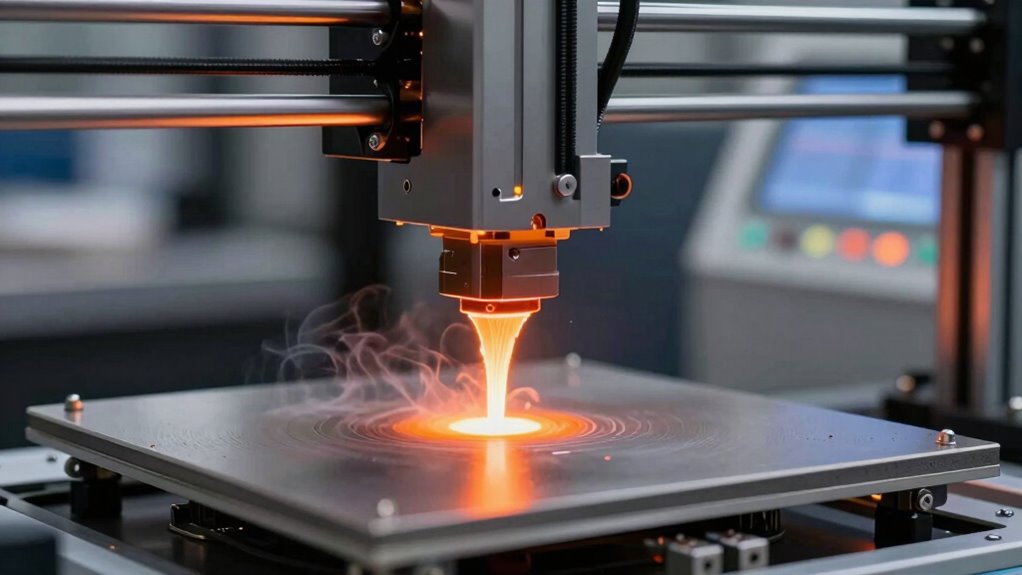

Materials that need high-temperature 3D printing include high-performance polymers like PEEK, nylon, PEI, and ULTEM, which have high melting points and excellent heat resistance. Metal composites such as Inconel and tungsten, along with ceramics like alumina and zirconia, also require elevated temperatures to process properly. These materials offer exceptional strength, durability, and heat tolerance. Discover more about which applications demand these advanced materials as you continue exploring.
Key Takeaways
- Materials with high melting or glass transition points, such as PEEK, PEI, and nylon, require high-temperature 3D printing for proper processing.
- Fiber-reinforced composites like carbon or glass fiber-reinforced filaments demand elevated temperatures to ensure strong bonding and durability.
- Metal and ceramic materials, including tungsten, Inconel, and alumina, need high heat to achieve proper flow and sintering.
- Thermoplastics with heat-sensitive dyes or pigments often require high-temperature printing to preserve color and effects.
- Specialized applications, like aerospace or medical parts, use high-temperature materials to withstand extreme operational conditions.
What Is High-Temperature 3D Printing and How Does It Work?
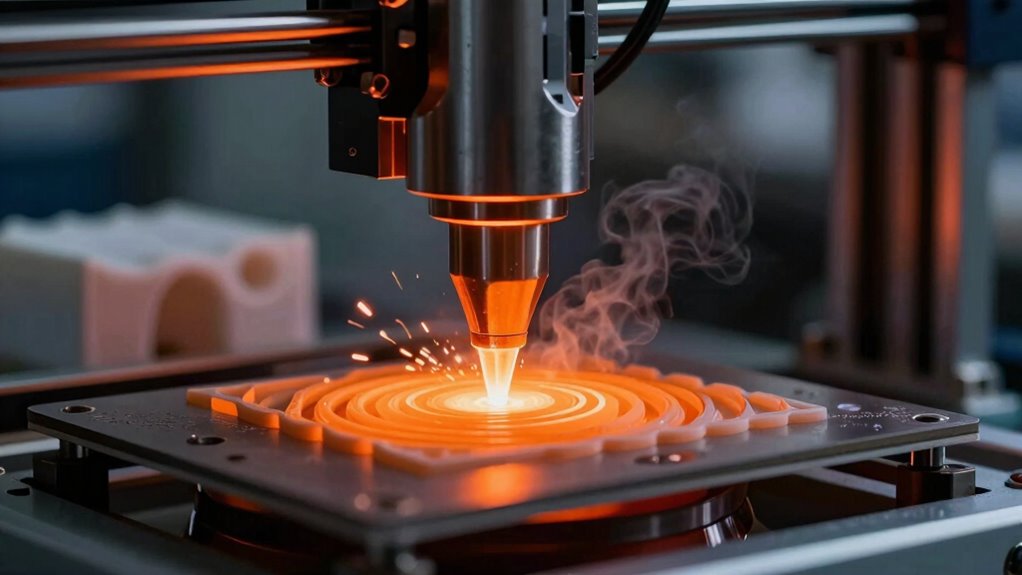
High-temperature 3D printing is a process that allows you to create complex, high-performance objects using materials that require elevated temperatures to melt and shape. The key lies in understanding material properties, especially thermal stability. These materials can withstand extreme heat without degrading, ensuring the printed object maintains its integrity during and after printing. Understanding material properties is essential for selecting the right filament and optimizing printing parameters for successful high-temperature 3D printing. Additionally, controlling the thermal environment during printing is crucial to prevent warping or deformation of heat-sensitive components. Proper temperature regulation ensures consistent melting and solidification, which is vital for achieving high-quality results. The process involves heating the material beyond its melt point while maintaining precise control over temperature and printing conditions. This guarantees strong layer adhesion, dimensional accuracy, and durability, making high-temperature 3D printing ideal for engineering, aerospace, and medical applications that demand robust, heat-resistant parts.
How to Tell If Your Material Needs High-Temperature 3D Printing?
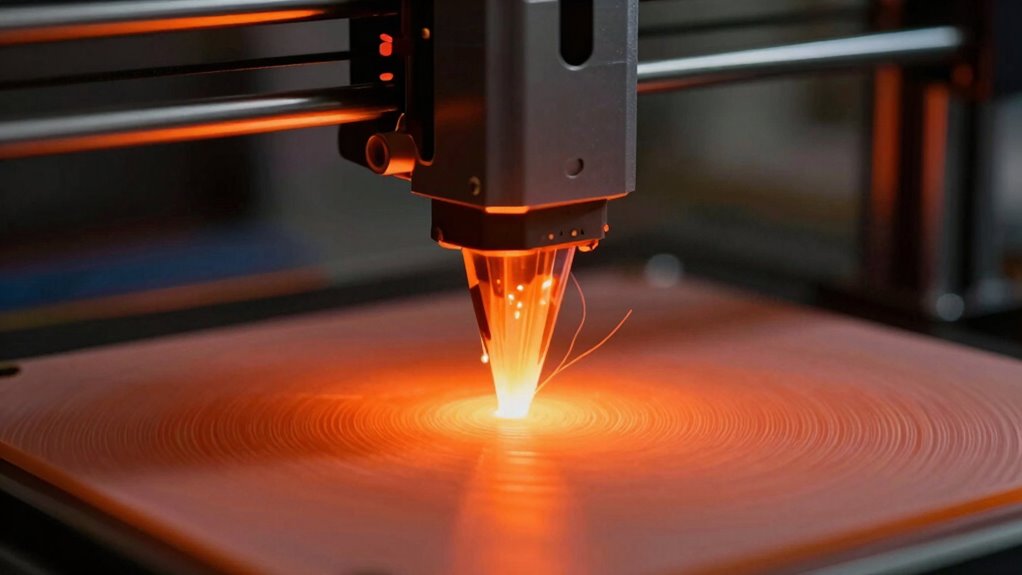
If you’re wondering whether your material requires high-temperature 3D printing, the key indicators are its thermal properties and intended application. Materials with high glass transition or melting points typically need elevated temperatures to print properly. Fiber reinforcement often increases a material’s strength and heat resistance, signaling the need for higher temperatures during printing. Additionally, if you aim for color customization options that involve dyes or pigments sensitive to heat, you’ll want to deliberate materials that can withstand those temperatures without degrading. Checking the manufacturer’s specifications for maximum extrusion temperature is essential. If your material’s properties or desired features—such as enhanced durability or specific color effects—demand higher heat, then high-temperature 3D printing is likely necessary for successful results. thermal properties are a critical factor in determining the appropriate printing conditions, especially for advanced or specialized materials. Moreover, understanding the material’s thermal limits can help prevent issues like warping or degradation during printing, and considering print environment conditions can further ensure successful printing outcomes. Additionally, evaluating the printability requirements of your chosen material can help determine if high-temperature capabilities are essential.
Why Do Some Materials Require Elevated Temperatures During Printing?
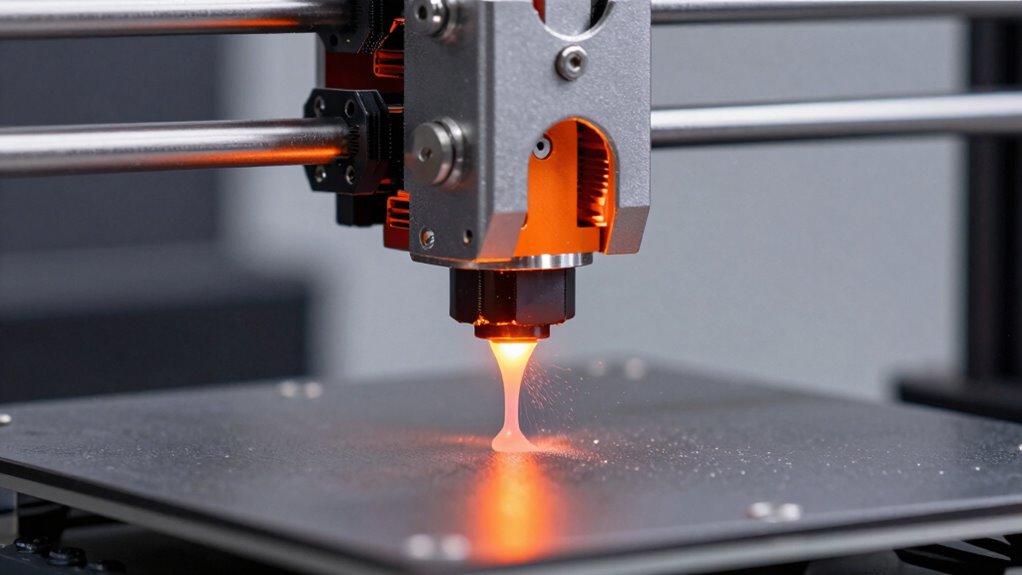
Some materials need elevated temperatures because their melting points are higher, making it essential to heat the print bed and nozzle properly. Without sufficient heat, they won’t flow smoothly or bond well to previous layers. Additionally, proper temperature control helps prevent warping and guarantees better adhesion throughout the print. Incorporating visual and auditory cues can also aid in understanding optimal temperature settings for different materials.
Material Melting Points
Ever wonder why certain materials need elevated temperatures during 3D printing? It all comes down to their melting points. Materials with high melting points, like nylon or PEEK, require heat to reach a temperature where they can flow smoothly. This ensures proper layer bonding and surface finish. Elevated temperatures help manage thermal expansion, preventing warping or cracking during cooling. You also need to take into account material compatibility, as some filaments won’t adhere or print correctly at lower temperatures. If the temperature isn’t high enough, the material won’t melt properly, leading to poor adhesion and structural weaknesses. Knowing these melting points helps you select the right hotend temperature, ensuring your print maintains dimensional accuracy and strength while avoiding issues caused by inadequate heating.
Adhesion and Warping
Elevated temperatures are essential during 3D printing because they improve material adhesion and reduce warping. When you print at higher temperatures, you promote adhesion enhancement between layers, leading to stronger bonds. This is particularly important for high-temperature filaments, which require precise thermal management to perform optimally. This also helps prevent warping by minimizing thermal stresses that cause parts to curl or lift. To maximize these benefits, consider:
- Maintaining consistent nozzle and bed temperatures for uniform adhesion.
- Using heated beds to support warping prevention, especially with materials prone to shrinkage.
- Ensuring proper print speed to allow layers to bond effectively.
- Selecting the right temperature settings based on the filament’s requirements for adhesion and stability.
- Studies support that predictive validity enhances the success of temperature adjustments, ensuring optimal print quality. Additionally, understanding the thermal properties of different filaments helps in fine-tuning temperature settings for better results. Knowing how thermal expansion affects filament behavior can also guide more precise temperature control. Furthermore, controlling ambient temperature and airflow can significantly influence the thermal stability of the printed object.
These adjustments help achieve better print quality by addressing adhesion and warping issues, making elevated temperatures a key factor in successful high-temperature 3D printing.
Which Materials Are Suitable for High-Temperature 3D Printing?
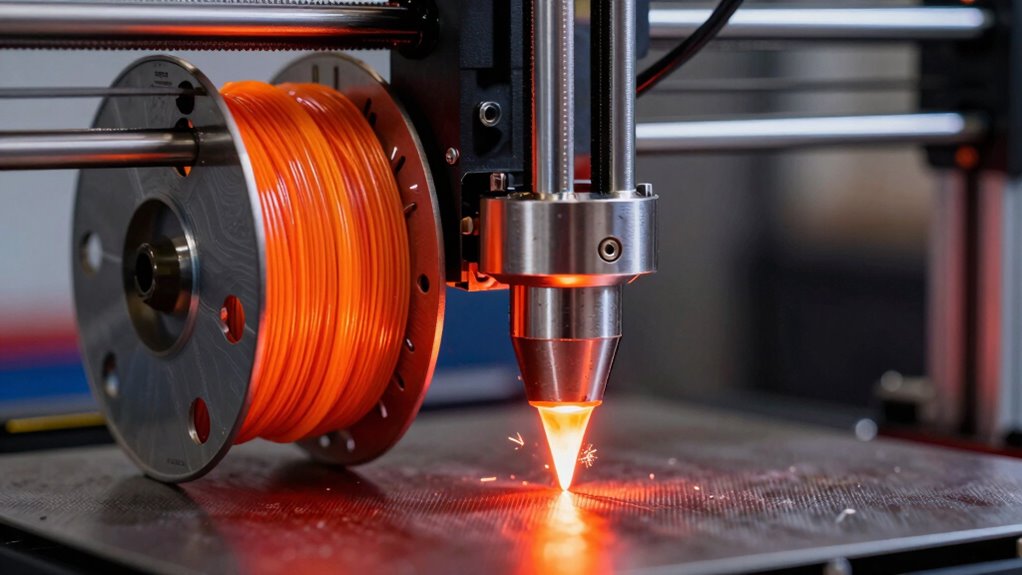
When choosing materials for high-temperature 3D printing, you’ll find options like specialized polymers, metals, and ceramics. These materials can withstand extreme heat without deforming or losing strength. Understanding their properties helps you select the best fit for your demanding applications, especially when considering appliance safety and long-term durability. Additionally, selecting materials with designer look qualities can enhance the aesthetic appeal of finished components, making them suitable for both functional and decorative purposes. Exploring the eco-friendly options available in high-temperature materials can also support sustainable manufacturing practices and reduce environmental impact. Being aware of material properties ensures you make informed decisions for your projects and applications. Moreover, considering material compatibility with existing manufacturing processes can streamline production and improve overall efficiency.
Suitable High-Temp Polymers
High-temperature 3D printing requires polymers that can withstand extreme heat without deforming or losing their properties. Materials like PEEK, PEI (ULTEM), and PPSU are ideal choices. These polymers offer excellent thermal stability and chemical resistance, making them suitable for demanding applications. When selecting suitable high-temp polymers, consider:
- Compatibility with fiber reinforcement for added strength
- Ability to handle high temperatures without warping
- Ease of color customization for branding or identification
- Mechanical properties that match your project’s needs
These polymers often come in various formulations, allowing you to tailor properties. Their robustness ensures your prints endure high heat environments, and fiber reinforcement can further improve strength. Plus, they support color customization to meet aesthetic or functional requirements. Exploring the future of nanotechnology highlights how advanced materials like high-temp polymers can be integrated into innovative applications, especially when considering material properties such as thermal stability and chemical resistance. Additionally, understanding material compatibility is crucial for ensuring these polymers work effectively with other materials in complex assemblies.
Metal and Ceramic Options
Metal and ceramic materials are essential choices for high-temperature 3D printing due to their exceptional heat resistance and structural integrity. Metal composites, such as tungsten or Inconel, withstand extreme temperatures while maintaining strength, making them ideal for aerospace and industrial applications. Ceramic options, including alumina and zirconia, offer excellent thermal stability and can be further enhanced with ceramic coatings to improve durability and reduce wear. These coatings provide an additional layer of protection against oxidation and thermal shock, extending the lifespan of printed parts. When choosing materials, consider the specific temperature range and mechanical demands of your project. Material selection is critical to ensuring the performance and longevity of high-temperature printed components. Metal composites and ceramics, especially with advanced coatings, enable you to produce components that perform reliably under demanding high-temperature conditions, especially when combined with thermal management techniques. Additionally, understanding the material properties helps optimize print settings and post-processing for maximum performance. Furthermore, staying informed about material innovations can open up new possibilities for custom high-temperature applications.
Common High-Temperature 3D Printing Materials and Their Properties
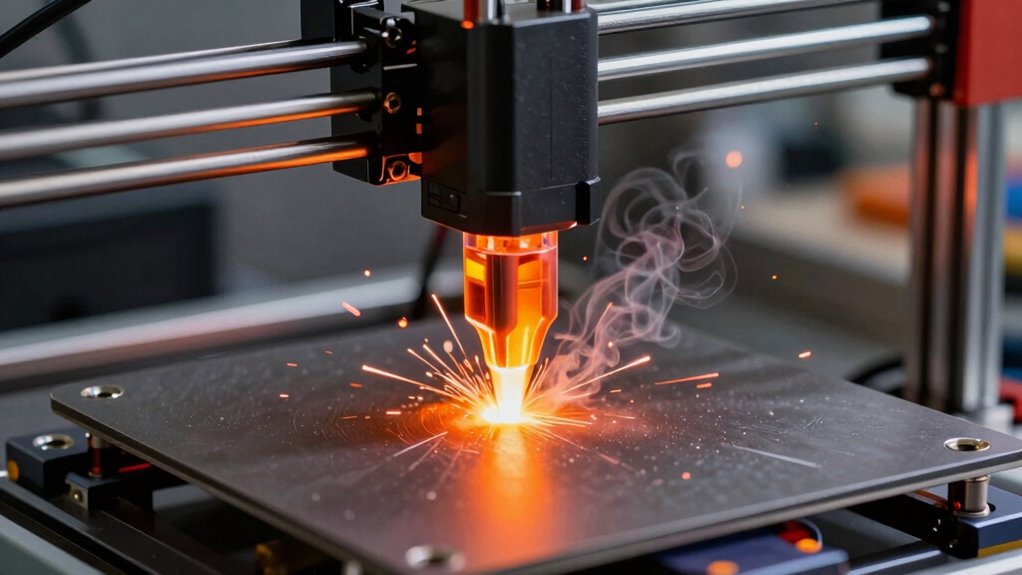
Have you ever wondered which materials can withstand extreme heat in 3D printing? High-temperature materials include some advanced plastics and composites designed for durability and stability. These materials often feature low thermal expansion, reducing warping during cooling. Key options are:
High-temperature 3D printing materials include advanced plastics like PEEK, ULTEM, and PEI for durability and stability.
- PEEK (Polyetheretherketone) – Excellent heat resistance and a smooth surface finish.
- ULTEM (Polyetherimide) – High strength with minimal thermal expansion.
- PEI – Known for stability under high temperatures and good surface quality.
- PEEK composites – Enhanced properties for demanding environments.
These materials require precise temperature control and often exhibit predictable thermal expansion, ensuring consistent part quality. Their surface finish can vary but generally improves with proper printing parameters, making them suitable for high-performance applications.
Challenges and Limitations of 3D Printing With High-Temperature Materials
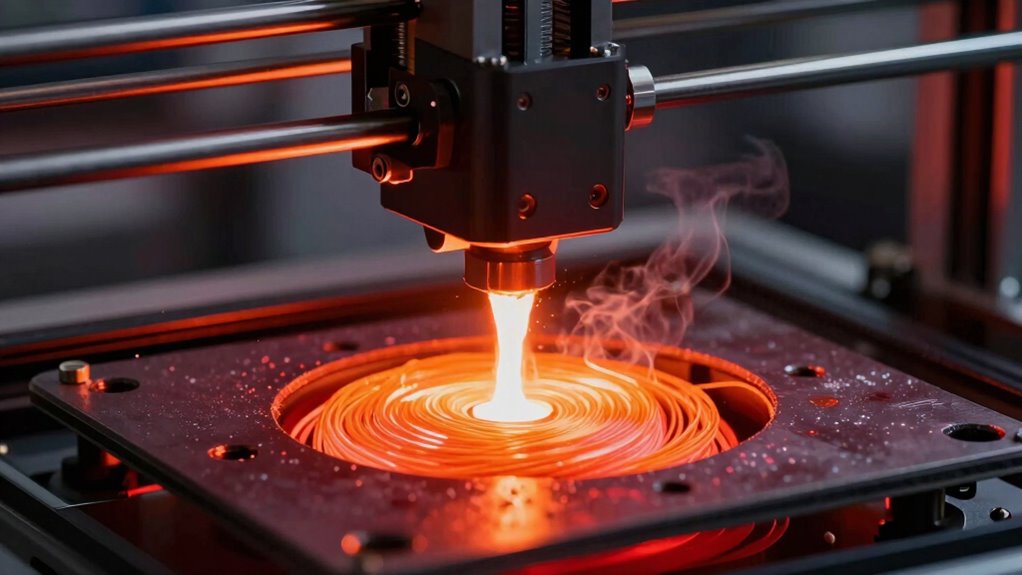
Working with high-temperature materials introduces several challenges you need to take into account. You’ll face issues like material handling difficulties, expensive equipment requirements, and safety risks. Understanding these limitations helps you optimize your 3D printing processes and ensure safe, efficient results.
Material Handling Challenges
Handling high-temperature materials in 3D printing presents significant challenges, as their demanding thermal properties require specialized equipment and careful management. Proper material storage is vital to prevent degradation and contamination. You need to:
- Store materials in controlled environments to avoid moisture absorption.
- Use sealed containers to prevent contamination and maintain purity.
- Handle materials with care to avoid exposing them to temperature fluctuations.
- Regularly inspect storage areas to guarantee cleanliness and stability.
These practices help maintain material quality and guarantee consistent printing results. Contamination can cause defects, while improper storage can compromise thermal properties. Managing these challenges requires diligence, as even minor lapses can lead to failed prints or material wastage. Your careful handling directly impacts the success of high-temperature 3D printing projects.
Equipment Limitations and Costs
High-temperature 3D printing faces significant equipment limitations and cost challenges that can hinder project success. You need specialized printers capable of reaching and maintaining high extrusion temperatures, which often require substantial cost considerations. These machines typically demand robust heating elements, advanced temperature controls, and durable materials, leading to higher initial investments. Upgrading existing equipment to handle high-temperature filaments can be costly and time-consuming. Additionally, maintenance expenses increase as components wear faster under extreme conditions. You must also budget for ongoing operational costs, including energy consumption and potential repairs. While investing in suitable equipment is essential for success, these cost considerations can be a barrier for many. Understanding the true expenses involved helps you plan for the necessary upgrades and avoid unexpected financial setbacks.
Safety and Environmental Concerns
Using high-temperature materials in 3D printing introduces significant safety and environmental challenges that require careful attention. First, material toxicity poses risks during handling, inhalation, and disposal, making protective measures essential. Second, high temperatures increase fire hazards, demanding strict safety protocols. Third, recycling challenges arise because many high-temp materials are difficult to repurpose, leading to waste buildup. Fourth, some materials release toxic fumes when heated, impacting air quality and worker health. To address these issues, you must implement proper ventilation, use personal protective equipment, and develop effective waste management strategies. Understanding these concerns ensures safer operation and minimizes environmental impact, making high-temperature 3D printing more sustainable and responsible.
Best Practices for Printing With High-Temperature Materials
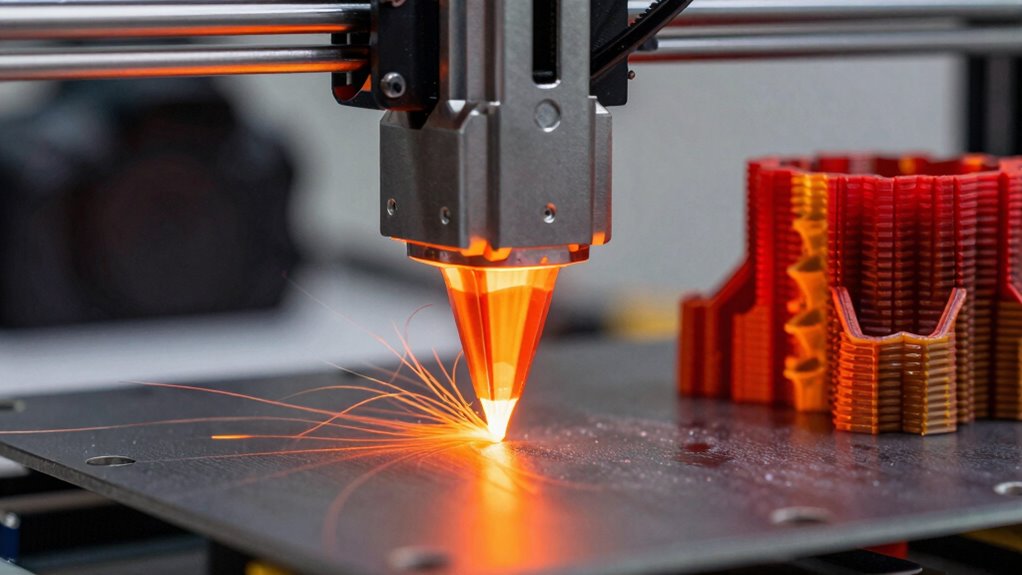
To achieve successful prints with high-temperature materials, you need to pay close attention to your printer’s setup and environment. Understanding material properties is vital, as high-temperature filaments like PEEK or PEKK require specific conditions for maximum adhesion and minimal warping. Adjust your printing parameters carefully: set the nozzle temperature within the recommended range, increase bed temperature, and use a heated chamber if possible. Proper cooling is also essential; too much can cause warping, while too little can affect layer bonding. Confirm your printer’s components can handle the elevated temperatures without degradation. Additionally, use high-quality filament and proper bed adhesion techniques. Following these best practices helps guarantee your high-temperature prints are strong, accurate, and free of common issues.
When Is High-Temperature 3D Printing Necessary?
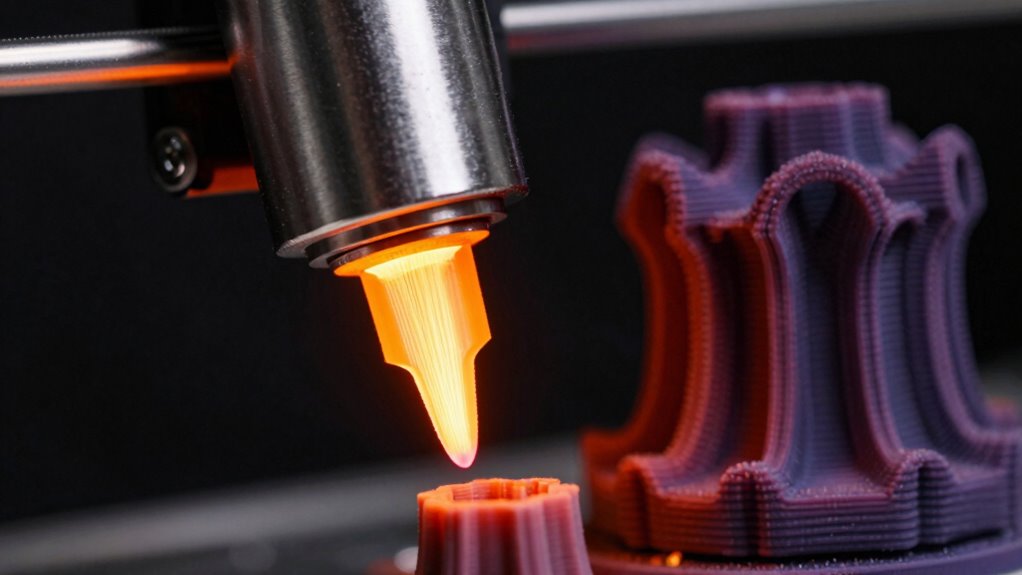
Certain applications demand the use of high-temperature 3D printing to achieve the necessary strength, stability, or chemical resistance. You should consider this method when your project requires specific material compatibility or surpasses certain temperature thresholds. High-temperature 3D printing becomes necessary if:
- The part will face continuous exposure to elevated temperatures.
- The chosen material’s melting point exceeds standard 3D printing limits.
- Chemical resistance is essential for your application’s longevity.
- Mechanical strength must withstand extreme conditions.
In these cases, standard materials won’t meet the required performance, making high-temperature printing indispensable. Recognizing when your project crosses these thresholds helps guarantee you select the right process and materials for durability and safety.
Industries and Applications That Benefit From High-Temperature 3D Printing
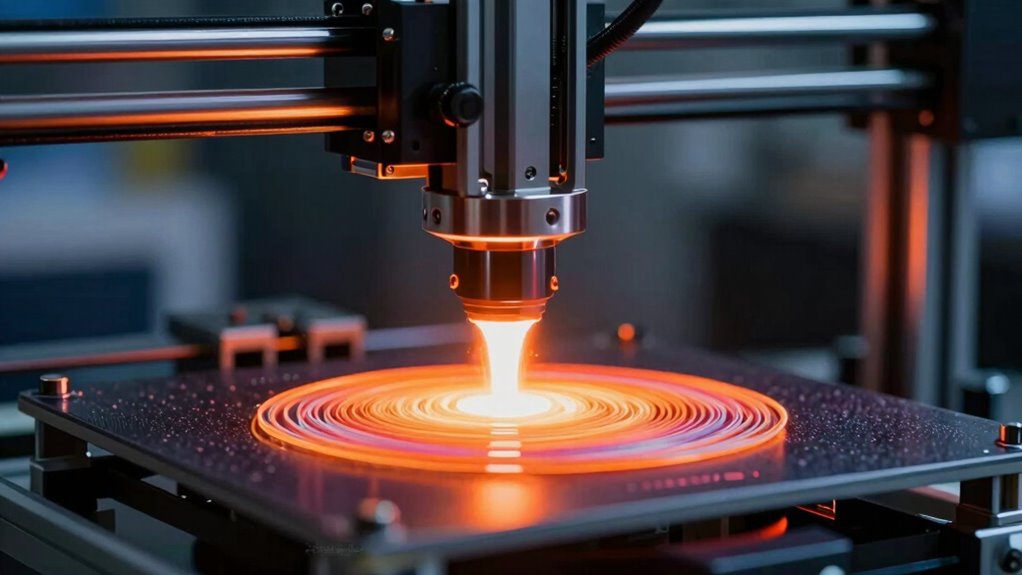
High-temperature 3D printing plays a crucial role across various industries where traditional methods fall short. You benefit from its ability to handle materials with high melting points, ensuring material compatibility for demanding applications. Aerospace manufacturers use it to create lightweight, heat-resistant components that withstand extreme conditions. Automotive industries rely on it for durable engine parts and tooling that require high thermal stability. In the electronics sector, it enables the production of components that operate reliably at elevated temperatures. However, you should consider cost considerations, as high-temperature materials and specialized printers can be expensive. Despite the higher investment, these applications often justify costs through enhanced performance, durability, and reduced lead times, making high-temperature 3D printing an essential tool for innovation in demanding industries.
What’s Next for High-Temperature 3D Printing Materials and Technology
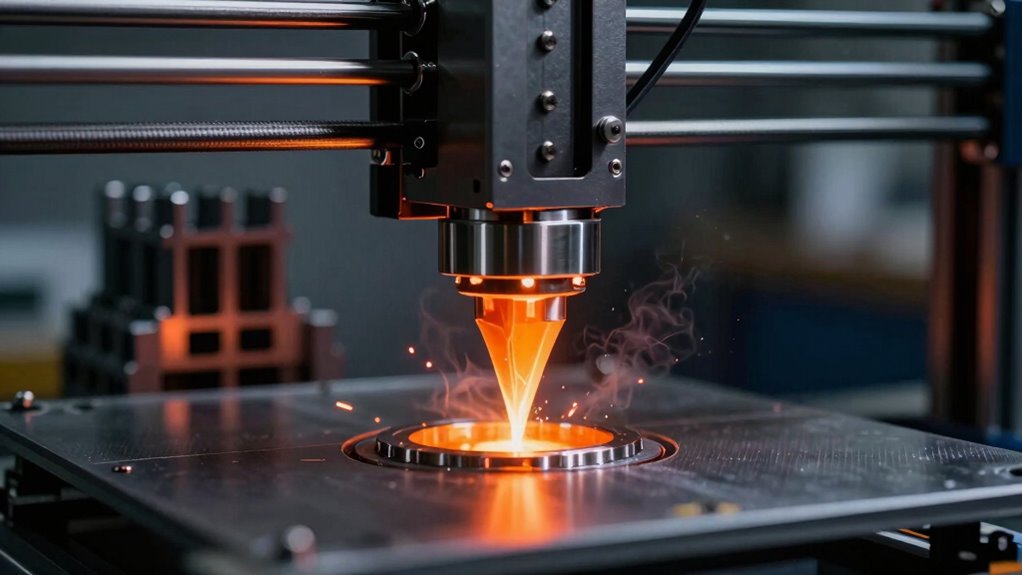
Advancements in materials and technology are poised to expand the capabilities of high-temperature 3D printing, making it more accessible and versatile for demanding applications. Future developments may include:
Emerging materials and technology will broaden high-temperature 3D printing’s applications and performance.
- The creation of new biocompatible polymers that withstand extreme heat, opening doors for medical implants and devices.
- The development of eco-friendly filaments that combine sustainability with high-performance heat resistance.
- Enhanced printer hardware capable of handling higher temperatures with improved precision and safety.
- smarter filament formulations that offer better adhesion, durability, and environmental benefits.
These innovations will enable you to produce complex, durable, and sustainable parts, pushing the boundaries of what high-temperature 3D printing can achieve across industries.
Frequently Asked Questions
How Do Temperature Requirements Vary Among Different High-Temperature 3D Printing Materials?
You’ll notice temperature requirements vary considerably among high-temperature 3D printing materials due to differences in thermal stability and melting points. For instance, PEEK needs extruder temperatures above 370°C, while ceramics require even higher heat to maintain their structural integrity. These materials demand precise control of printing temperatures to prevent warping or degradation, ensuring ideal layer adhesion and strength. Always consult specific material datasheets for accurate thermal stability and melting point details.
What Safety Precautions Are Necessary When Working With High-Temperature 3D Printers?
When working with high-temperature 3D printers, you should always wear protective gear like gloves and safety glasses to prevent burns and eye injuries. Guarantee proper ventilation systems are in place to avoid inhaling fumes from heated materials. Keep a fire extinguisher nearby, and never leave the printer unattended during operation. Following these safety precautions helps protect you from potential hazards associated with high temperatures and molten materials.
Can Standard 3D Printers Be Adapted for High-Temperature Printing?
Yes, you can adapt standard 3D printers for high-temperature printing, but it requires standard modifications like upgrading the hotend and heated bed, and ensuring your frame can handle higher temperatures. You’ll also need to perform precise temperature calibration to prevent issues like warping or nozzle clogging. Keep in mind that not all printers are suitable, so check compatibility before making any upgrades.
How Does High-Temperature 3D Printing Impact Post-Processing Steps?
High-temperature 3D printing transforms your post-processing journey into a delicate dance, where residual material often clings stubbornly to surfaces. You’ll need to carefully sand, polish, or chemically treat your parts to reveal a smooth, professional finish. This process demands patience and finesse, as the intense heat can cause warping or surface imperfections. Embrace the challenge, knowing that your efforts will lead to sleek, high-quality results that truly stand out.
Are There Environmental Concerns Associated With High-Temperature 3D Printing Materials?
Yes, there are environmental concerns with high-temperature 3D printing materials. You should consider the environmental impact, as some materials release volatile compounds or toxic fumes during printing. Additionally, material recyclability varies; some high-temp filaments are harder to recycle, increasing waste. To reduce your environmental footprint, choose sustainable, recyclable materials when possible, and guarantee proper ventilation and waste management during your printing process.
Conclusion
If you’re considering high-temperature 3D printing, understanding which materials truly need elevated heat is key. Imagine printing a durable aerospace component that withstands extreme conditions—using materials like PEEK or ceramics. By choosing the right high-temp filament and following best practices, you can achieve exceptional strength and precision. As technology advances, expect even more innovative materials and applications, opening new possibilities for your projects and industries.