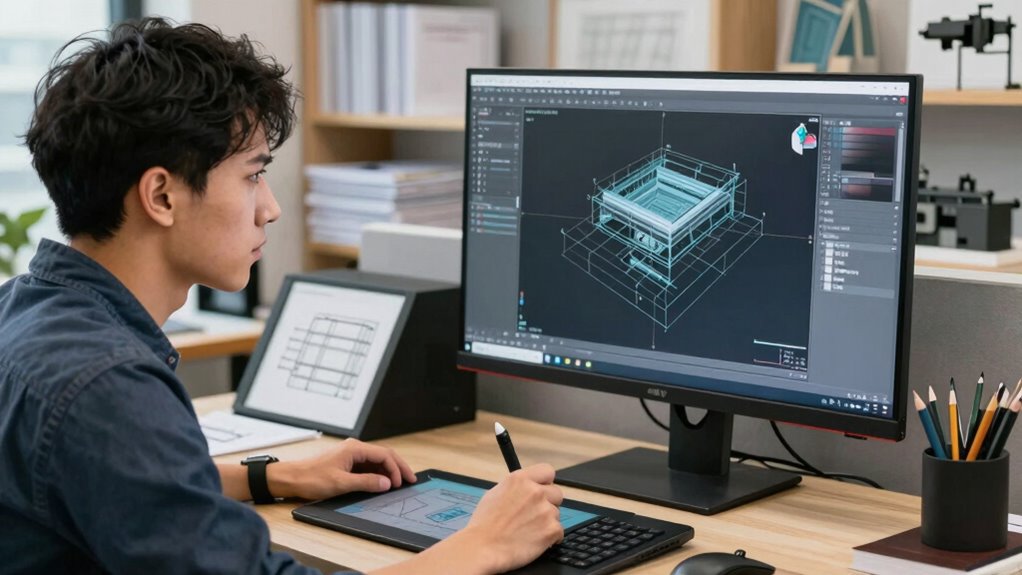

When hiring for an entry-level CAD position, managers look for your technical skills with industry-standard software like AutoCAD or SolidWorks, as well as your ability to produce precise designs efficiently. They value your adaptability and enthusiasm to learn new tools, along with strong teamwork and communication skills. Awareness of industry standards and sustainable practices also sets you apart. Keep exploring to discover how developing these qualities can boost your chances of landing the right opportunity.

Prime made for students and young adults
- Fast, free delivery for dorm and study essentials
- Prime Video and Amazon Music included
- Member-only deals
Key Takeaways
- Proficiency with industry-standard CAD software and ability to produce accurate, professional designs efficiently.
- Willingness to learn, adapt, and stay current with emerging CAD technologies and industry trends.
- Strong communication skills and ability to collaborate effectively within multidisciplinary teams.
- Knowledge of industry standards, legal requirements, and sustainable design principles.
- Demonstrated professionalism, growth mindset, and openness to constructive feedback.

Starting a career in CAD often requires more than just technical skills; employers look for qualities that demonstrate your potential to grow and contribute. When you apply for an entry-level CAD position, your software proficiency is one of the first things hiring managers evaluate. They want to see that you’re comfortable with industry-standard programs like AutoCAD, SolidWorks, or Revit. Being proficient doesn’t mean just knowing how to draw; it means understanding how to optimize workflows, troubleshoot issues, and produce precise, professional designs efficiently. If you can showcase your ability to learn new software quickly and adapt to different tools, you’ll stand out as someone ready to hit the ground running. Employers also value your willingness to continue improving your skills, so mentioning ongoing training or certifications can further strengthen your application.
Proficiency in industry-standard CAD software, adaptability, and continuous learning are key to standing out in entry-level positions.
Beyond technical prowess, your teamwork skills are equally essential. CAD projects rarely happen in isolation; they involve collaboration with architects, engineers, project managers, and clients. Your ability to communicate effectively within a team, listen to others’ input, and incorporate feedback is key. Employers want to see that you’re not just a good individual contributor but also someone who can work well with others to meet project goals. Demonstrating past experiences where you’ve successfully collaborated on complex projects gives hiring managers confidence in your interpersonal skills. Being open to constructive criticism, sharing ideas clearly, and respecting diverse perspectives show maturity and professionalism—traits that employers highly value. Recognizing the importance of biodiversity and sustainable living practices can be an asset, especially if your work contributes to environmentally conscious designs. Developing a professional mindset and demonstrating your commitment to continuous improvement can also make a significant difference in how you are perceived. Additionally, understanding how to leverage industry standards helps ensure your designs meet professional and legal expectations, which is highly regarded in the field. Gaining an awareness of environmentally sustainable design principles can set you apart as a forward-thinking candidate committed to responsible practices. Moreover, staying informed about emerging technologies can help you adapt to future industry shifts and maintain your competitive edge.
As an affiliate, we earn on qualifying purchases.
Frequently Asked Questions
What Software Proficiency Is Most Valued by Hiring Managers?
You should prioritize proficiency in industry-standard CAD software like AutoCAD and SolidWorks, as hiring managers value these skills highly. They also look for your ability to stay updated with software updates, which keeps your skills current and efficient. Additionally, being capable of technical troubleshooting shows you can quickly solve software issues, reducing project delays. Demonstrating these skills makes you a strong candidate for entry-level CAD positions.
How Important Are Soft Skills for Entry-Level CAD Roles?
Think of a CAD project as a team sport; your soft skills are the teamwork and communication that keep everyone on the same page. For entry-level roles, strong communication skills and teamwork abilities are vital—they guarantee smooth collaboration and problem-solving. Without these, even the most technically proficient can struggle. So, focus on developing your soft skills, because they’re just as important as your technical knowledge in landing and succeeding in a CAD role.
Do Certifications Enhance an Applicant’s Chances?
Certifications definitely enhance your chances by showcasing your skill validation and dedication to the field. Certification benefits include demonstrating your technical competence and commitment to professional growth, which can set you apart from other candidates. Hiring managers often see certifications as proof you possess the necessary knowledge and skills for entry-level CAD roles, making you a more attractive applicant. Earning relevant certifications can give you a competitive edge in the job market.
How Much Experience Is Expected for Entry-Level Positions?
For entry-level positions, you typically need minimal experience—industry standards often accept applicants with internship experience or relevant coursework. You should showcase a solid understanding of CAD software, but extensive experience isn’t expected. Demonstrating dedication through internships, projects, or coursework can distinguish you. Keep your skills sharp, your portfolio polished, and your enthusiasm evident to impress hiring managers seeking capable, committed candidates ready to grow.
What Portfolio Elements Impress Hiring Managers the Most?
You should showcase a diverse portfolio highlighting your best work, including a clear design presentation that demonstrates your creativity and problem-solving skills. Include technical documentation to show your attention to detail and ability to communicate complex ideas effectively. Hiring managers are impressed by well-organized projects, showcasing your technical proficiency and understanding of design principles, which reflect your readiness for real-world CAD projects.
SolidWorks professional design tools
As an affiliate, we earn on qualifying purchases.
As an affiliate, we earn on qualifying purchases.
Conclusion
Ultimately, showcasing your problem-solving skills and enthusiasm to learn can set you apart as an entry-level CAD applicant. For instance, imagine a candidate who quickly adapts to new software during their first project, impressing their team with innovative solutions. By highlighting your adaptability and eagerness, you demonstrate you’re ready to grow with the company. Remember, employers value proactive learners who can contribute from day one. Stay confident, and showcase those qualities in your application!
CAD training certification courses
As an affiliate, we earn on qualifying purchases.
As an affiliate, we earn on qualifying purchases.
best CAD software for entry-level
As an affiliate, we earn on qualifying purchases.
As an affiliate, we earn on qualifying purchases.
Fall Picks
fall essentials
As an affiliate, we earn on qualifying purchases.