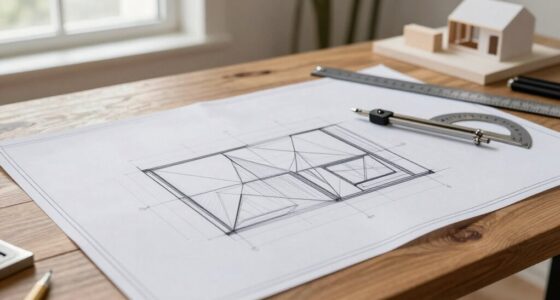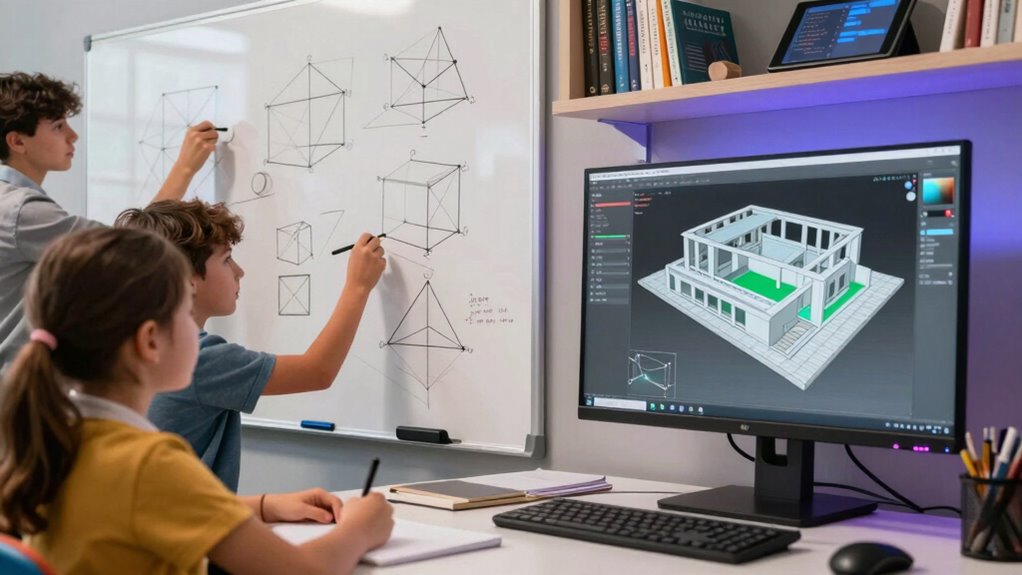

If you love geometry, you’re headed for exciting career options in CAD, 3D modeling, and digital design. Your skills in understanding shapes, spatial relationships, and precision are essential in industries like game development, film, manufacturing, and virtual environments. With strong geometric knowledge, you can create realistic models and innovative designs. Keep exploring, and you’ll discover more ways to turn your passion into a successful career in digital innovation.

Prime made for students and young adults
- Fast, free delivery for dorm and study essentials
- Prime Video and Amazon Music included
- Member-only deals
Key Takeaways
- Geometry skills open careers in CAD, 3D modeling, and virtual environment design across various industries.
- Proficiency in geometric principles enhances ability to create precise digital models for manufacturing and animation.
- Careers like product design, game development, and visual effects rely heavily on strong geometric understanding.
- Developing spatial and geometric problem-solving skills is essential for success in digital design fields.
- Utilizing online resources and software training helps transition from classroom geometry to professional CAD applications.
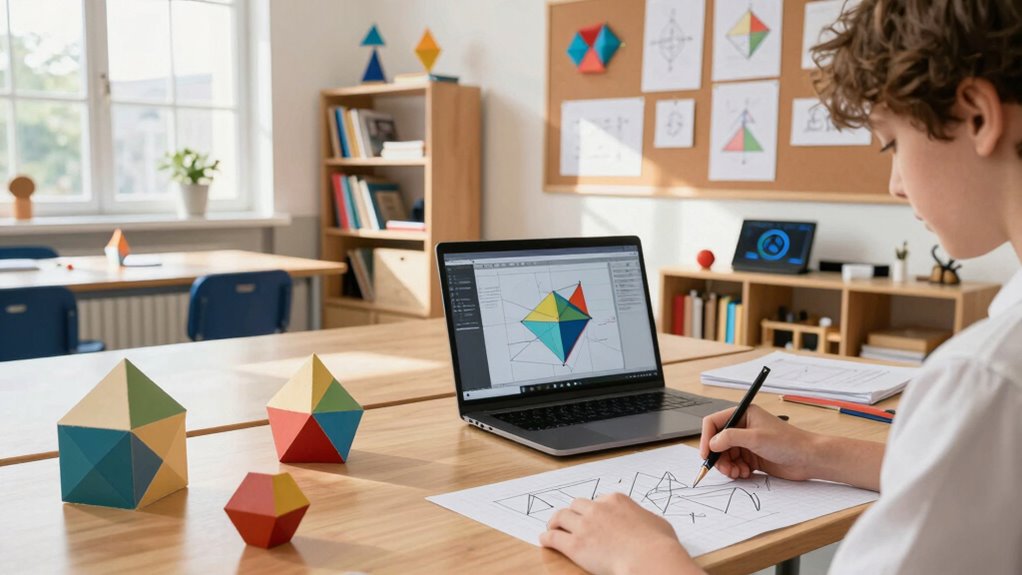
If you’re interested in more practical applications, careers in CAD (computer-aided design) and 3D modeling might appeal to you. These fields demand a strong grasp of geometry to create precise digital representations of physical objects. Mastering geometric concepts is essential for accurately translating ideas into digital formats. Whether you’re designing consumer products, animation, or virtual environments, your skills help bring ideas to life with accuracy and efficiency. You might work in industries like game development, film, or manufacturing, where geometric knowledge ensures that designs are both innovative and feasible to produce. Developing a deep understanding of geometric principles can enhance your ability to create complex models and solve spatial problems more effectively.
As an affiliate, we earn on qualifying purchases.
Frequently Asked Questions
What Skills Beyond Geometry Are Essential for These Careers?
Beyond geometry, you need strong skills in advanced modeling and technical communication. Mastering advanced modeling helps you create complex designs efficiently, while clear technical communication guarantees your ideas are understood by clients and team members. You should also develop proficiency in CAD software, problem-solving, and attention to detail. These skills help you excel in careers like architecture, engineering, or product design, making your work precise and easily shareable.
How Can I Gain Practical Experience in These Fields?
Think of gaining practical experience as your own “Great Adventure.” You should seek out real-world internships to immerse yourself in actual projects, giving you hands-on skills and industry insights. Simultaneously, develop a strong portfolio showcasing your best work—think of it as your personal treasure chest. These steps will help you build confidence, refine your skills, and prepare for a successful shift from classroom concepts to professional design environments.
Are There Specific Certifications Needed for Geometry-Based Careers?
Certification requirements for geometry-based careers vary depending on the industry and role. You should research industry standards for your specific field, such as architecture, engineering, or CAD design. Many professions value certifications like Autodesk Certified Professional or LEED accreditation, which demonstrate your skills and commitment. While not always mandatory, earning these certifications can boost your credibility, open doors, and give you a competitive edge in the job market.
What Are the Job Outlooks for Geometry-Related Professions?
You’ll find that job outlooks for geometry-related professions are promising, especially in fields requiring strong geometric visualization and spatial reasoning skills. Careers like architectural design, engineering, and CAD drafting are expanding as industries seek professionals who can interpret complex shapes and structures. Your ability to visualize geometrical concepts makes you a valuable asset, increasing your chances of thriving in these roles as demand for precise, innovative design grows.
How Do I Transition From Education to a Professional Role?
You can shift from education to a professional role by exploring relevant educational pathways like specialized degrees or certifications in CAD, architecture, or engineering. Focus on building your network through industry events, online forums, and internships to connect with professionals. Gain practical experience, develop a strong portfolio, and leverage your network to find job opportunities. Staying proactive and continuously learning will help you successfully move from classroom knowledge to a career.
3D modeling software for professionals
As an affiliate, we earn on qualifying purchases.
As an affiliate, we earn on qualifying purchases.
Conclusion
So, whether you’re sketching blueprints or designing video game worlds, your passion for geometry can shape a vibrant career. It’s like turning a simple triangle into a complex structure—your skills can build bridges or craft immersive experiences. While the classroom may be behind you, your love for shapes and angles is the foundation of future innovations. Embrace the contrast; the geometry you love today can become the groundbreaking work of tomorrow.
virtual environment design tools
As an affiliate, we earn on qualifying purchases.
As an affiliate, we earn on qualifying purchases.
As an affiliate, we earn on qualifying purchases.
Fall Picks
fall essentials
As an affiliate, we earn on qualifying purchases.