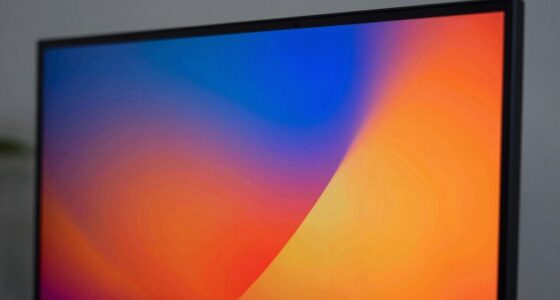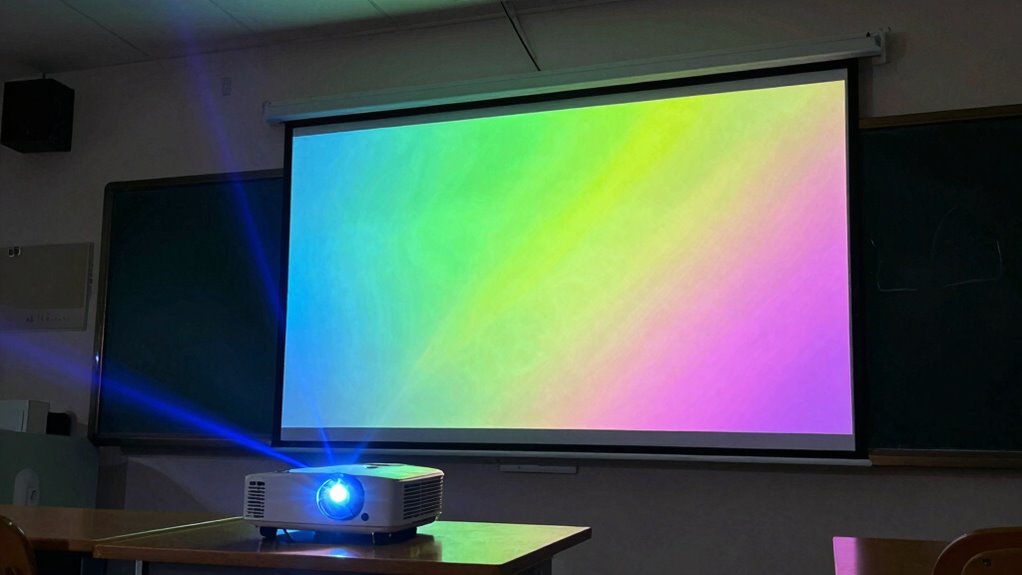
Laser projectors offer brighter images with vibrant colors and high contrast, making classroom lessons more engaging even in well-lit rooms. They deliver consistent brightness and sharp details across various sizes, ensuring clear visuals for all students. High contrast ratios deepen blacks and brighten whites, boosting image clarity. If you want to understand how these features improve classroom lessons and find the right projector for your needs, keep exploring to discover more.
Key Takeaways
- Laser projectors offer high brightness and vivid colors, ensuring clear images even in well-lit classrooms.
- Contrast ratios in laser projectors create deeper blacks and brighter whites, enhancing image quality and visual clarity.
- Consistent brightness over time reduces maintenance, supporting reliable performance in educational settings.
- Brightness and contrast levels should be matched to classroom size and ambient light for optimal viewing experience.
- Advanced laser technology provides durability and sharp, detailed images suitable for diverse teaching methods.
What Are Laser Projectors and Why Are They a Better Choice for Classrooms?
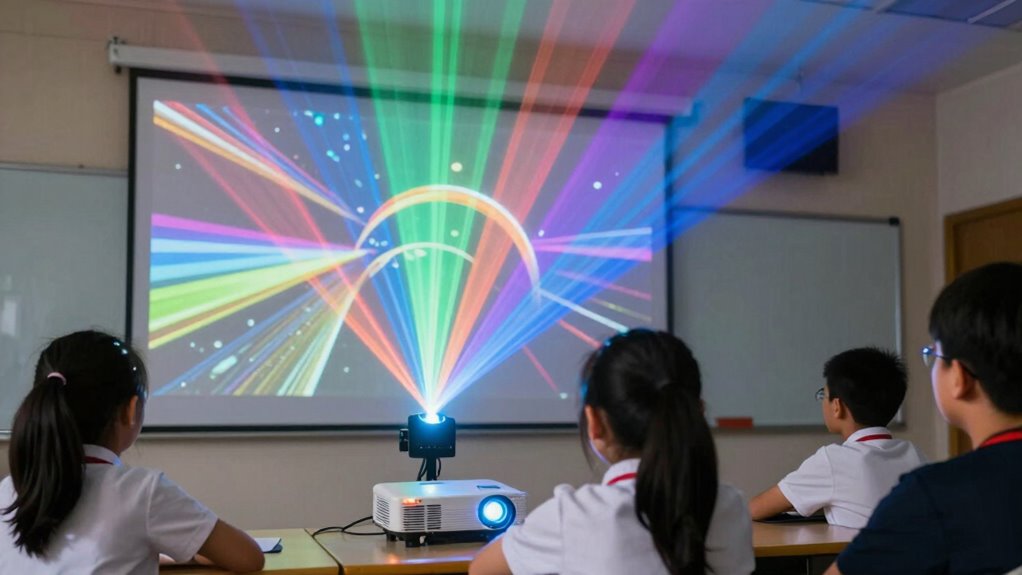
Laser projectors are quickly becoming a popular choice for classrooms because they offer brighter images and better color accuracy than traditional projectors. Their advanced laser technology delivers consistent brightness over time, reducing the need for replacements and maintenance. This reliability makes them highly suitable for daily classroom use. When it comes to classroom integration, laser projectors are easy to set up and operate, fitting seamlessly into various teaching environments. They produce sharp, vivid images even in well-lit rooms, enhancing student engagement. Plus, their durability means less downtime, so lessons stay on schedule. Additionally, their high contrast ratio improves image depth and clarity, making visuals more engaging and easier to interpret for students. Incorporating these projectors also aligns with sustainable technology goals by reducing waste and energy consumption, which is beneficial for eco-conscious educational institutions.
How Bright and Clear Are Laser Projectors in Educational Settings?
Because they utilize advanced laser technology, these projectors deliver exceptionally bright and sharp images even in well-lit classrooms. Their high brightness levels ensure that content remains vivid despite ambient lighting, making lessons more engaging. The clarity stays consistent across various screen sizes, so whether you’re projecting on a small or large surface, the image remains crisp. To maximize visibility, consider how ambient lighting affects screen visibility and choose a projector with sufficient lumens. Additionally, larger screens benefit from laser projectors’ brightness, maintaining clarity without sacrificing detail. This combination helps you create a dynamic learning environment. Here are some key points to remember:
- Brightness levels adapt to ambient lighting
- Clear images across different screen sizes
- Improved visibility in well-lit rooms
- Sharpness remains consistent at larger sizes
- Understanding projector brightness can help you select the right device for your space. Investing in proper calibration during setup can further enhance image quality and ensure consistent performance over time.
Why Do Contrast Ratios Matter When Choosing a Classroom Laser Projector?
Have you ever wondered why some projectors produce more vivid images than others? Contrast ratio plays a key role in this. A high contrast ratio means deeper blacks and brighter whites, enhancing color accuracy. This is especially important when ambient light is present, as it can wash out images. When choosing a classroom laser projector, look for a high contrast ratio to guarantee clarity and color vibrancy. Here’s a quick comparison:
| Contrast Ratio | Best Use Scenario |
|---|---|
| 1000:1 | Dim classrooms |
| 3000:1 | Moderate ambient light |
| 5000:1 | Bright rooms, vivid images |
| 10,000:1 | Outdoor or very bright settings |
| 20,000:1+ | High color accuracy needs |
A better contrast ratio enhances image quality, ensuring your lessons are clear and engaging even with ambient light. Additionally, understanding how thermal behavior influences projector performance can help you select a more reliable model. Recognizing the ambient light conditions in your classroom is essential for choosing the right projector specifications to optimize visibility. For instance, considering how thermal management affects projector longevity can lead to more durable equipment. Moreover, evaluating the lumen output helps determine the brightness level suitable for various classroom environments. Being aware of projector placement also impacts how well the image appears in different room layouts.
Do Laser Projectors Perform Well in Real Schools? Insights and Results
Many schools have already integrated laser projectors into their classrooms, and the results are promising. You’ll notice increased student engagement thanks to bright, sharp images that capture attention. Teachers report smoother lessons with quick setup and reliable performance. Budget considerations, once a concern, are often offset by lower maintenance costs and longer-lasting light sources. Schools also find that laser projectors support diverse teaching styles, from interactive lessons to visual demonstrations. Additionally, understanding networking hardware can help schools optimize their multimedia systems for better performance. Proper installation techniques can further enhance the lifespan and image quality of laser projectors, ensuring long-term reliability. Moreover, staying informed about technological advancements can help educational institutions select the most suitable models for their needs. Furthermore, familiarity with power management systems can assist schools in reducing energy consumption and operational costs. Recent innovations in light source technology contribute to even greater durability and consistent brightness over time. – Improved visibility even in well-lit rooms
- Reduced downtime and fewer bulb replacements
- Enhanced interactive and multimedia experiences
- Cost-effective over the long term for educational institutions
In short, laser projectors deliver real-world performance that meets the needs of modern classrooms, making them a valuable investment for educational success.
How to Pick the Best Laser Projector for Your School or Classroom
Choosing the right laser projector for your school or classroom starts with understanding your specific needs and environment. If you plan to use interactive whiteboards, look for models with quick response times and high resolution to ensure smooth, clear images. For digital signage, brightness and contrast are critical to ensure visibility in well-lit spaces. Consider the size of your classroom or hall—larger areas may require higher lumen output to maintain clarity. Think about connectivity options for seamless integration with your existing tech setup. Portability might matter if you need to move the projector frequently. Finally, evaluate the projector’s durability and maintenance needs to minimize downtime. Additionally, assessing the passive voice in your content can improve clarity and engagement. Incorporating reliable power sources ensures consistent operation, reducing interruptions during lessons. Understanding visual performance factors like brightness, contrast, and resolution can help you select a model that meets your educational goals effectively. To make an informed choice, it’s also beneficial to review projector warranties and after-sales support to ensure long-term satisfaction. Moreover, proper calibration can significantly enhance image quality and overall user experience.
Frequently Asked Questions
How Do Laser Projectors Compare to Traditional Lamp Projectors in Maintenance Costs?
Laser projectors typically cost less to maintain than traditional lamp projectors because you won’t need frequent lamp replacements. They also tend to be more energy-efficient, which lowers your overall energy costs. With laser projectors, you avoid the hassle and expense of changing lamps often, making them a more cost-effective choice in the long run. Plus, their longevity means fewer interruptions and lower maintenance expenses over time.
What Are the Environmental Benefits of Using Laser Projectors in Classrooms?
Think of laser projectors as green sprouts in your classroom garden. They boost energy efficiency, using less power than traditional projectors, and produce less heat. This means reduced waste and a smaller carbon footprint. By choosing laser, you help conserve resources and lessen environmental harm. You’re not just upgrading your tech; you’re nurturing a more sustainable future for your students and the planet.
Can Laser Projectors Be Integrated With Existing Classroom Technology?
Yes, you can integrate laser projectors with your existing classroom technology. They often feature wireless connectivity, making setup and operation seamless without bulky cables. Compatibility with various devices and platforms guarantees smooth integration, whether you’re connecting to laptops, tablets, or interactive whiteboards. This flexibility allows you to enhance lessons, collaborate more easily, and upgrade your classroom tech without needing extensive system overhauls.
How Do Ambient Light Conditions Affect Laser Projector Performance?
Ever wondered how ambient light impacts your laser projector? Bright ambient light can wash out images, making it harder to see details clearly. You’ll need effective glare management to minimize reflections and enhance contrast. Adjusting projector placement and using blackout curtains or shades can help. Do you want your lessons to shine? Managing ambient light guarantees your laser projector performs at its best, delivering vibrant visuals even in well-lit classrooms.
What Are the Long-Term Durability and Lifespan Considerations for Laser Projectors?
You need to take into account that laser projectors generally have a longer lifespan than traditional models, thanks to laser diode longevity. Their projector component lifespan can often reach around 20,000 to 30,000 hours, reducing maintenance costs and downtime. However, factors like usage, environment, and quality influence durability. Proper care and regular maintenance help maximize your laser projector’s longevity, ensuring consistent performance over many years.
Conclusion
Laser projectors offer superior brightness, contrast, and durability for classrooms, making lessons more engaging and accessible. While some worry about initial costs, their long-term savings on maintenance and energy make them a smart investment. Don’t let budget concerns hold you back—consider the enhanced learning experience and reliability they bring. With the right choice, you’ll see your students stay focused and excited, turning your classroom into a vibrant, future-ready space.