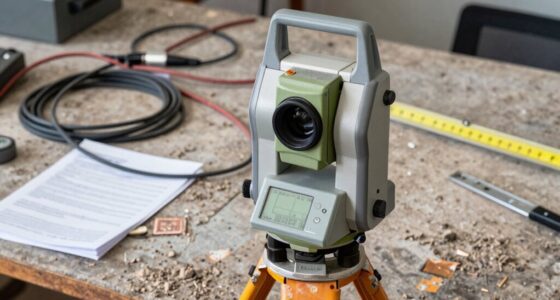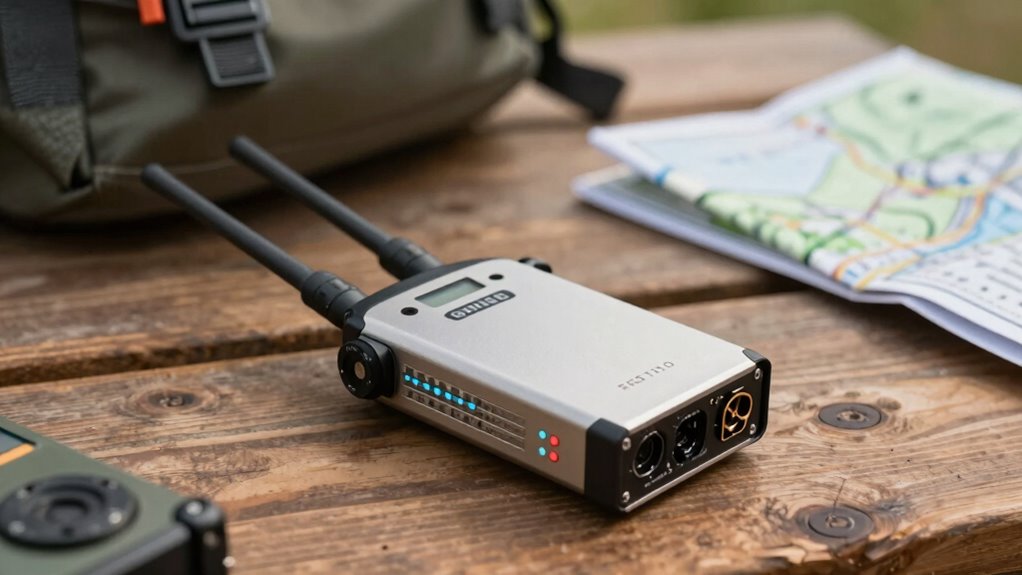

Before buying a RTK GNSS receiver, consider your specific surveying needs, such as land, construction, or mapping projects. Check if it supports multiple satellite constellations like GPS, GLONASS, Galileo, and BeiDou, especially in challenging environments. Look for models that are lightweight, durable, and offer long battery life for fieldwork. Compatibility with drones and ease of use are also key. Keep these factors in mind to find the best fit—more details await to guide your choice.

Prime made for students and young adults
- Fast, free delivery for dorm and study essentials
- Prime Video and Amazon Music included
- Member-only deals
Key Takeaways
- Ensure compatibility with your surveying needs and drone integration capabilities.
- Consider multi-constellation GNSS support for improved accuracy in challenging environments.
- Balance cost against desired performance, durability, and long-term reliability.
- Prioritize portability and environmental durability for field conditions.
- Evaluate long-term support, software updates, and overall value for your specific application.
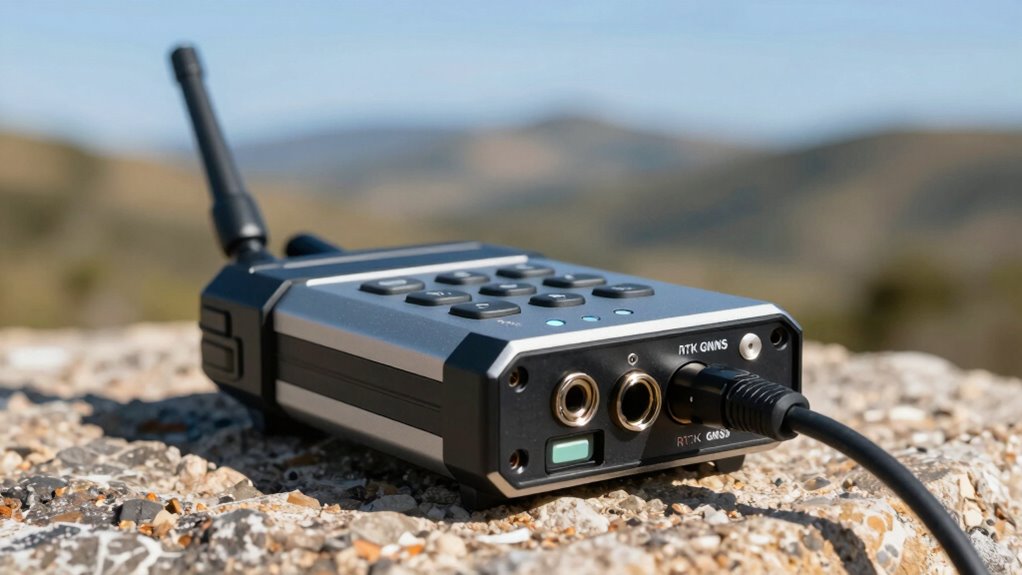
When selecting an RTK GNSS receiver, understanding your specific surveying or positioning needs is essential. You need to determine whether your work involves land surveying, construction, mapping, or other applications, as this influences the features you require. One crucial factor to consider is drone integration. If you plan to use drones for aerial surveys, ensure your RTK GNSS receiver supports drone compatibility. Not all receivers are designed for seamless integration with UAVs, so check for features such as lightweight design, quick setup, and compatibility with drone navigation systems. This integration can significantly improve data accuracy and efficiency in aerial mapping projects, saving you time and effort. Additionally, consider whether the receiver supports multi-constellation GNSS, which can enhance performance in challenging environments. Supporting multiple constellations can also improve the robustness of signals, especially in obstructed or challenging terrains. A further consideration is the availability of software updates and support, which can extend the longevity and reliability of your device.
Cost considerations also play a vital role in your decision-making process. RTK GNSS receivers vary widely in price, from budget-friendly options to high-end models with advanced capabilities. While it might be tempting to opt for the cheapest model, be cautious about sacrificing essential features or reliability. Higher-priced receivers often come with better accuracy, durability, and support for additional functionalities like multiple constellations or real-time data correction. Consider your project’s scope and whether investing in a more robust system aligns with your long-term goals. Remember, a more expensive receiver might offer better performance and fewer upgrades needed down the line, ultimately saving you money and hassle.
Another aspect to evaluate is the receiver’s capabilities regarding satellite constellation support. Modern RTK GNSS receivers often support multiple GNSS constellations—such as GPS, GLONASS, Galileo, and BeiDou—enhancing accuracy and signal reliability, especially in challenging environments. If you frequently work in areas with obstructions or interference, choosing a receiver with multi-constellation support is a wise investment. This capability can also help mitigate issues caused by satellite signal blockages or multipath effects. Ensuring compatibility with different satellite systems can further improve your positioning performance.
Battery life and portability are also key considerations. Long battery life enables extended fieldwork without constant recharging or swapping batteries, boosting productivity. Portability becomes particularly important if you work in rugged terrains or need to carry the receiver for extended periods. Additionally, consider the receiver’s ruggedness—waterproof, dustproof, and shock-resistant features can prevent downtime due to environmental factors. It’s also helpful to look into user-friendly interfaces that can streamline setup and operation in the field, saving you time and reducing errors. Moreover, assessing the ease of calibration and connection options can enhance your overall workflow efficiency.
Ultimately, your choice of an RTK GNSS receiver depends on balancing your specific requirements with your budget. Think about drone integration if aerial surveys are part of your workflow, and weigh the cost against the benefits of advanced features. By carefully assessing these factors, you’ll be better positioned to select a receiver that enhances your accuracy, efficiency, and overall project success.
RTK GNSS receiver with multi-constellation support
As an affiliate, we earn on qualifying purchases.
As an affiliate, we earn on qualifying purchases.
Frequently Asked Questions
How Does RTK GNSS Compare to Traditional GPS Accuracy?
RTK GNSS offers considerably better signal accuracy than traditional GPS, often achieving centimeter-level precision. It uses real-time data correction, which drastically reduces errors caused by atmospheric conditions and signal delays. Unlike standard GPS, which can be off by meters, RTK GNSS provides reliable, high-precision positioning, making it ideal for surveying, construction, and precision agriculture. This advanced correction process guarantees your measurements are consistently accurate and trustworthy.
What Is the Typical Lifespan of an RTK GNSS Receiver?
You can expect a typical lifespan of 5 to 10 years for your RTK GNSS receiver, depending on usage and maintenance. To extend its life, regularly perform battery maintenance, keep the battery charged, and replace it when needed. Additionally, stay current with firmware updates from the manufacturer, which improve performance and fix bugs, ensuring your receiver remains reliable and accurate over the years.
Are There Any Compatibility Issues With Existing Surveying Equipment?
Many believe RTK GNSS receivers seamlessly integrate with existing equipment, but compatibility issues can arise. You should verify equipment integration and software compatibility before purchasing. Check if your current surveying tools support the receiver’s communication protocols and data formats. If not, you might need additional adapters or software updates. Ensuring compatibility prevents delays and extra costs, so always confirm these details to keep your workflow smooth.
How Does Environmental Interference Affect RTK GNSS Performance?
Environmental interference can greatly impact your RTK GNSS receiver’s performance through signal degradation and atmospheric interference. When signals pass through obstacles or are affected by weather conditions, accuracy drops, and the data becomes less reliable. To minimize these issues, you should choose a receiver with strong signal tracking capabilities, avoid working in areas with dense foliage or tall structures, and consider atmospheric conditions before starting your survey.
What Are the Ongoing Costs Associated With RTK GNSS Receivers?
You might think the initial cost is all, but ongoing expenses like battery maintenance and software updates can surprise you. You’ll need to regularly check and replace batteries, especially in demanding environments. Plus, staying current with software updates is essential to keep your RTK GNSS receiver accurate and reliable. These costs add up over time, so plan your budget accordingly to avoid disruptions and maximize your investment’s lifespan.
drone compatible RTK GNSS receiver
As an affiliate, we earn on qualifying purchases.
As an affiliate, we earn on qualifying purchases.
Conclusion
Before buying an RTK GNSS receiver, remember to evaluate your specific needs and the receiver’s compatibility with your existing equipment. Do thorough research, check the accuracy and update rates, and don’t forget to compare prices. Notably, RTK GNSS technology can provide positioning accuracy within just a few centimeters—making it invaluable for precise surveying and mapping tasks. With the right choice, you’ll access reliable, high-precision data for your projects.
portable rugged RTK GPS receiver
As an affiliate, we earn on qualifying purchases.
As an affiliate, we earn on qualifying purchases.
long battery life RTK GNSS device
As an affiliate, we earn on qualifying purchases.
As an affiliate, we earn on qualifying purchases.
Fall Picks
fall essentials
As an affiliate, we earn on qualifying purchases.