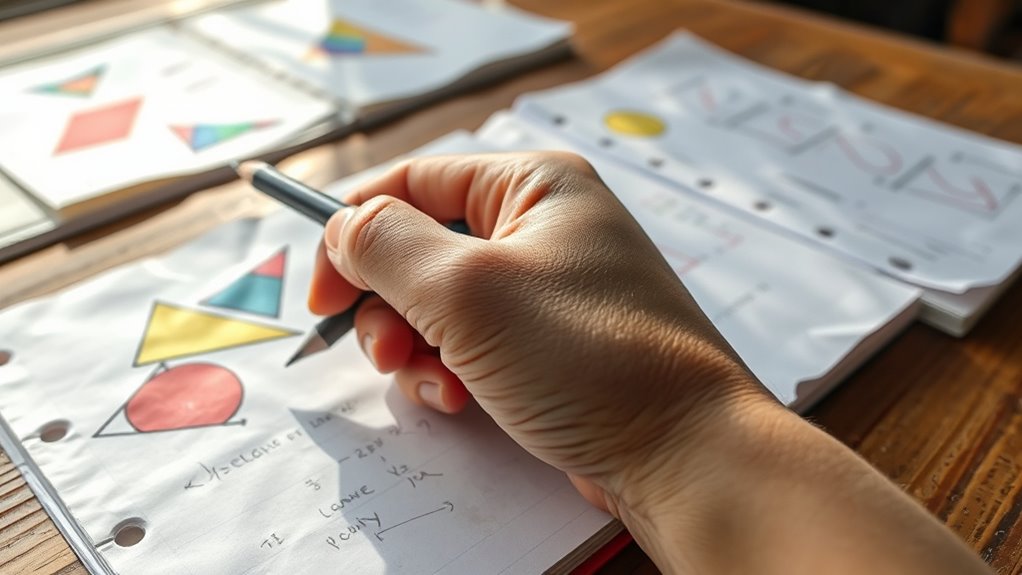

Embracing mistakes in geometry allows you to develop resilience and strengthen problem-solving skills. When you face struggles, you learn to analyze errors, adjust your approach, and gain a deeper understanding of concepts. This growth mindset boosts your confidence and encourages curiosity, making challenges feel like valuable learning opportunities. If you keep pushing through difficulties, you’ll discover how setbacks can become stepping stones toward mastery and confidence in geometry.
Listen free for 30 days with Audible
Thousands of audiobooks and originals — cancel anytime.
As an affiliate, we earn on qualifying purchases.
Key Takeaways
- Struggling with geometry challenges fosters resilience and enhances problem-solving skills through repeated attempts.
- Embracing mistakes promotes a growth mindset, encouraging ongoing learning and deeper understanding of geometric concepts.
- Curiosity-driven exploration turns errors into valuable learning opportunities, boosting confidence and engagement.
- Viewing errors as part of the learning process helps students develop perseverance and long-term mastery.
- Overcoming difficulties in geometry builds critical thinking skills essential for mastering complex mathematical ideas.
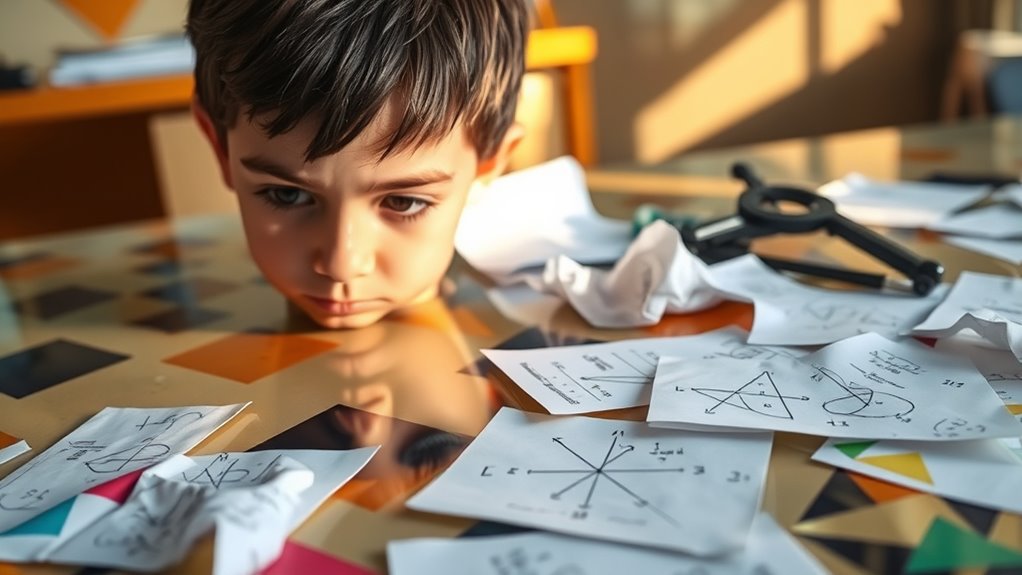
Many students shy away from struggling with geometry, fearing mistakes will set them back. It’s natural to want to avoid errors, especially when you feel the pressure to get the right answer quickly. However, embracing these challenges is where real growth happens. When you face difficult problems and don’t succeed right away, you develop learning resilience — the ability to bounce back from setbacks and keep pushing forward. This resilience isn’t just about perseverance; it’s about shifting your mindset to see mistakes as opportunities to learn rather than failures. Instead of feeling discouraged, you learn to analyze what went wrong, adjust your approach, and try again. Over time, this process strengthens your problem-solving skills and builds confidence, making you more comfortable tackling complex geometry concepts.
Encouraging curiosity plays a *vital* role in this journey. When you’re curious, you’re more willing to explore different methods and experiment with solutions. Instead of rushing to find the correct answer, you ask questions like, “Why does this work?” or “What happens if I try this approach?” This active engagement with the material transforms mistakes from sources of frustration into stepping stones for understanding. Curiosity drives you to dig deeper, uncover patterns, and develop a genuine interest in geometry. As you ask more questions and seek answers, your understanding becomes more robust, and you become less afraid of making errors. This mindset fosters a growth-oriented approach, where mistakes are seen not as signs of failure but as essential parts of mastering the subject. Developing a growth mindset helps reinforce that learning is a process and mistakes are part of that journey.
geometry problem-solving workbook for students
As an affiliate, we earn on qualifying purchases.
As an affiliate, we earn on qualifying purchases.
Frequently Asked Questions
How Can Teachers Effectively Encourage Students to Embrace Mistakes?
You can effectively encourage students to embrace mistakes by using positive reinforcement when they identify errors and encouraging mistake analysis. Celebrate their efforts to find solutions, emphasizing that mistakes are a natural part of learning. Ask guiding questions to help them reflect on errors, turning setbacks into opportunities for growth. This approach fosters a growth mindset, making students more comfortable with struggles and enthusiastic to improve through their mistakes.
What Are Common Misconceptions Students Have About Geometry Struggles?
Did you know that 65% of students believe they’re either naturally good or bad at geometry? You might have misconceptions myths, thinking struggles mean you’re not meant to excel, but that’s false. Many misjudge their skills, thinking mistakes signal failure instead of growth. Recognizing these common misconceptions helps you see that struggles are part of learning, and building skills takes time, persistence, and embracing errors as opportunities.
How Does Failure in Geometry Influence Long-Term Mathematical Confidence?
Failure in geometry can actually boost your long-term mathematical confidence if you adopt a growth mindset. When you see setbacks as opportunities to learn, you build resilience development and realize that struggle is part of growth. This mindset helps you stay motivated, persist through challenges, and develop stronger problem-solving skills. Over time, you’ll trust your ability to improve, making you more confident in future math endeavors.
Are There Specific Strategies to Help Shy or Anxious Students Accept Mistakes?
Think of learning geometry as tending a garden; mistakes are like weeds helping you grow stronger. To help shy or anxious students accept mistakes, encourage a growth mindset and use positive reinforcement. Celebrate small wins and remind them errors are part of growth. Create a safe space where they see mistakes as opportunities, not failures. This approach gradually builds confidence, helping them embrace challenges and develop resilience in their learning journey.
How Can Parents Support Their Children’s Learning Through Geometric Challenges?
You can support your child’s learning by encouraging visual learning methods, like drawing or using geometric tools, to make concepts clearer. Promote peer collaboration, so they can learn from classmates and gain confidence through shared problem-solving. Celebrate their efforts and mistakes as essential parts of understanding geometry. Your active involvement helps them see challenges as opportunities to grow, fostering resilience and a positive attitude towards complex geometric problems.
As an affiliate, we earn on qualifying purchases.
Conclusion
Remember, even Socrates believed wisdom came from recognizing our mistakes. When you embrace struggles in geometry, you’re not just solving problems—you’re sharpening your mind and building resilience. Every error is a stepping stone toward greater understanding. Just like a master sculptor chisels away to reveal beauty, your challenges shape your skills. So, don’t shy away from mistakes; see them as the forge where your true potential is crafted.
geometry practice puzzles for teens
As an affiliate, we earn on qualifying purchases.
As an affiliate, we earn on qualifying purchases.
educational geometry kits for kids
As an affiliate, we earn on qualifying purchases.
As an affiliate, we earn on qualifying purchases.
Flea & tick season Picks
flea and tick prevention
As an affiliate, we earn on qualifying purchases.