TL;DR

Prime made for students and young adults
- Fast, free delivery for dorm and study essentials
- Prime Video and Amazon Music included
- Member-only deals
A design project published in September 2026 presents the Lightbulb Computer, a speculative device combining a projector and computer vision to place digital information on surfaces around a home. Its creator says the demonstrations use a real but bulky prototype and that the technology is not ready for a consumer product.
A design project published in September 2026 has presented the Lightbulb Computer, a speculative home-computing device that combines a projector with computer vision to place information on real-world surfaces. The creator says its demonstrations come from a real but bulky prototype, while cautioning that the technology is not yet ready for a consumer version.
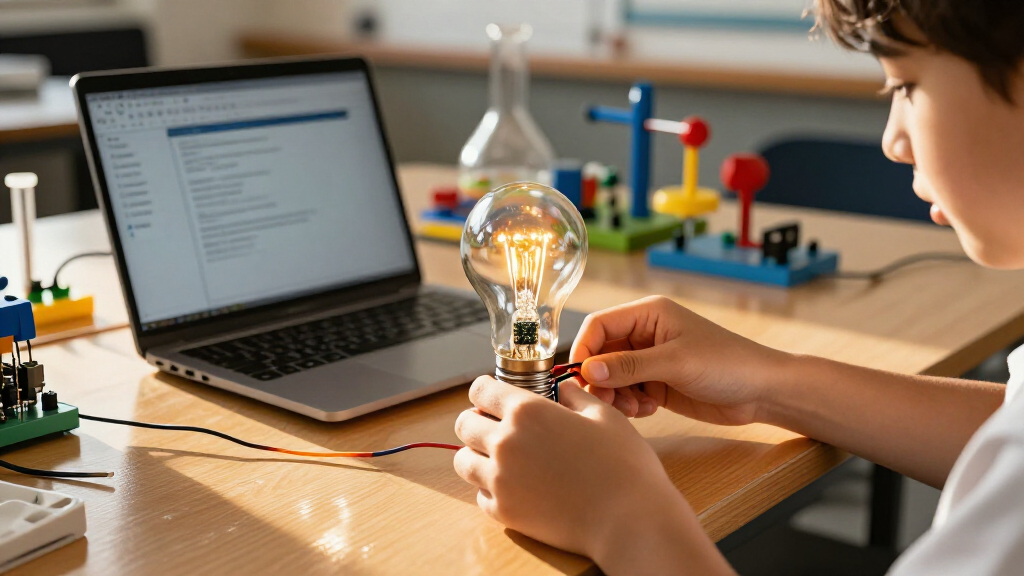
The concept puts a projector and camera system in a large lightbulb-shaped device. It could sit in a portable, battery-powered lamp base or fit into a standard Edison-style socket, allowing room-scale use from a ceiling or wall. The project proposes using voice commands and pointing gestures to control the system, which could identify objects, analyze what a camera sees and project content onto nearby surfaces.
Demonstrated uses include displaying recipes and timers in a kitchen, answering questions about reading material, and showing a shared map for trip planning. The creator also describes projecting photos, playing digital board games, controlling smart-home devices by pointing, and showing household information such as the time, weather or a family checklist. These are examples of the project’s envisioned uses, not evidence that a finished product is available.
The report says the videos show a real prototype setup, without video editing, special effects or AI-generated imagery. It does not provide product specifications, a release date, a price or details of a planned commercial version. The creator says the setup is bulky and that projector and computer-vision technology would need to advance further before a consumer device could be built.
A Different Route to Home Computing
The concept addresses a design question facing consumer technology: whether digital information has to remain on phones, tablets and computers, or can instead appear in the space where a person is working or gathering. A projected recipe could be easier to consult with messy hands, while a shared map could let several people look at the same information without crowding around a phone. Those are proposed advantages, not independently tested findings.
The approach also differs from headsets and smart glasses, which the project describes as physically constraining and socially awkward. A room-based projector would avoid putting a display on the user’s face, but would introduce other practical questions, including image visibility, placement, room lighting and who controls what appears in shared spaces. The project is a design exploration rather than evidence that projection will replace personal screens.
Privacy is a central issue because the device would use a camera to interpret its surroundings. The creator says protections should include on-device processing, a camera that activates only at the user’s request, a hard-wired indicator light and a physical cover. These are proposed safeguards; the report does not describe a finalized privacy architecture or independently verify its security.
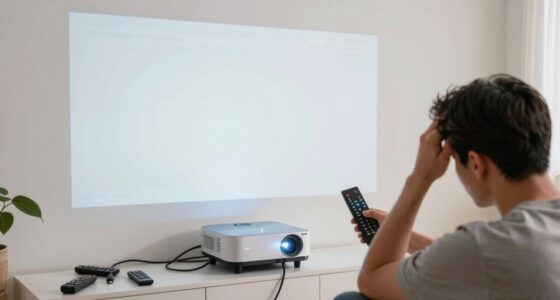
portable home projector with camera
As an affiliate, we earn on qualifying purchases.
As an affiliate, we earn on qualifying purchases.
The project frames the device as an alternative to computing organized around rectangular personal screens. Its proposal is to use surfaces already present in a home—such as counters, walls, tables or maps—as places to display information. The lightbulb form is meant to make the equipment portable or mountable in existing sockets, with a ceiling position offering a view across a room.
The creator points to recent progress in computer vision and compact projectors as reasons the concept may be worth exploring, while acknowledging that a consumer-ready version is not currently feasible. The supplied report offers no measurements for brightness, resolution, projection range, processing speed or reliability. Its demonstrations show the idea in practice, but do not establish how well it would perform across different homes or everyday conditions.
““I don’t think the technology is quite there yet to build a consumer version of this Lightbulb Computer today.””
— The Lightbulb Computer project
As an affiliate, we earn on qualifying purchases.
Product Readiness and Privacy Questions
It is not clear whether the creator plans to develop the concept into a product, or whether any company is involved. The report gives no release timeline, price or technical specifications, and does not say how the device would handle multiple users, changing light conditions, surfaces that are difficult to project onto, or inaccurate object recognition.
The privacy protections described are proposals rather than confirmed features of a consumer device. The report also does not provide independent testing of the prototype’s performance, security or accessibility. Its demonstrations support the claim that a bulky setup can project interactive content, but do not establish that the experience is ready for ordinary household use.
As an affiliate, we earn on qualifying purchases.
No Consumer Launch Date Given
The project’s immediate next step is not specified. Its creator says advances in projection and computer vision may bring the idea closer to a consumer form, but gives no schedule or announced development milestone. Further details about technical performance, privacy controls and whether the work will proceed beyond prototypes remain unconfirmed.
As an affiliate, we earn on qualifying purchases.
Key Questions
What is the Lightbulb Computer?
It is a speculative device concept that combines a projector and computer vision in a lightbulb-shaped form to display interactive information on surfaces around a home.
Is it a product people can buy?
No consumer product or release date is announced in the report. The creator says the demonstrations use a real but bulky prototype and that the technology is not yet ready for a consumer version.
What could it be used for?
Proposed uses include projecting recipes, timers, maps, photos and household displays, as well as controlling smart-home devices by pointing. These are envisioned applications, not confirmed capabilities of a retail product.
How would the device address camera privacy?
The creator proposes safeguards such as on-device processing, user-activated camera operation, an indicator light and a physical camera cover. The report does not confirm a finalized privacy system.
Source: hn
Columbus Day / Indigenous Peoples' Day Picks
long weekend sales
As an affiliate, we earn on qualifying purchases.