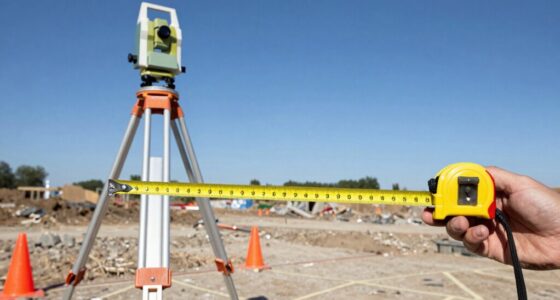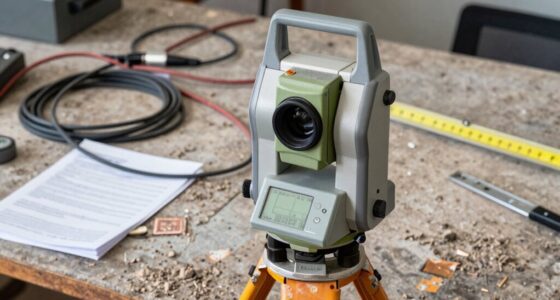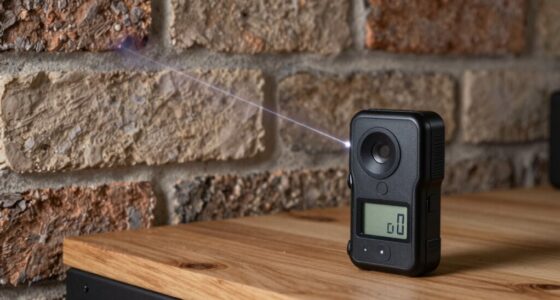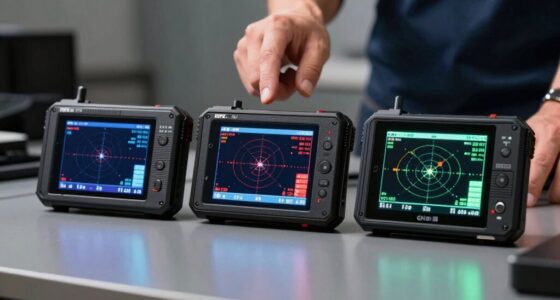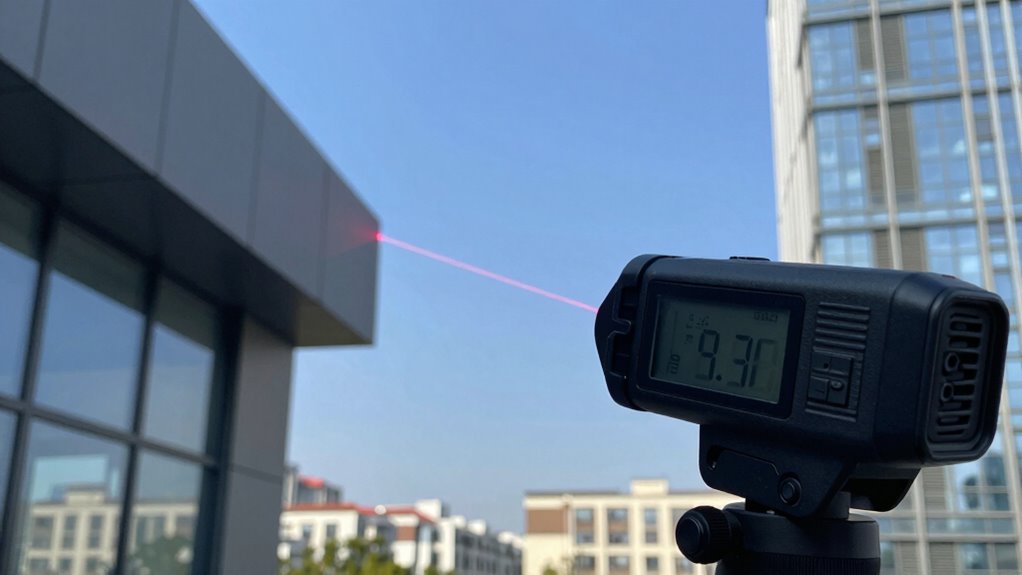

Laser measurement tools quickly estimate distance by emitting a laser beam toward the target and measuring how long it takes for the reflection to bounce back. Using this time-of-flight data, your device performs fast calculations internally to determine the distance precisely. It’s this rapid processing and advanced algorithms that allow for instant results, making your measurements efficient and accurate. If you’re curious about how these tools achieve such speed, there’s more there to discover.

Prime made for students and young adults
- Fast, free delivery for dorm and study essentials
- Prime Video and Amazon Music included
- Member-only deals
Key Takeaways
- They emit a laser pulse toward the target and measure the reflection time (time-of-flight).
- Rapid internal calculations determine the distance based on the laser’s reflection data.
- Advanced processing algorithms enhance measurement speed and accuracy.
- Internal sensors and calibration ensure consistent, reliable results in real time.
- Digital displays provide instant measurements, minimizing delays and human error.
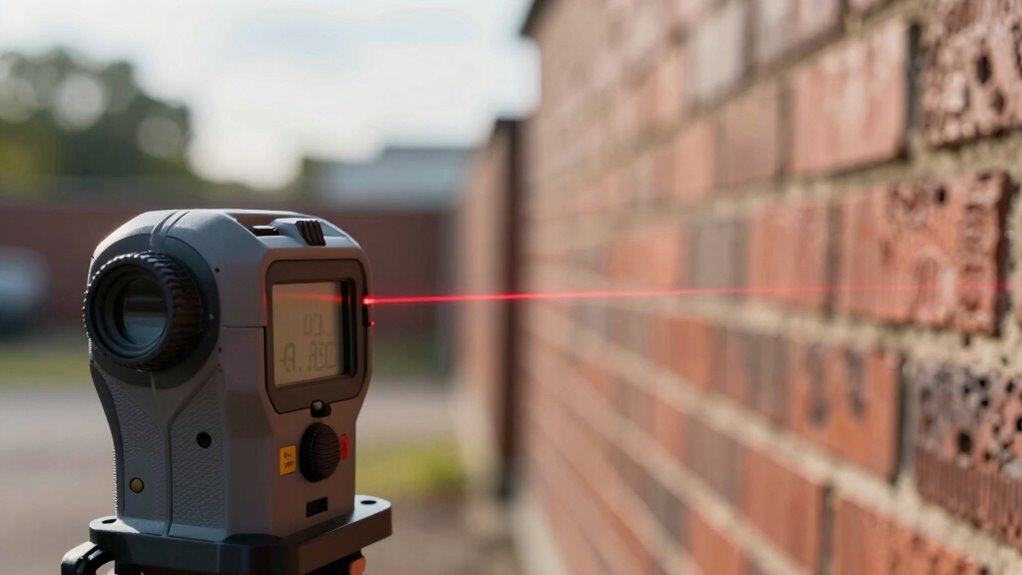
Have you ever needed to measure a distance quickly and accurately? Laser measurement tools are designed specifically for this purpose, offering rapid and precise readings that traditional tape measures or rulers can’t match. These devices work by emitting a laser beam toward a target, then calculating the distance based on the time it takes for the laser to reflect back. This process, known as time-of-flight measurement, allows you to get the measurement in just seconds, making it ideal for construction, surveying, or any task requiring quick data collection.
Laser measurement tools provide quick, accurate distances using time-of-flight laser technology for efficient data collection.
One of the key reasons laser measurement tools are so effective is their ability to perform these calculations almost instantaneously. When you point the device at your target and press a button, it automatically initiates the laser pulse, measures the reflection, and computes the distance. This rapid operation minimizes human error and speeds up your workflow. Additionally, these tools often incorporate advanced processing algorithms to enhance measurement accuracy even in challenging environments. Furthermore, many models include digital displays that provide clear, immediate results, reducing potential misreadings. The integration of internal sensors also helps these devices maintain consistent accuracy over time. Proper use of calibration techniques is essential to ensure ongoing precision with your device, especially after rough handling or extended usage. Regular calibration can also help identify instrument drift, where measurements gradually become less reliable, and correct it before it affects your work. However, it’s essential to keep laser safety in mind; the laser beams emitted can be harmful if misused or directed into the eyes. Always follow safety guidelines, such as wearing protective eyewear and ensuring the laser is used only as intended, to prevent accidents.
Calibration procedures are another critical aspect of maintaining the accuracy of your laser measurement tools. Regular calibration ensures that the device’s internal sensors and laser components are functioning correctly, providing reliable readings over time. Proper calibration involves comparing the device’s measurements against a known standard and adjusting the device as needed. Many manufacturers include calibration instructions or recommend professional calibration services to keep your tool precise. Performing these procedures periodically is essential, especially if you notice inconsistent readings or after impacts or rough handling that could misalign internal components.
The speed and efficiency of laser measurement tools come from their ability to process complex calculations internally, removing the need for manual measurement conversions or estimations. As you use the device, it continuously performs internal calibration checks and updates its algorithms to deliver accurate results quickly. This seamless operation is what makes laser measurement tools so popular among professionals who need reliable data without sacrificing time. Just remember, for the most accurate and safe measurements, always adhere to proper laser safety protocols and keep your device calibrated according to the manufacturer’s recommendations. This way, you can confidently rely on your laser measurement tool for all your distance estimation needs.
As an affiliate, we earn on qualifying purchases.
Frequently Asked Questions
How Accurate Are Laser Measurement Tools Over Long Distances?
Laser measurement tools are quite accurate over long distances, especially when properly calibrated. Regular laser calibration guarantees the device maintains precision, even at extended ranges. Measurement calibration helps you trust the readings, reducing errors caused by environmental factors or device drift. Keep your tool calibrated and follow manufacturer guidelines for best results. With proper care, laser measurement tools can provide reliable, precise distance measurements over long distances, making them ideal for professional and industrial use.
What Environmental Factors Can Affect Laser Measurement Accuracy?
Did you know that weather conditions can reduce laser accuracy by up to 30%? When using laser measurement tools, bad weather like fog, rain, or snow can scatter the laser beam, making it less precise. Reflective surfaces also pose challenges, as they can cause the laser to bounce unpredictably, leading to inaccurate readings. To get the best results, avoid measuring in extreme weather and steer clear of highly reflective objects.
Can Laser Tools Measure Irregular or Complex Surfaces Effectively?
Laser tools can measure irregular or complex surfaces effectively, but surface reflectivity impacts accuracy. Highly reflective surfaces may cause measurement errors, while dark or matte surfaces might absorb or scatter the laser, reducing precision. Measurement limitations include difficulty capturing deep or shadowed areas. To improve results, you might need to adjust the laser’s settings or apply a reflective target. Understanding these factors helps you get the most accurate measurements on complex surfaces.
How Do Laser Measurement Tools Compare to Traditional Tape Measures?
You’ll find laser measurement tools more accurate and faster than traditional tape measures. They reduce measurement errors through laser calibration, ensuring precise readings. Plus, their measurement ergonomics make them easier to use in tight or awkward spaces, saving you time and effort. Unlike tape measures, lasers provide instant results over long distances, making them ideal for professional and DIY projects alike.
Are Laser Measurement Tools Safe for All Users?
Laser measurement tools are generally safe for all users when proper laser safety and user precautions are followed. You should avoid direct eye exposure to the laser beam and wear protective eyewear if necessary. Most devices emit low-level lasers, but it’s essential to handle them responsibly and keep them away from children. By following safety guidelines, you can use these tools confidently without risking harm.
As an affiliate, we earn on qualifying purchases.
Conclusion
As you watch a laser measurement tool in action, you begin to realize there’s more to its speed than just technology. Behind that quick calculation lies a delicate balance of light, precision, and unseen forces. It’s almost as if it’s reading the fabric of space itself. So next time you see one in use, remember—what seems instantaneous is actually a marvel of science waiting to be fully understood. The true power of laser measurement might just be beginning to reveal itself.
laser distance measurement device
As an affiliate, we earn on qualifying purchases.
As an affiliate, we earn on qualifying purchases.
professional laser distance finder
As an affiliate, we earn on qualifying purchases.
As an affiliate, we earn on qualifying purchases.
Fall Picks
fall essentials
As an affiliate, we earn on qualifying purchases.