If your resin 3D printer is producing parts that are fragile, slow, or lack detail, it’s time to upgrade. Modern models offer enhanced durability, faster print speeds, and sharper precision, making them perfect for professional or artistic projects. Upgrades also guarantee more reliable operation and less post-processing. When you need higher quality, consistency, and efficiency, upgrading makes the investment worthwhile. Keep exploring to discover how upgrading can transform your printing experience even further.
Key Takeaways
- Upgrading is worthwhile when improved durability extends the lifespan of prints for real-world use.
- When faster printing speeds significantly increase productivity and reduce project turnaround times.
- If enhanced precision and surface quality are needed for detailed artistic or prototyping work.
- When reliability improvements decrease maintenance and downtime, ensuring consistent workflow.
- If new resin formulations provide better resistance for specific application requirements.
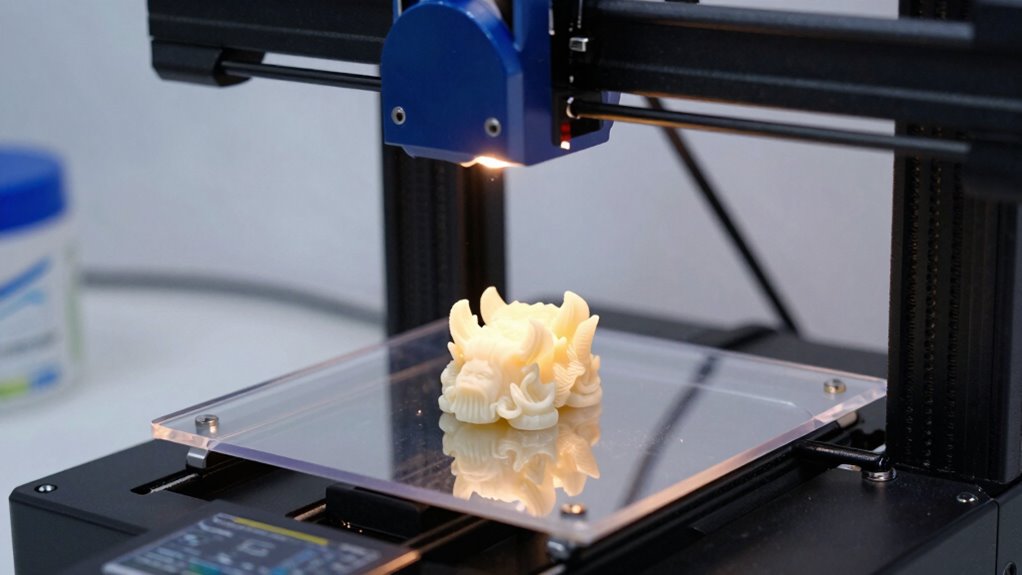
Upgrading your resin 3D printer can considerably enhance print quality, speed, and reliability. When you’re working on detailed models or prototypes, these improvements make a real difference. One of the main reasons to contemplate an upgrade is to boost resin durability, which directly impacts the longevity of your printed objects. Newer resin formulations and upgraded exposure settings can produce parts that are more resistant to wear, chemicals, and stress. This means your prints won’t just look better—they’ll last longer and perform better in real-world applications. If you’re tired of fragile, easily breakable parts, an upgrade can help you achieve more durable results without sacrificing detail.
Upgrading boosts resin durability, making your prints stronger, longer-lasting, and better suited for real-world use.
Printing speed is another critical factor that can justify a hardware upgrade. Faster printing means you get more projects done in less time, increasing your productivity. Many upgraded resin printers feature improved light engines and optimized exposure algorithms, which reduce the time it takes to cure each layer. This not only speeds up overall print times but also minimizes issues like layer shifts or incomplete curing. If you often find yourself waiting for lengthy print jobs or dealing with failed prints due to speed-related problems, investing in an upgraded model could save you significant time and frustration. Additionally, newer models often incorporate better build quality, which enhances overall stability during printing. Improved component durability in newer models can also reduce the frequency of repairs and downtime.
Beyond resin durability and printing speed, upgrades often introduce better build quality and more precise control over print parameters. These enhancements lead to sharper details and smoother surfaces, which are essential for high-quality prototypes or artistic pieces. When you upgrade, you gain access to improved LCD screens, more stable platforms, and advanced software that allows for finer adjustments. These technological improvements can also include enhanced calibration tools, ensuring your prints are consistently accurate. This precision ensures your prints come out exactly as intended, reducing the need for post-processing or reprints.
Furthermore, an upgraded resin 3D printer can offer better reliability, meaning fewer breakdowns and maintenance issues. Modern models incorporate more robust components and smarter cooling systems, which extend the lifespan of your device. If you’ve experienced frequent calibration problems or hardware failures, an upgrade can provide a more dependable workflow. Over time, this reliability not only saves money on repairs but also keeps your projects on schedule.

52 Pcs Resin 3D Printing Tool Kit with 304 Stainless Steel Resin Filter Funnel,Silicone Pad, Scraper,Tweezers & Cleaning Tools | Accessories for Model Removal, Resin Recycling & Post-Processing
- Stainless Steel Funnel & Filters: Leak-proof resin pouring and debris filtering
- Reusable & Disposable Filters: Includes metal filters and paper funnels for cleanup
- Cleaning Brush Included: Keeps funnels pristine for repeated use
As an affiliate, we earn on qualifying purchases.
As an affiliate, we earn on qualifying purchases.
Frequently Asked Questions
How Long Does a Typical Resin 3D Printer Upgrade Take?
A typical resin 3D printer upgrade takes around 1 to 3 hours, depending on the complexity of the resin resin upgrade you’re performing. You’ll need time to carefully replace or enhance components, update firmware, and calibrate your printer. Make certain to follow instructions closely, as rushing can impact print quality. This upgrade duration allows you to improve your resin 3D printer’s performance and guarantee it runs smoothly with the new features.
Are There Common Compatibility Issues With Upgraded Resin Printers?
Yes, you might encounter compatibility issues when upgrading your resin 3D printer. Material compatibility is essential since new resin types may require different settings or hardware adjustments. Firmware adjustments are often necessary to guarantee proper functioning with upgraded components. Always check for compatible parts and updates before upgrading, and be prepared to tweak settings to optimize performance and avoid issues like print failures or hardware conflicts.
What Is the Cost Range for a Full Resin Printer Upgrade?
Pricing pulses between $200 and $1,000, depending on the upgrade. You’ll find that material compatibility, improved precision, and faster printing are benefits that make the investment worthwhile. Whether you’re upgrading for better detail or broader resin options, the cost varies with quality and features. You’ll want to weigh the upgrade benefits against your budget, ensuring the enhancements meet your needs without overstretching your wallet.
Can I Upgrade My Resin Printer Myself or Need Professional Help?
You can often upgrade your resin printer yourself, especially if you’re comfortable with basic calibration techniques. Focus on adjusting the resin type settings to match your new resin and guarantee proper curing. However, for more complex upgrades like hardware modifications or replacing the LCD screen, professional help might be best to avoid damage. Always follow manufacturer instructions and safety precautions to achieve the best results.
Will Upgrading Improve Print Speed or Just Quality?
Think of upgrading your resin resin 3D printer as tuning a finely crafted instrument—you’ll notice both harmony and speed improve. An upgrade can boost print quality by sharpening details, but it might also increase print speed if you install a more powerful light source or faster resin curing system. So, yes, an upgrade can enhance both print speed and quality, transforming your printer into a more efficient and precise tool for your creative symphony.

ANYCUBIC Photon Mono 4 Ultra 10K Resin 3D Printer, 7'' HD Mono Screen and COB Light Source, 120mm/h Fast Printing, Intelligent Detection, 6.04''x3.42''x 6.49'' Printing Size
- Fast Printing Speed: Up to 120mm/h for quick prints
- High Resolution Screen: 7-inch 10K display with 9024×5120 pixels
- Enhanced Print Precision: 105% more precise than Mono 2
As an affiliate, we earn on qualifying purchases.
As an affiliate, we earn on qualifying purchases.
Conclusion
Upgrading your resin 3D printer can substantially boost your print quality and efficiency, especially if you’re tackling detailed projects regularly. Did you know that resin printers can achieve layer resolutions as fine as 25 microns? That’s nearly four times more detailed than some FDM printers. If you’re serious about precision and smoother finishes, investing in an upgrade is worth it—just weigh the costs against the benefits, and you’ll see the difference in your prints almost immediately.

ANYCUBIC Photon Mono 4, Resin 3D Printer with 7'' 10K Mono LCD Screen, Stable LighTurbo Light Source and 70mm/h Fast Printing, Print Volume 6.04'' x 3.42'' x 6.49''
- High-Resolution 7'' LCD: 9024×5120 resolution for detailed prints
- Stable LighTurbo Light Source: Ensures uniform, smooth layer curing
- Large Print Volume: 6.04'' x 3.42'' x 6.49''
As an affiliate, we earn on qualifying purchases.
As an affiliate, we earn on qualifying purchases.

SUNLU 3D Printer Resin, 1kg Fast Curing Standard 3D Resin for LCD DLP SLA Printers, 395-405nm UV Light Curing Photopolymer Resin, Low Shrinkage, High Precision, 1000g, Grey
- Easy to Use: Compatible with various printers and speeds
- Low Shrinkage: Ensures accurate size and shape
- Good Stability: Resistant to acids and greases
As an affiliate, we earn on qualifying purchases.
As an affiliate, we earn on qualifying purchases.