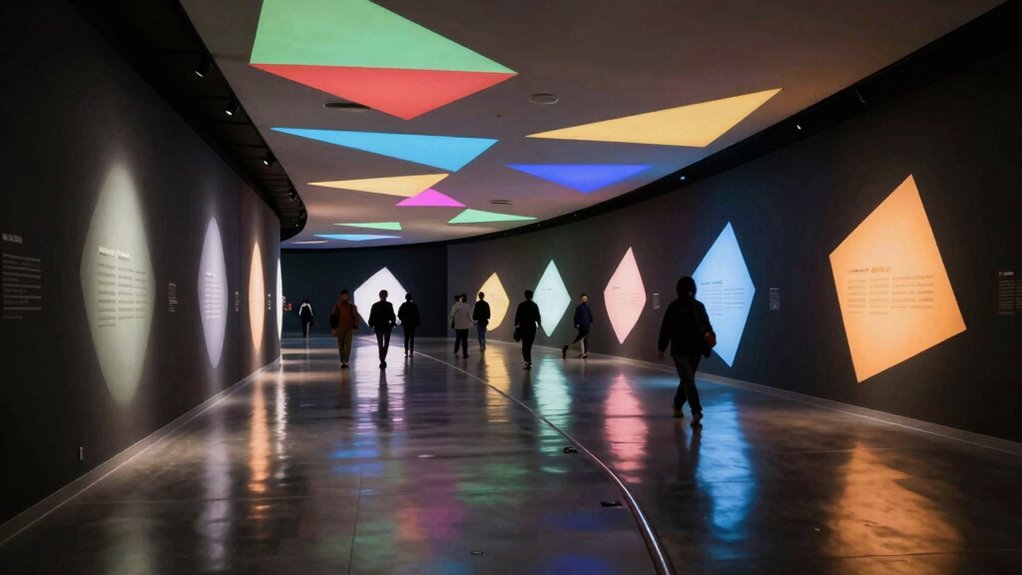

You’ll notice how the exhibit’s layout naturally guides your movement, using geometric shapes and pathways that direct attention without much signage. Sharp angles, curves, and strategic placement of displays create smooth flow, encouraging exploration while preventing congestion. Symmetry and asymmetry add visual interest and cohesion, helping you stay engaged. If you keep exploring, you’ll uncover how these careful design choices shape your experience and streamline your journey through the exhibit.
Key Takeaways
- The exhibit layout employed sharp angles and curves to naturally direct visitor movement along curated pathways.
- Geometric shapes in flooring and displays created visual cues that subtly guided exploration without signage.
- Strategic placement of interactive elements at key geometric junctions encouraged deeper engagement and exploration.
- Spatial organization used symmetry and asymmetry to control pacing and prevent bottlenecks, ensuring smooth flow.
- Visual cohesion was achieved through geometric lines and shapes, creating an intuitive, cohesive experience for visitors.

Imagine walking into a museum where the layout itself gently directs your attention and guides your journey through the exhibits. As you move through the space, you notice how the design subtly influences your path, making the experience feel natural and effortless. This isn’t by chance; it’s the result of carefully applied geometry that shapes the entire visitor flow. The exhibit uses interactive displays strategically placed along these geometric pathways, drawing you in and encouraging exploration. These displays aren’t just for engagement—they serve as visual cues that align with the overall layout, creating a seamless flow from one section to the next.
The museum designers employed geometric principles to craft pathways that intuitively lead you through the exhibit. Sharp angles, curves, and sightlines are deliberately positioned to catch your eye, guiding you toward points of interest without the need for explicit signage. The shapes and lines in the flooring, walls, and display arrangements work together to form an invisible network that naturally channels your movement. As a result, you find yourself walking along a predetermined route that maximizes exposure to highlights without feeling constrained or forced. The interactive displays are integrated into this layout, placed at key junctures where visitor flow naturally converges or diverges, encouraging deeper engagement at the right moments.
This geometric approach also guarantees that the exhibit maintains a steady rhythm, preventing bottlenecks and overcrowding. You might notice how the spacing of displays and the angles of pathways influence your pacing. When you pause at a display, the layout subtly nudges you to continue exploring, maintaining a smooth progression through the exhibit. The clever use of symmetry and asymmetry creates visual interest, making each section feel unique yet interconnected. As you move from one interactive display to another, the geometry guides your eye and your steps, making the entire experience feel cohesive and thoughtfully orchestrated. Additionally, understanding geometric principles can help designers create spaces that feel both inviting and efficient, emphasizing the importance of spatial organization in visitor experience. Recognizing how visual cues are strategically integrated further enhances the flow and engagement within the exhibit.
As an affiliate, we earn on qualifying purchases.
Frequently Asked Questions
What Specific Geometric Shapes Were Used in the Exhibit Design?
You notice that the exhibit design incorporates a variety of geometric shapes, such as circles, triangles, and rectangles, to create visual interest and guide visitors. These shapes appear in decorative patterns on walls and displays, while structural forms like arches and prisms add stability and flow. By using these geometric shapes thoughtfully, the design enhances the visitor experience, making navigation intuitive and engaging through a harmonious blend of decorative patterns and structural forms.
How Did Visitors Respond to the Geometric Guidance?
You notice visitors respond positively to the geometric guidance, experiencing improved spatial navigation and increased satisfaction. They find the shapes intuitive and engaging, which helps them move smoothly through the exhibit. The thoughtful design creates a sense of flow, encouraging exploration and interaction. As a result, visitor satisfaction rises, and their journey through the exhibit feels natural and enjoyable, thanks to the effective use of geometric cues.
Were There Any Challenges in Implementing Geometric Elements?
You may have faced challenges in implementing geometric elements due to architectural symbolism and spatial perception. Ensuring that the shapes accurately guide visitors without causing confusion requires careful planning. Sometimes, geometric features can be misunderstood or clash with existing architectural features. You needed to balance aesthetic appeal with functional clarity, making sure the spatial perception aligns with your intended guidance, all while maintaining the exhibit’s design integrity.
How Was Visitor Flow Measured and Analyzed?
You track visitor flow by observing their behavior through cameras and sensors, creating a vivid map of movement patterns. Spatial analysis helps you see how people navigate the exhibit, revealing crowded spots and underused areas. You analyze this data to see if visitors follow the intended pathways, allowing you to fine-tune the geometric design. This approach guarantees a smooth flow, making the experience engaging and seamless for every visitor.
What Was the Overall Impact on Visitor Engagement?
You notice a significant boost in visitor engagement through interactive storytelling and sensory experiences. Visitors become more immersed, exploring exhibits actively rather than passively observing. The geometry-based design guides their movement naturally, encouraging participation and curiosity. As a result, visitors spend more time, retain more information, and leave with a deeper emotional connection. Overall, the exhibit effectively enhances engagement by combining visual cues with engaging storytelling and sensory elements.
As an affiliate, we earn on qualifying purchases.
Conclusion
You see, just like a compass guides explorers through uncharted territories, the geometric design of this exhibit steers visitors seamlessly through the displays. By using shapes, lines, and patterns, it creates a visual map that feels natural and inviting. When you walk through, you’ll notice how geometry isn’t just math — it’s a tool that makes your journey easier and more engaging, like a friendly guide lighting your path in a bustling museum.
modern exhibit lighting fixtures
As an affiliate, we earn on qualifying purchases.
As an affiliate, we earn on qualifying purchases.
spatial organization design books
As an affiliate, we earn on qualifying purchases.
As an affiliate, we earn on qualifying purchases.