TL;DR

Prime made for students and young adults
- Fast, free delivery for dorm and study essentials
- Prime Video and Amazon Music included
- Member-only deals
Recent archaeological discoveries offer fresh insights into the Late Bronze Age Collapse, a major societal decline around 1200 BCE. While some causes are confirmed, others remain debated, impacting our understanding of ancient history.
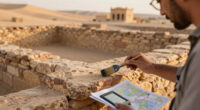
Archaeologists have announced new findings that provide a clearer picture of the Late Bronze Age Collapse, a widespread societal decline around 1200 BCE. The discoveries, made at multiple ancient sites across the eastern Mediterranean, suggest a combination of environmental, economic, and political factors contributed to this historic event. This new evidence is significant as it helps refine longstanding theories about the decline of advanced civilizations such as the Mycenaeans, Hittites, and Egyptian Empire.
The recent excavations, led by international teams, uncovered evidence of widespread destruction layers, signs of climate stress, and disruptions in trade networks. These findings support the theory that a series of interconnected crises, including droughts and invasions, led to the collapse of major political centers. According to Dr. Maria Lopez, an archaeologist involved in the research, “The stratigraphy at these sites indicates a rapid series of societal disruptions over a few decades, rather than a gradual decline.”
While environmental stressors like droughts are now confirmed through analysis of sediment cores and pollen samples, the role of invading groups such as the Sea Peoples remains debated. Some scholars argue that internal economic decline and political instability played a more significant role than previously thought. The new evidence also suggests that the collapse was not uniform across the region, with some areas experiencing more severe destruction and decline than others.
Implications of New Findings on Ancient Civilizations
The new discoveries are important because they help clarify the causes behind the fall of several interconnected civilizations, marking a pivotal moment in ancient history. Understanding this collapse can inform modern discussions on societal resilience and vulnerability to environmental and political crises. The findings challenge simplified narratives that attribute the decline solely to invasions, highlighting a complex web of factors that led to the end of the Late Bronze Age.
ancient archaeological excavation tools
As an affiliate, we earn on qualifying purchases.
As an affiliate, we earn on qualifying purchases.
Recent Advances in Understanding the Late Bronze Age Demise
The Late Bronze Age Collapse, occurring around 1200 BCE, is characterized by the sudden decline of major civilizations across the eastern Mediterranean, including the Mycenaeans, Hittites, and the Egyptian Empire. Historically, scholars have attributed this to a combination of invasions, natural disasters, and economic decline, but definitive evidence has been elusive. Recent excavations at sites like Ugarit, Hattusa, and Knossos have revealed destruction layers and environmental clues that support a multifaceted explanation. Prior to these findings, much of the understanding was based on textual sources and limited archaeological data, leaving room for debate.
“The stratigraphy at these sites indicates a rapid series of societal disruptions over a few decades, rather than a gradual decline.”
— Dr. Maria Lopez
Bronze Age civilization replica models
As an affiliate, we earn on qualifying purchases.
As an affiliate, we earn on qualifying purchases.
Unresolved Questions About the Causes and Impact
Despite new evidence, several questions remain unresolved. It is not yet clear how much environmental stress versus human factors contributed to the collapse, or whether internal societal issues were primary. The precise role of the Sea Peoples and other invading groups is still debated, with some evidence suggesting invasions were a symptom rather than a cause. Additionally, the regional variability in destruction and decline complicates efforts to produce a unified explanation for the entire event.
As an affiliate, we earn on qualifying purchases.
Future Research and Ongoing Investigations
Researchers plan to conduct further excavations at key sites and analyze environmental data to better understand climate impacts. Interdisciplinary studies combining archaeology, climate science, and ancient texts are expected to refine theories about the collapse. Additionally, scholars aim to compare regional differences to determine why some areas experienced more severe decline than others. The ongoing debate will likely continue as new evidence emerges, shaping our understanding of this pivotal period in history.
ancient civilization educational books
As an affiliate, we earn on qualifying purchases.
As an affiliate, we earn on qualifying purchases.
Key Questions
What is the Late Bronze Age Collapse?
The Late Bronze Age Collapse was a period around 1200 BCE marked by the sudden decline of major civilizations in the eastern Mediterranean, including the Mycenaeans, Hittites, and Egyptians, leading to widespread societal disruption.
What new evidence has been discovered?
Recent excavations have uncovered destruction layers, signs of climate stress, and disrupted trade networks, supporting the idea that multiple factors contributed to the collapse.
Are invasions the main cause?
While invasions by groups like the Sea Peoples are part of the story, current evidence suggests environmental stress and internal decline also played significant roles. The exact balance remains debated.
Why does this matter today?
Understanding the causes of the Late Bronze Age Collapse can inform modern discussions on societal resilience and the impacts of environmental and political crises on civilizations.
What will researchers do next?
Future efforts include further excavations, environmental analyses, and interdisciplinary studies to clarify the causes and regional differences of the collapse, with ongoing scholarly debate expected to continue.
Source: hn
Halloween Picks
halloween
As an affiliate, we earn on qualifying purchases.