
TL;DR
Scientists have created AI-generated videos that can selectively activate particular brain regions. This breakthrough could advance neuroscience research and therapeutic methods, though many details remain under study.
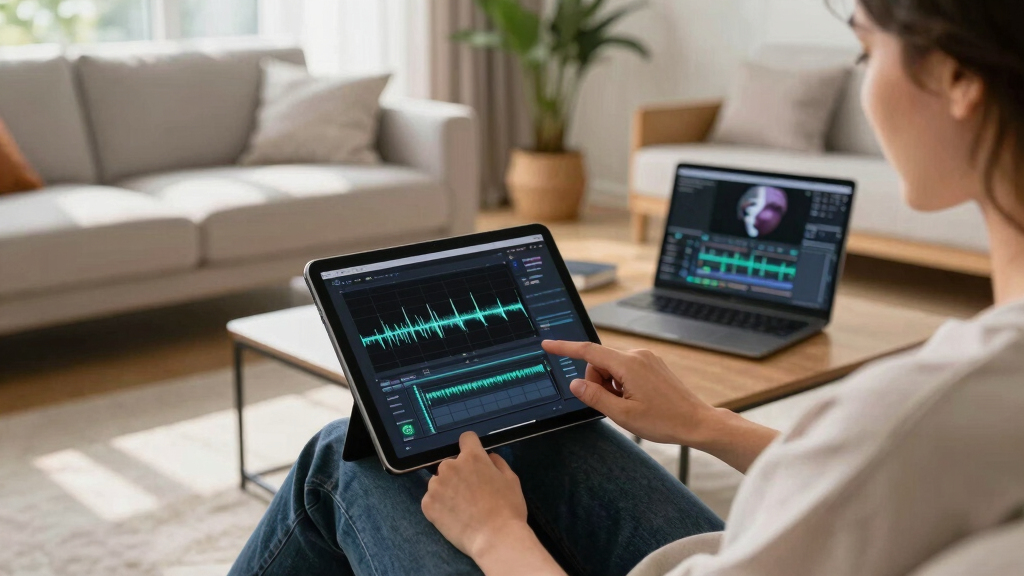
Researchers have demonstrated that AI-generated videos can be designed to specifically stimulate targeted brain regions, a development confirmed by a recent study from a team at the Neural Dynamics Institute. This breakthrough opens new avenues for understanding brain functions and developing treatments for neurological and mental health conditions.

Prime made for students and young adults
- Fast, free delivery for dorm and study essentials
- Prime Video and Amazon Music included
- Member-only deals
While the study confirms the feasibility of this targeted stimulation, it is still in early stages, and the researchers caution that further validation and safety assessments are necessary before clinical applications can be considered. The team emphasizes that the technology is designed to optimize visual stimuli for maximal neural engagement, rather than to produce specific behavioral outcomes at this stage.
Potential Impact on Neuroscience and Mental Health
This development could significantly enhance our ability to study brain functions by enabling precise activation of neural circuits. It also opens the possibility of non-invasive therapies for conditions like depression, anxiety, or PTSD, where targeted brain stimulation is beneficial. Experts note that, if refined, this technology might reduce reliance on invasive procedures such as deep brain stimulation, offering safer, more accessible options for patients.
Popular right now

Ninja Prestige Smart XL Pro Cook System 10-in-1 Air Fryer and Countertop Oven, Stainless Steel, DT551

LG 55-Inch QNED73B Mini LED 4K Smart TV (2026)

Vitamix 5200 Professional-Grade Blender with 64 oz Container, Black
As an affiliate, we earn on qualifying purchases.
Advances in AI and Brain Stimulation Techniques
Recent years have seen rapid progress in artificial intelligence, especially in generating realistic visual content. Concurrently, non-invasive brain stimulation methods, such as transcranial magnetic stimulation (TMS), have been used to modulate neural activity, but with limited precision. The current study combines these fields, leveraging AI to create stimuli that can selectively activate specific brain regions based on neural response data. Prior research has explored generic visual stimuli for brain activation, but this new approach aims for targeted, maximally effective visual inputs.
Earlier efforts in brain modulation focused on electrical or magnetic stimulation, which lack spatial specificity. AI-driven visual stimuli offer a new pathway, potentially enabling more nuanced and personalized neural interventions. The study builds on foundational work in neural decoding and stimulus-response modeling, pushing toward practical applications in neuroscience and medicine.
“Our AI-generated videos can be tailored to activate specific brain regions with high precision, opening new doors for both research and clinical interventions.”
— Dr. Emily Carter, lead researcher
Unanswered Questions About Safety and Practical Use
It remains unclear how well these AI-generated videos will perform across diverse populations or in real-world settings. The long-term safety of repeated neural stimulation via visual stimuli has not been established, and potential unintended effects are unknown. Researchers emphasize that the technology is still experimental and requires further validation before clinical trials can commence. Ethical considerations around neural manipulation also need thorough exploration.
Next Steps in Research and Validation Efforts
The research team plans to conduct broader validation studies, including testing the technique in animal models and eventually in human subjects under controlled conditions. They aim to refine the AI algorithms for greater specificity and safety, as well as to explore potential therapeutic applications. Regulatory pathways and ethical guidelines will also be developed as the technology advances toward clinical use.
Key Questions
How exactly do the AI-generated videos stimulate brain regions?
The videos are designed using AI algorithms trained on neural response data to produce visual stimuli that maximize activation in specific brain areas, as confirmed by fMRI measurements.
Are there any risks associated with this technology?
Since the method is still experimental, the long-term safety and potential side effects are not yet known. Further research is needed before it can be used in clinical settings.
Could this technology be used for mental health treatments?
Potentially, yes. If validated and proven safe, it could offer a non-invasive way to modulate brain activity for conditions like depression or anxiety, but this is still in the future.
How does this compare to existing brain stimulation techniques?
Unlike invasive methods like deep brain stimulation, this approach uses visual stimuli generated by AI to target brain regions non-invasively, but its effectiveness and safety are still under investigation.
When might this technology become available for clinical use?
It is too early to predict; further validation, safety testing, and regulatory approval are required before any clinical application can be realized.
Source: hn