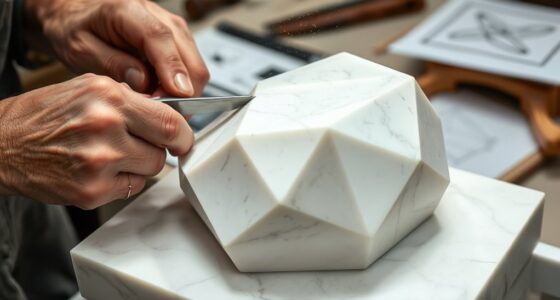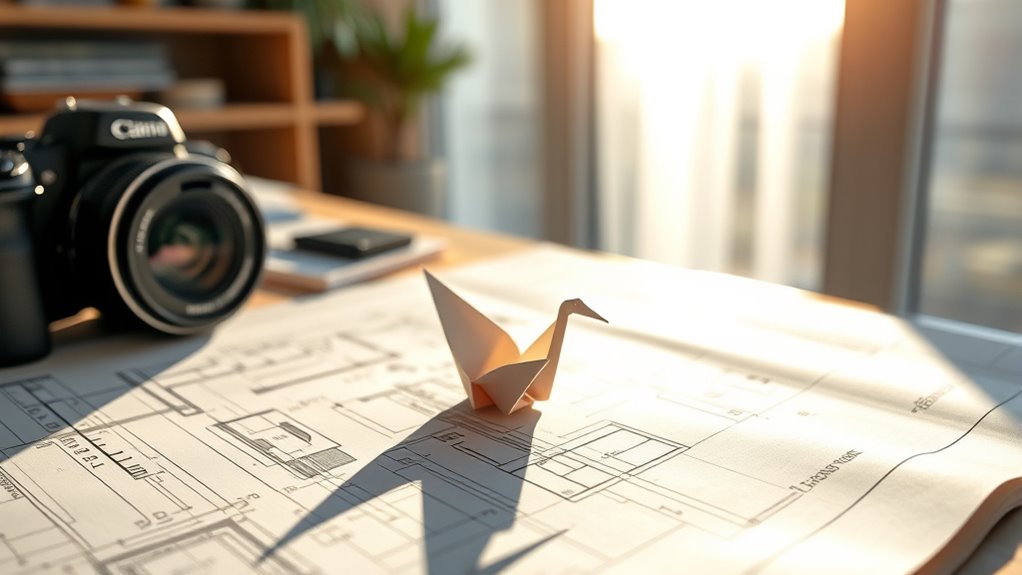

Exploring the crossover between architecture and origami reveals how both fields share core principles like form, structure, and material understanding. Origami’s emphasis on material efficiency and sustainability aligns with eco-conscious design in architecture. Both disciplines foster artistic expression, innovation, and structural inspiration, inspiring unique, adaptable structures. By blending these passions, you can discover new ways to shape spaces that are functional, beautiful, and sustainable—if you want to see how these worlds merge seamlessly, there’s more to uncover.
Key Takeaways
- Both architecture and origami emphasize form, structure, material understanding, and purposeful design, fostering a shared creative foundation.
- Origami principles inspire innovative architectural solutions like foldable roofs and deployable structures, promoting sustainability and resource efficiency.
- The disciplines combine artistic storytelling with functional design, enabling expressive, meaningful creations through precise manipulation of materials.
- Mastery of origami techniques enhances architectural innovation, offering new perspectives on space, form, and adaptability.
- Their crossover encourages experimentation, blending structural discipline with artistic freedom to produce visually striking and sustainable designs.
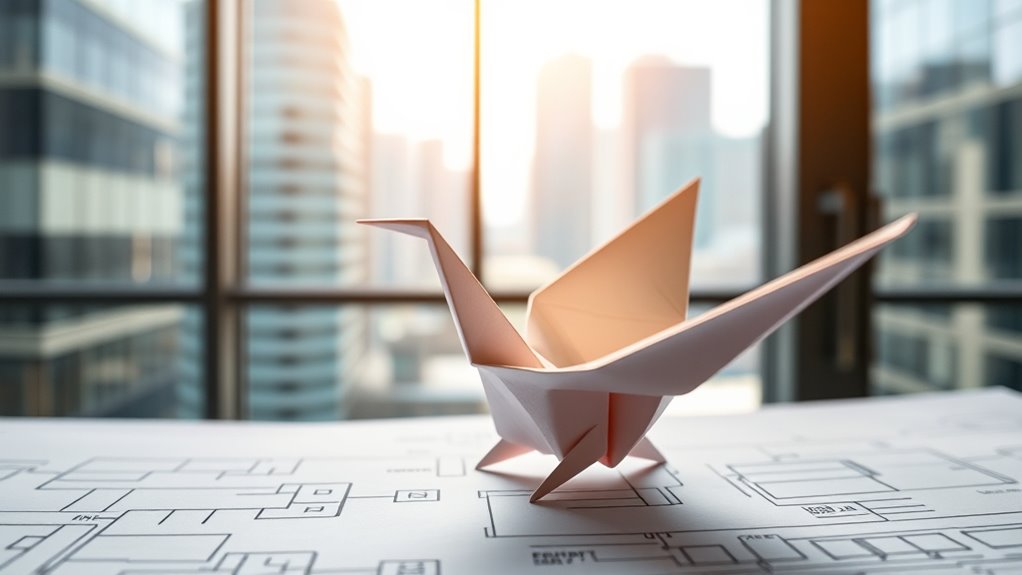
Have you ever wondered how the principles of architecture can transform into the delicate art of origami? At first glance, these might seem like worlds apart—one rooted in grand structures and blueprints, the other in tiny paper folds. But explore a little deeper, and you’ll see they share core elements like form, structure, and purpose. Both disciplines thrive on an understanding of how materials behave and how to shape them into functional, aesthetic, and expressive forms. When you approach origami through the lens of architecture, you begin to see folding as a way to explore sustainable design. Just like architects seek to minimize waste and optimize natural resources, origami emphasizes efficient use of material—no excess, no unnecessary cuts. It’s a craft that champions eco-consciousness by transforming a simple sheet of paper into complex sculptures with minimal waste, aligning perfectly with sustainable design principles. Additionally, understanding the importance of a high contrast ratio can inspire creative approaches to designing foldable structures that adapt to different environments.
As you investigate combining architecture with origami, you’ll notice how both serve as powerful tools for artistic expression. In architecture, every line, curve, and space contributes to a building’s narrative. Similarly, origami allows you to communicate ideas, emotions, or cultural stories through intricate folds and shapes. The act of folding becomes a form of visual storytelling, a way to express creativity that’s both precise and spontaneous. You can experiment with form and scale—creating small, detailed models or large, sweeping installations—each reflecting your personal artistic voice. This crossover encourages you to think beyond conventional boundaries, blending structural discipline with artistic freedom. It’s about seeing the potential for beauty and meaning in simple materials, whether it’s a steel frame or a sheet of paper.
When you approach origami from an architectural perspective, it’s easier to appreciate its potential in innovative design. Origami-inspired structures have already influenced modern architecture—think of foldable roofs, deployable shelters, or lightweight, flexible facades. These designs demonstrate how folding techniques can lead to sustainable solutions that are adaptable, resource-efficient, and visually striking. By mastering the art of origami, you open a new way to think about space, form, and function—merging the pragmatic with the poetic. This crossover invites you to experiment with how materials fold, bend, and transform, creating dynamic structures that challenge traditional notions of stability and aesthetics. Ultimately, both architecture and origami empower you to craft spaces and sculptures that resonate with purpose, innovation, and artistic expression.
Frequently Asked Questions
How Do Architectural Skills Enhance Origami Design Techniques?
Your architectural skills greatly enhance your origami design techniques by improving your design process and spatial reasoning. You can visualize complex folds and structures more easily, translating architectural concepts into intricate origami creations. This understanding helps you plan and execute designs with precision, ensuring stability and aesthetic appeal. Your experience with spatial reasoning allows you to manipulate paper into sophisticated forms, blending architectural insights seamlessly into your origami artistry.
What Materials Are Best for Complex Origami Structures?
The best materials for complex origami structures are sturdy yet flexible paper, like washi or high-quality cardstock. You want paper with excellent durability to withstand intricate folds, while maintaining material flexibility for precision and creativity. Coincidentally, choosing the right paper enhances your ability to create detailed, durable designs. Focus on these qualities, and your origami will hold its shape beautifully, even in complex configurations.
Can Origami Principles Influence Modern Architectural Projects?
Yes, origami principles definitely influence modern architectural projects. You can apply paper folding techniques to enhance structural aesthetics, creating innovative and visually striking designs. By understanding how folds distribute stress, you can develop lightweight, flexible structures that are both functional and beautiful. Incorporating origami-inspired geometry allows you to push design boundaries, blending art and engineering seamlessly in contemporary architecture.
How Does the Learning Curve Differ Between Architecture and Origami?
Think of the learning curve as a winding staircase—you’ll find the skill acquisition in origami sharper initially, with quick wins as you master basic folds. In architecture, it’s more like a sprawling maze, demanding a deeper, sustained effort over time. While both require dedication, origami’s learning curve is steeper at first, then levels out, whereas architecture demands ongoing growth, making their paths uniquely challenging yet rewarding.
Are There Common Tools Used in Both Architecture and Origami?
You use common tools like your hands for folding techniques and carefully select paper to match both disciplines. In architecture, your tools might include drafting instruments, but in origami, precise folding techniques and choosing the right paper are crucial. Both fields require an eye for detail, patience, and skill in manipulating materials, making paper selection and folding techniques indispensable for creating accurate models and structures.
Conclusion
Your journey from architecture to origami shows that passion can transform even the most intricate designs into breathtaking art. By blending these worlds, you unseal endless possibilities that can reshape how we see both structures and paper. Keep pushing boundaries—your creativity is a force to be reckoned with, capable of turning the simplest sheet into a masterpiece. Remember, with your dedication, you’re not just folding paper—you’re shaping the future of design itself.