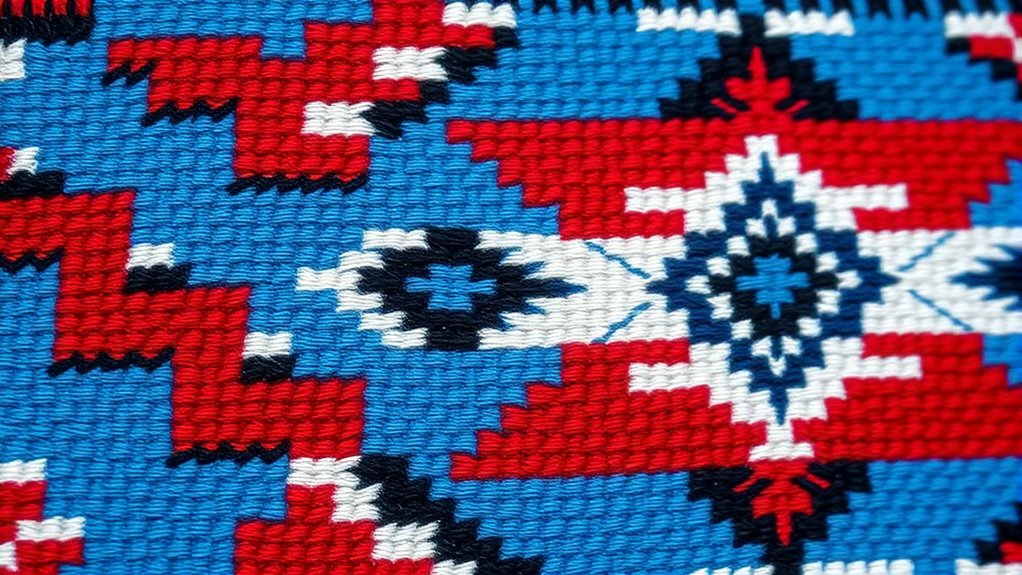

Geometric patterns in indigenous art serve as a visual language that tells stories, shares beliefs, and connects communities. You’ll notice symbols like spirals, triangles, and diamonds that represent life cycles, animals, and natural elements. These designs aren’t just decorative—they carry deep spiritual and cultural meanings, often used during rituals and traditions. If you keep exploring, you’ll discover how these patterns embody history, spirituality, and community identity in profound ways.

Prime made for students and young adults
- Fast, free delivery for dorm and study essentials
- Prime Video and Amazon Music included
- Member-only deals
Key Takeaways
- Geometric patterns serve as visual storytelling tools that encode cultural stories, beliefs, and spiritual meanings in indigenous art.
- Techniques emphasize symmetry, repetition, and precise motifs to create rhythm and harmony in traditional designs.
- Shapes like spirals, crosses, and diamonds symbolize life cycles, directions, and natural elements with spiritual significance.
- Knowledge of pattern creation is passed through oral tradition and hands-on practice, preserving cultural heritage.
- These patterns embody social, spiritual, and historical values, acting as cultural vessels that maintain indigenous identity.
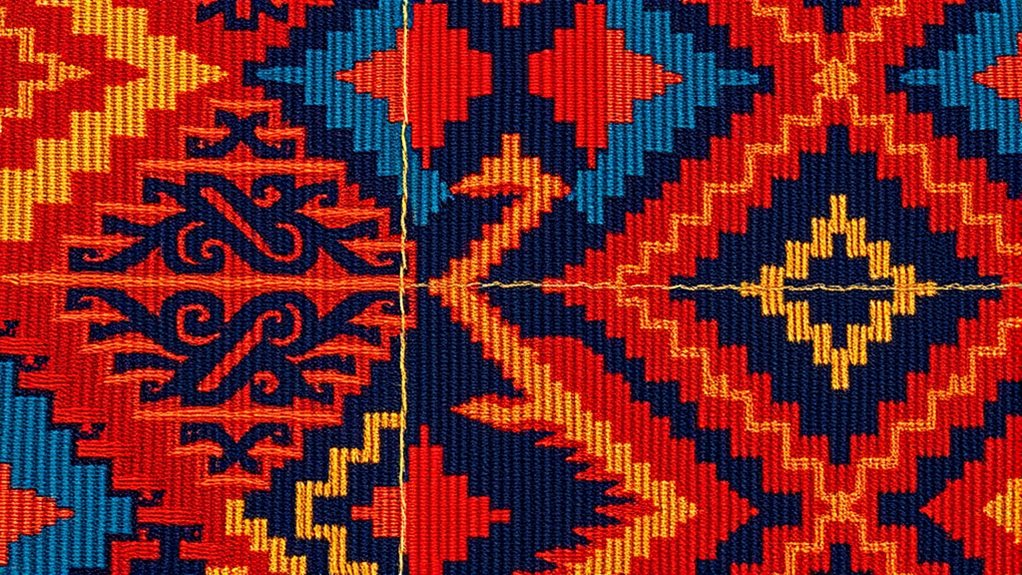
Have you ever wondered how indigenous artists create such intricate and meaningful geometric patterns? It’s a fascinating blend of cultural symbolism and artistic techniques that have been passed down through generations. These patterns aren’t just decorative; they serve as visual language, telling stories, conveying beliefs, and expressing identity. When you look at these designs, you’re witnessing a deep connection to history, spirituality, and community. Each shape and line carries significance, reflecting the worldview of the culture that crafted it. Understanding how they develop these patterns involves appreciating both their symbolic meanings and the skilled methods used to produce them. Indigenous artists often employ specific artistic techniques that require patience, precision, and mastery. They work with natural materials—such as clay, pigments derived from plants, or woven fibers—to create their patterns. Many rely on traditional tools like brushes, sticks, or carved implements to draw or shape these designs. A common approach is symmetry: artists carefully replicate motifs to create balanced, harmonious compositions. The repetition and arrangement of geometric shapes—like triangles, diamonds, or zigzags—are deliberate, emphasizing rhythm and order. These techniques are deeply rooted in their cultural practices, often performed during rituals or community celebrations, reinforcing their spiritual and social importance. The use of symbolism enhances the meaning behind the patterns, making them a visual language that communicates complex cultural stories. Cultural symbolism plays a vital role in shaping these patterns. Certain motifs are universal, like the spiral representing life cycles, or the cross symbolizing the four directions. Others are more specific to a particular group, depicting animals, ancestors, or natural elements that hold spiritual significance. Artists embed these symbols into their geometric designs to honor their ancestors, invoke protection, or mark important events. This layered symbolism transforms a simple pattern into a vessel of cultural memory. The geometric forms serve as visual shorthand for complex stories, beliefs, and relationships that might otherwise be difficult to articulate with words alone. Creating these patterns also involves a deep understanding of the cultural context. Artists learn through oral tradition and hands-on practice, often starting at a young age. They study the meanings behind each shape and color, ensuring that their work respects the cultural integrity of their community. The process itself becomes a form of cultural preservation—each piece a testament to their history and worldview. As you observe these intricate designs, remember that behind every line lies a story, a symbol, and a tradition rooted in generations of artistic techniques and cultural symbolism. These patterns aren’t just beautiful—they’re a language that keeps indigenous cultures alive.
indigenous geometric pattern art supplies
As an affiliate, we earn on qualifying purchases.
As an affiliate, we earn on qualifying purchases.
Frequently Asked Questions
How Do Geometric Patterns Influence Contemporary Indigenous Artists?
You see that geometric patterns shape how contemporary indigenous artists express their cultural identity and drive artistic innovation. By incorporating traditional designs, you connect to your heritage while pushing creative boundaries. These patterns inspire you to explore new forms and techniques, blending old and new. As a result, your work becomes a powerful reflection of cultural pride and modern artistry, fostering a deeper understanding of indigenous traditions through innovative visual language.
Are There Specific Symbols Associated With Different Indigenous Tribes?
You’ll find that many indigenous tribes use specific symbols as tribal symbolism to represent their cultural identity and traditions. These symbols act as cultural identifiers, revealing their unique history, beliefs, and environment. For example, certain patterns or motifs might signify a tribe’s connection to nature or spiritual beliefs. Recognizing these symbols helps you appreciate the rich diversity and deep meaning behind each tribe’s artistic expressions.
What Materials Are Traditionally Used to Create Geometric Indigenous Art?
Imagine stepping into an ancient workshop where tradition breathes life into every stroke. You’ll find that indigenous artists use natural pigments derived from minerals, plants, and charcoal to create vibrant hues. Traditional dyes, made from these sources, are carefully applied to materials like hide, cloth, and bark. These materials, infused with cultural significance, help preserve the intricate geometric patterns that tell stories across generations.
How Do Geometric Patterns Relate to Indigenous Spiritual Beliefs?
You might find that geometric patterns hold deep spiritual significance in indigenous cultures. These designs often symbolize important aspects of their beliefs, such as connection to nature, ancestors, or spiritual guides. The symbolic meanings embedded in the patterns serve as visual representations of their worldview, helping to convey spiritual truths and reinforce cultural identity. By understanding these patterns, you gain insight into the rich spiritual beliefs that shape indigenous art and traditions.
Can Non-Indigenous Artists Authentically Incorporate These Patterns?
You might think it’s easy for non-indigenous artists to incorporate geometric patterns, but it’s like trying to capture the soul of a culture overnight. Cultural appropriation risks overshadowing authenticity, turning rich traditions into mere decoration. To truly honor these patterns, you must understand their deep spiritual meanings and collaborate respectfully. Otherwise, your work could feel hollow, lacking genuine artistic authenticity and risking cultural insensitivity.
natural pigment paints for traditional art
As an affiliate, we earn on qualifying purchases.
As an affiliate, we earn on qualifying purchases.
Conclusion
As you explore indigenous art, you realize these geometric patterns aren’t just designs—they’re the heartbeat of cultures, telling stories more vivid than the brightest stars. By recognizing these patterns, you connect with traditions older than time itself, feeling their power pulse through every line and shape. It’s like gazing into a universe of symbols that hold the weight of centuries. Truly, understanding these patterns will transform your perspective forever—you might just see the world in a whole new, more vibrant way.
handmade indigenous pattern weaving tools
As an affiliate, we earn on qualifying purchases.
As an affiliate, we earn on qualifying purchases.
traditional pattern stencil sets
As an affiliate, we earn on qualifying purchases.
As an affiliate, we earn on qualifying purchases.
Halloween Picks
halloween
As an affiliate, we earn on qualifying purchases.