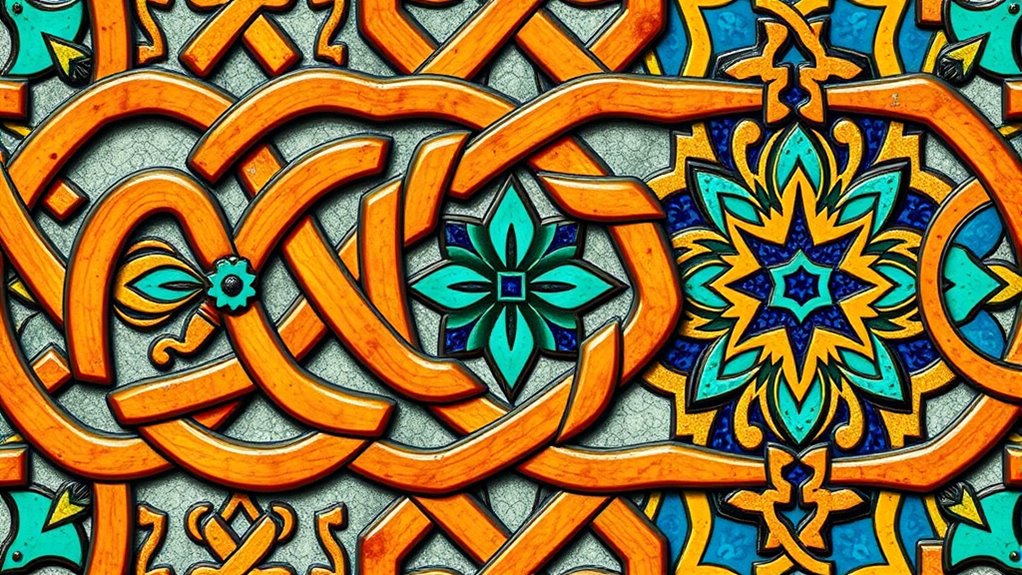

Celtic knots and Islamic tiles both showcase intricate, endless patterns that symbolize eternity, unity, and spiritual harmony. You’ll notice their designs reflect cultural values—Celtic knots emphasize life’s eternal cycle, while Islamic tiles depict divine order and universal unity. Both art forms involve high craftsmanship and serve as tools for meditation and spiritual reflection. By exploring these patterns further, you’ll discover how they embody deeper philosophical and cultural beliefs that connect art, faith, and identity.
Key Takeaways
- Both Celtic knots and Islamic tiles feature intricate, endless patterns symbolizing eternity, unity, and divine order.
- They reflect cultural values and spiritual beliefs, emphasizing interconnectedness, divine unity, and philosophical ideals.
- Craftsmanship involves meticulous techniques—hand-drawing and carving for Celtic knots; glazing and tile-making for Islamic patterns.
- These motifs serve as visual metaphors for spiritual concepts, promoting meditation and reflection on infinity and divine presence.
- Both art forms embody cultural identity and universal themes, connecting artistry with philosophical and spiritual symbolism across civilizations.

Celtic knots and Islamic tiles may seem worlds apart, but both art forms share a fascination with intricate, endless patterns that symbolize eternity and unity. When you examine these designs, you notice how deeply they reflect cultural values and spiritual beliefs. Celtic knots are renowned for their continuous, unbroken lines, which symbolize the eternal cycle of life, interconnectedness, and the infinite nature of the universe. These motifs often serve as visual metaphors for spiritual continuity, emphasizing that nothing exists in isolation. Similarly, Islamic tiles feature complex geometric patterns that often appear endless, representing the infinite nature of Allah and the divine order of creation. The recurring motifs serve as a reminder of the unity between the divine, the natural world, and human existence.
As you explore the craftsmanship behind these art forms, you’ll see that both rely on highly specialized techniques to achieve their mesmerizing effects. Celtic knotwork is crafted through meticulous hand-drawing and carving, where artists skillfully interlace lines without breaks, creating seamless loops that require precise planning. Their techniques often involve knotwork that is symmetrical and balanced, reflecting harmony and order. In contrast, Islamic tile artisans utilize advanced glazing and tile-making methods, including cuerda seca and zellige techniques, to produce vibrant, intricate mosaics. These techniques involve precise cutting, fitting, and glazing of tiles to form complex, repeating patterns with perfect symmetry. Both traditions demand exceptional skill, patience, and attention to detail, ensuring that each pattern maintains its symbolic and aesthetic integrity.
The symbolism embedded in these patterns is more than decorative; it embodies philosophical ideals. Celtic knots symbolize the interconnectedness of life and the eternal cycle of renewal, reminding you that everything is part of a larger, unending whole. Islamic tiles, with their intricate geometric designs, serve as visual representations of divine unity and order, encouraging contemplation of the infinite and the divine presence that sustains the universe. These motifs are carefully constructed to avoid figurative imagery, emphasizing the spiritual over the literal, which also reflects the cultural emphasis on abstraction and the divine mystery.
Through their craftsmanship and symbolism, both Celtic knots and Islamic tiles transcend mere decoration. They serve as visual tools for meditation, spiritual reflection, and cultural identity. When you look at these patterns, you’re witnessing the convergence of artistry, belief, and history, each pattern echoing a universal longing for eternity, unity, and harmony that resonates across civilizations.
Frequently Asked Questions
How Do Celtic Knots and Islamic Tiles Influence Contemporary Design?
You can see Celtic knots and Islamic tiles influence contemporary design in many ways. In interior decor, they inspire intricate patterns on walls, rugs, and furniture, creating a rich cultural ambiance. Fashion accessories also draw from these designs, with jewelry and textiles featuring similar geometric motifs. Their timeless appeal adds depth and elegance, allowing you to incorporate cultural heritage into modern spaces and styles effortlessly.
What Materials Are Traditionally Used in Creating Celtic Knots and Islamic Tiles?
You’re likely to see traditional craftsmanship shine through in Celtic knots with materials like wood, stone, and metal, each chosen for their durability and cultural significance. Islamic tiles often feature glazed ceramic or terracotta, prized for their vibrant colors and ability to reflect divine beauty. These materials carry deep material significance, embodying centuries of artistry and spiritual symbolism that connect creators and viewers across generations.
Are There Symbolic Meanings Behind the Patterns in Celtic Knots and Islamic Tiles?
You’ll find that the patterns in Celtic knots and Islamic tiles hold deep symbolic meanings and spiritual significance. Celtic knots often represent eternity, interconnectedness, and life’s endless cycle, reflecting spiritual beliefs. Islamic tiles symbolize unity, divine perfection, and paradise through intricate, repeating geometric designs. These patterns aren’t just decorative—they embody cultural values and spiritual concepts, allowing you to connect with the deeper symbolism behind each artistic motif.
How Do These Art Forms Evolve With Modern Technology?
You see how modern technology transforms these art forms through digital fabrication and virtual reconstructions. You can now recreate intricate patterns with precision, explore historical designs in immersive virtual environments, and even experiment with new variations. These tools help preserve cultural heritage while allowing artists to innovate. By blending tradition with technology, you keep the art alive and relevant, reaching wider audiences and inspiring future generations to appreciate and continue these intricate, meaningful patterns.
What Are the Conservation Challenges for Preserving These Intricate Artworks?
Imagine you’re restoring ancient masterpieces; environmental threats like humidity, pollution, and temperature fluctuations pose major challenges. You need advanced restoration techniques to preserve intricate details, but delicate materials and fading colors make this tough. Modern technology helps, yet you must constantly adapt to safeguard these artworks from further deterioration. Balancing preservation with minimal intervention remains vital, especially as climate change accelerates environmental threats, demanding innovative approaches to keep these cultural treasures intact.
Conclusion
As you explore Celtic knots and Islamic tiles, you’ll notice both cultures masterfully use geometry to create stunning art. Fascinatingly, over 80% of Islamic tile designs feature repeating geometric patterns, reflecting their spiritual emphasis on infinity and unity. This shows how geometry isn’t just decoration but a reflection of deeper cultural beliefs. So, next time you see intricate patterns, remember they tell stories beyond their beauty—connecting us across time and traditions.