With sweep line algorithms, you can efficiently solve complex geometric problems—discover how they transform computational geometry and why they are so powerful.
Browsing Category
Computational Geometry
28 posts
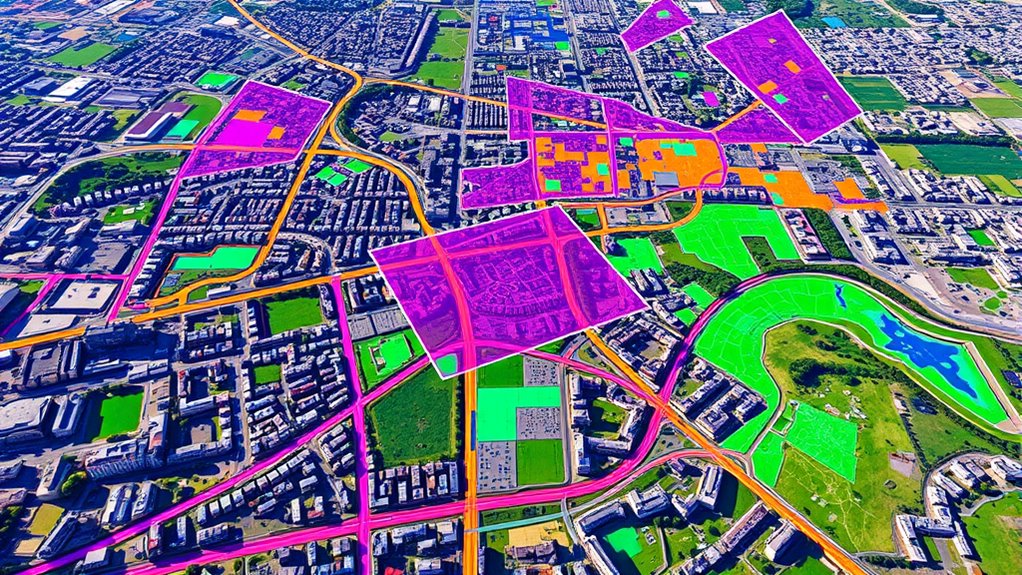
Computational Geometry in GIS: Mapping and Spatial Analysis
Unlock the potential of computational geometry in GIS mapping and spatial analysis to enhance your spatial insights and discover new possibilities for your projects.
Collision Detection Algorithms in Games: Geometry at Play
Collision detection algorithms are essential for creating realistic and smooth interactions in…
The Traveling Salesman Problem: A Geometric Perspective
The Traveling Salesman Problem (TSP) can be better understood through a geometric…
Delaunay Triangulation and Why It’s Useful
Delaunay triangulation helps you connect points in a way that maximizes the…
Convex Hull Algorithms: Finding the Smallest Polygon Around Points
Convex hull algorithms efficiently find the smallest polygon enclosing points, and exploring their techniques reveals powerful methods for computational geometry.
Introduction to Computational Geometry: Solving Geometric Problems With Algorithms
Many geometric problems can be efficiently solved with algorithms, opening the door to innovative applications and deeper understanding—continue reading to explore how.
Voronoi Diagrams and Their Applications
Many fields leverage Voronoi diagrams to analyze spatial relationships and optimize solutions—discover how these powerful tools transform various industries.