The best educational science reference book for most families is the DK Science Encyclopedia (Revised Edition), which balances authoritative content, clear visual explanations, and enough depth to grow with a child from late elementary through middle school. If budget is the deciding factor, the Usborne Illustrated Dictionary of Science delivers remarkable density for the price, while younger readers around 5–8 will get more from the First Science Encyclopedia than from any of the heavier volumes. The main tradeoff in this category is age-appropriateness versus longevity: visually dazzling encyclopedias often get outgrown in two years, while denser references feel intimidating to beginners. There is also the question of scope — broad general encyclopedias versus focused titles like The Elements Book or the Human Body volume that go deeper on a single subject. Continue reading for the full breakdown, including where each book fits and which ones are worth skipping.
Prime for Young Adults — start your free trial
Fast free delivery, streaming and member deals for eligible 18–24 year olds.
Try it freeAs an affiliate, we earn on qualifying purchases.
Key Takeaways
- DK dominated the top of this comparison because its revised Science Encyclopedia pairs curriculum-aligned depth with visual layouts that don’t talk down to kids — most competitors copy one half of that formula but not both.
- Several similarly titled ‘Knowledge Encyclopedia’ volumes differ sharply in depth and reading level; the 2nd Edition of Science! clearly beats the original, so buyers should check edition numbers before purchasing.
- Focused single-subject references (The Elements Book, Human Body!) outperformed general encyclopedias for engagement but fail as a child’s only science reference — they work best as supplements.
- The six-book box set is the only option here that genuinely serves multiple children at different reading levels, but it costs nearly double a single-volume encyclopedia and takes up far more shelf space.
- The generic ‘Encyclopedia of Science’ and ‘Science Encyclopedia’ titles were the weakest picks: unattributed authorship, dated visuals, and overlap with better-executed alternatives make them hard to recommend over name-brand options at similar prices.
| Knowledge Encyclopedia Science! |  | Best Overall Visual Reference | Publisher: DK Children | Format: Hardcover | Reading Age: 9–14 years | VIEW LATEST PRICE | See Our Full Breakdown |
| DK Science Encyclopedia (Revised Edition) |  | Best for School Reports | Publisher: DK | Edition: Revised Edition | Format: Hardcover | VIEW LATEST PRICE | See Our Full Breakdown |
| The Elements Book: A Visual Periodic Table Encyclopedia for Kids |  | Best Deep Dive for Chemistry | Publisher: DK Children | Format: Hardcover | Reading Age: 8–13 years | VIEW LATEST PRICE | See Our Full Breakdown |
| The Usborne Illustrated Dictionary of Science |  | Best Value Quick-Lookup Guide | Publisher: Usborne | Format: Paperback | Reading Age: 11–16 years | VIEW LATEST PRICE | See Our Full Breakdown |
| First Science Encyclopedia (DK First Reference) |  | Best for Young Beginners | Publisher: DK Children | Series: DK First Reference | Format: Hardcover | VIEW LATEST PRICE | See Our Full Breakdown |
| National Geographic Kids Science Encyclopedia: Atom Smashing, Food Chemistry, Animals, Space, and More! |  | Best for Curious Elementary Readers | Publisher: National Geographic Kids | Format: Hardcover | Recommended Age: 7–11 years | VIEW LATEST PRICE | See Our Full Breakdown |
| Knowledge Encyclopedia Science! 2nd Edition |  | Best All-Ages Visual Reference | Publisher: DK | Edition: 2nd Edition | Format: Hardcover | VIEW LATEST PRICE | See Our Full Breakdown |
| Knowledge Encyclopedia: Inventions and Discoveries for Children |  | Best for History-of-Innovation Fans | Publisher: Wonder House Books | Format: Hardcover | Recommended Age: 8–12 years | VIEW LATEST PRICE | See Our Full Breakdown |
| Knowledge Encyclopedia Human Body! Human Anatomy as You’ve Never Seen It Before |  | Best Single-Subject Deep Cut | Publisher: DK | Format: Hardcover | Subject: Human anatomy and physiology | VIEW LATEST PRICE | See Our Full Breakdown |
| Knowledge Encyclopedia – Science for Children |  | Best Budget Starter Pick | Publisher: Wonder House Books | Format: Hardcover | Recommended Age: 6–9 years | VIEW LATEST PRICE | See Our Full Breakdown |
| The Usborne Science Encyclopedia: An In-depth Guide for Young Scientists Exploring Gravity, Flight, Genes, DNA and More |  | Best Multimedia-Enhanced Pick | Format: Hardcover encyclopedia | Topics Covered: Gravity, flight, genes, DNA, and general science | Multimedia: Over 180 video clips | VIEW LATEST PRICE | See Our Full Breakdown |
| Encyclopedia of Science |  | Best Classic Reference Shelf Pick | Format: Print encyclopedia | Coverage: Comprehensive across major scientific fields | Audience: Students and general science enthusiasts | VIEW LATEST PRICE | See Our Full Breakdown |
| Science Knowledge Encyclopedia for Children: Collection of 6 Books (Box Set) |  | Best Box Set for Young Readers | Format: Box set of 6 books | Target Audience: Young children (age range not specified) | Content Style: Engaging, introductory science topics | VIEW LATEST PRICE | See Our Full Breakdown |
| Science Encyclopedia | 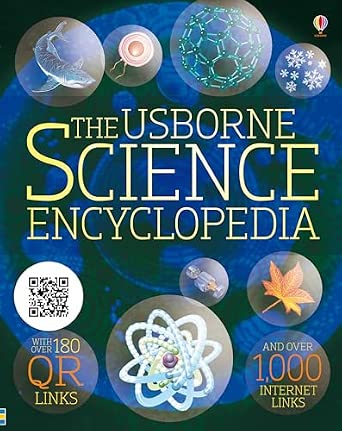 | Best Balanced General-Purpose Pick | Format: Single-volume encyclopedia | Coverage: Comprehensive across scientific fields | Illustrations: Included throughout | VIEW LATEST PRICE | See Our Full Breakdown |
| educational science reference book | Format | Publisher | Structure |
|---|---|---|---|
| Knowledge Encyclopedia Science | Hardcover | DK Children | Thematic two-page topic spreads |
| DK Science Encyclopedia | Hardcover | DK | — |
| The Elements Book: A Visual Pe | Hardcover | DK Children | — |
| The Usborne Illustrated Dictio | Paperback | Usborne | — |
| First Science Encyclopedia | Hardcover | DK Children | Question-and-answer topic spreads |
| National Geographic Kids Scien | Hardcover | National Geographic Kids | Thematic topic sections with fun facts |
| Knowledge Encyclopedia Science | Hardcover | DK | Reference encyclopedia with indexed topic entries |
| Knowledge Encyclopedia: Invent | Hardcover | Wonder House Books | Chronological/thematic entries on key inventions |
| Knowledge Encyclopedia Human B | Hardcover | DK | Body-system chapters with indexed reference entries |
| Knowledge Encyclopedia | Hardcover | Wonder House Books | Short topic-by-topic entries for early readers |
| The Usborne Science Encycloped | Hardcover encyclopedia | Usborne | — |
| Encyclopedia of Science | Print encyclopedia | — | — |
| Science Knowledge Encyclopedia | Box set of 6 books | — | — |
| Science Encyclopedia | Single-volume encyclopedia | — | — |
More Details on Our Top Picks
Knowledge Encyclopedia Science!
Knowledge Encyclopedia Science! earns the top spot because it balances breadth and visual clarity better than anything else in this lineup. Where the DK Science Encyclopedia leans on dense two-page spreads, this title uses oversized CGI renders that make abstract physics and astronomy feel tangible for middle-grade readers. Compared with The Elements Book, which goes deep on one subject, this volume spreads across physics, chemistry, biology, and earth science, so it works as a single-desk reference rather than a specialist purchase.
The tradeoff is depth: ambitious high schoolers will outgrow the explanations and need something like the Usborne Science Encyclopedia for more rigorous text. Still, as the one book that keeps a curious 9-to-14-year-old coming back, this pick makes the most sense for most families.
Pros:- Covers physics, chemistry, biology, and earth science in one volume
- Large-format CGI illustrations explain abstract concepts intuitively
- Accessible writing that doesn’t talk down to older kids
- Durable coffee-table format that invites repeated browsing
Cons:- Explanations stop short of textbook rigor for older students
- Large format makes it awkward for backpacks or travel
- Some topics get only a single spread before moving on
Best for: Families with curious kids aged 9–14 who want one visually rich book covering all major science fields
Not ideal for: High school or college students needing exam-level depth and technical vocabulary
- Publisher:DK Children
- Format:Hardcover
- Reading Age:9–14 years
- Subjects Covered:Physics, chemistry, biology, earth science, space
- Illustration Style:Full-color CGI renders and annotated diagrams
- Structure:Thematic two-page topic spreads
Our verdict“If you’re buying one science reference for a curious middle-grade reader, this is the one to get.”
DK Science Encyclopedia (Revised Edition)
This revised edition of the DK Science Encyclopedia is the workhorse pick of the group. It sacrifices some of the flashy presentation of Knowledge Encyclopedia Science! in exchange for denser, more systematic coverage — which is exactly what a student needs when writing a report on photosynthesis or plate tectonics. Entries are organized so related topics sit near each other, making it easier to follow a subject across pages than the topic-of-the-moment layout of its newer sibling.
Buyers should know the edition predates more recent discoveries, so cutting-edge science isn’t its strength; the Usborne Science Encyclopedia handles DNA and genetics with fresher framing. And unlike The Elements Book, the visuals serve the text rather than carrying it, so younger children may find pages text-heavy. This model is better suited to homework support than casual browsing.
Pros:- Systematic organization makes finding homework topics fast
- Detailed labeled illustrations support written explanations
- Wide subject range across all core sciences
- Trusted DK reference pedigree used in classrooms
Cons:- Revised edition is dated next to newer titles in this roundup
- Text-dense pages can intimidate younger or reluctant readers
Best for: Students in grades 4–9 who need a reliable, report-friendly reference for homework and projects
Not ideal for: Readers wanting the newest scientific discoveries or a visually playful browsing book
- Publisher:DK
- Edition:Revised Edition
- Format:Hardcover
- Reading Age:8–14 years
- Organization:Thematic encyclopedia sections with cross-referenced entries
- Illustration Style:Detailed annotated diagrams and photography
- Primary Use:Homework and school report reference
Our verdict“A dependable homework companion that trades visual flash for report-ready structure.”
The Elements Book: A Visual Periodic Table Encyclopedia for Kids
While most books in this roundup skim across every field, The Elements Book does the opposite: it devotes its entire page count to the periodic table, element by element. That focus pays off in stunning macro photography — each element appears as a real object or sample, which no amount of diagram-drawing in the DK Science Encyclopedia can match. For a child working through chemistry units, this visual anchor makes abstract symbols memorable.
The tradeoff is obvious: it’s a specialist purchase, not a general reference. A buyer expecting whole-curriculum coverage like Knowledge Encyclopedia Science! will be disappointed, and the entry-level text won’t carry a student past middle school chemistry. There’s also no practical lab component — it informs rather than teaches process. But as a single-subject supplement that makes chemistry click, nothing else here competes.
Pros:- Every element gets a full photographic treatment
- Turns abstract periodic table symbols into memorable visuals
- Arranged to mirror the actual periodic table for easy cross-reference
- Accessible short entries for independent reading
Cons:- Single-subject scope makes it a supplement, not a full reference
- Content depth plateaus for advanced or older students
- No hands-on experiments or lab guidance
Best for: Kids aged 8–13 studying chemistry who benefit from visual, object-based learning of the periodic table
Not ideal for: Buyers wanting an all-in-one general science reference — this covers only the elements
- Publisher:DK Children
- Format:Hardcover
- Reading Age:8–13 years
- Subject Focus:Periodic table and chemical elements
- Illustration Style:Photographic samples of each element
- Organization:Element-by-element entries following periodic table order
Our verdict“The best chemistry supplement here — buy it alongside a general encyclopedia, not instead of one.”
The Usborne Illustrated Dictionary of Science
When the question is ‘what does that word mean,’ the Usborne Illustrated Dictionary of Science answers faster than any encyclopedia in this lineup. Its dictionary format means instant lookups — no index-hunting like in the DK Science Encyclopedia — and each definition pairs with a compact illustration that clarifies without overwhelming. For a student mid-homework, that speed matters more than glossy spreads.
At a lower price point than the big-format DK titles, it’s also the best value pick, though the savings come with real limitations. Definitions run short, so a reader who wants to actually understand a concept — not just define it — will need the deeper explanations in Knowledge Encyclopedia Science!. Advanced topics get glossary-level treatment at best. This option stands out as a desk-side companion rather than a primary learning text.
Pros:- Alphabetical dictionary format enables fast lookups
- Every definition paired with a clarifying illustration
- Affordable compared with large-format encyclopedias
- Compact enough to keep on a desk or shelf permanently
Cons:- Definitions are brief and lack conceptual depth
- No narrative or thematic learning path for building understanding
- Advanced topics receive only surface-level treatment
Best for: Students and homework helpers who need fast definitions of scientific terms at a budget price
Not ideal for: Learners seeking concept explanations rather than quick definitions
- Publisher:Usborne
- Format:Paperback
- Reading Age:11–16 years
- Organization:A-to-Z illustrated dictionary entries
- Subjects Covered:Physics, chemistry, biology terminology
- Illustration Style:Small annotated diagrams beside definitions
- Primary Use:Quick term lookup and revision support
Our verdict“A cheap, fast vocabulary companion — pair it with a fuller encyclopedia for actual learning.”
First Science Encyclopedia (DK First Reference)
First Science Encyclopedia is where the roundup gets its true entry-level pick. Written for early readers, it uses simple sentences and bright, busy pages to introduce science before kids can handle the denser layouts of Knowledge Encyclopedia Science! or the DK Science Encyclopedia. Question-driven entries — why does it rain, how do birds fly — match how young children naturally encounter science, and the format supports short shared-reading sessions rather than long study.
The flip side is real: scientific depth is minimal, and a strong reader of 8 or 9 will outgrow it within a year or two. Compared with The Elements Book, even the visuals are simpler by design, favoring accessibility over detail. This is a first stepping stone, not a lasting reference — budget for an upgrade as reading skills grow.
Pros:- Language pitched correctly for early independent readers
- Question-based entries match young kids’ curiosity
- Colorful, uncluttered pages hold short attention spans
- Sturdy first-reference format built for rough handling
Cons:- Very limited scientific depth by design
- Kids typically outgrow it within a couple of years
- Not suitable as a homework reference for school-age assignments
Best for: Parents of children aged 5–8 building a first home science library
Not ideal for: Readers 9 and up, who will find the content too shallow and quickly move on
- Publisher:DK Children
- Series:DK First Reference
- Format:Hardcover
- Reading Age:5–8 years
- Subjects Covered:Introductory physics, biology, weather, space, and everyday science
- Illustration Style:Bright photography and simple labeled diagrams
- Structure:Question-and-answer topic spreads
Our verdict“The right first science book for a 5-to-8-year-old — just expect to upgrade to a fuller encyclopedia soon.”
National Geographic Kids Science Encyclopedia: Atom Smashing, Food Chemistry, Animals, Space, and More!
This encyclopedia stands out for its broad, kid-friendly topic mix — atoms, food chemistry, animals, and space all share one volume — which makes it a strong first science reference for children who haven’t yet picked a favorite subject. Compared with the Knowledge Encyclopedia Science! 2nd Edition, which leans on dense visual spreads, this option favors fun facts and photo-driven layouts that keep younger readers turning pages rather than overwhelmed. The tradeoff is depth: a middle schooler working on a report will hit the ceiling quickly, and families wanting rigorous explanations should look at the DK Science Encyclopedia instead. This pick makes the most sense for building curiosity, not for answering homework questions exhaustively.
Pros:- Wide-ranging topics that expose kids to many branches of science at once
- National Geographic photography and design that kids genuinely want to browse
- Fun-fact format keeps reluctant readers engaged without feeling like a textbook
- Accessible vocabulary suited to independent reading by younger kids
Cons:- Explanations stay surface-level, so it can’t serve as a primary reference for schoolwork
- Coverage of each topic is brief compared to single-subject encyclopedias like the Knowledge Encyclopedia Human Body!
Best for: Parents of elementary-school kids (roughly 7–11) who want a fun, browsable science book that encourages voluntary reading
Not ideal for: Middle and high school students who need detailed, citation-worthy explanations for assignments
- Publisher:National Geographic Kids
- Format:Hardcover
- Recommended Age:7–11 years
- Topics Covered:Physics, chemistry, biology, space, food science
- Visual Style:Full-color photography and illustrations
- Reading Level:Elementary independent reading
- Structure:Thematic topic sections with fun facts
Our verdict“A great pick for sparking curiosity in elementary readers, but skip it if you need a serious study reference.”
Knowledge Encyclopedia Science! 2nd Edition
This is the volume I’d point to when one book has to serve a whole household. The 2nd Edition pairs detailed explanations with DK’s signature rendered cross-sections and 3D-style diagrams, so a 9-year-old can absorb the visuals while a teenager reads the text closely — something the simpler National Geographic Kids Science Encyclopedia can’t manage on both levels. Compared with the Science Knowledge Encyclopedia for Children box set, you give up multi-volume depth, but you gain a single, cohesive reference that doesn’t require shelf space or set-keeping discipline. The tradeoff: it’s heavier and text-denser than entry-level picks, so younger readers may need an adult nearby to stay engaged with longer entries.
Pros:- Explanations sophisticated enough for teens while remaining visual enough for younger kids
- Updated second-edition content reflects current science
- Covers physical, life, and earth sciences in one cohesive volume
- High production quality with detailed diagrams that reward close re-reading
Cons:- Heavier and more text-dense than kid-first alternatives, which can intimidate younger readers
- Not specialized — readers deep in one subject will outgrow it faster than a dedicated volume
Best for: Families and classrooms needing one durable science reference that works for multiple ages and grade levels
Not ideal for: Parents of pre-readers or very young children who need short, playful fact snippets rather than structured reference entries
- Publisher:DK
- Edition:2nd Edition
- Format:Hardcover
- Recommended Age:9 years and up (all-ages household use)
- Coverage:Physics, chemistry, biology, earth and space science
- Visual Style:3D-rendered illustrations, cross-sections, annotated diagrams
- Structure:Reference encyclopedia with indexed topic entries
Our verdict“The strongest single-volume choice for households spanning ages, provided the youngest readers have some adult support.”
Knowledge Encyclopedia: Inventions and Discoveries for Children
Rather than competing head-on with general science encyclopedias, this book carves out a history-of-innovation angle — who invented what, when, and why it mattered. That framing makes it a better fit for kids whose curiosity runs toward stories and inventors rather than abstract principles, and it complements titles like the Knowledge Encyclopedia Science! 2nd Edition instead of duplicating them. The visuals are colorful and approachable, closer in tone to the National Geographic Kids volume than to DK’s denser core encyclopedia. The main tradeoff: it’s not a science reference in the strict sense. If your child needs a book explaining how electricity works for homework, this won’t cover it — it explains who harnessed it.
Pros:- Story-driven format that appeals to kids bored by textbook-style science
- Covers a wide span of inventions and discoveries across eras
- Attractive illustrations make long reading sessions easy
- Unique angle not duplicated by general science encyclopedias in this roundup
Cons:- Explanations of the underlying science are simplified, so older kids may find it thin
- Functions as a supplement rather than a primary science reference
Best for: Kids aged roughly 8–12 who love inventors, gadgets, and ‘how things came to be’ stories
Not ideal for: Buyers seeking a core science reference for schoolwork — this is history-focused, not a subject reference
- Publisher:Wonder House Books
- Format:Hardcover
- Recommended Age:8–12 years
- Focus:Inventions and discoveries through history
- Visual Style:Full-color illustrations and graphics
- Structure:Chronological/thematic entries on key inventions
Our verdict“A great second book for invention-obsessed kids, but not a substitute for a general science encyclopedia.”
Knowledge Encyclopedia Human Body! Human Anatomy as You’ve Never Seen It Before
Where general encyclopedias spread themselves thin, this volume goes deep on one subject, and that focus pays off. The annotated anatomical renderings do the heavy lifting: systems like circulation and digestion are shown layer by layer in a way that text-only references such as the Usborne Illustrated Dictionary of Science simply can’t match visually. Compared with the National Geographic Kids Science Encyclopedia, which devotes only a section to biology, this book rewards a kid who has already picked anatomy as their interest and wants to keep going. The tradeoff is obvious — it’s one subject. Families wanting whole-curriculum coverage should treat this as a companion to a general encyclopedia, not a replacement. Advanced biology students will also find it stops short of textbook rigor.
Pros:- Layered anatomical illustrations that make body systems genuinely understandable
- Deeper anatomy coverage than any general encyclopedia in this roundup
- Appeals across a wide age range, from curious kids to adults refreshing their knowledge
- Complex processes explained clearly without dumbing down terminology
Cons:- Single-subject scope — useless for chemistry, physics, or earth science questions
- Content may feel basic for advanced or older students studying biology formally
Best for: Kids, teens, and adults focused on human biology — especially students considering medicine or health careers
Not ideal for: Buyers wanting broad science coverage, or AP/honors biology students who need textbook-level detail
- Publisher:DK
- Format:Hardcover
- Subject:Human anatomy and physiology
- Recommended Age:9 years and up
- Visual Style:Detailed anatomical renderings and annotated diagrams
- Structure:Body-system chapters with indexed reference entries
Our verdict“The best choice here for anatomy-focused readers, provided it’s bought alongside a general reference rather than instead of one.”
Knowledge Encyclopedia – Science for Children
This volume plays the affordable entry point in the lineup — a solid, colorful first science book that gets young learners oriented without the price or heft of the Knowledge Encyclopedia Science! 2nd Edition. The explanations are short and plainly worded, which is exactly right for a 7-to-9-year-old meeting concepts like gravity or states of matter for the first time, but it’s also the ceiling: the DK Science Encyclopedia (Revised Edition) or the 2nd Edition above it cover the same ground with far more depth and durability. Compared with the First Science Encyclopedia, the two are close in intent; this one’s advantage is price, its drawback is less refined visuals and thinner reference structure. Buy it as a starter, not a keeper.
Pros:- Low-cost way to introduce science topics to young readers
- Simple explanations well matched to early readers’ vocabulary
- Bright, engaging illustrations that hold short attention spans
- Lightweight and easy for small hands to handle independently
Cons:- Shallow content depth limits usefulness beyond early elementary school
- Less detailed visuals and indexing than premium alternatives like DK’s core encyclopedias
Best for: Budget-conscious parents buying a first science book for early-elementary kids aged roughly 6–9
Not ideal for: Families wanting a long-lasting household reference — kids will outgrow this within a couple of years
- Publisher:Wonder House Books
- Format:Hardcover
- Recommended Age:6–9 years
- Coverage:Introductory physical, life, and earth science topics
- Visual Style:Colorful illustrations with simple captions
- Structure:Short topic-by-topic entries for early readers
Our verdict“A sensible low-risk first science book for young kids, with the expectation that it will be outgrown quickly.”
The Usborne Science Encyclopedia: An In-depth Guide for Young Scientists Exploring Gravity, Flight, Genes, DNA and More
The Usborne Science Encyclopedia stands out from a lineup crowded with print-only references because it pairs the book with over 180 video clips and 1,000 vetted websites. That digital layer is the whole point here: a curious nine-year-old who reads two pages about DNA can immediately watch it in motion, which no static volume like the Encyclopedia of Science can match. The tradeoff is real, though — the multimedia hooks require internet access and a QR-code habit, so households limiting screen time will only get half the value. Compared with the DK First Reference titles aimed at younger readers, this one pushes into genuinely meatier territory like genetics and aerodynamics, making it the stronger bridge toward middle-school science. Just don’t expect it to function as a self-contained offline reference.
Pros:- Over 180 video clips extend learning beyond the page
- 1,000 curated websites point kids toward safe further reading
- Covers advanced topics like genes and DNA for upper-elementary readers
- Strong bridge between picture-heavy junior encyclopedias and middle-school texts
Cons:- Multimedia content depends entirely on internet access
- No customer ratings available to verify reception
- Physical book alone is thinner on depth than premium DK volumes
Best for: Parents of curious 8-12 year olds who want a print book that extends into supervised online learning
Not ideal for: Families avoiding screens or lacking reliable internet access, since the video and web content is a core part of the package
- Format:Hardcover encyclopedia
- Topics Covered:Gravity, flight, genes, DNA, and general science
- Multimedia:Over 180 video clips
- Online Resources:1,000 recommended websites
- Target Age:Approximately 8-12 years
- Publisher:Usborne
Our verdict“Buy this for a child who will actually use the linked videos and websites; skip it if you want a standalone offline encyclopedia.”
Encyclopedia of Science
This is the traditional workhorse of the group: a broad, print-only encyclopedia that treats science as a serious reference subject rather than a browsing experience. Where The Usborne Science Encyclopedia leans on videos and websites, this volume stays entirely self-contained, which matters for school reports done without a device nearby. Compared with the National Geographic Kids Science Encyclopedia, the tone here is drier and more encyclopedic — better for looking up facts, weaker at competing with a tablet for attention. The main hesitation is dating: no clear edition or publication date is listed, and science references age faster than most nonfiction, so buyers should confirm they’re getting a recent printing before ordering. For a homework shelf rather than a bedtime browse, it still earns its place.
Pros:- Broad, detailed coverage across scientific disciplines
- Fully self-contained with no internet dependency
- Well suited to student research and fact-checking
- Accessible to both students and adult enthusiasts
Cons:- Unclear edition or publication date risks outdated content
- No multimedia or interactive elements
- Plain presentation compared with visual-first competitors
Best for: Students and households that want a dependable, screen-free general science reference for homework and reports
Not ideal for: Reluctant readers who need flashy visuals or interactivity to stay engaged — this is reference material, not entertainment
- Format:Print encyclopedia
- Coverage:Comprehensive across major scientific fields
- Audience:Students and general science enthusiasts
- Interactive Content:None — print only
- Use Case:Reference and study
- Edition Info:Not clearly specified
Our verdict“A solid no-frills reference for the study shelf, provided you verify the edition before buying.”
Science Knowledge Encyclopedia for Children: Collection of 6 Books (Box Set)
Everything else in this roundup is a single volume, and that’s exactly where this six-book box set differs: it splits science into digestible themed books a child can carry, shelve, and finish individually. That format suits younger or more casual readers far better than a heavy one-volume encyclopedia like the Encyclopedia of Science, which can feel like homework just to open. The catch is transparency — no age range, contents list, or customer ratings are available, so you’re buying on trust more than with any other pick here. Parents who want to vet reading levels in advance will find that frustrating. Compared with the DK First Science Encyclopedia, the per-topic depth is likely shallower, but the sense of progress from finishing a whole book is a genuine motivational advantage for early readers.
Pros:- Six-book format is less intimidating than one large encyclopedia
- Portable individual books kids can read independently
- Good gift option with shelf appeal
- Encourages curiosity across a wide range of science topics
Cons:- No stated age range or topic breakdown
- No customer reviews to gauge quality
- Likely shallower per topic than single-volume encyclopedias
Best for: Gift-givers and parents building a home library for young children who like completing small books
Not ideal for: Buyers who need confirmed reading levels or detailed contents — the lack of published details makes this a gamble for older students
- Format:Box set of 6 books
- Target Audience:Young children (age range not specified)
- Content Style:Engaging, introductory science topics
- Depth:Introductory rather than reference-grade
- Customer Ratings:None available
- Use Case:Home library and gifting
Our verdict“A cheerful starter library for young children, but a risky purchase if you need verified reading levels.”
Science Encyclopedia
This Science Encyclopedia lands in the middle of the spectrum between the two extremes of this roundup: more visual and readable than the dry Encyclopedia of Science, yet more focused and self-contained than the video-linked Usborne Science Encyclopedia. The combination of detailed explanations with supporting illustrations makes it a sensible default for a family that wants one book to serve a middle-grader’s homework and casual browsing alike. Its weakness is anonymity — no edition details and no user ratings — which makes it hard to distinguish from near-identical titles like Knowledge Encyclopedia Science! without opening a copy. That said, for buyers who don’t want to manage web links or commit to a six-book box set, this single-volume approach hits a practical balance of depth, visuals, and readability that few options here match.
Pros:- Balanced mix of detailed explanations and illustrations
- Serves students and general readers equally well
- Self-contained single volume with no digital dependency
- Broad, up-to-date coverage across scientific fields
Cons:- No edition or publication details provided
- No user reviews or ratings available
- Overlaps heavily with similar titles in the roundup
Best for: Families wanting one versatile, illustrated science book that works for both homework and browsing
Not ideal for: Buyers who need provenance and social proof — the missing edition info and ratings make it hard to verify before purchase
- Format:Single-volume encyclopedia
- Coverage:Comprehensive across scientific fields
- Illustrations:Included throughout
- Audience:Students and general readers
- Interactive Content:None — print only
- Edition Info:Not clearly specified
Our verdict“A dependable middle-of-the-road choice if you want one illustrated science book without links, extras, or boxes.”

How We Picked
I evaluated these 14 titles against the criteria that actually determine whether a science reference book gets used or sits on a shelf: age-appropriate depth (does the reading level match the content?), visual explanation quality (do diagrams carry information or just decorate pages?), longevity (how many years will a child realistically use it?), publisher credibility (DK, Usborne, and National Geographic use vetted contributors; several unbranded titles do not), and value per dollar. A book that costs twice as much but stays relevant for six extra years is the better purchase — that logic drove the ranking more than any single feature.
The ranking also reflects scope fit. A family buying one book needs a general encyclopedia, which is why broad titles with strong indexing and cross-referencing placed higher. Focused titles like The Elements Book were judged as supplements and slotted accordingly, since recommending them as a sole reference would mislead most buyers. Where two titles overlapped heavily, the newer revision or better-organized layout won the higher slot.
| educational science reference book | Publisher | Format |
|---|---|---|
| Knowledge Encyclopedia Science | DK Children | Hardcover |
| DK Science Encyclopedia | DK | Hardcover |
| The Elements Book: A Visual Pe | DK Children | Hardcover |
| The Usborne Illustrated Dictio | Usborne | Paperback |
| First Science Encyclopedia | DK Children | Hardcover |
| National Geographic Kids Scien | National Geographic Kids | Hardcover |
| Knowledge Encyclopedia Science | DK | Hardcover |
| Knowledge Encyclopedia: Invent | Wonder House Books | Hardcover |
| Knowledge Encyclopedia Human B | DK | Hardcover |
| Knowledge Encyclopedia | Wonder House Books | Hardcover |
| The Usborne Science Encycloped | Usborne | Hardcover encyclopedia |
| Encyclopedia of Science | — | Print encyclopedia |
| Science Knowledge Encyclopedia | — | Box set of 6 books |
| Science Encyclopedia | — | Single-volume encyclopedia |
Factors to Consider When Choosing Educational Science Reference Books
Before picking a specific title, it helps to understand how science reference books differ from textbooks, storybooks, and quick-answer internet searches — because those differences determine what’s worth paying for.Match the Reading Level, Not Just the Age Range
Publishers label books with wide age ranges like “8–12” because it helps sales, not because the content suits every child in that span. The real question is vocabulary density: a book that introduces five technical terms per paragraph will frustrate a reluctant reader even if the cover says age 9. Flip through a random interior page (most online retailers show previews) and count how many unfamiliar words appear — more than three or four per page signals the book is better suited to an older child or a shared read-aloud. Also watch for sentence structure; encyclopedias written in short, self-contained chunks work for dipping in and out, while narrative-flow paragraphs require sustained attention. Buying slightly below a child’s reading level for engagement purposes is fine, but buying two levels above “to grow into” usually means the book goes untouched for a year and feels babyish by the time the child is ready.
One Big Volume vs. a Focused Subject Book
The most common buying mistake in this category is treating these as interchangeable. A general encyclopedia covers physics, chemistry, biology, earth science, and space at survey depth — useful for homework, curiosity browsing, and discovering interests. A single-subject reference like a periodic table or human anatomy book goes two or three times deeper on its topic and tends to spark stronger engagement because kids develop obsessions, not general curiosity. If a child already loves one area of science, the focused book will get ten times the use. If you’re unsure what they like, buy the general encyclopedia first and add focused titles later. Families sometimes buy both types expecting redundancy problems; in practice, the formats complement each other because general encyclopedias rarely exceed a page per topic.
Why Publisher and Edition Matter More Than Price
Science understanding changes — Pluto’s status, gene editing, exoplanet counts — and editions that are a decade old can present outdated facts confidently, which is worse for a reference book than for a storybook. Check the publication or revision date before buying, especially with marketplace sellers who list old printings alongside new ones. Publisher reputation also predicts editing quality: DK, Usborne, and National Geographic employ subject consultants and update on regular cycles, while some unbranded print-on-demand titles compile public-domain content with minimal fact-checking. The price gap between these tiers is usually small — often under $10 — which makes the unvetted options poor value even when they look cheaper. A good rule: if you can’t identify who wrote or reviewed the book, treat its facts as starting points to verify rather than settled answers.
Visuals Should Explain, Not Just Attract
Nearly every science book markets itself as “visually stunning,” but there’s a real difference between decorative imagery and explanatory diagrams. Cross-sections, labeled cutaways, step-by-step process illustrations, and comparison scales teach; full-page stock photos of planets mostly set mood. Cutaway diagrams of volcanoes, cells, or engines let a child understand structure without reading a word, which extends a book’s useful life below its official reading level. When comparing titles, look at whether the captions carry information or simply name the picture — “Diagram showing how a four-stroke engine works” teaches more than “A car engine.” This distinction is why certain publishers consistently rank higher in this category despite similar price points: their art departments are built around instructional graphics, not decoration.
Box Sets, Multi-Child Households, and Shelf Reality
Box sets look like great value until you account for duplication and storage. A six-book set covering space, the body, animals, and so on often repeats 30–40% of the content found in a single general encyclopedia, so you’re paying for depth in some areas and redundancy in others. Where sets genuinely win is households with multiple children at different reading levels — one child can read the simpler volume while an older sibling digs into the advanced one, without fights over a shared book. Classroom teachers and homeschool families get similar value because sets divide cleanly into lending units. Measure your shelf space honestly, too: these books are heavy, wide-format hardcovers, and a six-volume set occupies roughly a foot and a half of shelf. If storage is tight, one excellent general encyclopedia plus a library card beats a sprawling set you can’t display.
When to Pay More — and When It’s Wasted Money
Spending more in this category buys three things: longer usability (a middle-school-level encyclopedia lasts years longer than an early-reader one), better indexing and cross-referencing (which turns a browsing book into an actual reference tool), and durability (library-bound editions survive daily handling that trade paperbacks do not). What premium pricing does not buy is more facts — the core science content at a given reading level is similar across reputable publishers. If a child reads voraciously and treats books roughly, a $30–40 hardcover encyclopedia is money well spent. If you’re buying for a toddler-adjacent child who may lose interest, or for a topic the child hasn’t shown sustained curiosity about, an inexpensive single-volume option is the smarter first purchase. You can always upgrade; buying premium twice is the expensive mistake, not buying cheap once.
Frequently Asked Questions
Should I buy the original Knowledge Encyclopedia Science! or the 2nd Edition?
The 2nd Edition is the clear choice unless you find the original at a steep discount. It updates coverage of fast-moving topics like space exploration, climate science, and genetics, and its layout revisions make the denser sections easier to navigate for younger readers. The original still holds up on timeless physics and chemistry content, so a used copy at half price is reasonable for budget buyers. What you shouldn’t do is buy both — the overlap is substantial, and the 2nd Edition replaces rather than complements its predecessor. Marketplace listings often mix the two without clear labeling, so check the publication date and edition number in the product details before ordering.
Is a general science encyclopedia enough, or does my child need single-subject books too?
A general encyclopedia like the DK Science Encyclopedia gives a child roughly one to two pages per topic — plenty for homework answers and curiosity browsing, but not enough to satisfy a genuine interest in, say, chemistry or anatomy. If your child repeatedly returns to the same section, that’s the signal a focused book like The Elements Book or the Human Body volume will earn its shelf space. If your child browses broadly without fixating, the general encyclopedia alone will serve for years. The mistake to avoid is buying three focused books before knowing where the interest lies, since those interests often shift every few months in elementary school. Start general, then follow the child’s demonstrated enthusiasm.
Which of these books actually works for a 6- or 7-year-old?
Very few. Most titles in this roundup target ages 8 and up, and the vocabulary density reflects that. The First Science Encyclopedia (DK First Reference) is the one designed from the ground up for early readers, with controlled vocabulary, larger text, and one concept per spread. The National Geographic Kids Science Encyclopedia sits just above it and works well as a read-together book where an adult can paraphrase. Everything else — including the otherwise excellent DK Science Encyclopedia — will frustrate a first or second grader who tries to read independently. A practical middle path: buy the First Science Encyclopedia now and the bigger volume at age 9 or 10, since the two genuinely serve different developmental stages rather than overlapping.
Is the six-book box set actually better value than one large encyclopedia?
It depends entirely on your household. Per page, the Science Knowledge Encyclopedia box set usually wins, and splitting content across thinner volumes makes each book less intimidating and easier for small hands to manage. But a meaningful share of its content duplicates what a single strong general encyclopedia covers, so a solo child with one general book already on the shelf gets little added value. The set shines for families with multiple children at different reading levels, homeschool libraries, and gift-givers who want variety under one cover price. Also factor in shelf space and weight — six hardcovers demand a committed home. If you have one child and limited space, one top-tier encyclopedia plus one focused title beats the set on both cost and usability.
Can these books replace internet searches and YouTube for science homework?
Not replace — but they do something the internet does poorly: provide curated, reading-level-appropriate answers without ads or rabbit holes. A child searching “how vaccines work” online may land on university-level text or misinformation; the same child opening the DK or Usborne encyclopedia gets an accurate explanation written for their age, with a diagram. Reference books also build the skill of looking things up in an indexed structure, which transfers to research habits later. Where the internet wins is recency — breaking space discoveries and evolving science outpace print editions. The healthiest setup treats these books as the first stop for foundational concepts and the internet as the follow-up for current developments, and that combination works better than either alone.
Conclusion
For most buyers, the DK Science Encyclopedia (Revised Edition) is the best overall choice — it hits the sweet spot of depth, credibility, and visual clarity that keeps kids coming back for years. If value is the priority, the Usborne Illustrated Dictionary of Science packs an impressive amount of curriculum-aligned content into an affordable package, though its denser text suits confident readers. For the premium end, the Usborne Science Encyclopedia and the Knowledge Encyclopedia Science! 2nd Edition offer the deepest coverage here and justify their price for middle-schoolers with serious science interests. Beginners and younger children ages 5–8 should start with the First Science Encyclopedia, which respects early reading levels instead of overshooting them. For specific needs: The Elements Book for a chemistry-obsessed kid, Human Body! for anatomy lovers, Inventions and Discoveries for history-minded readers, and the six-book box set for multi-child households and homeschool libraries. Whatever you choose, match the book to the child in front of you — the best science reference is the one that actually gets opened.
Fall yard work Picks
leaf blowers
As an affiliate, we earn on qualifying purchases.