Geometry is the foundation that makes computer graphics and games look stunning. It helps you create precise models of characters, environments, and objects by manipulating points, edges, and surfaces. This allows realistic shading, reflections, and animations by accurately interpreting how light interacts with surfaces. With a strong grasp of geometry, you can produce immersive worlds that feel real. Keep exploring, and you’ll discover how these geometric principles bring digital visuals to life in amazing ways.
Key Takeaways
- Geometry defines the shapes, vertices, and surfaces that form detailed 3D models and environments in computer graphics and games.
- It enables accurate calculation of lighting, shading, and reflections, enhancing visual realism and immersion.
- Precise geometric manipulation ensures models and scenes are proportionate, consistent, and seamlessly integrated.
- Geometry optimizes data for real-time rendering, allowing high-detail visuals without sacrificing performance.
- Understanding geometric principles allows developers to create dynamic, believable worlds with realistic physics and interactions.

Geometry forms the foundation of computer graphics, enabling the creation of realistic and complex visuals. When you explore 3D modeling, you’re essentially working with geometric shapes, vertices, edges, and surfaces that define the structure of digital objects. This process allows you to build detailed models of characters, environments, and objects that look convincing and immersive. Every curve, angle, and surface you design relies heavily on geometric principles, guaranteeing that your models are both accurate and visually appealing. Understanding beginners guides can help you start with the basics of these concepts and gradually develop your skills. Once your models are created, rendering algorithms come into play. These algorithms interpret the geometric data and simulate how light interacts with surfaces, shadows, and textures. They determine how your scene appears from different angles and under various lighting conditions. Effective rendering algorithms use geometric calculations to produce realistic shading, reflections, and refractions, bringing your virtual world to life. Without a solid understanding of geometry, these algorithms wouldn’t be able to accurately simulate the physical properties of objects, making your visuals appear flat or unrealistic.
Mastering geometric shapes and principles is essential for creating realistic, immersive 3D models in computer graphics.
The beauty of 3D modeling lies in its precision. You manipulate points in space to craft complex shapes, guaranteeing each element fits seamlessly within the scene. Whether you’re designing a detailed character or a sprawling landscape, the geometric foundation allows you to maintain consistency and proportion. This precision is vital for creating animations, games, or visual effects where realism enhances user engagement.
Rendering algorithms further enhance this realism by calculating how light interacts with these geometric models. They consider surface normals, material properties, and spatial relationships to generate images that mimic real-world visuals. For example, a well-implemented rendering algorithm can accurately portray how a shiny metallic surface reflects its environment or how translucent glass refracts light. Your understanding of the underlying geometry ensures these calculations are accurate, resulting in visuals that are both stunning and believable.
In the context of games, geometry’s role extends to real-time rendering, where speed and efficiency matter. Optimized geometric data allows game engines to quickly generate visuals without sacrificing detail, keeping gameplay smooth and immersive. This synergy between geometry, modeling, and rendering algorithms forms the backbone of modern computer graphics, enabling you to craft visuals that captivate and engage audiences. By mastering these geometric principles, you open the door to produce truly stunning digital worlds that feel alive and real.

Blender for Beginners Part 1: A reference guide to 3D modeling, shading, and animating workflows with Blender 4.5 LTS
As an affiliate, we earn on qualifying purchases.
As an affiliate, we earn on qualifying purchases.
Frequently Asked Questions
How Does Geometry Influence Real-Time Rendering Performance?
Geometry directly impacts real-time rendering performance by affecting how efficiently your system processes visual data. You can optimize meshes to reduce polygon counts, which speeds up rendering, and implement level of detail techniques that adjust geometry complexity based on the viewer’s distance. These strategies help your graphics engine run smoother, allowing for higher frame rates and better visual quality without overloading your hardware.
Can Geometry Algorithms Adapt to Dynamic, Changing Environments?
Imagine a river flowing and shifting, shaping its course around obstacles—that’s how adaptive algorithms handle dynamic meshes. You find that these algorithms can adapt to changing environments in real time, like a chameleon blending into its surroundings. They constantly update geometry data, allowing your graphics to stay seamless and realistic. This flexibility guarantees your game or simulation responds naturally, even as the environment evolves unpredictably.
What Role Does Geometry Play in Virtual Reality Experiences?
In virtual reality, geometry is essential for creating realistic experiences. It helps you develop precise mathematical models that accurately represent the environment, enhancing your spatial awareness. When you move or interact within VR, geometry algorithms adjust the virtual space in real-time, ensuring seamless navigation and immersion. This mathematical modeling makes virtual worlds feel tangible and alive, allowing you to explore and engage as if you were truly there.
How Is Geometry Used to Simulate Natural Phenomena Like Water or Fire?
You see water ripple, fire flicker, and smoke swirl because developers use mathematical modeling and geometric transformations. They simulate natural phenomena by shaping particles, fluid dynamics, and surface interactions, making everything look real. With precise geometric transformations, they animate waves crashing or flames dancing, evoking awe and wonder. This blend of math and geometry breathes life into virtual worlds, immersing you deeper into the experience you love.
Are There Emerging Geometric Techniques Improving Graphics Quality Further?
You’re curious if new geometric techniques are enhancing graphics quality. Yes, innovations like advanced mesh optimization reduce polygon counts while maintaining detail, making scenes more realistic and efficient. Procedural modeling also plays a key role, enabling you to generate complex structures algorithmically, saving time and resources. These techniques help create more immersive worlds by improving visual fidelity and performance, pushing the boundaries of what’s possible in computer graphics today.

Computer Graphics from Scratch: A Programmer's Introduction to 3D Rendering
As an affiliate, we earn on qualifying purchases.
As an affiliate, we earn on qualifying purchases.
Conclusion
As you explore the mesmerizing worlds of computer graphics and games, you realize that geometry quietly weaves the magic behind the scenes. It’s the gentle force that shapes every curve and edge, guiding your journey through enthralling visuals. Without it, these digital wonders wouldn’t shine as brightly. So, next time you’re immersed in a stunning scene, remember that it’s the subtle power of geometry quietly working its enchantment, making everything feel just a bit more extraordinary.

3D Printer Tools Kit, 34pcs 3D Printer Accessories for All FDM/SLA Printers Includes Nozzle Cleaning, Removal Scrapers, Finishing Tools, 5 Types of Files,Brushes, Wire Cutter, Engraving Knife
【3D Printer Tools Expedite Your Workflow, 1-Year Warranty】Designed and Selected by a 15-Year 3D print enthusiasts team, this…
As an affiliate, we earn on qualifying purchases.
As an affiliate, we earn on qualifying purchases.
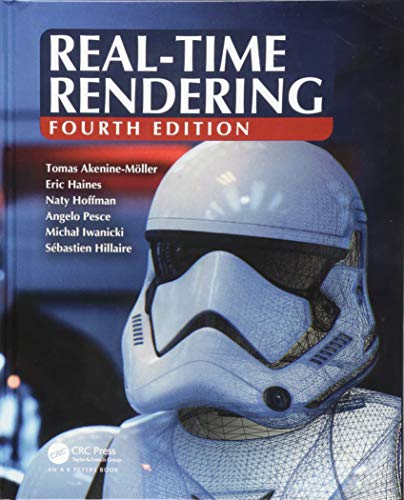
Real-Time Rendering, Fourth Edition
As an affiliate, we earn on qualifying purchases.
As an affiliate, we earn on qualifying purchases.