You’ll notice geometry everywhere in your daily environment—from the angles in buildings and bridges to natural patterns like honeycombs and snowflakes. Shapes like triangles, hexagons, and symmetrical designs provide strength, efficiency, and beauty. Recognizing these shapes helps you see how math keeps structures stable and natural patterns organized. If you keep exploring, you’ll discover even more hidden shapes and the fascinating ways geometry influences your everyday life.
Key Takeaways
- Geometry is present in architecture, shaping building stability and aesthetic appeal through angles and shapes like triangles and rectangles.
- Natural patterns such as honeycombs, shells, and snowflakes display geometric forms that maximize strength and efficiency.
- Symmetry in nature, like butterfly wings, demonstrates geometric principles that organize biological structures.
- Structural stability relies on geometric calculations to optimize load distribution and ensure safety in construction.
- Recognizing geometric shapes in everyday objects and environments enhances understanding of their design, function, and natural harmony.

Have you ever noticed how often geometry shows up in your daily routines? It’s everywhere, from the way buildings are designed to the natural patterns that surround you. One of the most visible examples is the angles in architecture. When you walk past a skyscraper or a historic bridge, you’re observing carefully calculated angles that guarantee stability and aesthetic appeal. Architects use triangles, rectangles, and other shapes to create structures that are both strong and visually pleasing. These angles aren’t just random; they follow geometric principles that allow buildings to withstand forces and distribute weight efficiently. By understanding these angles, you get a glimpse into how math keeps our cities standing tall, blending function with beauty seamlessly. Recognizing these geometric principles helps you appreciate the engineering that ensures safety and durability in construction.
Beyond buildings, geometry manifests in patterns in nature that you might have overlooked. Think about the spirals of shells, the hexagons of honeycombs, or the symmetry of a snowflake. These natural patterns are governed by geometric shapes that repeat and evolve in predictable ways. The symmetry you see in a butterfly’s wings or the radial arrangement of sunflower seeds follows mathematical rules that create order out of chaos. Recognizing these patterns helps you appreciate the inherent harmony in nature, which often reflects geometric principles rooted in simple ratios and shapes. It’s fascinating how nature employs geometry to optimize space, strength, and efficiency without any conscious design—those patterns serve crucial functions for the organisms involved.
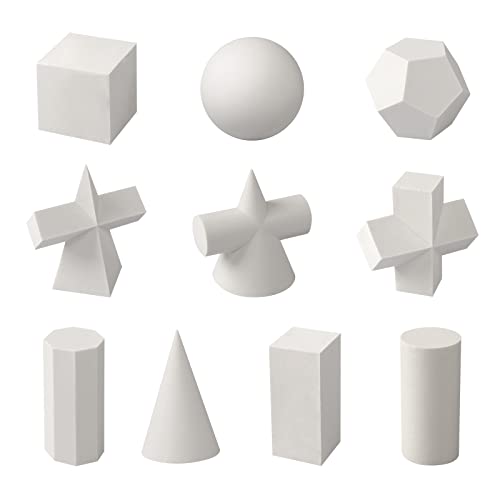
Holiberty 10PCS Art Crafts 3D Gypsum Geometry Sketch Basic Form Learning Tools Mini Resin Geometry Shapes Mold Sketch Classic Modern Shelf Table Sculpture Home Decor
- High Quality Resin Material: Durable, smooth, and fade-resistant
- Ideal Sketch Tools: Perfect for art learning and teaching
- Stylish Decorative Ornaments: Elegant sculptures for home and office
As an affiliate, we earn on qualifying purchases.
As an affiliate, we earn on qualifying purchases.
Frequently Asked Questions
How Can I Identify Geometric Shapes in Natural Environments?
To identify geometric shapes in natural environments, look closely at natural formations and animal structures. Notice the symmetry in leaves, the hexagonal patterns of honeycombs, or the circular shape of tree rings. Observe animal structures like shells or bird nests, which often feature geometric patterns. Use your eyes to spot straight lines, angles, or repeating shapes, and think about how these shapes help nature function and adapt.
What Are Common Geometric Patterns in Architecture?
You often see architectural tessellations creating intricate patterns on walls and floors, showcasing how shapes fit together seamlessly. Structural symmetry is common in buildings, providing balance and stability. Look for repeated geometric motifs like hexagons or squares in bridges, domes, and facades. These patterns not only enhance aesthetics but also demonstrate practical engineering principles, making architecture both beautiful and functional through the clever use of geometric designs.
How Does Geometry Influence Design and Engineering?
Geometry influences your design and engineering work by guiding structural analysis and mathematical modeling. You use geometric principles to guarantee stability, optimize shapes, and create efficient structures. Understanding angles, symmetry, and spatial relationships helps you predict how materials will perform under stress. This knowledge allows you to design safer, more durable, and aesthetically pleasing projects, seamlessly integrating mathematical concepts into practical applications that shape the built environment around you.
Can Understanding Geometry Improve Problem-Solving Skills?
Yes, understanding geometry can enhance your problem-solving skills. Imagine you’re designing a drone, and spatial reasoning helps you visualize how parts fit together, while logical deduction ensures your design is stable. By practicing these skills, you become better at tackling complex problems, seeing patterns, and finding solutions efficiently. Geometry trains your mind to think critically and logically, making you more adept at solving challenges both in everyday life and technical fields.
How Is Symmetry Used in Art and Decoration?
You use symmetry in art and decoration to create harmony and visual balance, making your designs more appealing. It helps you achieve color balance by mirroring colors and patterns, which enhances aesthetic appeal. In perspective drawing, symmetry guides you to create realistic scenes with proper proportions. By mastering these techniques, you make your artwork more engaging and visually cohesive, drawing viewers’ attention effortlessly.

Art3d Black Metal Wall art, 4 Pieces Wall Decor
- Modern Wall Art Design: Intricate hollow metal design
- Premium Quality Material: High-grade rust-resistant metal
- Versatile Home Decor: Suitable for any room or outdoor
As an affiliate, we earn on qualifying purchases.
As an affiliate, we earn on qualifying purchases.
Conclusion
You might be surprised to learn that over 70% of architectural structures incorporate geometric shapes to guarantee stability and aesthetic appeal. By recognizing these hidden shapes around you, you’ll see how geometry shapes your daily environment in ways you never noticed. From the curves of a coffee mug to the angles of a building, geometry is everywhere. So next time you look around, remember that the world is filled with fascinating, practical shapes waiting to be discovered.

AWHAO Architectural Monuments Figurine Model Famous Building Model Geometric Design Skyscraper for Shelf, Office, Antique Bronze, 22cm
- Detailed Architectural Design: Fine window and facade details with engraving
- Versatile Decorative Piece: Suitable for desks, shelves, and cabinets
- Premium Alloy Material: Antique bronze finish for classic elegance
As an affiliate, we earn on qualifying purchases.
As an affiliate, we earn on qualifying purchases.
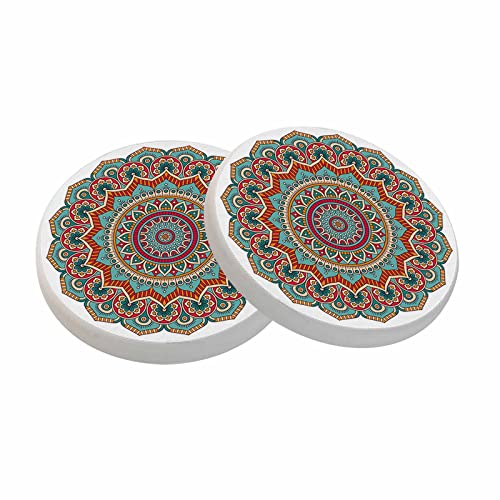
oFloral Ethnic Flower Coasters for Drinks Rustic Mandala Symmetry Cups Place Mats for Home Decor Set of 2, 4 Inch
- Diameter: Approximately 4 inches
- Thickness: About 0.35 inches
- Non-slip Base: Cork bottom for stability
As an affiliate, we earn on qualifying purchases.
As an affiliate, we earn on qualifying purchases.