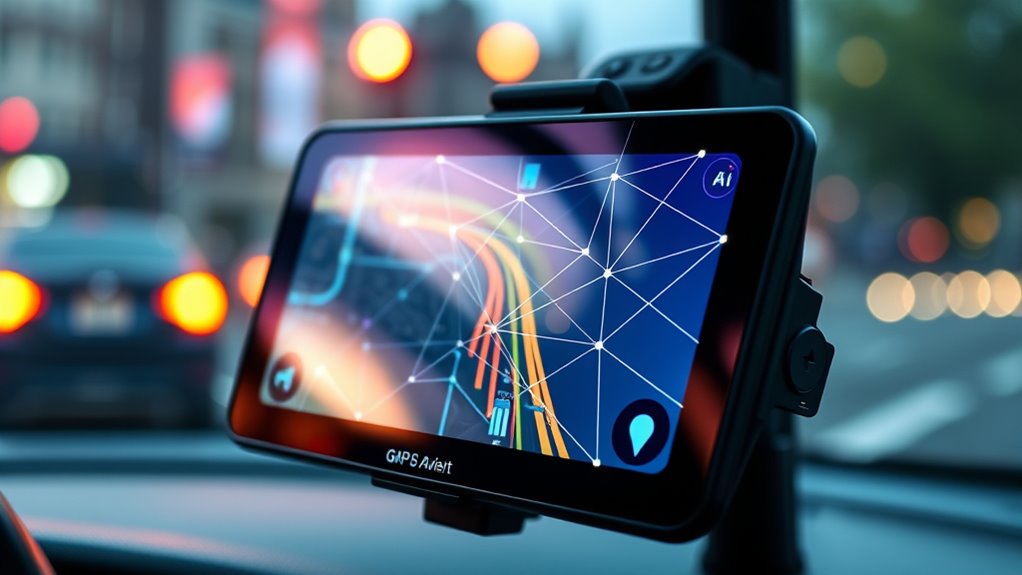

Geometric algorithms help your GPS find the way by interpreting signals from satellites and calculating your exact location through map triangulation. They measure the time it takes for signals to arrive, then translate that data into distances from multiple satellites. By intersecting these distances, your device pinpoints where you are on the map. These advanced calculations also optimize routes and adapt in real time, so you’ll discover more about how your GPS navigates every step of your journey.
Key Takeaways
- Geometric algorithms enable precise triangulation to determine your exact location using satellite signals.
- They facilitate distance calculations from multiple satellites based on signal timing.
- These algorithms interpret spatial data to accurately map your position on the Earth’s surface.
- They support route optimization by analyzing road networks and traffic conditions geometrically.
- Geometric principles allow real-time route recalibration for seamless navigation amid changing conditions.
Geometric algorithms are fundamental to the functioning of GPS technology, enabling precise navigation and positioning. When you use your GPS device or app to find your way, it relies on these algorithms to interpret signals from satellites and translate them into accurate location data. One key technique involved is map triangulation, which helps determine your exact position by measuring distances from multiple satellites. As the signals arrive at slightly different times, the device calculates how far you are from each satellite, and geometric algorithms then intersect these distances to pinpoint your location on the map. This process is vital because, without precise calculations, your GPS would struggle to give reliable directions or updates. Additionally, these algorithms incorporate principles from engineering and mathematics to enhance accuracy and efficiency in real-world navigation scenarios.
Once your position is established, your GPS isn’t just passively showing your location; it actively plans the best route to your destination. This is where route optimization comes into play. Geometric algorithms analyze the road network, considering factors like distance, traffic conditions, and road types to find the most efficient path. They evaluate multiple possible routes simultaneously, weighing their pros and cons, and choose the one that minimizes travel time or distance based on your preferences. This real-time analysis hinges on complex calculations that constantly adapt as conditions change, ensuring you’re always guided along the optimal route.
Route optimization uses geometric algorithms to analyze roads, traffic, and distance for the most efficient navigation.
The process of map triangulation and route optimization showcases how geometric algorithms integrate spatial data with mathematical precision. When you’re navigating through unfamiliar territory, these algorithms help your device interpret satellite signals to establish your position quickly and accurately. From there, they analyze the surrounding road network to generate a route that saves you time and fuel. As traffic updates come in or if you deviate from the suggested path, the algorithms recalibrate, continuously refining the route to keep you on track. This constant adjustment relies on geometric principles to quickly process new data and provide seamless guidance.
In essence, geometric algorithms are the backbone of your GPS experience. They translate satellite signals into precise locations through map triangulation and then utilize route optimization to guide you efficiently. Without these sophisticated calculations, your device wouldn’t be able to provide the reliable, real-time directions that make traveling smoother and less stressful. Every time you see your route change or get a new estimated arrival time, remember that behind the scenes, complex geometric algorithms are working tirelessly to help you find your way.
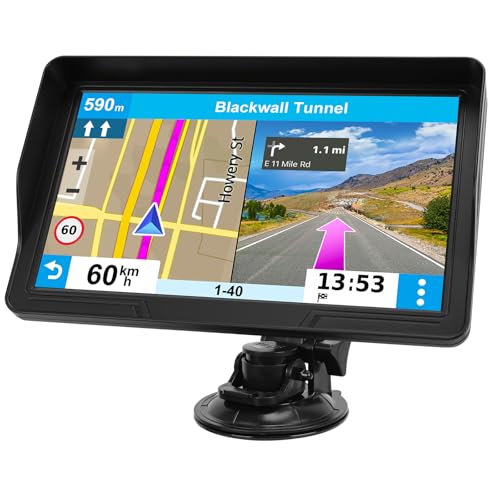
GPS Navigator for Car Truck RV, 9-Inch HD Touchscreen GPS for Car with 2026 Maps Free Lifetime Updates, Voice Turn-by-Turn Guidance, Speed & Red Light Camera Alerts, Custom Truck Routing
- Large HD Touchscreen: 9-inch high-definition display for clear visuals
- Lifetime Map Updates: Free updates with 2026 North America maps
- Voice Guidance: Turn-by-turn voice prompts for easy navigation
As an affiliate, we earn on qualifying purchases.
As an affiliate, we earn on qualifying purchases.
Frequently Asked Questions
How Do Geometric Algorithms Compare to Machine Learning in Navigation?
You might wonder how geometric algorithms compare to machine learning in navigation. Geometric algorithms excel at map optimization and pathfinding efficiency, quickly calculating the best routes based on spatial data. In contrast, machine learning adapts to new patterns and traffic conditions over time. While geometric algorithms provide fast, reliable routes, machine learning offers smarter, context-aware navigation. Combining both can enhance your GPS’s accuracy and responsiveness.
Can Geometric Algorithms Adapt to Real-Time Traffic Changes?
Imagine your GPS as a savvy navigator, quick to adjust its sails. Geometric algorithms, however, focus on the fixed map, making it tough to adapt to real-time traffic changes. They excel at route optimization but lack the agility for traffic prediction. To truly navigate dynamic roads, your system needs a blend of geometric precision and real-time data, ensuring you dodge traffic jams and stay on the fastest path.
Do Geometric Algorithms Work Outdoors or Indoors Better?
You might wonder if geometric algorithms work better outdoors or indoors. Outdoors, they excel because satellite signals provide accurate data, enhancing map accuracy. Indoors, signals can weaken or be obstructed, reducing precision. Geometric algorithms rely on satellite data, so they perform best outdoors where signals are strong. Indoors, their effectiveness drops, and other techniques are often needed to improve location accuracy.
How Energy-Efficient Are Geometric Algorithms for GPS Devices?
You might wonder about the energy consumption of geometric algorithms in GPS devices. These algorithms are designed for high efficiency, helping reduce overall power use. Their optimized structure means your GPS can process location data quickly without draining your battery too fast. As a result, the algorithm efficiency directly contributes to a longer device lifespan, making your navigation experience more sustainable and reliable, especially during extended outdoor trips.
Are Geometric Algorithms Used in Autonomous Vehicle Navigation?
Like a skilled conductor, geometric algorithms orchestrate autonomous vehicle navigation. You rely on them for sensor fusion and obstacle detection, helping your vehicle interpret complex surroundings. These algorithms process spatial data quickly and accurately, enabling safe decision-making on the road. They map out routes, avoid hazards, and adapt to changing environments, making your ride smooth and secure. Fundamentally, they’re the brain behind your vehicle’s ability to navigate confidently and efficiently.
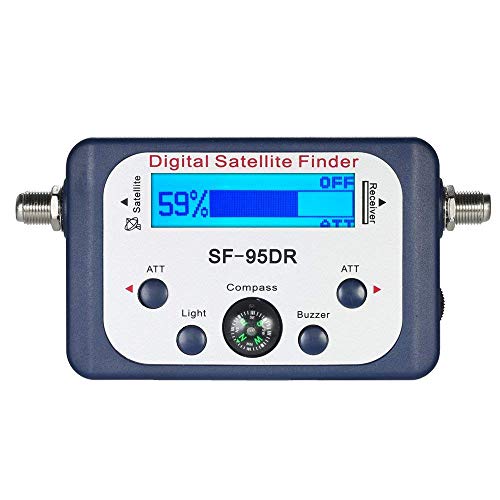
AGPtek Digital Satellite Finder for Dish DirectTV FTA, Signal Meter
- High-Quality Construction: Professional design with compass for easy tuning
- Reduced Signal Loss: Built-in amplifier compensates insertion loss
- Versatile Satellite Tool: Connects to LNB and receiver for optimal tuning
As an affiliate, we earn on qualifying purchases.
As an affiliate, we earn on qualifying purchases.
Conclusion
Think of geometric algorithms as your trusted compass, guiding you through a maze of streets and obstacles. They’re the silent sailors steering your GPS ship, charting the quickest course across uncharted waters. As you follow their lead, every turn becomes clear, every route precise. With these algorithms as your mapmaker, you’re free to explore confidently, knowing that technology’s steady hand will always steer you home—swiftly, safely, and surely through the labyrinth of roads.

GPS Tracker for Vehicles – No Subscription Tracker Device for Vehicles, No Monthly Fee & SIM Card for Car Tracker Device Hidden for Android and iPhone, IP68 Waterproof, Safe & Durable, Small
- Global Compatibility: Works with iOS and Android devices
- Dual-System Support: Compatible with Google Find Hub and Apple Find My
- Loud Alert Sound: 100dB high-volume speaker for quick location
As an affiliate, we earn on qualifying purchases.
As an affiliate, we earn on qualifying purchases.
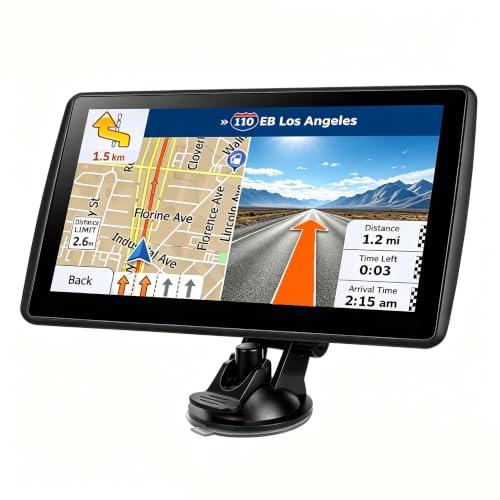
7'' GPS Navigator for Car – 2026 North America Maps Free Lifetime Updates
- Map Updates: Pre-installed 2026 North America maps with free updates
- Voice Guidance: Clear turn-by-turn voice directions and alerts
- Safety Alerts: Notifies speed limits and school zones
As an affiliate, we earn on qualifying purchases.
As an affiliate, we earn on qualifying purchases.