Geometry in architecture helps you design structures that are both strong and beautiful by ensuring that curves, angles, and proportions work together for stability and visual harmony. It allows you to distribute loads effectively, minimize material waste, and create open, resilient spaces. Using principles like the Golden Ratio or precise calculations, you can craft buildings that balance art and engineering. Keep exploring to uncover how these geometric concepts shape iconic and enduring designs.

Prime made for students and young adults
- Fast, free delivery for dorm and study essentials
- Prime Video and Amazon Music included
- Member-only deals
Key Takeaways
- Geometry creates visually appealing designs while ensuring structural stability through shapes like arches and domes.
- It optimizes material use and load distribution, enhancing strength and sustainability.
- Precise geometric calculations maintain safety, balance forces, and support large spans without excessive supports.
- Symmetry, proportions, and ratios like the Golden Ratio foster aesthetic harmony and visual coherence.
- Geometric principles blend science, art, and engineering to develop resilient, beautiful architectural structures.
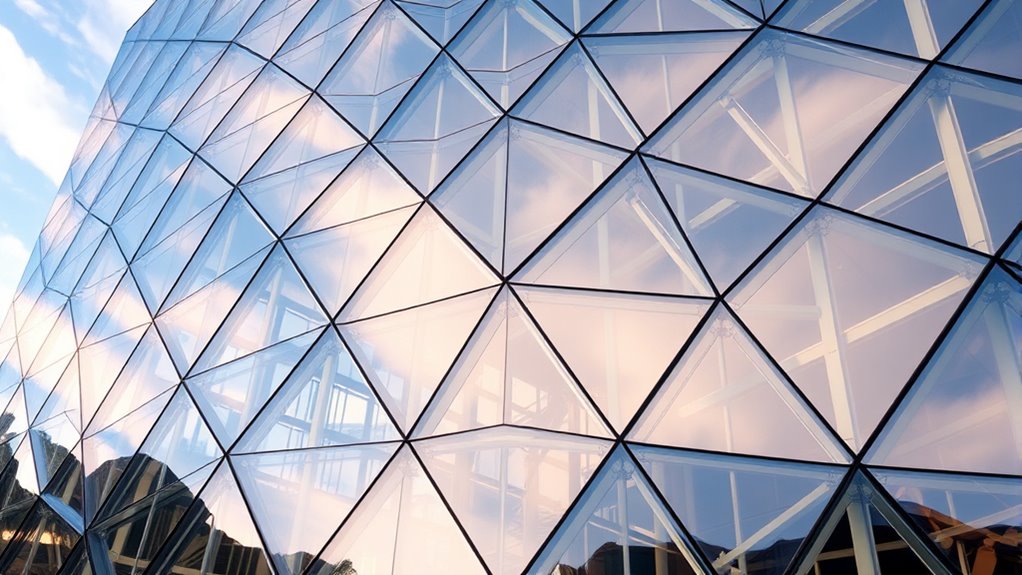
Have you ever wondered how architects create the striking shapes and structures around us? It all comes down to a deep understanding of geometry. Architects leverage geometric principles to craft buildings that are not only visually engaging but also structurally sound. By doing so, they ensure that every curve, angle, and line contributes to both the beauty and stability of a structure. When you look at a modern skyscraper or an elegant bridge, you’re witnessing the power of geometry in design, where form and function blend seamlessly.
Architects use geometry to create beautiful, stable structures that blend form and function seamlessly.
One of the primary goals in architectural geometry is achieving structural efficiency. This means designing shapes that distribute loads effectively, minimizing material waste while maximizing strength. For example, arches and domes use geometric principles to transfer weight evenly, allowing for larger open spaces without the need for excessive support. Architects calculate angles and curves meticulously to ensure that forces flow smoothly through the structure, reducing stress points and preventing failures. This efficiency isn’t just about safety; it also makes buildings more sustainable by reducing the amount of materials used and energy consumed during construction and maintenance. Additionally, understanding geometric optimization helps architects enhance both the durability and aesthetic appeal of their designs.
At the same time, geometric shapes help create aesthetic harmony, making buildings visually appealing and harmonious with their surroundings. Symmetry, proportions, and repeating patterns contribute to a sense of balance and order that our eyes find pleasing. Architects often employ classical geometric ratios, like the Golden Ratio, to establish pleasing proportions that evoke a sense of natural beauty. These mathematical relationships create a feeling of unity and coherence, making structures feel intentional and well-designed. Whether it’s the sleek lines of a modern museum or the intricate facades of historical cathedrals, geometry guides the eye and evokes emotional responses.
In essence, geometry acts as the blueprint for designing structures that are both resilient and beautiful. It allows architects to optimize material use, ensuring that every element serves a purpose without compromising strength. Simultaneously, geometric principles help craft visual harmony that resonates with viewers, making structures feel both functional and artful. When you walk past a building or cross a bridge, remember that behind its impressive appearance lies a foundation built on geometric precision—where science and art meet to create something truly extraordinary. This balance between structural efficiency and aesthetic harmony is what makes architecture a engaging blend of mathematics, engineering, and creativity.
As an affiliate, we earn on qualifying purchases.
Frequently Asked Questions
How Do Architects Incorporate Fractal Geometry Into Building Designs?
You incorporate fractal geometry into building designs by using fractals in facades and creating recursive pattern designs. This approach allows you to develop visually enthralling structures that mimic natural forms, enhancing aesthetic appeal and structural integrity. By applying recursive patterns, you can craft intricate details that repeat at different scales, adding depth and complexity. Fractals in facades make your buildings stand out while maintaining harmony with nature’s patterns.
What Role Does Symmetry Play in Architectural Stability?
Symmetry plays a vital role in architectural stability by creating architectural balance, which evenly distributes weight and forces throughout a structure. This balance enhances both strength and durability, guaranteeing your building withstands environmental stresses. Additionally, symmetry contributes to aesthetic harmony, making your design visually pleasing and harmonious. By incorporating symmetry thoughtfully, you guarantee your structure is both stable and beautiful, engaging viewers while maintaining structural integrity.
How Are Complex Geometric Patterns Optimized for Structural Efficiency?
You optimize complex geometric patterns by leveraging material innovation, which allows for lighter yet stronger structures, and focusing on aesthetic harmony to guarantee visual appeal. Interestingly, studies show that carefully designed patterns can reduce material use by up to 30% without compromising stability. By combining innovative materials with precise geometric arrangements, you achieve both structural efficiency and beauty, making your designs resilient and enthralling.
Can Geometric Principles Predict How Buildings Respond to Environmental Forces?
Yes, you can use geometric principles to predict how buildings respond to environmental forces. By analyzing shapes and patterns, you understand material resilience and how structures distribute stress. This helps guarantee aesthetic harmony while optimizing strength. Incorporating geometry allows you to design buildings that adapt to wind, earthquakes, and other forces, creating resilient, beautiful structures that perform reliably under various environmental conditions.
How Does Digital Modeling Enhance Geometric Accuracy in Architecture?
Digital modeling enhances geometric accuracy in architecture by providing digital precision that captures every detail. You can rely on modeling software to create precise, scalable designs that reflect your vision perfectly. This technology streamlines complex calculations, reduces errors, and allows for adjustments in real-time. By embracing digital tools, you guarantee your structures are both beautiful and strong, transforming your ideas into flawlessly executed architectural masterpieces.
Golden Ratio architectural design book
As an affiliate, we earn on qualifying purchases.
As an affiliate, we earn on qualifying purchases.
Conclusion
So, next time you marvel at a building’s beauty, remember that its strength and elegance come from the magical power of geometry. You’re not just looking at bricks and beams—you’re witnessing the universe’s secret code shaping the world around you. Without geometry, your favorite structures would crumble into chaos! It’s the invisible superhero behind every stunning, resilient design. Embrace it, and you’ll see the world with eyes that recognize the incredible patterns holding everything together.
structural engineering load distribution kit
As an affiliate, we earn on qualifying purchases.
As an affiliate, we earn on qualifying purchases.
arch and dome construction models
As an affiliate, we earn on qualifying purchases.
As an affiliate, we earn on qualifying purchases.
Fall Picks
fall essentials
As an affiliate, we earn on qualifying purchases.