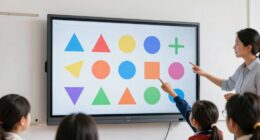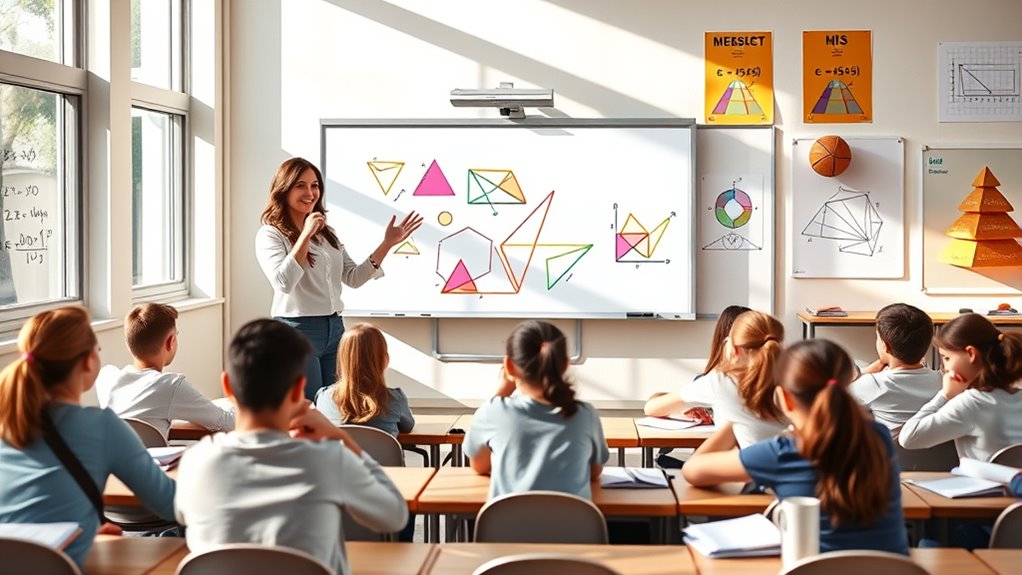

To make geometry engaging in your classroom, use visual aids, models, and real-world examples to help students see shapes and theorems in action. Incorporate hands-on activities and technology like dynamic geometry software to foster critical thinking and curiosity. Encourage student participation through questions and group work to deepen understanding. By connecting concepts to everyday life, you create a lively learning environment. Continue exploring strategies that inspire a love for geometry and boost confidence in your students.
Key Takeaways
- Effective geometry teaching combines visual aids, hands-on activities, and real-world applications to engage diverse learning styles.
- Using targeted questions and group discussions encourages critical thinking and deeper understanding of geometric concepts.
- Incorporating technology like dynamic software enhances interactivity and makes abstract shapes more tangible.
- Relating geometry to everyday scenarios fosters relevance and sparks student curiosity.
- A supportive, participatory classroom environment builds confidence and inspires a lasting interest in geometry.

Have you ever wondered what makes a great math teacher stand out? It’s often their ability to connect with students and make complex concepts like geometry accessible and exciting. One key factor is their use of effective educational strategies that foster student engagement. When you employ diverse teaching methods, you create an environment where students are more likely to participate actively and develop a genuine interest in learning geometry.
Great math teachers connect with students and make geometry engaging through diverse, interactive teaching strategies.
A standout geometry teacher knows that engaging students isn’t just about delivering information; it’s about creating meaningful interactions. You might incorporate visual aids, models, or real-world applications to make abstract shapes and theorems tangible. For example, using physical objects like triangles or circles can help students visualize properties and relationships more clearly. This approach taps into different learning styles, ensuring that visual, kinesthetic, and auditory learners all stay involved.
Another crucial educational strategy involves asking thought-provoking questions that challenge students to think critically. Instead of simply presenting formulas or theorems, you encourage them to explore why certain properties hold true. This active thinking process boosts understanding and retention. You might also assign hands-on activities, such as constructing geometric figures or using technology tools like dynamic geometry software, to make lessons more interactive. These methods not only keep students engaged but also promote inquiry and discovery.
Moreover, integrating real-life applications of geometry can pique students’ interest and demonstrate its relevance outside the classroom. For instance, relating the Pythagorean theorem to construction projects or sports strategies makes the subject more relatable. When students see how geometry applies to everyday life, they’re more motivated to learn and participate.
You also need to create a supportive classroom atmosphere where students feel comfortable sharing ideas and asking questions. Building this environment encourages collaboration, which can further enhance engagement. Group activities, discussions, and peer teaching allow students to learn from each other and deepen their understanding of geometric concepts.
Furthermore, utilizing AI tools in lessons can provide personalized feedback and adaptive learning experiences, making geometry instruction more effective for diverse learners. Ultimately, a successful geometry teacher combines innovative educational strategies with a genuine enthusiasm for the subject. You inspire students to see beyond the pages of their textbooks and discover the beauty and practicality of geometry. By focusing on student engagement, you foster a love for learning that can last well beyond the classroom. This approach not only helps students master geometric principles but also builds their confidence and critical thinking skills, setting them up for success in more advanced math courses and real-world problem solving.

The Geometer's Sketchpad: Dynamic Geometry Software for Exploring Mathematics
- Condition: Used Book in Good Condition
As an affiliate, we earn on qualifying purchases.
As an affiliate, we earn on qualifying purchases.
Frequently Asked Questions
How Do Students Respond to Hands-On Geometry Activities?
You notice that students respond positively to hands-on geometry activities because they boost engagement and help correct common misconceptions. When students actively manipulate shapes and explore concepts physically, they often develop a clearer understanding of geometric principles. This hands-on approach keeps students interested, reduces confusion around geometry misconceptions, and encourages participation. Overall, students find these activities engaging and effective, making geometry lessons more enjoyable and memorable.
What Technology Tools Enhance Geometry Teaching Effectiveness?
You can enhance geometry teaching by using dynamic software and interactive apps that make concepts come alive. These tools allow students to manipulate shapes, explore properties, and visualize geometric ideas in real-time, boosting understanding and engagement. By integrating technology, you create an interactive learning environment where students actively participate and develop deeper insights into geometry, making lessons more effective and enjoyable.
How Do You Differentiate Lessons for Diverse Learning Styles?
You can differentiate lessons by incorporating varied strategies like visual learning tools and kinesthetic approaches. For example, you might use interactive geometric models for tactile learners while providing visual diagrams for those who learn best through images. In a classroom, mixing activities like drawing, manipulating shapes, or using digital apps caters to diverse learning styles, ensuring every student engages actively and understands geometry concepts effectively.
What Common Misconceptions Do Students Have About Geometry?
You often find students have misconceptions about angles, thinking all angles are sharp or that right angles are the only important ones. They may also misunderstand shapes, believing that all quadrilaterals are rectangles or that all triangles are the same. These shape misunderstandings can lead to confusion when identifying properties or solving problems. To correct these, you need to emphasize different types of angles and shapes, providing clear examples and hands-on activities.
How Do You Assess Student Understanding in Geometry?
You assess student understanding in geometry by weaving visualization techniques into your lessons, like asking students to draw and manipulate shapes mentally. You use formative assessments—quick quizzes, think-pair-share, or exit tickets—to catch misconceptions early. These tools create a rhythm, letting you see if students grasp concepts like angles or congruence. This active approach keeps your teaching responsive, ensuring students build confidence through continuous, visual, and interactive feedback.

KiBcsLic 8 Pieces Transparent Geometric Solids Visual Demonstration Tool Transparent Geometry Models Foldable 3D Shapes Kit for Primary School Students
- Complete Geometric Shapes Set: Includes cube, cylinder, cone, pyramids
- Educational Classroom Tool: Ideal for elementary and middle school students
- Visual Learning Aid: Removable colorful inserts show surface area
As an affiliate, we earn on qualifying purchases.
As an affiliate, we earn on qualifying purchases.
Conclusion
As you reflect on the inspiring work of math teachers shaping young minds, remember their dedication gently guides students through sometimes complex concepts. Their passion quietly sparks curiosity and confidence, helping students see the beauty in geometry’s patterns and shapes. By supporting these educators, you help nurture a future where learning feels more like an exciting journey than a formidable challenge. Together, we can create an environment where every student finds their love for math, one gentle step at a time.

Foraineleyo 3D Paper Folding STEM Kit – Hands-On Math & Geometry Toy Set with 5 Origami Models, Step-by-Step Tutorials & Video Guides for Kids Ages 6-12, Educational DIY Craft Gift
- 5-in-1 STEM Learning Set: Includes 5 unique 3D origami models
- Step-by-Step Instructions: Detailed tutorials and video guides included
- Safe, Durable Materials: Made with thick, non-toxic, tear-resistant paper
As an affiliate, we earn on qualifying purchases.
As an affiliate, we earn on qualifying purchases.
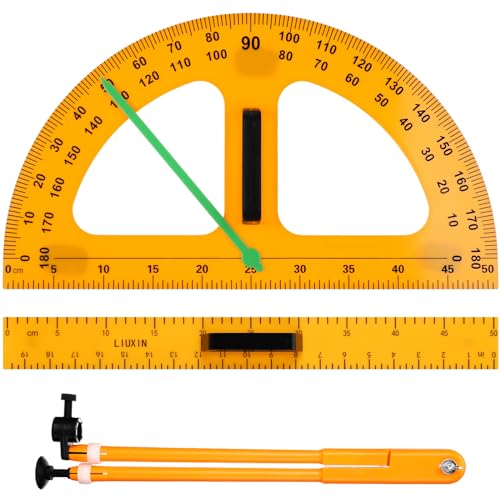
MotiMind 1 Set Large Mathematics Teaching Kit Including 1 Pcs Jumbo Teaching Ruler 1 Pcs Large Protractor 1 Pcs Geometry Compass Big Geometry Measurement Tool for Teacher Classroom Black Board
- Complete Teaching Tools Set: Includes ruler, compass, and protractor
- Large Visibility Dimensions: Ruler 50cm, Protractor 45cm, Compass size
- Durable PP Material: Sturdy, scratch-resistant, long-lasting
As an affiliate, we earn on qualifying purchases.
As an affiliate, we earn on qualifying purchases.