

Choosing a science experiment kit is less about finding the box with the most dramatic project and more about matching the kit to how a child likes to learn. Reusable, open-ended kits usually include tools and materials for a range of investigations; single-project kits focus on a small set of activities with a defined result. That difference affects how much adult help a child may need, how long the kit stays interesting, and whether its price pays off after the first afternoon. Choose a reusable kit for a curious child who likes trying variations, or a single-project box for a first experiment, a short activity, or a gift with a clear plan.

Prime made for students and young adults
- Fast, free delivery for dorm and study essentials
- Prime Video and Amazon Music included
- Member-only deals
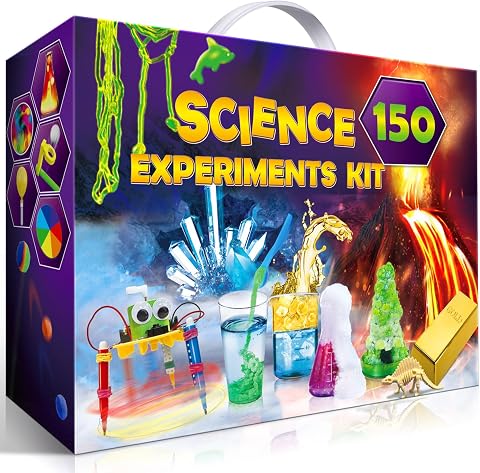
UNGLINGA 150-Experiment Science Kit for Kids
- ✔ Brand: UNGLINGA
- ✔ Experiments: 150
- ✔ Recommended age: 8 years and up
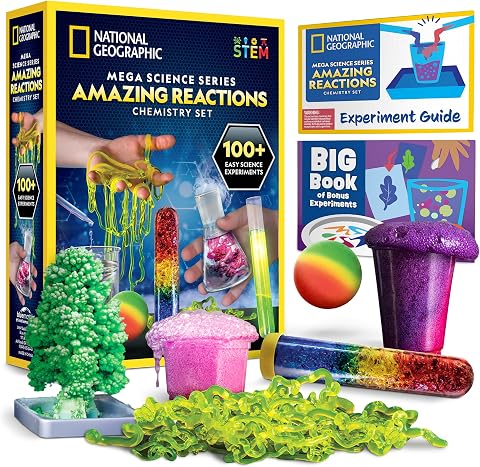
National Geographic Amazing Chemistry Set with 100+ Experiments
- ✔ Brand: Blue Marble
- ✔ Age range: 8 years and up
- ✔ Experiments: 15 kit-based experiments plus 85 bonus experiments

National Geographic Science Magic Kit for Kids, 100+ Experiments
- ✔ Brand: Blue Marble
- ✔ Age range: 8 years and up
- ✔ Included experiments: 20 magic experiments
At a Glance
| Criteria | Reusable, open-ended science kits | Single-project science kits | Winner |
|---|---|---|---|
| Experiment variety | Often supports multiple investigations and variations | Usually centers on a few specified activities | A |
| Repeat use | Tools can be reused; consumables may need replacing | Often limited by included consumables or one-time steps | A |
| Instructions and independence | May invite exploration but can leave more choices to the child | Typically gives a clearer sequence and target result | B |
| Adult involvement | Often helpful for setup, questions, and safe handling | May need less planning, though supervision still matters | B |
| Age and skill fit | Best when the child can handle some open-ended choices | Can suit beginners who benefit from a guided task | Depends |
| Time and setup | Can involve gathering materials and resetting between activities | Often designed for a contained activity, but prep varies | B |
| Value over time | Can pay off over repeated sessions | Good value for a complete, short experience; less so for repeat use | Depends |
UNGLINGA 150-Experiment Science Kit for Kids
The UNGLINGA kit earns our overall pick because its stated activities range across chemistry, physics, Earth science, and surface tension. That makes it a stronger choice for a child whose interests shift from one kind of question to another than either National Geographic set, which has a narrower chemistry or magic-trick focus. Its illustrated, step-by-step manual and included goggles and kid-friendly tools help give the activities a guided, hands-on format.The headline count of 150 experiments signals breadth, but it does not mean every project is fully supplied: some activities use common household items. Families should expect to check the manual before starting, particularly when a child wants to begin an experiment immediately. Compared with the Amazing Chemistry Set, UNGLINGA favors topic range over a clearly specified set of chemistry tools such as test tubes and pipettes. Compared with the Science Magic Kit, it offers less of a ready-made performance angle. Its advantage is variety; its tradeoff is that a broad catalog still calls for some preparation.
Pros:
- Lists 150 experiments across four science areas.
- Illustrated, step-by-step manual supports guided activities.
- Includes kid-friendly tools and goggles.
- Some experiments use common household items.
Cons:
- Some projects require supplies not included in the kit.
- Its broad topic mix may be less focused than a dedicated chemistry set.
Best for: Families seeking one kit that introduces children ages 8 and up to several science topics, with an illustrated manual and included tools.
Not ideal for: Children who want only chemistry activities, or families expecting every experiment to include all required materials.
Bottom line: Choose UNGLINGA when variety across science topics matters more than a narrowly focused kit or a performance theme.
“Choose UNGLINGA when variety across science topics matters more than a narrowly focused kit or a performance theme.”
National Geographic Amazing Chemistry Set with 100+ Experiments
For a child specifically curious about chemical reactions, crystals, and lab-style equipment, the Amazing Chemistry Set has a more defined purpose than the broader UNGLINGA kit. Its supplied tools include test tubes, beakers, and pipettes, and the included materials support 15 experiments, including crystal growing and color-changing solutions. Those details make the chemistry theme tangible: children handle familiar scientific tools while following activities in one subject area.The 100-plus total needs context. The kit provides materials for 15 experiments; the guide’s other 85 activities use common household items. That makes this a less self-contained choice than the headline may suggest, and less suited to families seeking a large set of supplied projects. UNGLINGA offers more listed activities and a wider mix of topics, while the Science Magic Kit adds a performance element. The chemistry set is the better match when focused chemistry and practical lab tools matter most, provided an adult is comfortable checking which extra supplies are needed.
Pros:
- Supplies materials for 15 chemistry experiments.
- Includes test tubes, beakers, and pipettes.
- Activities include crystal growing and color-changing solutions.
- Guide adds 85 household-item experiments.
Cons:
- Most of the advertised activities are not supplied with kit materials.
- The 85 bonus experiments require common household items.
- Its chemistry focus offers less subject variety than UNGLINGA.
Best for: Children ages 8 and up who are especially interested in chemistry, crystals, reactions, and using lab-style tools.
Not ideal for: Families wanting a broad range of science topics or materials supplied for all of the activities in the advertised total.
Bottom line: Pick this set for a focused introduction to chemistry tools and reactions, while accounting for the household supplies needed for bonus activities.
“Pick this set for a focused introduction to chemistry tools and reactions, while accounting for the household supplies needed for bonus activities.”
National Geographic Science Magic Kit for Kids, 100+ Experiments
The Science Magic Kit gives experiments a social goal: children can learn a science concept and then present it as a trick. Its 20 supplied magic experiments, wand, white gloves, and illustrated explanations distinguish it from the chemistry set’s lab-tool approach and UNGLINGA’s wider topic survey. For a child who likes demonstrations, the performance framing may make it easier to share an activity with family or friends while learning how the effect works.This is the most specialized pick in the lineup. Its core set centers on tricks rather than the broad range of subjects in UNGLINGA or the dedicated chemistry activities and tools in the Amazing Chemistry Set. The bonus booklet adds more than 85 experiments, but those rely on common household items, while the included materials cover 20. Families should also expect to help children check instructions and prepare each activity. Choose it for the show-and-explain format; skip it if the main goal is a broad, conventional science kit or chemistry equipment.
Pros:
- Combines 20 supplied experiments with magic-trick presentations.
- Includes a wand and white gloves for performances.
- Illustrated guide explains the science behind the tricks.
- Adds a booklet of more than 85 household-item experiments.
Cons:
- Only 20 experiments include kit materials.
- Bonus activities depend on household supplies.
- Its performance theme is narrower than UNGLINGA’s topic mix or the chemistry set’s focus.
Best for: Children ages 8 and up who enjoy performing demonstrations and explaining how science makes a trick work.
Not ideal for: Families looking primarily for broad science-topic coverage, dedicated chemistry tools, or kit materials for every listed experiment.
Bottom line: Choose this kit when presenting science is part of the fun, and the child is happy to gather supplies for bonus activities.
“Choose this kit when presenting science is part of the fun, and the child is happy to gather supplies for bonus activities.”
As an Amazon Associate we earn from qualifying purchases.
Key Differences
The biggest difference is what happens after the first successful experiment. A reusable kit can invite a child to change one variable, repeat a test, or use its tools for a different question. That makes it a stronger fit for ongoing exploration, but the box may not provide a fully scripted path for every activity. Families should check what is included and whether experiments rely on household materials, since a kit’s advertised variety can depend on both.
A single-project kit usually reduces the work of choosing what to do. The instructions and materials are organized around a result, which can make the activity easier to start and satisfying to finish. The tradeoff is a shorter runway: when the projects are complete or the consumables are used, the box may have little left to offer. Neither format is automatically more educational; the better choice is the one that makes a child want to ask another question and has an adult available for the guidance the activity requires.
Detailed Comparison
Experiment variety (Reusable, open-ended science kits wins — moderate)
Reusable kits generally win because shared tools can support different questions and repeat attempts. The gap is moderate: a well-designed single-project box may still contain several activities, while a reusable kit’s real variety depends on the instructions and materials. For a child who wants to keep experimenting after the first result, A offers more room to continue.
Repeat use (Reusable, open-ended science kits wins — major)
A is the stronger choice for repeat sessions because durable tools can be used again, though liquids, powders, seeds, or other consumables may run out. B can be more limited when its key steps consume included materials. The gap is major for families seeking a kit to use across several weekends, but smaller if the goal is one memorable activity.
Instructions and independence (Single-project science kits wins — moderate)
B often wins for clarity because it is built around a defined sequence and outcome. That can help a beginner feel capable of completing a project. A may encourage useful choices and predictions, but those choices can frustrate a child who wants to be told exactly what to do. The difference is moderate; check whether the specific kit offers age-appropriate steps and illustrations.
Adult involvement (Single-project science kits wins — minor)
B often takes less planning because the activity has a set path, but a clear instruction sheet does not remove the need for supervision. A may ask an adult to help select an experiment, find household supplies, or discuss what changed between attempts. The gap is minor to moderate and depends on the child’s age, the activity, and the manufacturer’s safety guidance.
Age and skill fit (moderate difference)
There is no universal winner. Younger beginners may prefer B’s contained activity, while children who already enjoy asking their own questions may get more from A. Labels such as “for ages 8+” are a starting point, not a guarantee of independence. Read the recommended age, required reading or fine-motor skills, and supervision notes for the specific box.
Time and setup (Single-project science kits wins — minor)
B usually has an advantage when a family wants a planned activity with a clear start and finish. A may require sorting components, gathering extra supplies, or deciding which experiment to try. The difference is minor when an adult is happy to prepare in advance, but more noticeable when the kit is meant to occupy a child with little setup.
Value over time (major difference)
Value depends on use. A can justify a higher upfront price if the child returns to it and the core equipment supports multiple experiments. B can be the better buy for a one-time gift or an activity whose instructions and outcome matter more than future use. Compare included experiments, refill costs, and supplies that must be purchased separately before paying extra for either format.
Reusable, open-ended science kits: Pros and Cons
Pros:
- Supports repeat experiments and changing variables
- Can stay useful beyond one planned afternoon
- Encourages children to explore questions at their own pace
Cons:
- May require extra household supplies or refills
- Open-ended activities can need more adult guidance
- Advertised variety may exceed what the included materials support
Single-project science kits: Pros and Cons
Pros:
- Clear sequence and a defined result can suit beginners
- A contained project can be easier to plan as a gift or activity
- Often requires less decision-making before starting
Cons:
- Some activities use up materials and cannot be repeated
- May offer less to do once the listed projects are complete
- A higher price can be poor value if the box is used only briefly
Who Should Choose What
Choose Reusable, open-ended science kits if:
- Your child likes repeating an experiment to see what changes.
- You want a kit for several sessions and can help with occasional setup.
- The child enjoys choosing questions rather than following only a fixed recipe.
Choose Single-project science kits if:
- This is a first science kit and a guided activity feels less intimidating.
- You want a ready-to-follow project for a particular occasion.
- Your child is most motivated by completing a clear task with a visible result.
Skip both if: Skip both if the age guidance, safety requirements, or supervision needs do not fit your household, or if the child would prefer a specific science topic that neither kit covers.
Value for Money
Pay more for a reusable kit only when its tools support activities your child is likely to repeat. Check whether the listed experiments use the included components, whether common supplies are required, and whether refills are sold at a sensible cost. A bigger box or a longer list of possible experiments does not automatically mean better value.
A single-project kit can be worth its price when convenience, clear instructions, and a satisfying one-time activity are the point. It is usually weaker value as an ongoing science resource if its materials are consumed quickly and no follow-up activities are supplied. For repeated use, A is the better value for many families; for a planned short activity, B may be the smarter spend.
Final Verdict
For most children who already enjoy hands-on discovery and have an adult available to guide them, choose a reusable, open-ended kit. Its repeat use and room for variations give it a longer life, provided the instructions and included supplies support more than a promise on the packaging. Choose a single-project kit for a beginner, a defined occasion, or a child who prefers clear steps and a quick finish. The deciding factor is whether you want an ongoing set of tools or a well-contained project; pay more only when the kit’s likely use matches that goal.
Frequently Asked Questions
Which type is better for a child’s first science kit?
A single-project kit can be an easier introduction if the child benefits from clear steps and a defined finish. A reusable kit can also work well when an adult is ready to help choose and explain activities. Check the age guidance and the reading or setup each activity requires.
Are reusable science kits worth the higher price?
They can be if the child will use the tools across several experiments and the needed consumables are included or affordable. If the box is likely to be used once, a focused project kit may offer better value. Compare what is reusable with what gets used up.
Do children need an adult for science experiment kits?
Often, yes. The amount of help varies by age and activity, and adult supervision may be needed for handling materials, measuring, or cleanup. Follow the specific manufacturer’s safety instructions rather than assuming a kit is fully independent because it includes a guide.
How can I tell whether a kit has enough experiments?
Look beyond the number printed on the box. Check how many activities use the included components, whether materials run out after one attempt, and what extra household supplies are needed. A smaller set of repeatable activities can offer more lasting use than a longer list of one-time demonstrations.


