When choosing educational science kits for kids, the real decision is whether a child will benefit more from variety across science and engineering or from repeated, carefully guided chemistry experiments. KiwiCo is known for age-specific crates that cover topics such as engineering, art, physics, and nature. MEL Science centers its children’s offerings on chemistry and related science, pairing experiment materials with structured explanations and, in some plans, digital features.

Prime made for students and young adults
- Fast, free delivery for dorm and study essentials
- Prime Video and Amazon Music included
- Member-only deals
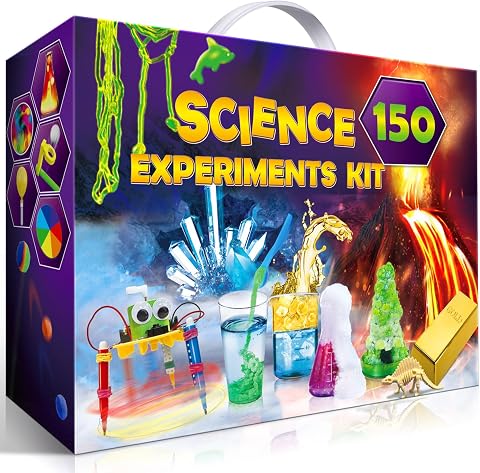
UNGLINGA 150-Experiment Science Kit for Kids – Chemistry Lab & STEM Toys
- ✔ Brand: UNGLINGA
- ✔ Recommended age: 8 years and up
- ✔ Experiment count: 150

National Geographic Junior Chemistry Set with 50 Experiments for Kids
- ✔ Brand: Blue Marble; National Geographic sub-brand
- ✔ Age range: 4 years and up
- ✔ Experiment count: 50

Doctor Jupiter Preschool Science Kit for Kids Ages 3-5, Birthday Gift
- ✔ Brand: Doctor Jupiter
- ✔ Age range: 3+ years; intended for preschool learners
- ✔ Experiment count: More than 100
That difference matters more than a simple question of which kit has more activities. A child who likes building, making, and switching topics may get more use from KiwiCo. A child who is eager to mix, observe, and understand chemical reactions may find MEL Science more engaging. Age suitability, adult involvement, safety, subscription terms, and the total cost all affect the better fit, so compare the specific kit and plan before ordering.
At a Glance
| Criteria | KiwiCo science kits | MEL Science kits | Winner |
|---|---|---|---|
| Subject variety | Broad mix of science, engineering, building, and creative projects, depending on the crate | Primarily chemistry and related science experiments | A |
| Age targeting | Multiple age bands, with activities designed around different developmental stages | Plans and kits target particular age ranges; check the chosen product’s current guidance | A |
| Experiment depth | Varies by crate; often combines making with a science or engineering concept | More focused sequence of experiments, often built around observing reactions and concepts | B |
| Instructions and learning support | Project instructions and explanations are generally central to the crate experience | Structured experiment guidance, with digital lessons or features on some offerings | B |
| Adult involvement and safety | Depends on project; younger children may need adult help with tools or steps | Chemical materials and procedures call for close attention to product age guidance and supervision | Depends |
| Value and subscription fit | A crate can offer several kinds of activity; value depends on the child using the included materials | Can suit regular experimenters, though recurring shipments may cost more than an occasional kit | Depends |
UNGLINGA 150-Experiment Science Kit for Kids – Chemistry Lab & STEM Toys
For children ready to move beyond a single science theme, UNGLINGA’s 150-experiment kit is the most comprehensive option in this lineup. Its stated coverage includes chemistry, physics and earth science, giving families more ways to connect activities to different school topics than the chemistry-centered National Geographic set. The illustrated, step-by-step manual is also a useful feature for children who are beginning to follow a sequence of instructions more independently.The recommended age is 8 years and up, which makes this a different proposition from the two kits aimed at younger children. The tools and kid-friendly materials are described as included, so it is presented as a ready-to-start kit; however, some projects may still call for household items. That can add a small bit of planning, and messy experiments may need an adult nearby for setup and cleanup. The plastic components may also be less suited to rough, frequent use than more durable lab equipment.Compared with Doctor Jupiter’s preschool sensory activities, UNGLINGA aims for wider subject variety and an older learner. Compared with National Geographic, it trades a specifically junior chemistry identity for more topics and a larger stated activity count. Choose it for breadth when a child is curious about several branches of science; skip it if the recipient is preschool age or if you want a tightly focused kit with minimal preparation.
Pros:
- 150 stated experiments span chemistry, physics, earth science and more.
- Illustrated, step-by-step manual supports guided exploration.
- Tools and kid-friendly materials are included for getting started.
- Older age recommendation suits children ready for broader STEM topics.
Cons:
- Some experiments may need additional household items.
- Projects can be messy and may require adult supervision and cleanup.
- Plastic components may not feel durable under heavy use.
Best for: Families seeking a broad, hands-on science program for a curious child aged 8 or older.
Not ideal for: Preschoolers, or families who need every activity to use only items supplied in the box.
Bottom line: We recommend UNGLINGA as the broadest all-around learning choice here for children aged 8 and up who want variety across science topics.
“We recommend UNGLINGA as the broadest all-around learning choice here for children aged 8 and up who want variety across science topics.”
National Geographic Junior Chemistry Set with 50 Experiments for Kids
The National Geographic Junior Chemistry Set makes science feel like a small lab session, with more than 20 child-safe tools including test tubes and goggles. For children aged 4 and up who are attracted to the equipment as much as the activity, that kit format can make simple experiments feel tangible and engaging. Its 50 activities offer a defined starting point without the much broader topic range of UNGLINGA.Its focus is a useful distinction: this is a junior chemistry set, not a general survey of physics and earth science. Illustrated, step-by-step instructions are described as supporting independent exploration, though young children may still need an adult to gather the common household items many experiments use. That extra sourcing is the main practical tradeoff against Doctor Jupiter, whose listed contents include a number of purpose-specific pieces and whose activities emphasize sensory play.We place this option between the preschool kit and UNGLINGA because it offers a recognizable lab experience for younger children while keeping the subject scope narrower. The 4+ age claim covers a broad developmental range, so adults should judge whether a child can follow directions and handle the tools with guidance. Pick it for early chemistry role-play and tools; choose UNGLINGA for older children who want broader science subjects or Doctor Jupiter for a preschool-focused activity style.
Pros:
- Includes more than 20 lab tools, including test tubes and goggles.
- 50 hands-on activities focus on introductory chemistry.
- Illustrated directions are designed to make steps clear.
- No batteries are required.
Cons:
- Many activities rely on common household items that need to be gathered.
- Its chemistry focus is narrower than UNGLINGA’s cross-subject program.
- Younger users may need adult help to follow directions and handle setup.
Best for: Children aged 4 and up who enjoy lab-style tools and adults who can help collect household experiment supplies.
Not ideal for: Families seeking wide coverage beyond chemistry or experiments that require no outside materials.
Bottom line: We like this as the most lab-like early chemistry choice, provided an adult is available to help prepare household materials.
“We like this as the most lab-like early chemistry choice, provided an adult is available to help prepare household materials.”
Doctor Jupiter Preschool Science Kit for Kids Ages 3-5, Birthday Gift
Doctor Jupiter is the clearest match for a child just beginning to explore science. Its described activities introduce colors, bubbles, water, motion and sound, concepts that preschoolers can experience directly rather than needing a long explanation. With more than 100 activities stated and bright illustrated directions, the kit is designed for screen-free discovery with a parent or caregiver close by.The included pieces—such as cups, a funnel, a spray bottle, a bubble wand and a color-mixing tray—support a more sensory style of play than the National Geographic set’s test tubes and goggles. Doctor Jupiter also lists an online activity manual, while National Geographic presents a more traditional junior chemistry lab. Its food-grade, child-safe materials are a reassuring part of the product description, though the presence of pH paper means some activities still call for adult supervision.This kit ranks third overall because its educational scope is intentionally basic and older children may outgrow it quickly. That is not a drawback for its target audience: for ages 3 to 5, approachable activities matter more than covering many branches of science. UNGLINGA is the better fit for an older child seeking a broader challenge, while National Geographic offers a bridge toward lab-style chemistry for children aged 4 and up. Choose Doctor Jupiter when early sensory engagement is the priority.
Pros:
- More than 100 stated activities introduce basic science concepts through sensory play.
- Listed tools support color mixing, bubbles and water activities.
- Illustrated directions and online activity access support guided use.
- Designed for young learners and described as using child-safe, food-grade materials.
Cons:
- Activities cover basic concepts, so older children may outgrow the kit.
- Some experiments still need adult supervision, including those using pH paper.
- Its preschool focus offers less subject breadth than UNGLINGA.
Best for: Parents and caregivers looking for guided, screen-free sensory science activities for children ages 3 to 5.
Not ideal for: Older children who want more advanced concepts or a kit focused on lab-style chemistry tools.
Bottom line: We recommend Doctor Jupiter for preschoolers who learn through simple, guided sensory exploration rather than for children seeking an advanced science challenge.
“We recommend Doctor Jupiter for preschoolers who learn through simple, guided sensory exploration rather than for children seeking an advanced science challenge.”
As an Amazon Associate we earn from qualifying purchases.
Key Differences
The clearest advantage for KiwiCo is breadth. Its different crates can introduce children to building, physical science, nature, and creative projects, so a family can choose a topic that matches a child’s current interests. That makes KiwiCo a stronger starting point when the child is curious but has not settled on one branch of science. The tradeoff is that depth and format vary by crate: one month may involve a construction project, another a different kind of activity.
MEL Science is the more focused choice for children who want experiments, especially chemistry. Its guided format can help turn each activity into a lesson about what happened and why. That structure is useful for a child who enjoys following a procedure and observing results, though it may feel narrow to someone who would rather build or explore several subjects. Neither brand is automatically the better educational purchase: adult support, age fit, interest, and actual use determine whether the materials deliver value.
Before paying for a subscription, compare the specific kit contents, shipping schedule, cancellation terms, and any digital features included in the current plan. A one-off box may suit an occasional activity better than recurring delivery. For younger children, consider whether an adult can supervise the setup and cleanup. The best choice is the one that makes a child want to return to the activity while matching the family’s time and budget.
Detailed Comparison
Subject variety (KiwiCo science kits wins — moderate)
KiwiCo wins by a moderate margin for variety: its crate lines span multiple hands-on subjects, while MEL Science is best known for a chemistry-led experience. That makes KiwiCo easier to match to a child who wants to build one week and explore another topic later. MEL’s narrower range is a benefit when chemistry is already the point of interest, but a limitation for a child who wants different kinds of projects.
Age targeting (KiwiCo science kits wins — moderate)
KiwiCo has a moderate edge for families shopping across a broad range of childhood ages because its product lines are divided into age-oriented categories. MEL Science also has products for different age ranges, but the fit depends on the particular kit and its procedures. Check the current age recommendation and contents rather than assuming all kits from either company suit the same child.
Experiment depth (MEL Science kits wins — moderate)
MEL Science wins by a moderate margin for sustained chemistry exploration. Its focus allows more attention to experiments and the ideas behind observed results. KiwiCo can offer strong science learning too, but depth varies with the crate and may be combined with a construction or craft outcome. Choose MEL for a child who wants to investigate reactions; choose KiwiCo when varied making activities are part of the appeal.
Instructions and learning support (MEL Science kits wins — moderate)
MEL Science has a moderate advantage when a child benefits from a consistent, lesson-oriented experiment format, including digital material on some offerings. KiwiCo’s project instructions can support independent making, but the explanatory depth and format differ by crate. For a child who likes understanding each step and result, MEL may be easier to follow; for one who learns by building, KiwiCo’s project format may feel more natural.
Adult involvement and safety (major difference)
This is a genuine depends category rather than a brand-wide win. Both brands offer activities that may need adult setup or help, and the specific tools, materials, and age guidance matter. Chemistry-focused activities can require especially careful attention to handling and instructions, while building projects can involve small parts or tools. Read the individual kit guidance and decide whether the required supervision fits your household.
Value and subscription fit (major difference)
Neither option wins for every budget. KiwiCo may provide better value for a child who uses a crate’s varied materials and enjoys completing its project. MEL can justify a higher recurring spend for a child who will regularly perform and revisit chemistry experiments. If the child’s interest is uncertain, start with a single kit or a short commitment where available; unused monthly boxes are poor value regardless of brand.
KiwiCo science kits: Pros and Cons
Pros:
- Wide mix of science, engineering, and creative project themes
- Age-oriented crate lines make it easier to browse for different stages
- A good fit for children whose interests change or span several subjects
Cons:
- Learning depth and activity style vary from crate to crate
- Some projects may require adult setup or help
- A subscription can be wasteful if the child does not use each shipment
MEL Science kits: Pros and Cons
Pros:
- Focused chemistry experience suits children who actively want experiments
- Structured guidance can connect procedures with scientific concepts
- Digital learning elements are available with some offerings
Cons:
- Narrower subject range than a broad activity-kit provider
- Chemistry activities may call for close adult supervision
- Recurring deliveries may not be worthwhile for occasional experimenters
Who Should Choose What
Choose KiwiCo science kits if:
- Your child likes making and building as much as experimenting.
- You want to explore several science-related subjects before settling on a favorite.
- You need to choose among age-oriented lines for children at different stages.
Choose MEL Science kits if:
- Your child is especially interested in chemistry and observing reactions.
- A guided sequence of experiments is more appealing than a rotating mix of project types.
- You expect the child to use recurring experiment kits often enough to justify the ongoing cost.
Skip both if: Skip subscriptions if your child is unlikely to complete regular activities, or if you need a kit with no adult supervision. Consider a one-time kit, a library program, or a local science activity instead.
Value for Money
Paying more for MEL Science makes sense when chemistry is a strong and sustained interest and the child will use the experiment materials regularly. The focused format and lesson support can make each shipment more useful for that specific learner. If chemistry is only a passing curiosity, the same recurring cost may buy more than the family needs.
KiwiCo can be the better value for a child who enjoys varied projects and will use the materials in each crate. Its breadth helps reduce the risk of committing to one subject, though variety alone does not guarantee use. Compare the current plan price, shipping, included materials, and cancellation terms; the best value is the kit the child will actually complete.
Final Verdict
For most families whose child has broad or still-forming interests, KiwiCo is the safer first choice because it offers more ways to match a project to what the child enjoys. Choose MEL Science when chemistry itself is the draw and structured experiments are likely to become a regular activity. The deciding factor is focus: pay for MEL’s specialization only when the child will use it; otherwise, KiwiCo’s broader project range is more likely to fit.
Frequently Asked Questions
Which is better for a child who is new to science kits?
KiwiCo is often the easier starting point for a child with broad or uncertain interests because its crate themes cover different kinds of projects. If the child already asks to do chemistry experiments, MEL Science may be a better match.
Are MEL Science kits only for older children?
Product age guidance varies by kit and plan. Check the specific kit’s recommended age, instructions, and supervision requirements before buying; do not use the brand name alone to judge suitability.
Do either of these kits replace adult supervision?
No. The amount of help varies by activity, but adults should review the instructions and age guidance before a child begins. Materials, tools, and procedures determine the needed supervision.
Is a subscription worth it for an occasional activity?
Usually, a recurring plan is harder to justify if the child will only do an activity now and then. Look for a single kit or short commitment, where available, and compare the current terms before subscribing.