
Estimation helps you save time before diving into exact geometry calculations by quickly identifying potential issues, material constraints, and design flaws early on. It allows you to set realistic goals, communicate effectively with stakeholders, and avoid unnecessary work later. By establishing a benchmark, you can spot deviations and make informed decisions faster. If you want to discover how to leverage these benefits to streamline your design process, there’s more to explore below.

Prime made for students and young adults
- Fast, free delivery for dorm and study essentials
- Prime Video and Amazon Music included
- Member-only deals
Key Takeaways
- Provides quick preliminary insights, reducing time spent on detailed calculations initially.
- Identifies potential issues early, preventing costly rework later.
- Establishes a reference framework, streamlining focus during detailed analysis.
- Clarifies design constraints, minimizing revisions and iterative recalculations.
- Enhances communication, aligning team understanding before complex geometry work.
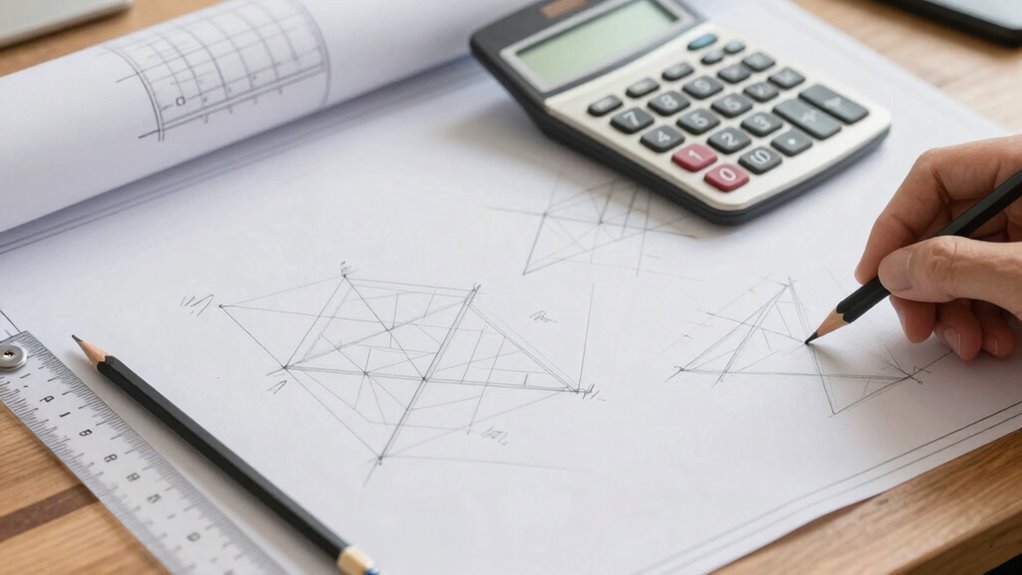
Before diving into detailed geometry calculations, taking a moment to estimate can save you significant time and effort. When you’re working on a project that involves precise measurements and complex shapes, a quick estimate allows you to identify potential issues early on. It helps you decide whether the design is feasible or if adjustments are necessary before investing time in detailed calculations. Estimation acts as a preliminary filter, catching glaring errors related to material properties or manufacturing tolerances that could otherwise cause costly rework later. For example, understanding the material properties—such as density, elasticity, or thermal expansion—can inform your initial assumptions about how components will behave under real-world conditions, which in turn influences your geometry considerations. Incorporating material properties and manufacturing tolerances into your initial estimates ensures a more realistic assessment of your design’s viability from the outset.
Estimating before detailed calculations helps identify issues early, saving time and reducing costly errors in complex projects.
Manufacturing tolerances are another critical aspect to factor into your estimates. These tolerances define the acceptable limits of variation in dimensions and can significantly impact the effectiveness of your design. By incorporating typical tolerances into your quick estimates, you get a realistic picture of how the final product might differ from your initial design. This prevents you from over-optimizing dimensions based on idealized assumptions, which might not be achievable in actual manufacturing. Recognizing the potential deviations early on helps you make smarter decisions about which features need tighter control and which can tolerate more flexibility. Additionally, considering manufacturing tolerances early in the process contributes to more reliable and practical designs, reducing the risk of costly adjustments later.
Estimation also streamlines communication with stakeholders and team members. When you can provide rough figures and straightforward insights upfront, you foster better collaboration. Everyone understands the potential constraints posed by material properties and manufacturing tolerances, leading to more practical and achievable design goals. This shared understanding reduces the chances of surprises during the detailed calculation phase, saving you from sudden revisions and delays.
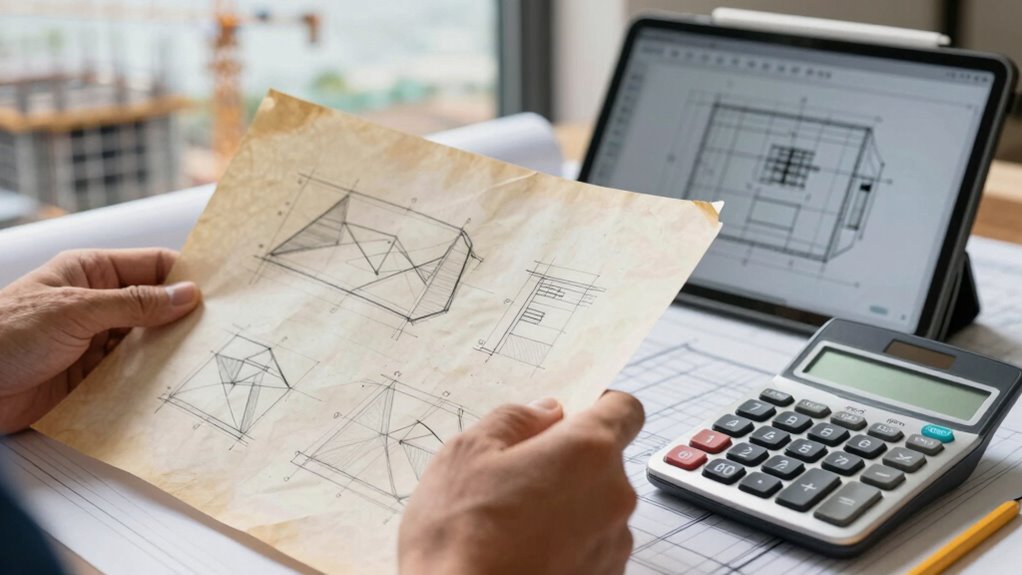
Furthermore, having a solid estimate gives you a benchmark against which to compare your detailed calculations later. If your precise analysis deviates significantly from your initial estimate, it signals that you might need to revisit your assumptions or check for errors. This iterative process ensures your final geometry is both accurate and practical, without wasting time on unnecessary computations from the start. Overall, taking a few moments to estimate before diving into detailed geometry calculations is a strategic move—one that saves time, minimizes errors, and enhances the overall efficiency of your project.
As an affiliate, we earn on qualifying purchases.
Frequently Asked Questions
How Accurate Can Initial Estimations Be?
Initial estimations using heuristic methods and approximation techniques can be quite accurate, often within a few percentage points of the final calculation. You can expect a reasonable level of precision that guides decision-making effectively. While not perfect, these methods save time by providing quick, reliable insights. Your accuracy depends on experience and the complexity of the problem, but generally, they strike a good balance between speed and reliability.
What Tools Are Best for Quick Estimations?
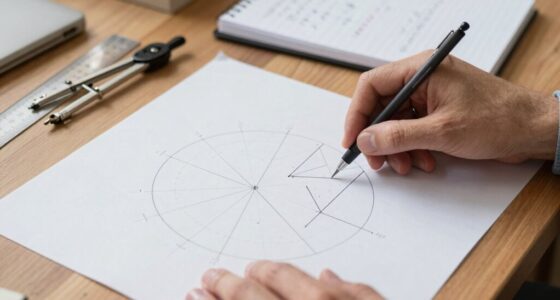
You should use tools like digital sketching apps and measurement shortcuts for quick estimations. Preliminary sketches help you visualize and approximate dimensions rapidly, saving time on detailed calculations. Use rulers, calipers, or digital measurement tools to get quick, rough measurements. These tools enable you to make educated guesses, ensuring your initial estimates are reasonably accurate without investing hours into exact geometry, streamlining your entire process.
When Should Estimation Be Replaced by Precise Calculations?
You should replace estimation with precise calculations when accuracy becomes critical, especially for complex projects or when material properties greatly impact outcomes. Rely on measurement techniques to gather detailed data, ensuring your calculations reflect real conditions. As soon as small errors could lead to costly mistakes or safety issues, switch from rough estimates to exact geometry calculations. This shift guarantees reliability and helps avoid potential setbacks.
How Does Estimation Improve Project Planning?
Estimation improves your project planning by helping you allocate resources effectively and manage risks early on. When you estimate accurately, you can identify potential bottlenecks and adjust your schedules or budgets accordingly. This proactive approach allows you to anticipate challenges, minimize delays, and guarantee efficient resource allocation. As a result, your project runs smoother, with fewer surprises, and you’re better prepared to handle uncertainties throughout the process.
Can Estimation Reduce Overall Project Costs?
Did you know that accurate estimation can cut project costs by up to 15%? When you estimate well upfront, you improve cost control and prevent budget overruns. This allows you to allocate resources more effectively, avoiding waste and delays. By making smarter financial decisions early on, you minimize unexpected expenses, ensuring your project stays within budget and on schedule, ultimately saving you significant money.
As an affiliate, we earn on qualifying purchases.
Conclusion
By using estimation early on, you can avoid wasting precious time on complex geometry calculations that might not be necessary. It’s like having a rough map before exploring a maze—you get a sense of direction without getting lost in details. This approach streamlines your workflow, allowing you to focus your efforts where they matter most. Remember, a little preparation goes a long way, so don’t overlook the power of quick estimates—they’re your secret weapon in saving time.
As an affiliate, we earn on qualifying purchases.
As an affiliate, we earn on qualifying purchases.
Fall Picks
fall essentials
As an affiliate, we earn on qualifying purchases.