For aerial mapping, I’d put the Autel EVO II Pro RTK V3 first because its RTK positioning is directly suited to reducing reliance on ground control points. The DJI Mavic 4 Pro models offer a more portable camera platform, while the Autel EVO II Pro V3 gives buyers a simpler route to high-resolution imagery without RTK. The main tradeoff is between mapping accuracy and workflow support, portability, and camera versatility. A capable camera alone does not make a drone a complete photogrammetry system; compatible mission planning and processing matter too. Read on for how these seven options compare and which fits your mapping work.

Prime made for students and young adults
- Fast, free delivery for dorm and study essentials
- Prime Video and Amazon Music included
- Member-only deals
Key Takeaways
- RTK is the clearest mapping advantage in this lineup: the Autel EVO II Pro RTK V3 is the most directly aligned with projects where precise image positioning matters.
- The two RTK listings are close alternatives: compare their included controller and bundle contents, since those affect setup and field workflow more than mapping fundamentals.
- The Mavic 4 Pro options prioritize portability and multi-camera flexibility: that can help mixed imaging work, but buyers should confirm mapping software compatibility before choosing them for survey jobs.
- The EVO II Pro V3 is the straightforward camera-focused pick: its 1-inch sensor and 6K video suit detailed image capture, though it lacks the RTK positioning emphasis of the RTK model.
- The Inspire 2 and EVO Max 4T V2 serve different specialist needs: the Inspire 2 is a larger professional platform, while the EVO Max 4T V2’s four-camera payload favors inspection and situational awareness over a dedicated mapping setup.
| DJI Inspire 2 Drone |  | Best for Gimbal Camera Flexibility | Compatible cameras: 5.2K gimbal cameras | Obstacle sensing range: 0–16.4 ft (0–5 m) | Operating temperature: −4°F to 104°F (−20°C to 40°C) | VIEW ON AMAZON | See Our Full Breakdown |
| Autel Robotics EVO Max 4T V2 Drone with 4 Cameras |  | Best for Multi-Sensor Infrastructure Mapping | Wide camera: 48MP, 1/2-inch CMOS, maximum ISO 64000 | Zoom camera: 48MP 8K, 10x optical zoom, up to 160x maximum zoom | Thermal camera: 640 × 512 at 30Hz, 9.1mm focal length, 16x digital zoom | VIEW ON AMAZON | See Our Full Breakdown |
| Autel Robotics EVO II Pro RTK V3 Drone with Centimeter-Level Positioning |  | Best Overall for Survey Mapping | RTK accuracy: 1 cm + 1 ppm horizontal; 1.5 cm + 1 ppm vertical | Positioning: RTK and PPK support | Camera sensor: Sony 1-inch CMOS | VIEW ON AMAZON | See Our Full Breakdown |
| Autel Robotics EVO II Pro RTK V3 Drone Bundle with Smart Controller |  | Best for Planned Autonomous Missions | Positioning accuracy: 1 cm + 1 ppm horizontal; 1.5 cm + 1 ppm vertical | Positioning support: RTK and PPK; time synchronization | Autonomous missions: Waypoint, rectangle, polygon, and oblique photography | VIEW ON AMAZON | See Our Full Breakdown |
| DJI Mavic 4 Pro Drone Fly More Combo with Triple-Camera System and Accessories |  | Best for Camera Versatility and Long Flights | Wide camera: 100MP Hasselblad | Medium tele camera: 48MP | Tele camera: 50MP | VIEW ON AMAZON | See Our Full Breakdown |
| DJI Mavic 4 Pro Fly More Combo with DJI RC 2 | 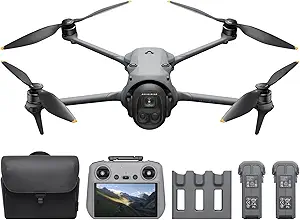 | Best for High-Detail Visual Capture | Main camera: 100MP Hasselblad | Video recording: 6K/60fps HDR | Gimbal: 360° Infinity Gimbal | VIEW ON AMAZON | See Our Full Breakdown |
| Autel Robotics EVO II Pro V3 Drone with Sony 1″ CMOS Sensor and 6K HDR Video (Combo Bundle) |  | Best for Manual Exposure Control | Camera sensor: Sony 1-inch CMOS, 20MP | Maximum video resolution: 6K HDR | Aperture: Adjustable F2.8–F11 | VIEW ON AMAZON | See Our Full Breakdown |
| drone for photogrammetry for aerial mapping | Obstacle avoidance |
|---|---|
| DJI Inspire 2 Drone | — |
| Autel Robotics EVO Max 4T V2 D | 720° omnidirectional, dual fisheye vision and millimeter-wave radar |
| Autel Robotics EVO II Pro RTK | 360°, 19 sensor groups including 12 visual sensors |
| Autel Robotics EVO II Pro RTK | 360° |
| DJI Mavic 4 Pro Drone Fly More | — |
| DJI Mavic 4 Pro Fly More Combo | — |
| Autel Robotics EVO II Pro V3 D | 360° omnidirectional; 12 vision sensors, 2 sonar sensors, 2 LED landing lights |
More Details on Our Top Picks
DJI Inspire 2 Drone
The DJI Inspire 2 suits mapping teams that already have a compatible gimbal camera and want to build a capture setup around it. Its support for 5.2K gimbal cameras gives it a different role from the Autel EVO II Pro RTK V3, which pairs a fixed 20MP camera with centimeter-level positioning for survey missions. The Inspire 2’s intelligent flight modes and Smart Return to Home can help with repeatable flights and recovery, while obstacle sensing adds a layer of awareness near structures. That sensing is limited to 16.4 feet, though, and the provided specs don’t establish RTK positioning or mapping-specific mission support. I’d choose it when camera configuration matters more than built-in survey positioning; teams seeking mapped accuracy with fewer workflow gaps should look at the Autel RTK models.
Pros:- Supports compatible 5.2K gimbal cameras
- Includes intelligent flight modes
- Smart Return to Home supports flight recovery
- Obstacle sensing provides awareness within its stated range
Cons:- Obstacle sensing range is limited to 16.4 feet
- The supplied product data does not specify RTK or PPK positioning
- The data does not specify dedicated mapping mission modes
Best for: Mapping crews with a compatible 5.2K gimbal camera who need a configurable aerial capture platform.
Not ideal for: Survey teams that need documented RTK or PPK positioning and dedicated polygon or oblique mapping missions.
- Compatible cameras:5.2K gimbal cameras
- Obstacle sensing range:0–16.4 ft (0–5 m)
- Operating temperature:−4°F to 104°F (−20°C to 40°C)
- Flight features:Spotlight Pro, intelligent flight modes, Smart Return to Home
- Obstacle sensing:Included; maximum stated range 16.4 ft
- ASIN:B01MY2YDW9
Our verdict“Choose the Inspire 2 if you already have a compatible gimbal camera; choose an Autel EVO II Pro RTK V3 when survey positioning is the priority.”
Autel Robotics EVO Max 4T V2 Drone with 4 Cameras
For infrastructure mapping where crews need to inspect more than surface geometry, the EVO Max 4T V2 brings a wide camera, optical zoom, thermal imaging, and a laser rangefinder in one aircraft. That breadth separates it from the Autel EVO II Pro RTK V3, whose supplied details emphasize centimeter-level positioning and a 20MP survey camera. The 4T V2’s waypoint, polygon, and mapping missions directly suit planned coverage, while GPS-denied navigation and 720° obstacle avoidance target complex sites. Its strength is operational flexibility, not a stated RTK mapping workflow: the supplied specs do not give RTK accuracy or photo resolution for the wide camera. The bundle includes one battery, so sustained field work may require additional batteries. It makes most sense for commercial teams combining mapping with thermal or close inspection tasks.
Pros:- Combines wide, zoom, thermal, and laser rangefinder sensors
- Supports waypoint, polygon, and mapping missions
- 720° obstacle avoidance combines vision and millimeter-wave radar
- GPS-denied navigation and hot-swappable battery support complex field operations
Cons:- Only one battery is included in the described bundle
- The supplied specs do not state RTK accuracy
- Its multi-sensor enterprise feature set may require operator training
Best for: Infrastructure and utility crews that need mapping alongside thermal inspection, optical zoom, and laser distance measurement.
Not ideal for: Surveyors whose primary requirement is documented centimeter-level RTK or PPK georeferencing for aerial maps.
- Wide camera:48MP, 1/2-inch CMOS, maximum ISO 64000
- Zoom camera:48MP 8K, 10x optical zoom, up to 160x maximum zoom
- Thermal camera:640 × 512 at 30Hz, 9.1mm focal length, 16x digital zoom
- Laser rangefinder:16.4–3737 ft; accuracy ±(1 m + D×0.15%)
- Obstacle avoidance:720° omnidirectional, dual fisheye vision and millimeter-wave radar
- Navigation and networking:GPS-denied navigation; A-Mesh 1.0 multi-device networking
- Battery:ABX41-D hot-swappable battery; one included
- Included controller:Smart Controller V3
- ASIN:B0DY11BHG9
Our verdict“Pick the EVO Max 4T V2 when one platform must map and inspect infrastructure across visible, thermal, and rangefinding tasks.”
Autel Robotics EVO II Pro RTK V3 Drone with Centimeter-Level Positioning
The EVO II Pro RTK V3 is the clearest fit here for buyers whose main job is producing georeferenced aerial maps. Its RTK module specifies 1 cm + 1 ppm horizontal accuracy and supports PPK, giving survey crews a positioning workflow that the DJI Inspire 2 and Mavic 4 Pro descriptions do not specify. The Sony 1-inch sensor captures 20MP photos, and its adjustable aperture helps operators adapt exposure to changing light. Compared with the closely related EVO II Pro RTK V3 bundle, this listing also specifies a 2000-nit controller display and includes three batteries. Its 360° obstacle avoidance adds support for autonomous work, though it does not remove the need for mission planning and processing expertise. I’d favor this model over the EVO Max 4T V2 when map accuracy matters more than thermal and zoom payloads.
Pros:- RTK accuracy specified at 1 cm + 1 ppm horizontal and 1.5 cm + 1 ppm vertical
- Supports PPK as well as RTK positioning
- Sony 1-inch sensor captures 20MP photos with adjustable aperture
- Includes three batteries and a bright 7.9-inch controller display
Cons:- Professional mapping features bring a learning curve for new operators
- The controller’s IP43 rating provides only moderate weather protection
- Lacks the thermal camera and laser rangefinder listed for the EVO Max 4T V2
Best for: Surveyors and mapping contractors who need RTK or PPK positioning, a capable still camera, and a field controller.
Not ideal for: Casual pilots or buyers seeking thermal inspection sensors and an all-in-one multi-camera payload.
- RTK accuracy:1 cm + 1 ppm horizontal; 1.5 cm + 1 ppm vertical
- Positioning:RTK and PPK support
- Camera sensor:Sony 1-inch CMOS
- Photo resolution:20MP
- Video resolution:6K Ultra HD
- Aperture:Adjustable f/2.8–f/11
- Obstacle avoidance:360°, 19 sensor groups including 12 visual sensors
- Controller display:7.9-inch, 2000-nit sunlight-readable display
- Included batteries:3
Our verdict“Choose this EVO II Pro RTK V3 when centimeter-level georeferencing and survey-ready still capture outweigh multi-sensor inspection needs.”
Autel Robotics EVO II Pro RTK V3 Drone Bundle with Smart Controller
This EVO II Pro RTK V3 bundle stands out for teams that want a documented mission workflow as part of their mapping aircraft. It specifies waypoint, rectangle, polygon, and oblique photography missions, along with RTK accuracy and support for PPK and time synchronization. That makes its mapping case more explicit than the DJI Mavic 4 Pro, whose listed strengths center on camera versatility and flight time. Compared with the other EVO II Pro RTK V3 listing, this bundle adds the named autonomous mission types and states 38 minutes of flight time; both include three batteries and a Smart Controller. The supplied data says ground control points are not required, but achievable accuracy still depends on the survey setup and processing workflow. A Windows PC with a compatible NVIDIA graphics card is required for Autel Mapper, and the professional feature set is a poor fit for casual pilots.
Pros:- Supports waypoint, rectangle, polygon, and oblique photography missions
- RTK and PPK support with specified centimeter-level positioning
- Three included batteries and Smart Controller support field operations
- 38-minute stated flight time and 15km transmission range
Cons:- Professional workflow and mission planning can challenge new operators
- Autel Mapper requires a compatible Windows PC with an NVIDIA graphics card
- No thermal or zoom camera is specified, unlike the EVO Max 4T V2
Best for: Professional mapping teams planning repeatable polygon, waypoint, or oblique capture missions and using compatible Windows processing hardware.
Not ideal for: Beginners or operators without a compatible Windows 10/11 PC and NVIDIA graphics card for Autel Mapper.
- Positioning accuracy:1 cm + 1 ppm horizontal; 1.5 cm + 1 ppm vertical
- Positioning support:RTK and PPK; time synchronization
- Autonomous missions:Waypoint, rectangle, polygon, and oblique photography
- Video capture:6K, MP4
- Flight time:38 minutes
- Transmission range:15km / 9.32 miles
- Obstacle avoidance:360°
- Battery:5000mAh lithium polymer; three included
- ASIN:B0DGL5SX8N
Our verdict“Choose this bundle for planned RTK mapping missions if your team can support its professional workflow and Windows-based processing requirement.”
DJI Mavic 4 Pro Drone Fly More Combo with Triple-Camera System and Accessories
The DJI Mavic 4 Pro is the camera-first choice in this group. Its triple-camera system offers a 100MP Hasselblad wide camera plus medium and tele cameras, and its up to 51-minute flight time can help cover more ground between battery changes. Three batteries are included, as with the Autel EVO II Pro RTK V3 bundles, but the Mavic’s supplied specifications do not list RTK or PPK positioning. That distinction matters for mapping: high-resolution imagery can support detailed reconstruction, while georeferencing depends on the capture and control workflow. The Autel RTK models make that positioning capability explicit; the Mavic instead brings camera choice, low-light sensing, and an RC 2 controller. I’d select it for visual mapping or mixed content work where camera flexibility leads, and skip it for survey deliverables that require specified centimeter-level positioning.
Pros:- Triple-camera system includes a 100MP Hasselblad wide camera
- Up to 51 minutes of stated flight time
- Low-light obstacle sensing includes front-facing LiDAR
- Combo includes three batteries and an RC 2 controller
Cons:- RTK or PPK positioning is not specified in the supplied product data
- Dedicated mapping mission modes are not specified
- Camera versatility does not by itself establish survey-grade georeferencing
Best for: Aerial imaging teams that want high-resolution multi-camera capture, long stated flight time, and mapping as one of several uses.
Not ideal for: Surveyors who need documented RTK or PPK accuracy and dedicated mapping mission specifications.
- Wide camera:100MP Hasselblad
- Medium tele camera:48MP
- Tele camera:50MP
- Maximum video resolution:6K60 HDR
- Maximum flight time:Up to 51 minutes
- Obstacle sensing:Six low-light fisheye sensors and front-facing LiDAR
- Included batteries:3 Intelligent Flight Batteries
- Included controller:RC 2 Remote Controller
- Memory cards:2 × 128GB Extreme MicroSDXC
Our verdict“Pick the Mavic 4 Pro for flexible, high-resolution aerial imaging, but choose an Autel EVO II Pro RTK V3 for specified survey positioning.”
DJI Mavic 4 Pro Fly More Combo with DJI RC 2
The 100MP Hasselblad camera gives the Mavic 4 Pro a clear advantage when a mapping workflow benefits from very high-resolution imagery, while its three included batteries help keep a field session moving. Its 51-minute stated flight time is longer than the Autel EVO II Pro V3’s 40 minutes, which can mean fewer battery changes between sorties. The 360° Infinity Gimbal and dual tele cameras add framing options, though those cinematic features matter less to mapping than consistent camera geometry and a survey-ready workflow. This listing does not specify RTK positioning, so buyers who need centimeter-level georeferencing should look to the Autel EVO II Pro RTK V3 models instead. I’d choose this combo for detailed visual capture and flexible field coverage, while accounting for the DJI Fly app download requirement on Android.
Pros:- 100MP main camera supports highly detailed aerial imagery.
- Three batteries and up to 51 minutes of stated flight time support longer field sessions.
- Dual tele cameras and a 360° gimbal add flexibility for image capture.
- Low-light omnidirectional obstacle sensing can help during flights in challenging light.
Cons:- RTK positioning is not specified, limiting its fit for precision survey workflows.
- Android users must download DJI Fly from DJI’s website because it is unavailable on Google Play.
- Cinematic camera features add capability but may not improve a straightforward mapping workflow.
Best for: Aerial imaging teams that prioritize high-resolution visual detail, long sorties, and multiple batteries, and can georeference imagery through their existing workflow.
Not ideal for: Surveyors who require specified RTK positioning or centimeter-level georeferencing from the aircraft.
- Main camera:100MP Hasselblad
- Video recording:6K/60fps HDR
- Gimbal:360° Infinity Gimbal
- Obstacle sensing:0.1-Lux Nightscape omnidirectional
- Maximum flight time:Up to 51 minutes
- Video transmission range:Up to 30 km / 18.6 mi
- Transmission:O4+ 10-bit HDR
- Included accessories:DJI RC 2, three batteries, charging hub
Our verdict“Choose this combo for high-detail aerial imagery and extended sorties, but pick an RTK-equipped model when precise georeferencing is a requirement.”
Autel Robotics EVO II Pro V3 Drone with Sony 1″ CMOS Sensor and 6K HDR Video (Combo Bundle)
The EVO II Pro V3’s adjustable F2.8–F11 aperture gives operators direct control over exposure as lighting shifts across a mapping flight, and its 20MP Sony 1-inch sensor offers a more conventional resolution choice than the DJI Mavic 4 Pro’s 100MP camera. That lower pixel count may mean less fine image detail, but the aperture range and 12-bit A-LOG recording give post-production teams flexibility in how they capture and process imagery. Its 40-minute stated flight time is shorter than the Mavic’s 51 minutes, and this bundle includes two batteries rather than three. The listing does not specify RTK, so I would not treat it as a substitute for the EVO II Pro RTK V3 when centimeter-level positioning is needed. This combo suits crews that value exposure control and a supplied hard case over maximum resolution or RTK positioning.
Pros:- Adjustable F2.8–F11 aperture supports exposure control across changing light.
- 12-bit A-LOG recording offers flexibility in post-production.
- Two included batteries and a hard case support field use and transport.
- Omnidirectional obstacle avoidance uses 12 vision sensors.
Cons:- The 20MP camera has lower stated resolution than the Mavic 4 Pro’s 100MP camera.
- Up to 40 minutes of forward-motion flight time is shorter than the Mavic 4 Pro’s stated 51 minutes.
- RTK positioning is not specified, so precision georeferencing requires another workflow or aircraft.
Best for: Aerial imaging operators who want adjustable exposure and 12-bit color flexibility for mapping imagery that will receive substantial post-production.
Not ideal for: Survey teams that need RTK positioning, maximum image resolution, or the longer flight time and three-battery setup of the DJI Mavic 4 Pro combo.
- Camera sensor:Sony 1-inch CMOS, 20MP
- Maximum video resolution:6K HDR
- Aperture:Adjustable F2.8–F11
- Color recording:12-bit A-LOG
- Obstacle avoidance:360° omnidirectional; 12 vision sensors, 2 sonar sensors, 2 LED landing lights
- Flight time:Up to 40 minutes forward motion; 35 minutes hover
- Transmission range:Up to 9 miles / 15 km
- Included bundle items:Hard case, remote controller, two batteries, spare propellers, 32GB SD card
Our verdict“Pick the EVO II Pro V3 for manual exposure control and flexible color capture, while choosing an RTK model for precision survey work.”

How We Picked
I ranked these drones around the needs of photogrammetry and aerial mapping: image capture suited to reconstructing sites, positioning support, field usability, portability, and how clearly each model fits into a mapping workflow. RTK capability carries particular weight because it can improve image geotagging and reduce the burden of ground control, although it does not replace checking accuracy requirements or validating a deliverable.
The EVO II Pro RTK V3 leads because its positioning system best matches mapping priorities. The other RTK bundle remains close, with its place depending on included field equipment. I ranked the Mavic 4 Pro models for buyers balancing imaging versatility and travel convenience, followed by the camera-oriented EVO II Pro V3. The Inspire 2 and EVO Max 4T V2 rank lower for general mapping because their listed strengths point to broader production or multi-sensor tasks rather than a focused mapping workflow. I also considered support for mission planning and image processing as something buyers must verify, since product names and camera specs alone cannot establish software compatibility.
Factors to Consider When Choosing Drone For Photogrammetry For Aerial Mapping
Before choosing a drone, I’d define the mapping deliverable and field workflow. A model that captures attractive imagery may still be a poor fit if it cannot fly the required grid pattern, record usable positioning data, or work with the processing software you rely on.
Match positioning accuracy to the deliverable
Start with the accuracy your client or project actually requires, then decide whether RTK, post-processed positioning, or ground control best supports it. RTK can reduce positional uncertainty in image locations, but it does not remove every source of error in a photogrammetry project. Camera calibration, overlap, flight height, terrain, and ground control strategy all affect the final model. A common mistake is to treat an RTK label as a guarantee of survey-grade results. Ask what accuracy can be demonstrated for the complete workflow, including processing and checkpoints. For lower-stakes site documentation, a capable non-RTK drone with well-placed ground control may be a better fit than paying for positioning features you will not use.
Check the camera for mapping, not just video
Photogrammetry benefits from sharp, consistent images with enough detail across the area being mapped. Sensor size and resolution matter, but so do lens characteristics, shutter behavior, focus consistency, and the ability to capture repeatable exposures. Video resolution figures do not tell you how suitable a camera is for building accurate maps or models from still frames. Before buying, confirm that the camera can produce the image format and capture settings your processing workflow accepts. Consider the ground sample distance required for your project; flying lower can improve detail but increases flight time and image volume. Multi-camera systems can add flexibility, yet extra lenses do not automatically improve mapping results.
Verify mission planning and processing compatibility
A mapping drone is part of a chain that includes flight planning, image transfer, processing, and delivery. Check that your preferred mission app supports the exact aircraft, controller, and firmware combination, since compatibility can differ across versions. Confirm whether the software can set a grid, manage overlap, and follow terrain where needed. Then check that your photogrammetry platform accepts the imagery and positioning metadata the drone records. A common purchasing error is choosing hardware first and discovering that a required automated flight or export path is unavailable. If you work across multiple crews, standardizing software and file handling may save more time than a modest camera upgrade.
Plan for coverage, batteries, and field conditions
Mapping efficiency depends on how much area you can cover in a working day, not simply the aircraft’s stated flight time. Wind, temperature, reserve requirements, travel between launch points, and battery swaps reduce practical coverage. Larger projects also create substantial image sets that need transfer, backup, and processing time. Compare battery availability and charging arrangements alongside aircraft portability. Compact models are easier to carry between sites, while larger professional platforms may make sense when payload flexibility or established crew procedures matter more. Build a sample mission plan before purchase so you can estimate sorties, image volume, and time on site.
Choose a platform your team can maintain
Field reliability includes more than the airframe: controller familiarity, spare parts, battery health, firmware management, and repair access all affect whether a project can proceed. If the drone will be shared, a simpler setup can reduce training and handoff errors. A bundle may include useful equipment, but check every listed component against what your team already owns. Consider how quickly you can replace a damaged propeller or battery and whether your organization has a process for firmware updates. For occasional mapping, a portable system that is easy to deploy may outperform a more capable aircraft that is cumbersome to transport. For recurring contract work, support and repeatability can justify a more specialized platform.
Frequently Asked Questions
Do I need RTK for aerial photogrammetry?
Not for every project. RTK can improve the position data attached to images and may reduce the number of ground control points needed, but the project’s accuracy requirements determine whether that benefit matters. You still need suitable flight planning, image quality, and independent checks against known points when the deliverable calls for them. For informal progress tracking, a non-RTK aircraft with carefully surveyed ground control may be enough. For repeat surveys or work with tighter positional requirements, compare the full RTK workflow and its software support before deciding.
Can I use a video-focused drone to make mapping models?
Sometimes, if it can capture consistent, sharp still images and your flight and processing tools support it. Video specifications alone are a weak way to judge mapping suitability because photogrammetry usually relies on overlapping photographs with dependable exposure and metadata. Check the still-image output, shutter behavior, camera settings, and mission-planning support. The EVO II Pro V3, for example, is more clearly camera-focused than the multi-sensor EVO Max 4T V2, while the RTK model adds a positioning advantage. Match the camera to the required detail and accuracy rather than relying on a headline resolution.
Are the two Autel EVO II Pro RTK V3 listings meaningfully different for mapping?
The core mapping distinction is whether the aircraft and positioning workflow meet your needs; the bundle contents can change field convenience. Compare the included controller, batteries, charging gear, and other accessories against your existing kit before choosing between listings. A controller bundle may simplify deployment if it includes the equipment your crew needs, but it does not by itself change the fundamental role of RTK. Verify the exact package contents and software compatibility for the listing you intend to buy. For mapping results, focus on the same flight, camera, and processing requirements across both options.
Is a multi-camera drone automatically better for mapping?
No. Multiple cameras can be useful for inspection, thermal work, or capturing different views, but a mapping job depends on consistent imagery from a suitable camera and a repeatable flight plan. Switching sensors can complicate capture consistency and processing if the workflow is not designed for it. The EVO Max 4T V2’s four-camera setup points toward broader operational awareness, while a dedicated RGB camera may be easier to use for standard orthomosaics. Choose additional sensors only when a real project needs them. Otherwise, portability, positioning, and software fit may matter more.
What should I verify before using one of these drones for paid mapping work?
Confirm aircraft and mission-app compatibility, airspace and operating rules for your location, and whether your workflow can meet the client’s stated accuracy and image requirements. Run a representative test site and compare the processed result against independent checkpoints before promising a level of precision. Check insurance, crew training, battery logistics, data storage, and delivery formats as part of the operating plan. If you are considering the Mavic 4 Pro or Inspire 2, verify that the exact model and controller work with your planned automated mapping setup. A documented end-to-end workflow is a stronger basis for a client commitment than a camera specification alone.
Conclusion
For a general mapping buyer, I recommend the Autel EVO II Pro RTK V3 as the best overall fit because RTK aligns directly with accurate image positioning. The Autel EVO II Pro V3 Combo Bundle is my best value direction for buyers who need detailed imagery but can work with ground control and do not need RTK. For a best premium choice, I’d shortlist the DJI Inspire 2 when its larger professional platform suits an established crew and production workflow. Beginners should start by comparing the DJI Mavic 4 Pro options for portability and manageable field deployment, while verifying mission-software support first. For specialized multi-sensor operations, the Autel EVO Max 4T V2 is the targeted pick; choose it for its broader camera payload rather than as the default photogrammetry drone.
Halloween Picks
halloween
As an affiliate, we earn on qualifying purchases.