TL;DR

Prime made for students and young adults
- Fast, free delivery for dorm and study essentials
- Prime Video and Amazon Music included
- Member-only deals
A Myriad interactive report demonstrates how a simulated creature with four neurons can move toward light, avoid it or stop near it, depending on how its neurons are connected. The model illustrates how behavior can emerge from simple circuits, but it does not explain the full complexity of biological brains.
A Myriad interactive report shows how a simulated creature with just four neurons can produce markedly different movement by changing the connections between its light-sensing and motor neurons. The model demonstrates how simple neural circuits can generate behavior that appears purposeful, while offering a limited illustration rather than a complete account of how real brains work.
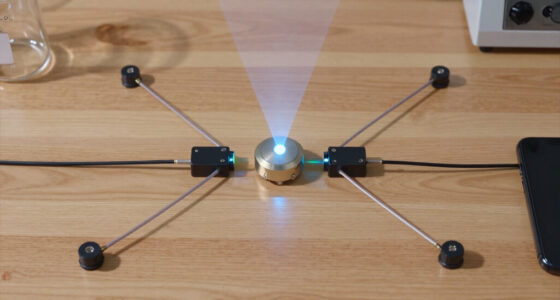
The report’s virtual creature, called a spark, has two light-sensing neurons and two motor neurons that control its flippers. A one-eye, one-flipper version speeds up as it detects more light, but cannot steer toward a source; its movement is restricted to one direction. Adding a second eye and flipper gives it the ability to respond differently depending on which side is brighter.
In the simulation, directly connecting each eye to the flipper on the same side makes the spark turn away from the light. The report explains that stronger input to the left eye makes the left flipper move faster, turning the creature right. Crossing the connections — left eye to right flipper and right eye to left — reverses the steering and lets the spark move toward the source.
The report then changes the connection type. An excitatory connection increases output when input rises, while an inhibitory one reduces output. With inhibitory connections, the spark slows as it approaches the light and can stop near it rather than overshooting. The simulation also varies connection strengths, producing different responses to the same light source. Its paths include a small amount of added noise, according to the report.
How Wiring Changes Shape Behavior
The simulation makes a basic neuroscience idea visible: behavior can arise from the way neural signals are organized, not only from the number of neurons involved. A small change in which neurons connect, or whether their connection excites or inhibits, can alter whether a creature turns toward a stimulus, moves away or slows down near it.
That matters because behavior is often interpreted from what an animal does. The report shows how the same apparent response can have different underlying causes: a spark approaching light might look as though it is attracted to it, while another circuit could make it charge past the source. The model is useful as an illustration of circuit-level behavior, but it is not evidence that the simulated creature has feelings, intentions or intelligence.
The report also introduces variation in connection strength as a way to produce different preferences. This offers a simplified analogy for how differences in brain wiring might shape behavioral tendencies. It does not establish how particular human preferences are encoded, and the author cautions that real biology is far more complex than the demonstration.
Popular right now

Breville Bambino Espresso Machine, Brushed Stainless Steel (BES450BSS)

TCL QM64L 85-Inch QD-Mini LED 4K Smart Fire TV

Bose QuietComfort True Wireless Noise-Cancelling Earbuds, Black
As an affiliate, we earn on qualifying purchases.
From Sensor Signals to Steering
The report frames its simulation around a broad research question: how collections of neurons produce complex behaviors. It notes that researchers have spent decades addressing parts of that question, but the supplied material does not identify a new experiment, peer-reviewed study or specific scientific finding. The development here is an educational interactive model that lets readers see the consequences of different circuit designs.
The sequence begins with a single sensory neuron linked to a motor neuron, then adds a second sensor and motor output. It tests direct and crossed wiring, followed by excitatory and inhibitory connections. Finally, it varies connection strengths between otherwise similar sparks. The report uses these steps to illustrate how a compact circuit can produce several distinct outcomes, not to claim that four neurons capture the operation of an animal brain.
““We’ve now seen four very different behaviors, each achieved by making small changes to the neural circuitry of our virtual creatures.””
— Myriad report
What the Simulation Cannot Show
The supplied report does not provide experimental results from living animals, quantitative measurements of the simulation’s performance or a publication date. It is not clear from the material what assumptions or equations govern the virtual neurons beyond the descriptions of brightness sensing, motor output and excitatory or inhibitory connections.
The model also does not establish that the same circuit arrangement explains a particular behavior in a real organism. The link between connection strength and preferences is presented as an analogy, not a demonstrated account of how human likes or dislikes are represented in the brain. The report’s ending is truncated, so its full discussion of biological limits is unavailable.
Further Testing Beyond the Model
The report invites readers to change the simulated light’s position and observe how the sparks respond. In the material provided, no further experiment, research milestone or follow-up publication is announced. The next step for readers is to explore the interactive and compare outcomes as connection patterns and strengths change.
For claims about real nervous systems, the demonstration would need to be paired with evidence from biological research. The report itself presents the simulation as a way to build intuition about neural circuits, not as a substitute for that research.
Key Questions
What is the spark?
The spark is a virtual creature in Myriad’s interactive report. It is modeled with two light sensors, two motor neurons and flippers that control its movement.
How can the spark turn toward light?
Its left and right eyes are connected to the opposite flippers. This crossed wiring makes differences in brightness steer it toward the source in the simulation.
Why does an inhibitory connection make it stop?
An inhibitory connection reduces motor output as the light signal increases. In the report’s model, that makes the spark slow near the light instead of speeding past it.
Does the report show how real brains create preferences?
No. It uses changes in connection strength to illustrate a possible analogy for variation in behavior. It does not establish how human preferences are encoded in real brains.
Source: aatishb.com