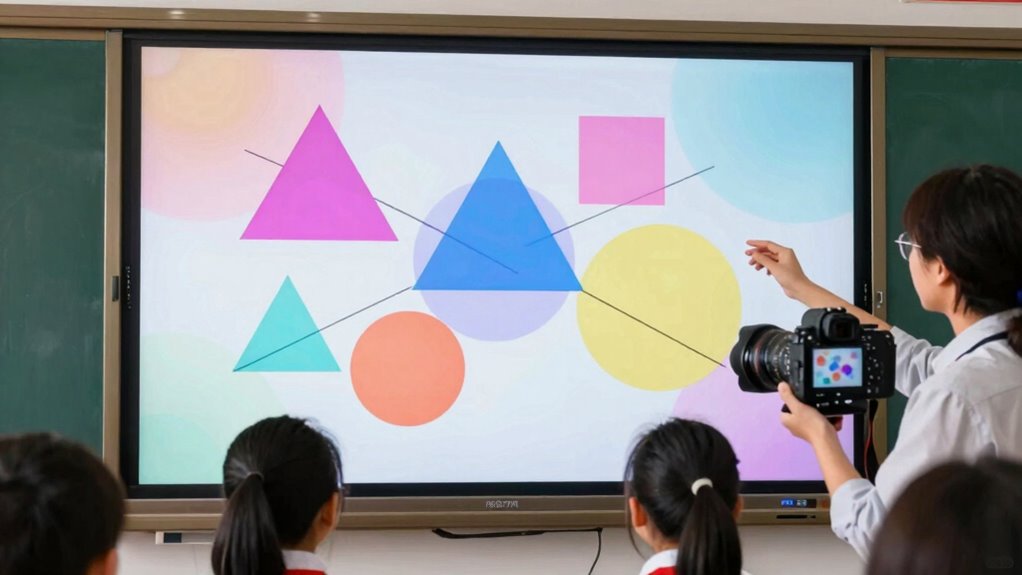

To effectively demonstrate geometric transformations live, use physical models like lightweight, colorful objects to show rotations, reflections, and translations clearly. Incorporate software tools such as GeoGebra or Desmos for dynamic visualization, and engage students with hands-on activities like puzzles or drawing exercises. Setting up your space for visibility and planning clear demonstration steps helps maintain clarity. Keep exploring further tips to make your live demos more engaging and impactful.

Get school and study supplies delivered free — and shop member deals
- Fast, free delivery on millions of items
- Access to Prime Big Deal Days deals on October 6–7
- Prime Video, Amazon Music and more included
Key Takeaways
- Use manipulatable physical models to clearly demonstrate rotations, reflections, and translations in real time.
- Incorporate digital tools like GeoGebra or Desmos for dynamic, interactive visualization of transformations.
- Plan step-by-step demonstration sequences highlighting key points such as axes, centers, and angles for clarity.
- Arrange the classroom to ensure all students have a clear view and can participate actively.
- Combine visual cues, diagrams, and guided questioning to reinforce understanding and identify misconceptions.
geometric transformation physical models
As an affiliate, we earn on qualifying purchases.
As an affiliate, we earn on qualifying purchases.
Why Visualizing Transformations Enhances Learning in Geometry
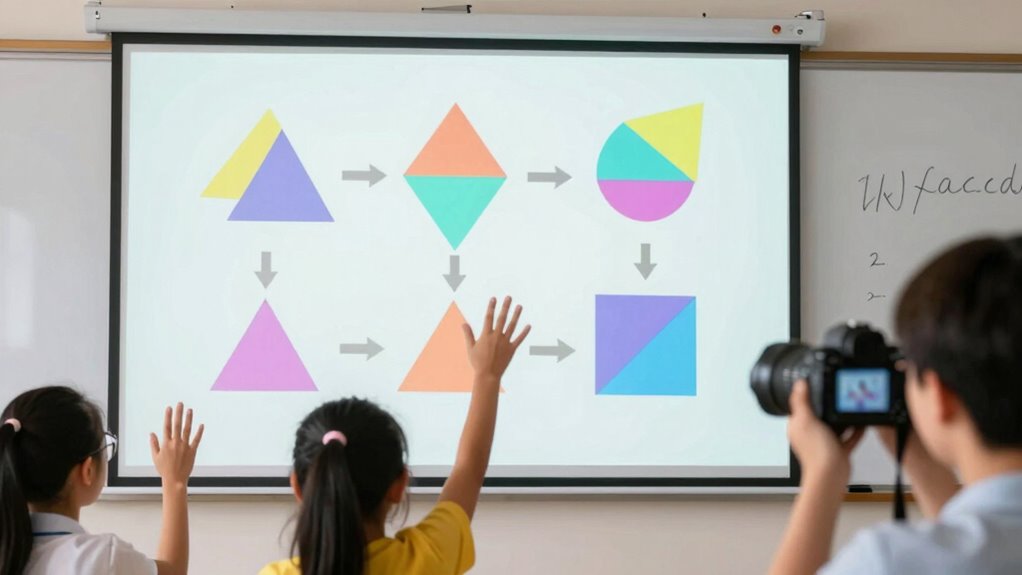
Visualizing transformations in geometry helps you understand concepts more deeply by providing a clear picture of how shapes move and change. This approach makes abstract concepts more tangible, allowing you to see the effects of rotations, reflections, and translations directly. By visualizing these transformations, you connect theoretical frameworks to concrete images, which enhances comprehension. In addition, accurate visualization can help identify patterns and relationships that might be overlooked through purely symbolic methods. Instead of relying solely on formulas or definitions, you develop an intuitive grasp of how shapes behave under different transformations. This active engagement with visual representations helps solidify your understanding and reveals patterns that might be hidden in purely symbolic or algebraic methods. Incorporating digital tools can make the visualization process more interactive and accessible for learners. For example, using interactive geometry software allows students to manipulate shapes in real-time, deepening their understanding. Furthermore, utilizing visual learning strategies can support diverse learning styles and foster greater engagement with geometric concepts. Overall, visualizing transformations bridges the gap between abstract concepts and practical understanding, making learning more effective and enjoyable.
interactive geometry software GeoGebra
As an affiliate, we earn on qualifying purchases.
As an affiliate, we earn on qualifying purchases.
How to Use Physical Models to Demonstrate Rotations, Reflections, and Translations
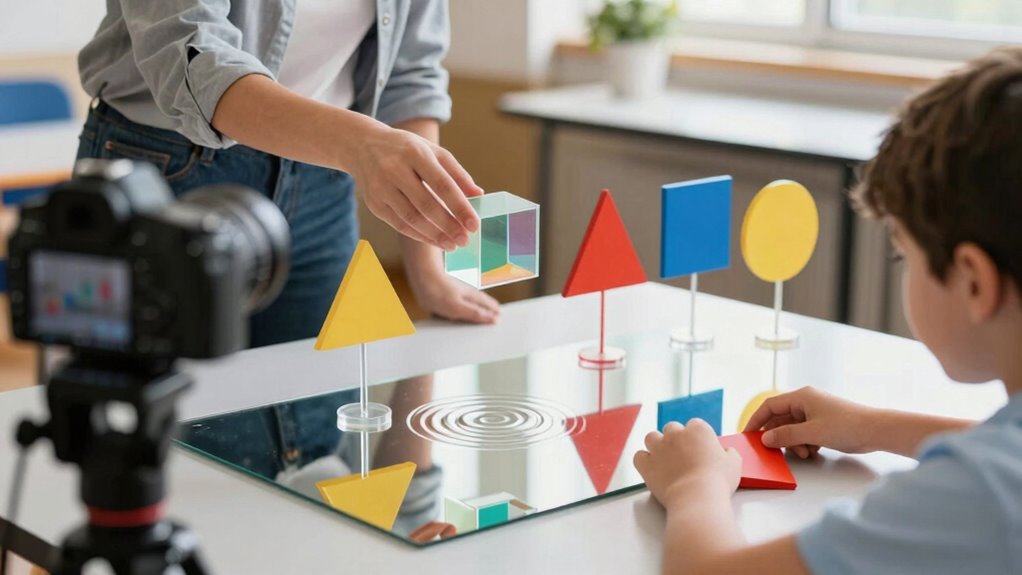
To effectively demonstrate transformations, start by selecting models that are easy to manipulate and clearly show each type of movement. When demonstrating rotations, use techniques that highlight the center of rotation and the angle turned. For reflections, choose models that make the mirror line obvious and help visualize the flipped image clearly. Incorporating visual aids can enhance understanding by providing additional clarity on the transformations.
Choosing Appropriate Models
Using physical models is an effective way to understand how rotations, reflections, and translations work in geometry. When selecting models, focus on clarity in presentation to guarantee students grasp the transformation clearly. Choose models that are easy to manipulate and clearly show the movement or reflection without causing confusion. For example, lightweight, colorful objects work well for demonstrating reflections, while modular models help visualize rotations precisely. Avoid overly complex models that might distract or overwhelm learners. The goal is to make the transformation visible and intuitive, so pick models that highlight the key features of each movement. Proper model selection enhances understanding and allows students to see the transformations in a tangible, memorable way.
Demonstrating Rotation Techniques
How can you effectively demonstrate rotations using physical models? Begin by choosing a model that clearly shows the shape and its center point. To illustrate an angle rotation, hold the model and rotate it around a fixed point, which acts as the rotation’s axis. Pay attention to axis orientation, ensuring it’s clearly visible to viewers. Show how the shape turns through a specific angle rotation, such as 90° or 180°, emphasizing the degree of turn. Use your fingers or a protractor to guide the rotation, making the movement precise. Keep the model steady and smoothly rotate it around the axis. This hands-on approach helps clarify how the shape’s position changes, reinforcing the concept of rotation and the importance of axis orientation in the transformation process.
Visualizing Reflections Clearly
Visualizing reflections clearly becomes easier when you use physical models that show the mirror line and the shape’s position before and after the reflection. These models enhance reflection clarity by making the line of symmetry explicit, allowing students to see how each point maps across the mirror line. As you manipulate the shape, focus on symmetry visualization to highlight how the reflected image maintains the same distance from the mirror line but on the opposite side. Using physical objects like mirrors, paper cutouts, or transparent sheets helps students grasp the concept intuitively. This hands-on approach reinforces the idea that reflections create mirror images, making the concept more concrete and accessible for learners. Clear visualization of symmetry builds a strong foundation for understanding more complex transformations.
visualization tools for math demonstrations
As an affiliate, we earn on qualifying purchases.
As an affiliate, we earn on qualifying purchases.
Top Software Tools for Dynamic Visualization of Geometric Transformations
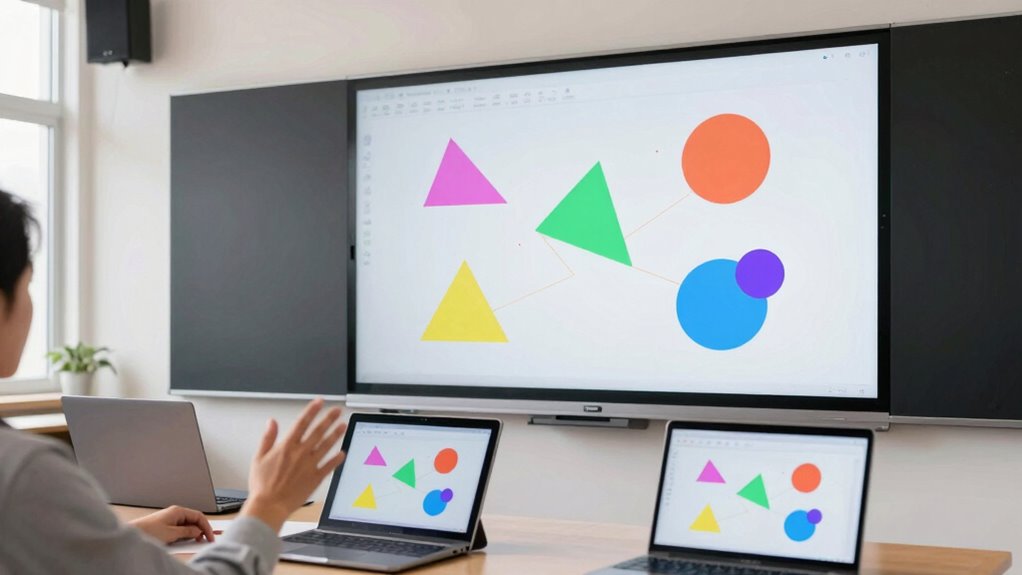
Dynamic visualization tools have revolutionized the way students and educators explore geometric transformations, making complex concepts more intuitive and engaging. These tools excel in interactive mapping, allowing you to manipulate shapes and see transformations in real time. They also support educational gamification, turning learning into an engaging challenge. Here are top software options:
- GeoGebra – Combines interactive mapping with dynamic geometry, perfect for visualizing transformations.
- Desmos – Offers easy-to-use graphing features that animate transformations seamlessly.
- Cabri Geometry – Enables hands-on manipulation of figures, ideal for exploring geometric changes.
- GeoNext – Incorporates gamified elements to deepen understanding through interactive challenges.
These tools help you demonstrate transformations live, making math more accessible and fun.
colorful manipulatives for geometry
As an affiliate, we earn on qualifying purchases.
As an affiliate, we earn on qualifying purchases.
Hands-On Activities to Explore Rotations, Reflections, and Translations
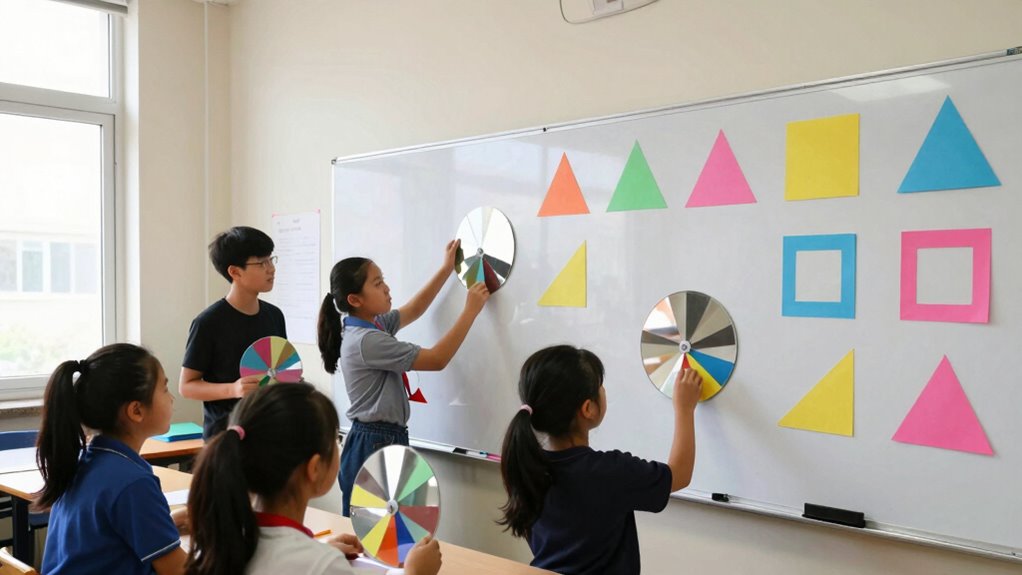
Hands-on activities provide an engaging way to explore the fundamental geometric transformations of rotations, reflections, and translations. Using kinetic art, you can create moving sculptures that demonstrate how shapes change position, helping visualize transformations dynamically. Geometric puzzles also serve as excellent tools; by manipulating pieces, you see firsthand how figures can rotate, flip, or shift across a plane. These activities encourage active learning, making abstract concepts tangible. For example, arranging puzzle pieces to form symmetrical designs highlights reflections, while rotating components reveals rotations. Kinetic art pieces can be adjusted to showcase translations, illustrating how shapes slide without changing orientation. These hands-on methods deepen understanding, making transformations more intuitive and memorable. They foster exploration and insight through tactile engagement. Incorporating visual demonstrations into lessons can further enhance comprehension by providing clear, dynamic representations of complex concepts.
Creative Drawing Exercises to Illustrate Geometric Transformations
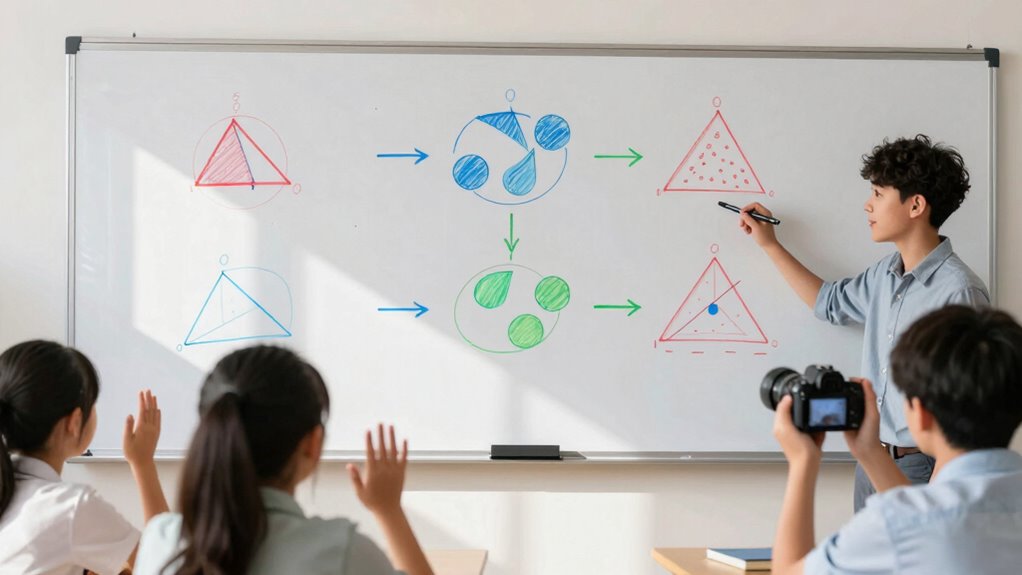
Creative drawing exercises offer a simple yet powerful way to understand geometric transformations. Through creative sketching and geometric doodles, you can visualize how shapes move, flip, or slide. To get started, try these exercises:
Engage with playful sketches to explore and understand geometric transformations intuitively.
- Draw a regular polygon, then sketch its reflection across a line, noticing the flipped shape.
- Create a pattern of repeated triangles, then translate each one to form a seamless design.
- Sketch a star, then rotate it around a point to see how orientation changes.
- Draw a series of circles, then scale one to demonstrate dilation.
These activities help you grasp transformations actively, making abstract concepts more tangible through visual practice. Using creative doodles keeps the process engaging and enhances your spatial understanding of geometry.
Comparing Methods: Physical Models, Software, and Artistic Approaches
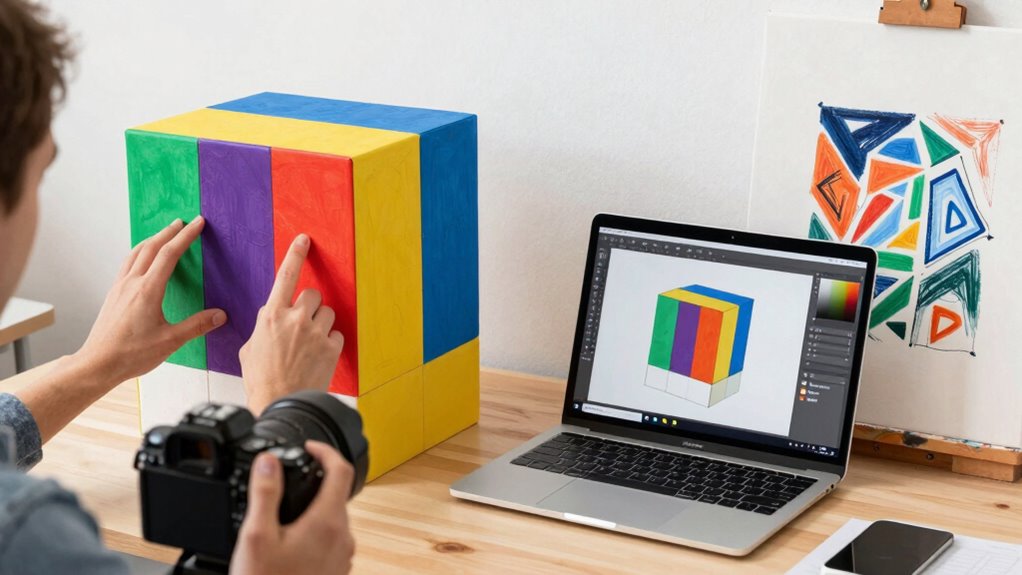
When exploring methods to understand geometric transformations, it’s important to compare physical models, software tools, and artistic approaches, as each offers unique advantages. Physical models provide tactile engagement, making concepts like symmetry and reflection tangible, emphasizing mathematical elegance through hands-on manipulation. Software tools, on the other hand, allow for dynamic visualization, precise adjustments, and instant feedback, helping you see transformations in real-time. Artistic approaches bring cultural significance into the learning process, blending aesthetic intuition with mathematical principles. They inspire creative exploration and deepen understanding by connecting transformations to cultural motifs or visual storytelling. Together, these methods cater to diverse learning styles, enriching your grasp of mathematical elegance and cultural context, ensuring a holistic, engaging approach to visualizing geometric transformations.
Tips for Setting Up Effective Live Transformation Demonstrations in Class
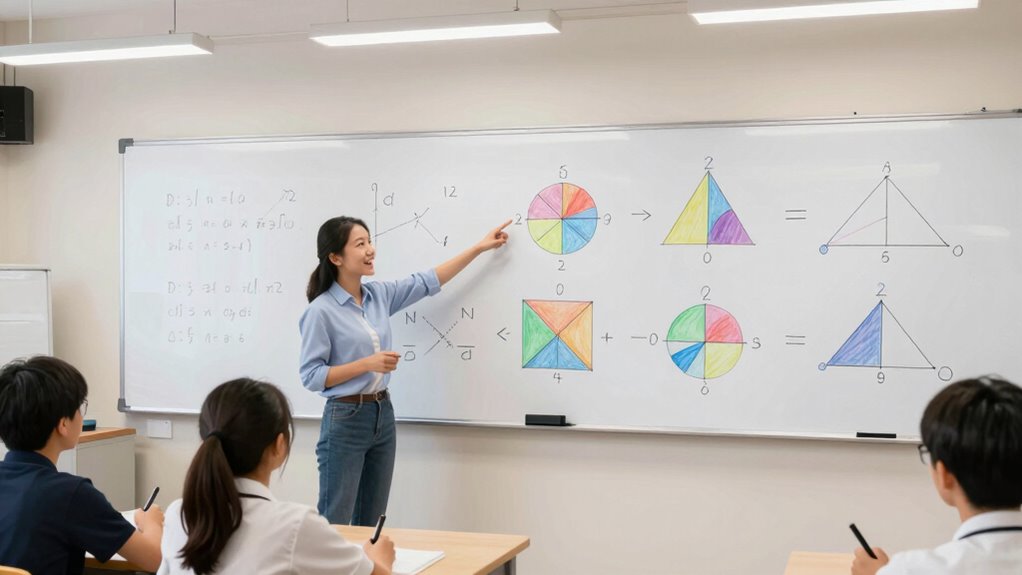
To make live transformation demonstrations effective in the classroom, careful planning and setup are key. First, arrange your classroom seating to ensure all students have a clear view of your workspace and visual aids. Second, prepare your mathematical notation tools—markers, digital boards, or handouts—that clearly display transformations. Third, plan your demonstration steps in advance, highlighting key points like reflection lines or rotation centers. Fourth, use objects or digital visuals that can be easily manipulated, so students see transformations in real-time. Clear visibility, strategic seating, precise notation, and smooth execution help students grasp transformations intuitively. By setting up thoughtfully, you make the demonstration engaging and accessible, fostering deeper understanding of the concepts.
How to Assess Student Understanding Through Live Transformation Activities
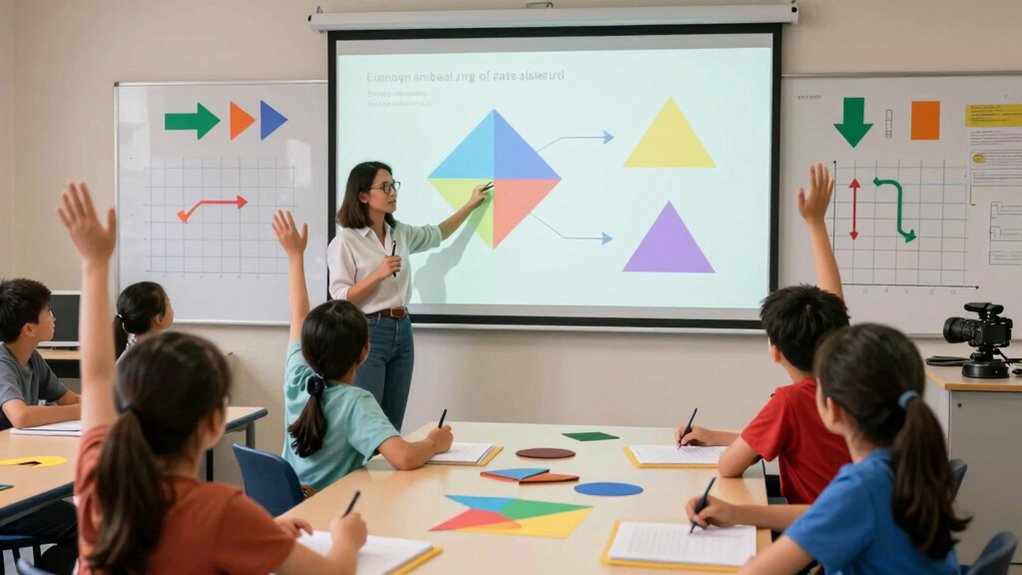
How can you effectively gauge student understanding during live transformation activities? Start by observing their actions and listening to their explanations. Look for signs of student misconceptions, such as confusion or incorrect reasoning, to identify areas needing clarification. Use targeted assessment strategies like asking open-ended questions or requesting students to explain their thinking aloud. Encourage students to describe each step of their transformation process to reveal their understanding. Incorporate quick checks, like thumbs-up or thumbs-down, to gauge comprehension in real-time. Providing immediate feedback helps correct misconceptions early. Recognizing the importance of visual representation in demonstrating transformations can significantly enhance student comprehension. Incorporate active engagement techniques to better observe student responses and understanding. Additionally, employing auditory cues can aid in assessing how well students are processing verbal instructions. Paying attention to body language can also offer valuable insights into their level of confidence and grasp of the concepts. By actively engaging with students and analyzing their responses, you’ll gain valuable insight into their grasp of the concepts, allowing you to adapt your instruction accordingly. Employing these strategies can also help address cultural differences that might influence student interpretation and participation. This approach ensures meaningful assessment during live demonstrations.
Extending Demonstrations With Digital Animations and Projects
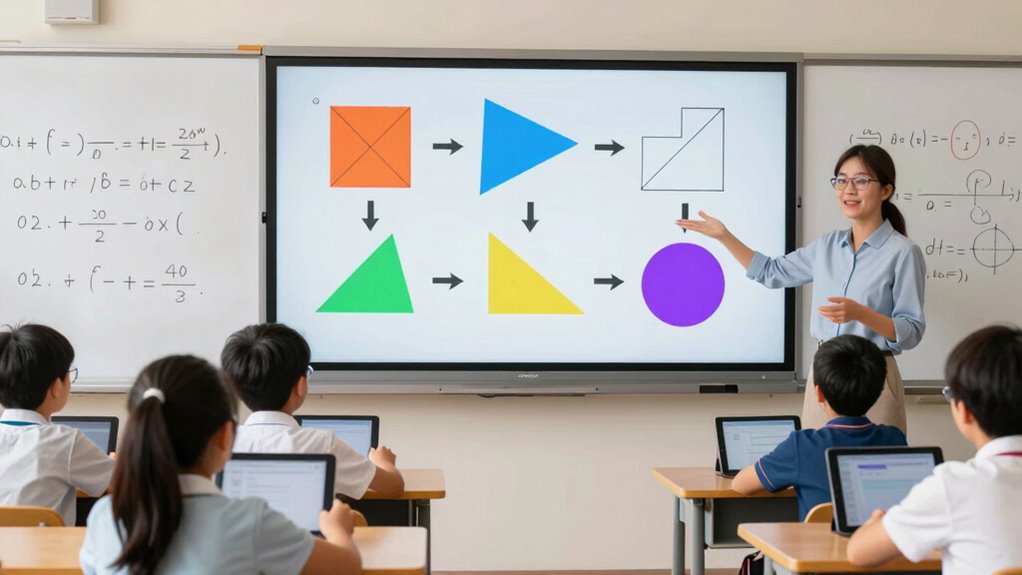
Have you ever considered how digital animation and project integration can deepen students’ understanding of mathematical concepts? Digital animations make transformations more tangible by allowing students to visualize changes step-by-step. To implement this, you can:
- Create animations that show transformations in real-time, making abstract ideas concrete.
- Use interactive tools to let students manipulate figures and observe outcomes instantly.
- Assign projects where students design their own digital animations to illustrate transformations.
- Incorporate animations into assessments to evaluate comprehension dynamically.
These strategies help students connect concepts actively and foster engagement. Digital animation transforms traditional demonstrations into immersive experiences, boosting understanding and retention. By integrating projects, you encourage creativity while reinforcing mathematical principles effectively.
Common Challenges When Demonstrating Transformations Live: and How to Overcome Them
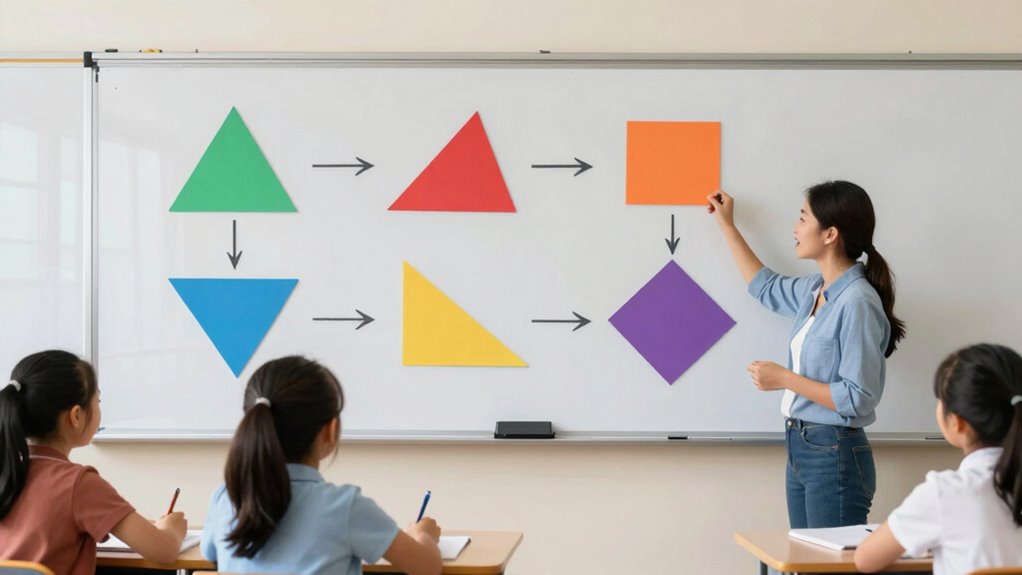
When demonstrating transformations live, technical glitches can disrupt your flow and confuse students. You also need to keep students engaged and make your visuals always clear and understandable. Addressing these challenges proactively helps you deliver smooth, impactful lessons. Developing a methodical approach to testing your technology beforehand can help identify potential issues early. Incorporating proper setup and calibration ensures your visuals accurately represent transformations and minimizes troubleshooting during the demonstration. Using smart home automation technology to control and monitor your setup can further enhance reliability and streamline the demonstration process. Additionally, understanding the sound healing science behind the use of specific frequencies can inspire innovative ways to incorporate calming sounds into your presentation environment, potentially reducing student anxiety and increasing focus.
Managing Technical Glitches
Technical glitches can disrupt live demonstrations of transformations, but with proper preparation, you can minimize their impact. Start by performing regular equipment maintenance to prevent unexpected failures. Next, develop a troubleshooting checklist to quickly identify issues. Make certain you have backup devices or files ready in case of hardware or software failures. Additionally, test your setup multiple times before the presentation, checking connections and functionality. This proactive approach helps catch problems early. Remember, technical troubleshooting is key; staying calm and methodically addressing issues keeps your demonstration on track. By maintaining your equipment and preparing for glitches, you ensure a smooth, engaging experience for your audience.
Maintaining Student Engagement
What are some common challenges you face when trying to keep students engaged during live demonstrations of transformations? One major challenge is maintaining their focus amidst potential distractions. To combat this, incorporate interactive storytelling to make the transformations more relatable and compelling. Encourage student-led exploration by asking open-ended questions and prompting students to predict outcomes or suggest steps. This involvement turns passive observation into active participation, increasing engagement. You can also vary your presentation style, using different visuals and movements to sustain interest. Remember, students remain more engaged when they feel their input matters. By fostering an environment where they lead exploration and the story unfolds with their contributions, you create an energetic, collaborative learning experience that keeps their attention sharp throughout the demonstration. Additionally, integrating media literacy principles can help students critically analyze visual representations and deepen their understanding of transformations.
Demonstrating Clear Visuals
Have you ever struggled to clearly illustrate transformations during a live demonstration? Achieving visual clarity and model accuracy is essential. To improve, consider these steps:
- Use bold lines and distinct colors to highlight key points and transformations.
- Simplify your models, avoiding unnecessary details that may cause confusion.
- Maintain consistent orientation and scale to help viewers follow each step seamlessly.
- Regularly check that your visuals align with the mathematical concepts, ensuring model accuracy.
- Incorporate visual strategies from instructional design principles to enhance student understanding and make transformations more intuitive. Additionally, focusing on fundamental kitchen fundamentals such as clarity and consistency can help develop effective teaching visuals.
Frequently Asked Questions
How Can I Adapt Live Demonstrations for Diverse Learning Styles?
You can adapt live demonstrations for diverse learning styles by incorporating multisensory learning, like visuals, sounds, and hands-on activities, to engage all students. Use individualized instruction by offering varied examples and allowing students to choose how they demonstrate their understanding. This approach helps visual, auditory, and kinesthetic learners connect with transformations, ensuring everyone stays engaged and learns effectively through tailored, interactive methods.
What Safety Precautions Are Necessary During Physical Model Demonstrations?
Think of yourself as a 21st-century scientist in a lab. You need to wear protective gear like goggles and gloves, follow safety protocols, and make certain your workspace is clear. Keep emergency equipment nearby and avoid distractions. Double-check your models for stability before demonstrations. Staying vigilant minimizes risks, keeps everyone safe, and guarantees your live demonstration runs smoothly, just like a well-planned mission.
How Do I Incorporate Student Participation Into Live Visualization Activities?
You can incorporate student participation by encouraging peer collaboration and student-led exploration. Ask students to work in small groups to manipulate models or visualize transformations together. Facilitate discussions where they share their thought processes and discoveries. This approach fosters active engagement, deepens understanding, and makes the activity more interactive. By empowering students to explore and explain concepts themselves, you create a dynamic learning environment that enhances comprehension.
What Are Cost-Effective Options for Classroom Transformation Demonstration Tools?
Think of your classroom as a painter’s palette, where every tool adds color to your lessons. You can use cost-effective tools like printable templates, household objects, or DIY classroom models to demonstrate transformations vividly. These options are budget-friendly yet highly effective, allowing students to grasp concepts through hands-on experience. By creatively repurposing everyday items, you turn your space into an engaging, visual learning environment that’s both economical and impactful.
How Can I Effectively Integrate Live Demos With Digital Resources for Homework?
You can effectively integrate live demos with digital resources for homework by using interactive apps and platforms that reinforce transformation concepts. Incorporate digital tools like virtual manipulatives or dynamic geometry software to enhance homework, making it more engaging and visual. By blending live demonstrations with digital integration, you help students better understand transformations, encouraging active participation and deepening their comprehension through homework that is both interactive and visually stimulating.
Conclusion
As you master live transformation demonstrations, you’ll open new ways for students to see and understand geometry. But remember, every reveal brings a deeper question—what’s truly happening behind the move? Keep exploring innovative methods and push beyond the basics. The more you experiment, the more you’ll discover that these visualizations aren’t just tools—they’re gateways to a profound understanding. Are you ready to uncover what lies beneath the transformations? The journey has only just begun.
Halloween Picks
halloween
As an affiliate, we earn on qualifying purchases.