Toolpaths like pocket, profile, and adaptive define how your CNC machine shapes material. Pocket toolpaths remove large areas quickly to create recesses, perfect for roughing out sections. Profile paths follow precise contours for detailed cuts and finishing. Adaptive toolpaths adjust the cutter engagement in real-time, reducing tool wear and improving surface quality on complex shapes. Understanding these tactics helps optimize your machining process—keep going to discover how each one works best for your projects.
Key Takeaways
- Pocket toolpaths remove large areas of material efficiently for hollow or recessed features.
- Profile toolpaths precisely follow contours for accurate external or internal cuts.
- Adaptive toolpaths adjust cutting engagement dynamically, reducing tool wear and improving surface quality.
- Choice of toolpath depends on material, design complexity, and desired finish quality.
- Optimizing parameters like feed rate and spindle speed enhances efficiency and tool life across all toolpaths.
What Are CNC Toolpaths and Why Do They Matter?
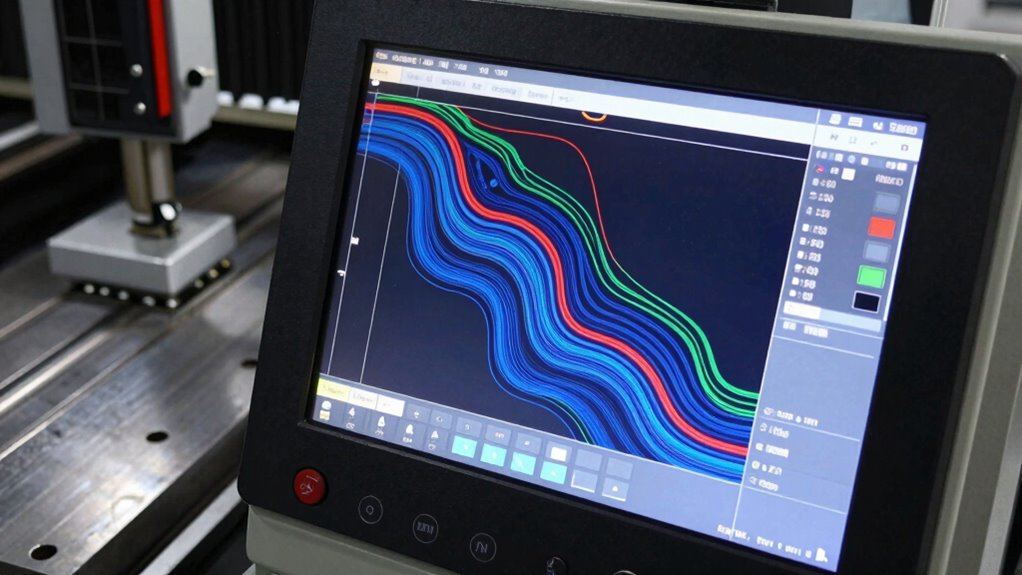
Ever wondered how machines create complex parts with precision? That’s where CNC toolpaths come into play. They’re the routes that a CNC machine follows to cut, carve, or shape material. These toolpaths are generated through CNC programming, which translates design files into instructions your machine can understand. Central to this process are toolpath algorithms, which determine the most efficient and accurate way for the tool to move. They control everything from cutting depth to speed, ensuring precision and minimizing waste. Without proper toolpaths, even the most advanced machinery could produce flawed parts. Innovative European cloud servers are also transforming manufacturing by providing sustainable and secure digital infrastructure to support advanced CNC operations. Additionally, understanding AI-powered tools can help optimize the design and manufacturing process for better efficiency. So, understanding what CNC toolpaths are and how they’re designed is essential for achieving high-quality, consistent results in manufacturing.
Which CNC Toolpath Is Best for Your Project? Key Factors to Consider
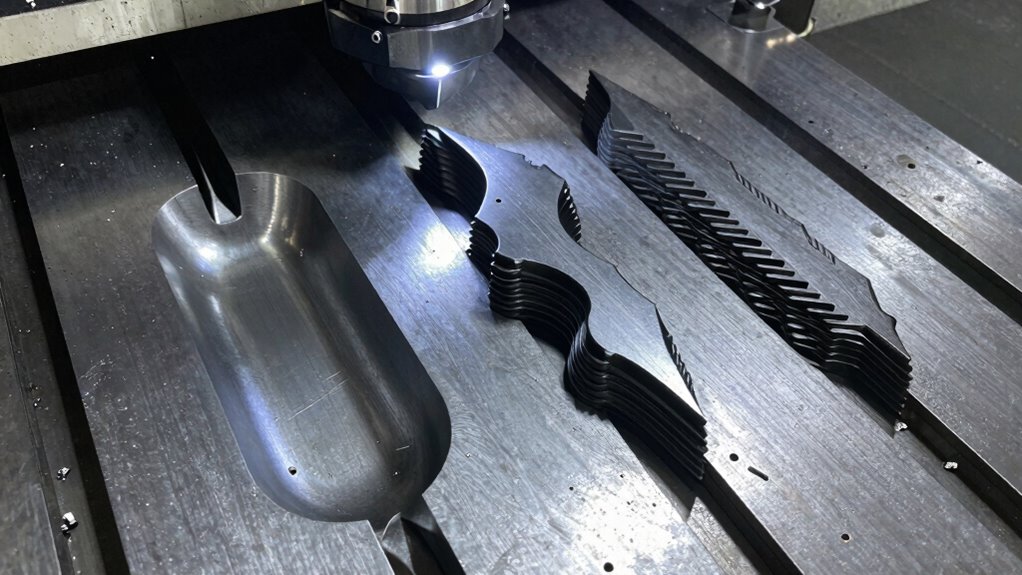
Choosing the right CNC toolpath for your project depends on several key factors, including the material you’re working with, the complexity of the design, and your desired finish quality. Your decision impacts feed rate and spindle speed, which directly affect cut quality and efficiency. For softer materials, a higher feed rate and spindle speed can increase productivity without sacrificing precision. More intricate designs may require slower speeds to ensure accuracy and reduce tool wear. Consider the finish you want—smooth surfaces may need more conservative settings and specific toolpaths like adaptive or pocketing. Additionally, understanding how cut quality is influenced by toolpath selection can help you achieve the desired surface finish. By adjusting feed rate and spindle speed based on these factors, you optimize performance and achieve better results tailored to your project’s needs. Moreover, being familiar with toolpath strategies can help you choose the most effective approach for different project requirements.
Pocket Toolpaths Explained: How They Work and When to Use Them

Pocket toolpaths are a versatile option when removing large amounts of material from a workpiece, especially for creating recessed areas or hollow sections. They excel in efficiently clearing out material, reducing overall machining time. To make the most of pocket toolpaths, consider these key points:
- Optimize toolpath strategy for faster material removal.
- Use appropriate feed rates to minimize tool wear.
- Select the right cutting tools to handle the material’s properties.
- Monitor tool wear regularly to prevent inaccuracies and damage.
- Incorporate Glycolic Acid Benefits for Skin to understand how consistent application can improve the surface quality of the workpiece. Additionally, understanding Vetted practices in toolpath planning can lead to better results and more efficient machining processes. Paying attention to filtration and pump protection ensures consistent performance of the equipment used during machining. Incorporating proper coolant management can also extend tool life and improve surface finish. Moreover, implementing coolant filtration systems can enhance the effectiveness of coolant and reduce tool wear.
Understanding Profile Toolpaths: Shaping Your Parts Precisely
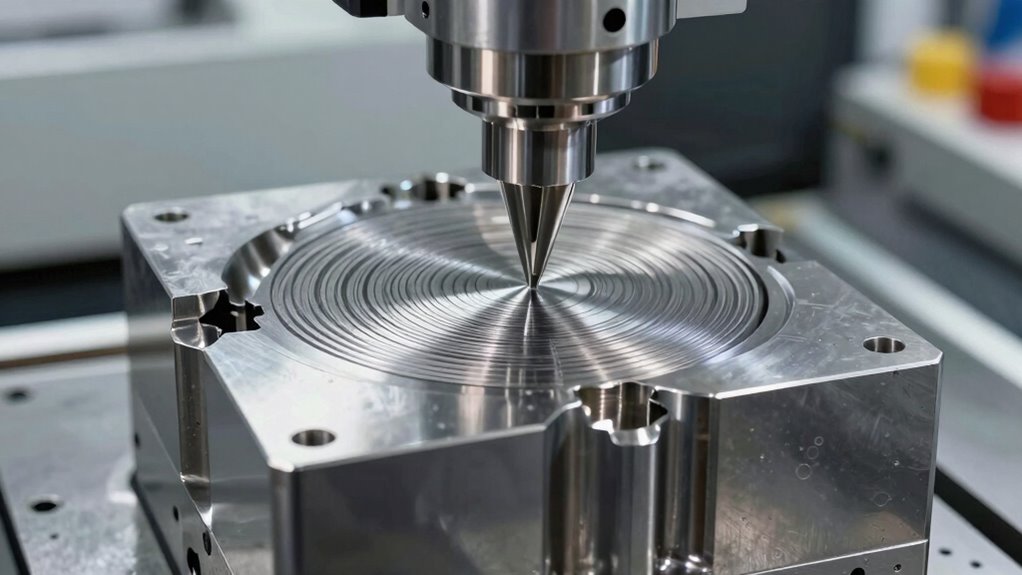
When working with profile toolpaths, precision in your cutting path is essential for achieving accurate shapes. You need to contemplate how your tool engages with the material to maintain control and avoid mistakes. Understanding these strategies helps you shape parts exactly as planned, no matter the complexity.
Cutting Path Precision
Understanding the precision of your cutting path is essential for achieving accurate and high-quality parts with profile toolpaths. A precise cutting path guarantees your machining accuracy meets design specifications. Here are four factors that influence this:
- Toolpath accuracy – The closer your toolpath follows the intended design, the better your final part’s dimensions.
- Machine calibration – Regular calibration minimizes deviations during cutting.
- Cutting parameters – Correct feed rates and spindle speeds prevent overshoot or undercutting.
- Material consistency – Uniform material properties reduce unexpected variations in the cutting process.
Paying attention to these elements helps you optimize your cutting path, leading to improved machining accuracy and consistent results. Mastering cutting path precision is key to producing parts that meet exact specifications.
Tool Engagement Strategies
Effective tool engagement is essential for achieving clean, accurate cuts with profile toolpaths. Proper tool engagement ensures you maintain consistent contact with the material, reducing vibrations and tool wear. To optimize chip removal, you should adjust feed rates and cutting depths so the tool engages the material gradually, preventing excessive heat and chip buildup. Using strategies like ramping into cuts or employing appropriate tool geometries enhances chip evacuation, which keeps the cut clear and reduces the risk of workpiece damage. Monitoring engagement angles and avoiding abrupt direction changes also helps maintain steady engagement, improving surface finish and dimensional accuracy. Incorporating proper tool engagement techniques helps prevent tool deflection and ensures consistent results. Additionally, understanding cutting force balance helps in fine-tuning the process for smoother operation. Maintaining appropriate feed rate control is also crucial for consistent engagement and reducing tool stress. Ultimately, thoughtful engagement strategies balance cutting forces, improve chip removal, and result in smoother, more precise profile cuts.
Adaptive Machining Techniques for Complex Materials
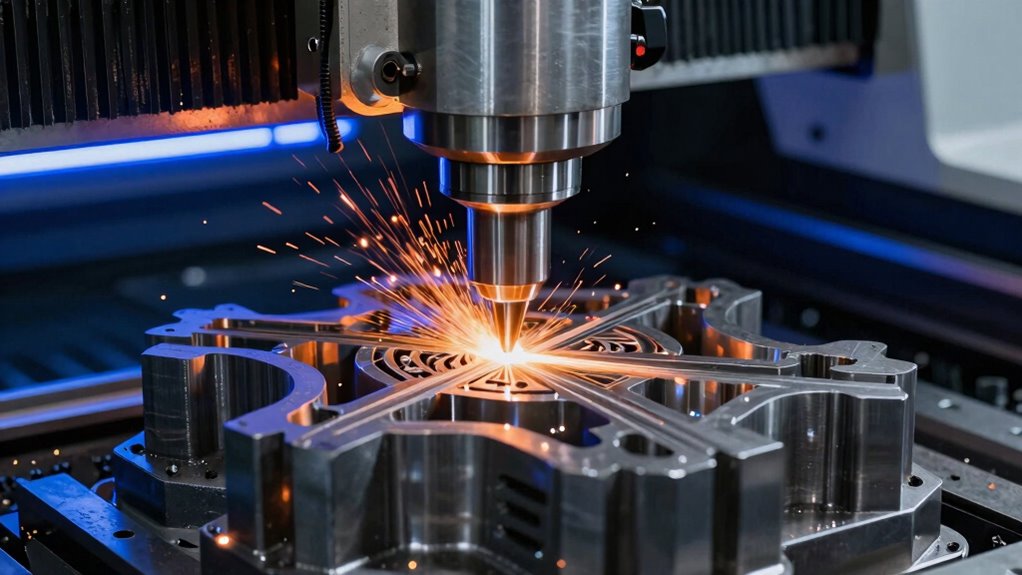
When working with complex materials, you need to adopt material-specific strategies to guarantee efficient machining. Optimizing tool engagement becomes vital to prevent tool wear and maintain precision. By adjusting your approach, you can achieve better surface quality and reduce production time. Incorporating smart gear can further enhance your ability to adapt processes dynamically for improved results. Additionally, utilizing adaptive machining techniques allows for real-time adjustments that respond to material variations, ensuring consistent outcomes. Implementing feedback control systems can help monitor cutting conditions continuously and make immediate adjustments to optimize performance. Understanding toolpath strategies is essential for selecting the most effective approach for each project, especially when dealing with intricate geometries and difficult materials. Embracing adaptive strategies can lead to significant improvements in machining efficiency and tool longevity.
Material-Specific Strategies
Adaptive machining techniques are essential when working with complex materials that pose unique challenges, such as composites, titanium, or hardened steels. To succeed, you need effective material-specific strategies that optimize your process. Key aspects include:
- Choosing the right cutting tool based on material properties to prevent wear and ensure precision. Additionally, understanding the material’s machinability can help in selecting appropriate machining parameters to reduce tool wear and improve surface finish. Incorporating material characterization techniques can further refine tool selection and process parameters for optimal results.
- Adjusting cutting speeds and feeds tailored to each material’s hardness and ductility.
- Implementing cooling methods suited for heat-sensitive materials like composites.
- Using specialized toolpaths that minimize stress and chatter in tough materials. You should also consider the material-specific jewelry materials used in the process to ensure compatibility and performance. Understanding the net worth of celebrities can also influence decisions in high-end jewelry design, as it reflects market value and desirability.
Optimizing Tool Engagement
Optimizing tool engagement is crucial for machining complex materials, as it directly influences cutting efficiency, surface quality, and tool life. To achieve this, focus on feed rate optimization and spindle speed adjustments. Increasing feed rates too quickly can overload the tool, causing premature wear, while too slow reduces productivity. Adjust spindle speed to match material properties, ensuring ideal cutting conditions without excessive heat or vibration. Adaptive machining techniques dynamically modify feed rate and spindle speed based on real-time feedback, maintaining consistent engagement with the material. This approach minimizes tool deflection and chatter, improves surface finish, and extends tool life. By carefully balancing feed rate optimization and spindle speed, you ensure efficient, precise cuts even in challenging, complex materials.
Troubleshooting Common CNC Toolpath Problems
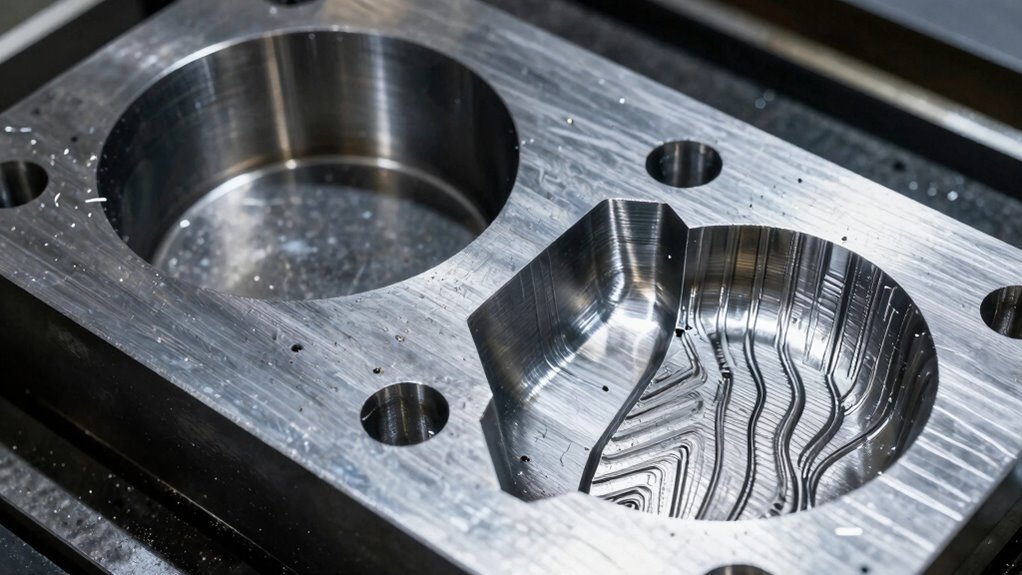
Troubleshooting common CNC toolpath problems requires careful attention to detail and a systematic approach. To improve toolpath design and guarantee machining accuracy, follow these steps:
- Check for unexpected tool movements or deviations; these often indicate issues with file setup or incorrect parameters. Proper setup is essential for accurate machining results.
- Verify your toolpath for collisions or gouges by simulating the job before running the machine.
- Inspect your machine’s calibration and tool offsets to eliminate inconsistencies affecting accuracy.
- Review feed rates and spindle speeds—improper settings can cause chatter, tool wear, or poor surface finish.
- Understand the importance of digital safety practices to prevent accidents and equipment damage during operation.
- Incorporate accurate toolpath simulation techniques to identify potential issues early in the process.
- Additionally, ensuring that your CNC machine has proper maintenance can prevent unexpected errors and prolong equipment lifespan.
Addressing these areas helps identify root causes quickly, ensuring your toolpath design produces precise, quality results without costly errors.
Choosing the Right Toolpath: Tips for Better Precision and Efficiency
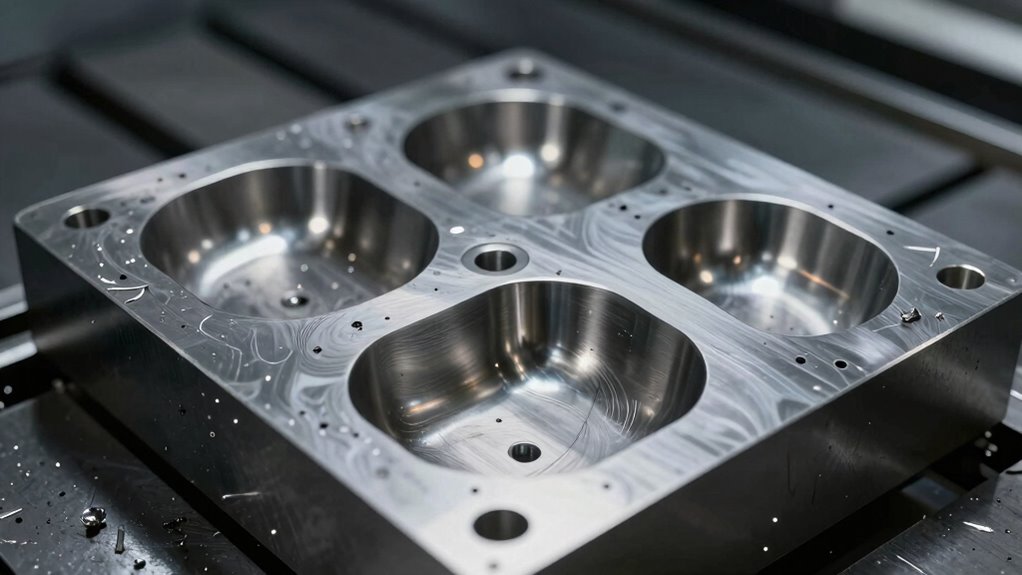
Selecting the right toolpath is essential for achieving both high precision and efficient machining. Your choice impacts surface quality, cycle time, and tool wear. Consider the material, geometry, and desired finish when choosing a toolpath. For example, adaptive toolpaths improve machining efficiency on complex parts, while pocketing is ideal for removing large areas quickly. To optimize results:
| Toolpath Type | Best Use Case |
|---|---|
| Large area removal, roughing | |
| Profile | External/internal cutting, finishing |
| Adaptive | Complex shapes, high efficiency |
| Contour | Precise edge finishing |
Proper toolpath selection streamlines your workflow and enhances precision, saving time and reducing errors.
Frequently Asked Questions
How Do Toolpaths Affect Machining Time and Surface Finish?
Toolpaths directly impact machining time and surface finish by controlling feed rate and cutting strategy. A faster feed rate reduces machining time but may increase tool wear and roughen the surface. Conversely, a slower feed improves surface quality but extends time. Adaptive toolpaths optimize cutting conditions, balancing feed rate to minimize tool wear while achieving a smooth finish, allowing you to efficiently complete jobs without sacrificing quality.
Can I Combine Different Toolpaths in One CNC Project?
Yes, you can combine different toolpaths in one CNC project, but you need to contemplate toolpath compatibility and your overall strategy. Mixing pocket, profile, and adaptive paths can optimize efficiency and surface finish, especially with multi tool strategies. Just guarantee your machine can handle the varied tool changes smoothly, and plan your sequence carefully to prevent collisions or errors. This approach opens more precise, efficient machining results.
What Software Options Are Best for Creating Complex Toolpaths?
You should consider CAM software like Fusion 360, Mastercam, or SolidCAM for creating complex toolpaths. These programs offer advanced features and intuitive interfaces to design intricate paths efficiently. Additionally, simulation tools within these software options let you preview your machining process, identify potential issues, and optimize toolpaths before actual cutting. This combination guarantees precision, saves time, and reduces material waste in your CNC projects.
How Do Material Properties Influence Toolpath Selection?
Material properties are like the terrain your tools must conquer. Harder materials demand robust toolpaths that can cut through the toughest surfaces, while thermal conductivity guides heat management—high conductivity disperses heat, reducing warping. You choose your strategy based on these traits, tailoring your toolpath to guarantee precision and efficiency. Think of it as charting a landscape where understanding the terrain determines your path’s success.
What Safety Precautions Should Be Taken When Running Specific Toolpaths?
When running specific toolpaths, you should prioritize machine safety by ensuring all safety guards are in place and keeping hands clear of moving parts. Always verify your toolpath thoroughly before starting, using toolpath verification to catch errors. Confirm the correct tool and settings are selected, and never bypass safety protocols. These steps help prevent accidents, protect your equipment, and guarantee a safe, efficient machining process.
Conclusion
Mastering CNC toolpaths is like wielding a magic wand that transforms raw material into perfect masterpieces. When you choose the right toolpath, you’ll carve through challenges like a hot knife through butter, producing precision so sharp it could cut glass. Forget guesswork—your projects will flow smoothly, turning complex designs into stunning reality with ease. Embrace these techniques, and you’ll discover a world where every cut feels effortless and every finish leaves jaws dropping.