
A plotter differs from a regular printer mainly in its ability to produce large-scale, highly precise technical drawings and graphics. Unlike standard printers that print on letter-sized paper, plotters handle wide-format materials, such as banners, maps, and blueprints. They use specialized tools like pens or blades moving along multiple axes, ensuring accuracy and clean lines. This makes plotters ideal for detailed, large-format projects. Keep exploring to understand how their advanced technology makes them a essential tool across industries.

Prime made for students and young adults
- Fast, free delivery for dorm and study essentials
- Prime Video and Amazon Music included
- Member-only deals
Key Takeaways
- Plotters are designed for large-scale, high-precision output, unlike regular printers that handle small documents.
- They use pens or blades for continuous lines and detailed vector graphics, ensuring accuracy on expansive surfaces.
- Plotters are integrated with CAD software for automated, precise plotting of technical and architectural designs.
- They support wide-format printing, suitable for banners, maps, and engineering drawings, which regular printers cannot handle.
- Plotters focus on mechanical precision and advanced technology to produce detailed, large-scale visuals without quality loss.
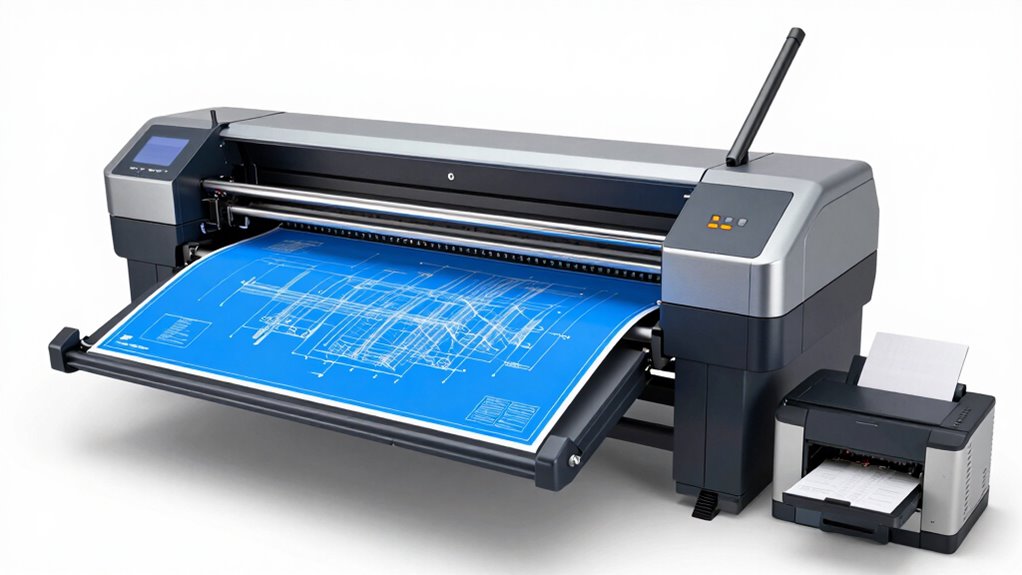
Have you ever wondered what sets a plotter apart from a regular printer? The key differences lie in their design purpose and capabilities, especially when it comes to digital precision and large scale output. Unlike standard printers, which are optimized for producing documents, photos, or small images, plotters are built for technical drawings, blueprints, and intricate designs that demand exceptional accuracy. When you’re working on architectural plans or engineering diagrams, the precision of a plotter ensures every line, curve, and detail is rendered exactly as intended. This digital accuracy is achieved through advanced pen or blade movements, allowing you to generate highly detailed and precise outputs that regular printers simply can’t match. Another major distinction is the ability of plotters to handle large scale output. If you’ve ever tried to print a poster or a large-scale map on a typical home or office printer, you’ll notice its limitations. Regular printers generally have size constraints, often maxing out at letter or A4 paper sizes. Plotters, on the other hand, are designed specifically for wide-format printing. They can produce banners, large architectural drawings, or city planning maps without sacrificing quality or detail. This capability is essential in fields where scale and clarity are non-negotiable, and it’s what makes plotters indispensable for professionals working on sizable projects. The mechanism behind a plotter also differs from that of a regular printer. While printers typically rely on inkjet or laser technology to deposit ink or toner onto paper, plotters often use pens, cutting blades, or other tools that move along multiple axes with high precision. This allows for continuous lines, smooth curves, and complex vector graphics that would be difficult or impossible for traditional printers to produce efficiently. You’ll find that this setup results in cleaner, more accurate drawings, especially on large surfaces. Additionally, the mechanical precision of plotters enables them to produce consistent and repeatable results, which is critical for technical and engineering work. Furthermore, some modern plotters incorporate computer-aided design (CAD) software integration, allowing users to directly transfer digital designs for accurate plotting. Modern advancements have also led to the development of automated plotting, which enhances efficiency and reduces manual intervention during large or complex projects. Moreover, the ability to customize outputs makes plotters particularly useful in specialized applications, providing tailored solutions for various industries. Understanding the core technology behind plotters highlights their importance in fields that require exactness and large-scale production. In essence, a plotter’s ability to combine digital accuracy with the capacity for large scale output makes it a specialized tool for professionals who need exactness and size. Whether you’re creating detailed technical drawings or expansive visual displays, a plotter provides the accuracy and scale that regular printers just can’t deliver. It’s this combination of advanced technology and purpose-built design that truly sets a plotter apart.
large format plotter for engineering drawings
As an affiliate, we earn on qualifying purchases.
As an affiliate, we earn on qualifying purchases.
Frequently Asked Questions
Can Plotters Print in Color or Only Black and White?
You can definitely do color printing with a plotter. Most modern plotters support vibrant, full-color output, making them ideal for detailed graphics and presentations. They also offer excellent media compatibility, so you can print on various materials like vinyl, fabric, or paper. This versatility means you’re not limited to black and white; you can create colorful, high-quality visuals tailored to your specific needs.
What Is the Typical Lifespan of a Plotter?
A plotter typically lasts between 3 to 7 years, depending on usage and maintenance. You should review its technical specifications for longevity expectations and follow recommended maintenance requirements to extend its lifespan. Regular cleaning, replacing worn parts, and using quality ink or pen supplies help guarantee it stays in good condition. Proper care and understanding of its specifications can maximize your plotter’s durability and performance over time.
Are Plotters Suitable for Home Use or Just Industrial?
Plotters are suitable for home setups and hobbyist use, especially if you work on large-format projects like art, design, or architecture. They offer precision and the ability to handle bigger media, making them ideal for creative projects. While they’re more common in industrial settings, smaller models are available for personal use. Just make certain you have enough space and the right setup to accommodate their size and requirements.
How Much Does a Professional Plotter Typically Cost?
A professional plotter usually costs between $2,000 and $20,000, depending on its features and size. Interestingly, this price range is considerably higher than regular printers, emphasizing their advanced capabilities. When considering cost comparison and budget considerations, remember that investing in a plotter offers precise large-format printing for industries like architecture and engineering, making it a worthwhile asset if you need high-quality, large-scale output.
Do Plotters Require Special Paper or Media?
Yes, plotters often require special paper or media, depending on your projects. They typically need media with specific weight, texture, or coating to guarantee quality output. For example, architectural plans or large-format artwork may need heavy, durable paper or vinyl. Always check your plotter’s media requirements before purchasing to avoid issues like smudging or poor ink adhesion, making sure your prints come out sharp and professional.
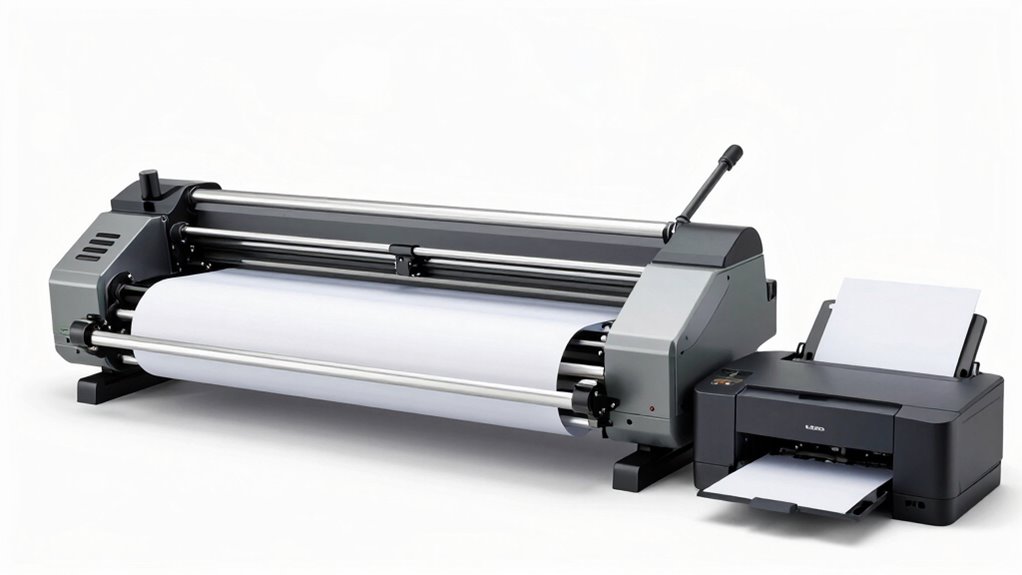
professional CAD plotter machine
As an affiliate, we earn on qualifying purchases.
As an affiliate, we earn on qualifying purchases.
Conclusion
So, now you see it—plotters are like the superheroes of printing, capable of creating jaw-dropping, massive, and ultra-detailed designs that regular printers could only dream of. They turn your wildest blueprints into reality, making every project feel like a masterpiece. Once you’ve experienced a plotter’s unmatched precision and size, there’s no going back to those tiny, ordinary printers. Get ready to release your inner artist and conquer every creative challenge with ease!
As an affiliate, we earn on qualifying purchases.
precision technical drawing plotter
As an affiliate, we earn on qualifying purchases.
As an affiliate, we earn on qualifying purchases.
Fall Picks
fall essentials
As an affiliate, we earn on qualifying purchases.