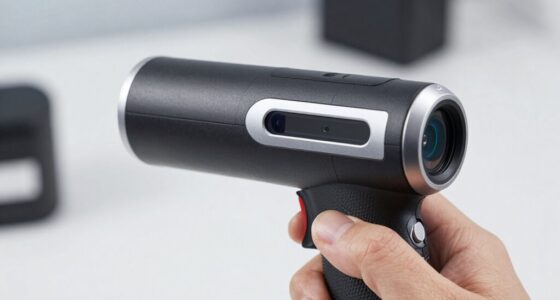

Proper lighting is key for effective inspections. Using ring lights provides even, shadow-free illumination that reveals fine details, while diffusers soften harsh light and reduce glare, creating uniform coverage. Controlling reflections with polarized filters and adjusting angles helps improve clarity. Combining these tools and techniques minimizes errors and eye strain, ensuring accurate results. If you want to discover more about optimizing your inspection environment, keep exploring the essential lighting solutions available.
Key Takeaways
- Ring lights provide uniform, shadow-free illumination with high CRI for accurate surface and detail inspection.
- Diffusers soften light, reduce harsh shadows and glare, ensuring even coverage and natural color rendering.
- Polarized filters and strategic light angles minimize reflections and surface glare, improving visibility.
- Adjustable brightness and color temperature control enhance inspection accuracy and reduce eye strain.
- Proper light positioning and equipment selection optimize inspection clarity, accuracy, and efficiency.
Why Good Lighting Is Essential for Inspection Accuracy?

Good lighting is indispensable for inspection accuracy because it directly affects your ability to see details clearly. The right color temperature helps you distinguish subtle differences in textures and materials, reducing errors. Cooler temperatures (around 5000K-6500K) mimic natural daylight, enhancing clarity, while warmer tones can distort colors. Additionally, choosing energy-efficient lighting reduces power consumption, saving costs during prolonged inspections. Proper lighting ensures you don’t miss critical flaws or imperfections, which could compromise your assessment. energy-efficient lighting not only benefits your operational costs but also supports sustainable practices. Incorporating proper lighting design can further optimize visibility and reduce eye strain during extended inspection sessions. Selecting lighting with the appropriate color rendering index (CRI) ensures that colors are rendered accurately, further improving inspection precision. By selecting lighting with appropriate color temperature and efficiency, you improve your inspection precision and reduce fatigue. Free Floating Good lighting isn’t just a convenience; it’s a crucial component that directly influences your ability to perform thorough, accurate inspections every time. Additionally, paying attention to glare control can prevent visual discomfort and enhance overall visibility during detailed inspections.
What Common Lighting Issues Do Inspectors Face?

Have you ever struggled to identify flaws because your lighting was inadequate? Poor lighting can cause shadows, glare, or uneven illumination, making it hard to see defects clearly. This often leads to incorrect sensor calibration, where inspection tools don’t accurately detect issues. Additionally, inefficient lighting setups may require higher power consumption, increasing operational costs and generating excess heat that can distort your view. Glare from bright lights can create reflections, obscuring details and causing eye strain. Inconsistent lighting intensities make it difficult to maintain focus, reducing inspection accuracy. These issues highlight the importance of proper lighting design, including diffusers and glare control measures, to guarantee consistent, clear illumination. Proper lighting setup can also help reduce energy use and heat output, improving overall inspection efficiency. Addressing these common problems helps inspectors perform more accurate, efficient inspections. Incorporating contrast ratio considerations into lighting design can further enhance visibility of fine details and defects. Moreover, understanding art care principles can guide the selection of appropriate lighting that preserves artwork quality during inspection. Furthermore, applying woodworking knowledge can assist in selecting the best lighting for different inspection environments and materials. To achieve optimal results, it is essential to consider lighting ergonomics to reduce fatigue and improve inspection accuracy over extended periods.
How Ring Lights Help Reveal Fine Details in Inspection Work
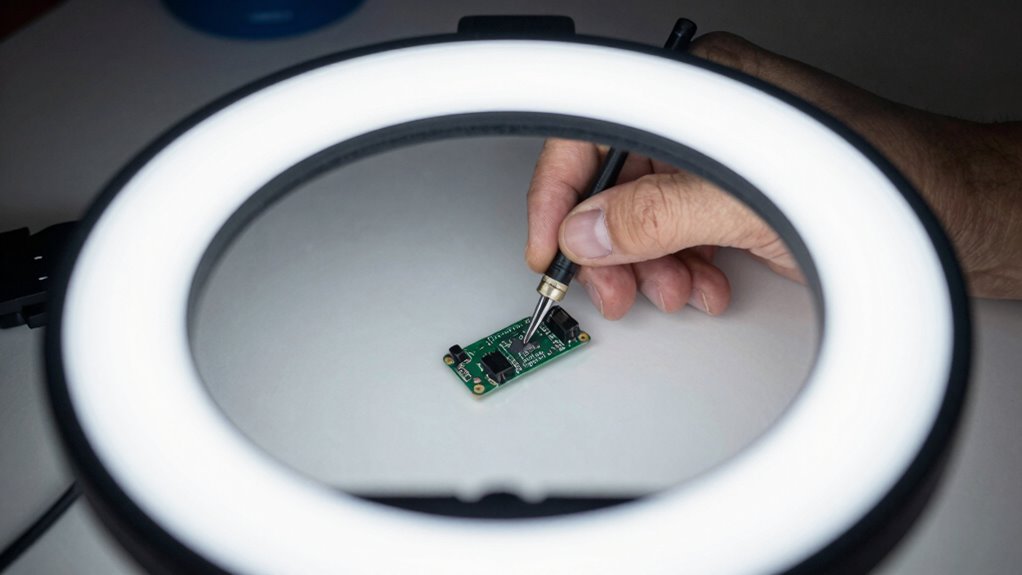
Ever wonder how inspectors capture minute details that might otherwise go unnoticed? Ring lights are essential tools because they provide uniform, shadow-free illumination that reveals fine details clearly. Their high color rendering ensures that colors appear natural and true to life, making it easier to identify defects or inconsistencies. Plus, ring lights are energy-efficient, offering powerful illumination with low power consumption, which is crucial during long inspection sessions. The even light distribution reduces glare and harsh shadows, helping you see subtle surface imperfections or tiny components without distraction. Additionally, understanding essential oils for detailed work can enhance focus and reduce eye strain during prolonged inspections. Incorporating knowledge about digital safety practices can further improve your inspection setup and prevent potential hazards. Recognizing lighting ergonomics can help optimize your workspace for comfort and efficiency. Proper light maintenance routines for your lighting equipment ensure consistent performance and longevity. This combination of excellent color rendering and efficient power use makes ring lights indispensable for detailed inspection work, enabling you to perform precise evaluations quickly and accurately.
Choosing the Best Diffusers for Soft, Even Lighting
Choosing the right diffuser is essential for creating soft, even lighting that minimizes harsh shadows and glare. When selecting a diffuser, consider how it affects color temperature; some materials can slightly shift the light’s hue, impacting inspection accuracy. Look for diffusers that evenly distribute light without markedly increasing power consumption, ensuring your setup remains energy-efficient. A well-chosen diffuser reduces hotspots and glare, providing consistent illumination across the inspection area. Lightweight, durable materials like frosted acrylic or fabric can offer ideal diffusion while maintaining ease of use. Additionally, selecting diffusers made from trusted materials can enhance durability and performance over time. Ensuring that the diffuser material has good light transmission properties helps achieve optimal illumination quality. Choosing a diffuser with effective light diffusion ensures a balanced, natural-looking light that reveals fine details without distortion or uneven brightness, all while keeping an eye on efficiency and color accuracy. Incorporating diffusers with appropriate diffusion levels can further optimize the quality of the lighting for precise inspections. Understanding how different diffuser materials influence light quality can help you select the best option for your specific inspection needs.
How to Control Reflections and Glare During Inspection

Reflections and glare can obscure critical details during inspection, making it essential to control light angles and surface interactions. Using polarized filters helps reduce surface reflections, improving visibility. Position lights at shallow angles to minimize direct reflections into your eyes or camera. Adjusting the orientation of polarized filters can further suppress unwanted glare. Surface finish also matters; matte or textured surfaces reflect less light, easing inspection. To illustrate, consider the following:
| Light Angle | Polarized Filter | Surface Finish |
|---|---|---|
| Shallow | Off | Matte or textured |
| Direct | On | Glossy surfaces |
| Side | On | Smooth, matte finishes |
| Overhead | Off | Any surface |
Additionally, understanding the best meals for Golden Retrievers and Rottweilers can help ensure their comfort during long inspection sessions, as comfortable dogs are less likely to cause distractions. Proper lighting setup can also help reduce fatigue and improve accuracy during extended inspections. It is also beneficial to adjust light intensity to prevent eye strain and enhance viewing clarity. Controlling reflections ensures clearer insights and more accurate inspections. Proper lighting setup is crucial for achieving financial clarity during inspection processes, as it minimizes errors and reduces the need for rework. Moreover, being mindful of light positioning can significantly improve the effectiveness of your inspection.
Comparing Top Inspection Lighting Solutions
When comparing inspection lighting solutions, you need to consider brightness and coverage to ensure all areas are visible. Diffuser effectiveness influences how evenly the light spreads, reducing harsh shadows. Additionally, managing glare and shadows is vital for clear, accurate inspections without eye strain or missed defects. Incorporating reliable power backup options can also ensure consistent lighting during power outages or in remote work environments.
Brightness and Coverage
Have you ever wondered how different inspection lighting solutions compare regarding brightness and coverage? Brightness depends on factors like lumen output and power consumption, which affect how well you see details. Coverage varies based on light distribution and beam angle. Here’s what to contemplate:
- Ring lights often provide even illumination with high brightness, ideal for detailed inspection.
- Diffusers help spread light uniformly but can slightly reduce overall brightness.
- Higher color temperature lights appear cooler and enhance contrast, aiding visibility.
- Power consumption impacts brightness efficiency; LED lights offer strong brightness with lower energy use, making coverage more effective.
Choosing the right solution balances brightness, coverage, color temperature, and power efficiency for your inspection needs.
Diffuser Effectiveness
Diffusers play a essential role in enhancing inspection lighting by spreading light more evenly across surfaces. The effectiveness of a diffuser depends on its materials, which influence how well it scatters light. Materials like frosted acrylic, opal polycarbonate, or specialized diffusing films excel at light scattering, reducing hot spots and harsh shadows. A high-quality diffuser minimizes glare and creates uniform illumination, making surface details clearer. Cheaper diffuser materials may not scatter light as effectively, resulting in uneven lighting and reduced inspection accuracy. When comparing top inspection lighting solutions, consider how well each diffuser material disperses light, ensuring that illumination remains soft, consistent, and glare-free. Proper diffuser selection directly impacts the clarity and reliability of your inspection process.
Glare and Shadow Control
Effective glare and shadow control are crucial for accurate inspection, as they prevent surface details from being obscured or distorted. Proper management ensures consistent, clear visibility of features without straining your eyes. When comparing top inspection lighting solutions, consider these points:
- Adjustable color temperature helps match ambient lighting, reducing glare and shadows.
- Diffusers spread light evenly, minimizing harsh shadows and preventing glare spots.
- Focused lighting reduces unwanted shadows, highlighting surface details precisely.
- Lower power consumption models often produce less heat and glare, improving comfort during long inspections.
Balancing color temperature and power use is key. A well-designed system reduces glare, improves shadow control, and ensures consistent, high-quality inspections.
Tips for Setting Up Your Inspection Lighting Environment
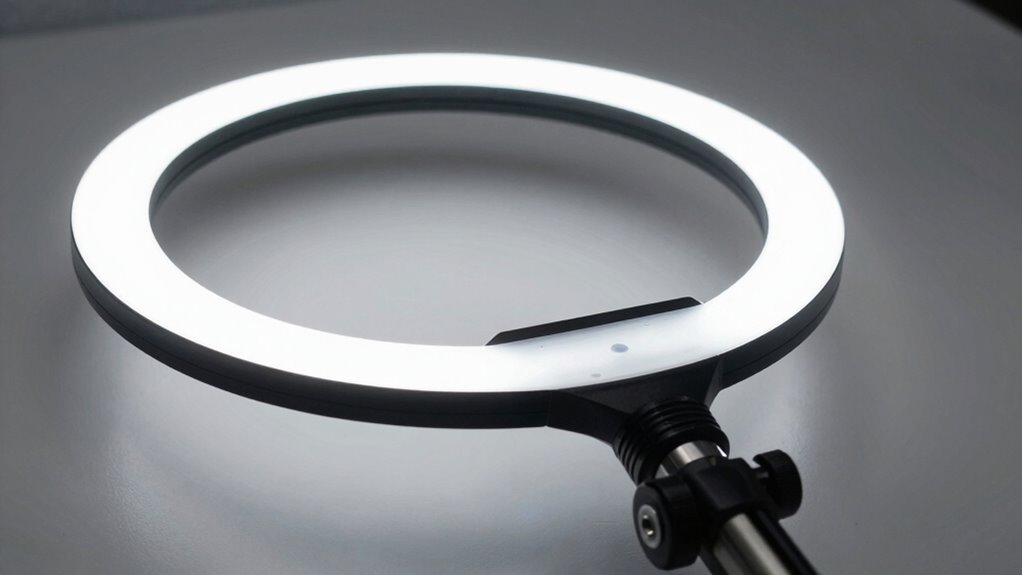
Setting up your inspection lighting environment begins with choosing the right light sources that provide bright, uniform illumination without creating shadows or glare. Focus on selecting lights with a suitable color temperature; cooler temperatures (around 5000K) enhance detail and contrast, while warmer tones may distort color perception. Consider power consumption to guarantee your setup is energy-efficient and cost-effective over time. LED lights are a popular choice because they offer high brightness with low energy use and minimal heat output. Position your lights to evenly illuminate the area, reducing shadows and glare. Use diffusers or ring lights to soften the light and improve visibility. Properly calibrated lighting minimizes eye strain and ensures accurate inspection results, making your setup both effective and sustainable.
How to Maintain and Adjust Your Inspection Lights for Perfect Results
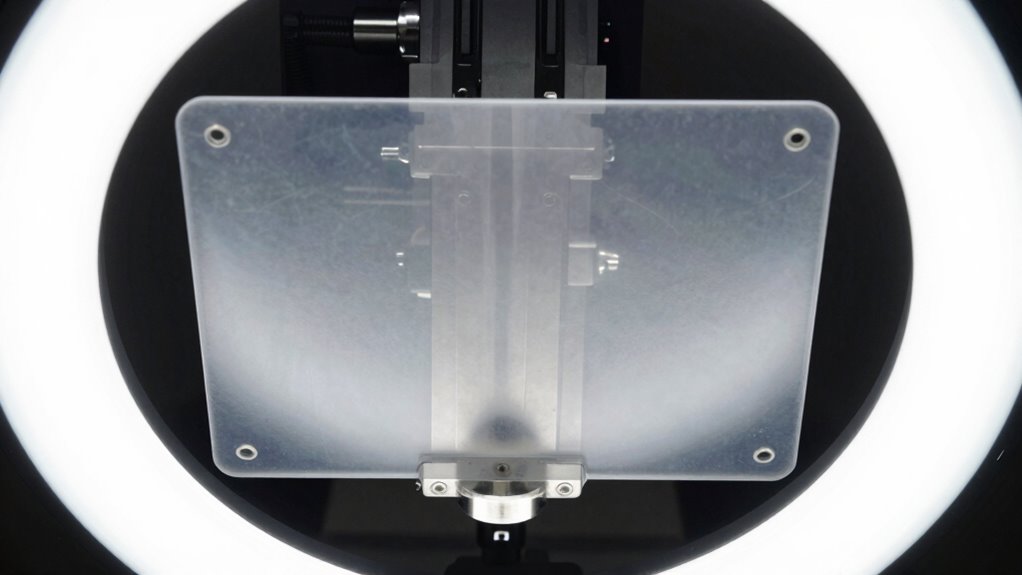
Once you’ve established a proper lighting setup, maintaining and adjusting your inspection lights guarantees consistent, high-quality results. Regular checks help ensure ideal color temperature, which is vital for accurate inspections, and maintain power efficiency. To keep your lights performing well:
- Adjust the color temperature as needed to match inspection requirements, ensuring accurate color representation.
- Clean lens diffusers and reflectors to prevent glare and maintain even illumination.
- Monitor power efficiency by replacing aging bulbs or LEDs with energy-saving options.
- Periodically recalibrate your lights to ensure consistent brightness and color accuracy over time.
These steps help you sustain excellent lighting conditions, reducing errors and improving inspection precision. Proper maintenance keeps your lights reliable, efficient, and tailored for perfect results every time.
Frequently Asked Questions
How Do Different Light Temperatures Affect Inspection Clarity?
Different light temperatures, or color temperatures, impact inspection clarity by affecting visual contrast. Cooler temperatures (above 5000K) create a bluish hue that enhances detail and sharpness, making defects easier to spot. Warmer temperatures (below 3500K) produce a yellowish tone that can soften contrasts, reducing visibility. Choosing the right color temperature helps you see details clearly, ensuring accurate inspections and minimizing overlooked issues.
Can Portable Lighting Solutions Improve Inspection Accuracy in the Field?
Yes, portable lighting solutions can enhance your inspection accuracy in the field. They provide focused, consistent light, helping you spot issues more clearly. With reliable portable power, you won’t worry about running out of juice mid-inspection, and long battery life ensures you can work for extended periods. This flexibility allows you to conduct thorough inspections in various environments, improving your overall precision and confidence in your findings.
What Safety Considerations Are Important When Setting up Inspection Lighting?
Think of setting up inspection lighting like building a sturdy bridge. You must guarantee electrical safety by checking for proper grounding to prevent shocks. Always inspect cords and connections for damage, and keep lighting away from water or wet areas. Wearing gloves and using insulated tools adds extra safety. Prioritize these steps, and you’ll create a safe environment, just like a well-constructed bridge that safely carries you across.
How Does Ambient Lighting Impact the Effectiveness of Ring Lights?
Ambient lighting can profoundly affect your inspection results by causing ambient interference, which reduces the contrast and clarity provided by your ring light. When ambient light fluctuates or is too bright, it diminishes lighting consistency, making it harder to see fine details. To maximize effectiveness, you should control ambient lighting, use diffusers if needed, and ensure your ring light provides sufficient, focused illumination for accurate inspections.
Are There Eco-Friendly Lighting Options Suitable for Inspection Environments?
Yes, you can use eco-friendly lighting options like energy-efficient LEDs, which consume less power and last longer. Pairing these with solar panels can make your inspection environment more sustainable by harnessing renewable energy. This setup reduces your carbon footprint and lowers energy costs, making it an excellent choice for eco-conscious workplaces. You get effective illumination while supporting green initiatives, all with minimal environmental impact.
Conclusion
Proper lighting can boost your inspection accuracy by up to 30%, helping you spot flaws others might miss. With the right tools like ring lights, diffusers, and glare control, you’ll work more efficiently and confidently. Remember, well-lit environments reduce errors and improve safety. Investing in quality lighting isn’t just a choice—it’s essential. So, set up your space wisely, and see the difference clear, consistent illumination makes in your inspection results.