
To turn everyday objects into geometry challenges, start by examining their shapes, patterns, and design elements. Break them down into basic geometric components like cylinders, rectangles, or triangles. Use them to explore properties such as angles, symmetry, and tessellations. Observe how cultural or architectural features relate to geometric principles. By analyzing these items, you’ll see how geometry appears in daily life. Keep exploring to discover even more ways to transform objects into engaging puzzles.

Prime made for students and young adults
- Fast, free delivery for dorm and study essentials
- Prime Video and Amazon Music included
- Member-only deals
Key Takeaways
- Transform objects into puzzles by identifying and analyzing their geometric shapes, patterns, and relationships.
- Use everyday items to explore properties like angles, symmetry, and tessellations through hands-on examination.
- Incorporate cultural and historical context to deepen understanding of geometric design in objects.
- Create challenges by questioning how objects’ structural features relate to geometric principles and functions.
- Compare similar objects across cultures or eras to highlight diverse geometric patterns and design strategies.
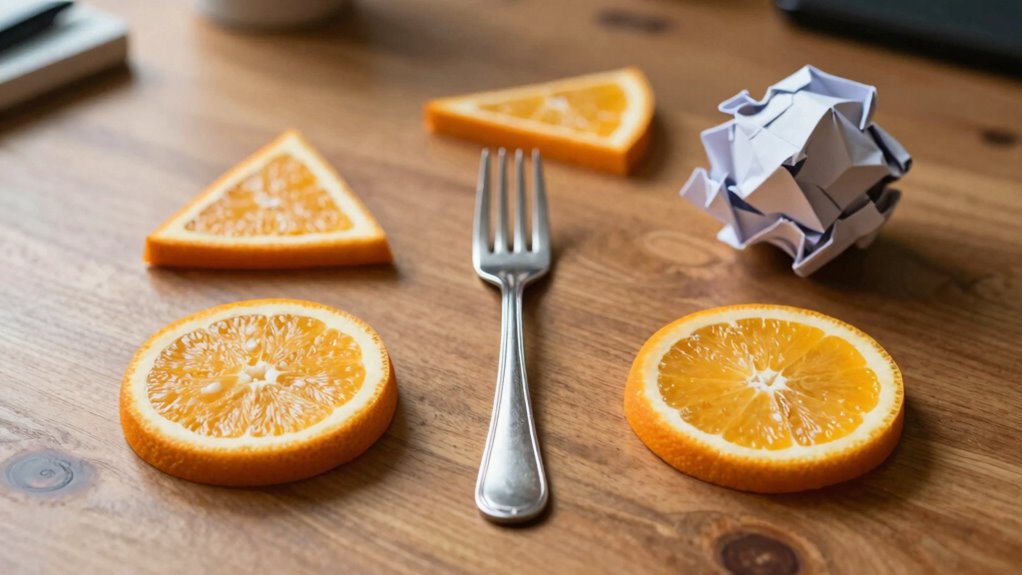
Transforming everyday objects into geometry challenges is a fun and engaging way to sharpen your spatial reasoning skills. When you look at the world around you, think about how common items can become puzzles that test your understanding of shapes, angles, and patterns. For example, a coffee mug isn’t just a container; it’s a cylinder with a curved surface that invites you to explore its geometric properties. By examining objects like this, you’re not only practicing visualization but also gaining insight into their design and structure.
As you turn objects into challenges, consider their cultural interpretations and historical significance. Many everyday items carry meanings rooted in tradition or history. A quilt with intricate patterns might reflect cultural symbols or storytelling, which you can analyze through geometry by identifying repeating shapes, symmetry, and tessellations. Similarly, a handcrafted basket might showcase traditional weaving techniques that follow geometric principles. Recognizing these elements can deepen your appreciation for the object’s cultural background and show how geometry has historically played a role in human creativity and craftsmanship. Additionally, exploring cultural symbolism can reveal how specific geometric patterns have been used to convey spiritual or social messages across different societies.
You can also challenge yourself by comparing the geometric aspects of objects from different cultures or eras. For instance, look at architectural features like arches or domes in historic buildings—these aren’t just visually impressive; they’re rooted in mathematical principles that have enabled engineering feats throughout history. Understanding their geometric design helps you see how different societies interpreted form and function, often using geometry to create stability and beauty. This approach connects your puzzle-solving to broader cultural narratives, making your challenges more meaningful. Moreover, examining the geometric principles behind these structures can give you a deeper appreciation of the ingenuity involved in their construction. Recognizing how geometry influences design across time can inspire your creativity in modern reimaginings.
geometric shape puzzles for kids
As an affiliate, we earn on qualifying purchases.
As an affiliate, we earn on qualifying purchases.
Frequently Asked Questions
What Age Group Is Suitable for These Geometry Challenges?
These geometry challenges are suitable for a wide age range, from early elementary kids to teens. You should consider age appropriateness and skill level adaptation when selecting objects and tasks. Younger children benefit from simple shapes and tactile exploration, while older kids can handle more complex challenges. Adjusting difficulty guarantees everyone stays engaged and learns at an appropriate pace, making the activity both fun and educational for all skill levels.
Can These Challenges Be Adapted for Virtual or Online Learning?
You can definitely adapt these challenges for virtual learning, and it’s a great way to keep students engaged. With a virtual adaptation, you can encourage students to find objects at home and share their findings online. This boosts online engagement and makes learning interactive. Use video calls or shared digital platforms to showcase solutions, making it enjoyable and accessible for everyone, no matter where they’re logging in from.
What Materials Are Best for Creating Durable Geometry Challenge Objects?
You should choose materials with high durability for creating geometry challenge objects, like sturdy plastic, metal, or thick cardboard. These materials withstand repeated handling and transport, ensuring your objects stay intact. When selecting objects, prioritize those that won’t easily break or deform—think glass or fragile ceramics—unless you reinforce them. Opting for resilient materials and thoughtful object selection guarantees your challenges remain functional and long-lasting through numerous uses.
How Can I Assess Students’ Understanding Through These Challenges?
You can assess students’ understanding through these challenges by observing their problem-solving process and using targeted assessment strategies. Engage students actively, encouraging them to explain their reasoning and choices, which reveals their grasp of geometric concepts. Monitor their collaboration and creativity, and ask reflective questions afterward. This approach boosts student engagement, helps you identify misconceptions, and provides insight into their depth of understanding, making your evaluations more meaningful and accurate.
Are There Safety Concerns When Using Certain Household Objects?
Yes, there are safety concerns when using household objects. You should prioritize household safety by inspecting items for material risks like sharp edges, small parts, or toxic substances. Always supervise students closely, especially with objects that pose choking hazards or could cause cuts. Make certain objects are clean and in good condition, and provide clear instructions. Taking these precautions helps prevent accidents and keeps the learning environment safe.
tessellation pattern building blocks
As an affiliate, we earn on qualifying purchases.
As an affiliate, we earn on qualifying purchases.
Conclusion
Now that you see how ordinary objects can become exciting geometry puzzles, imagine what else is waiting to be discovered around you. Every item holds a secret shape or pattern just begging to be explored. Are you ready to turn your daily surroundings into a world of endless mathematical surprises? The next challenge could be just a glance away—if you look closely enough, you might uncover the mystery that changes everything you thought you knew about shapes.
cultural geometric pattern coloring book
As an affiliate, we earn on qualifying purchases.
As an affiliate, we earn on qualifying purchases.
architectural model building kit
As an affiliate, we earn on qualifying purchases.
As an affiliate, we earn on qualifying purchases.
Halloween Picks
halloween
As an affiliate, we earn on qualifying purchases.