TL;DR

Prime made for students and young adults
- Fast, free delivery for dorm and study essentials
- Prime Video and Amazon Music included
- Member-only deals
NASA opened a $1 million Moon Base Student Challenge for teams at U.S. high schools and post-secondary schools. Students can propose solutions in six areas, including lunar power, life support and astronaut safety; registration through NASA’s STEM Gateway is open until Jan. 25, 2027.
NASA has opened a $1 million Moon Base Student Challenge, inviting teams from U.S. high schools and post-secondary schools to design solutions for living and working on the Moon. The multiphase competition spans six areas of lunar operations, and teams must register through NASA’s STEM Gateway by Jan. 25, 2027.
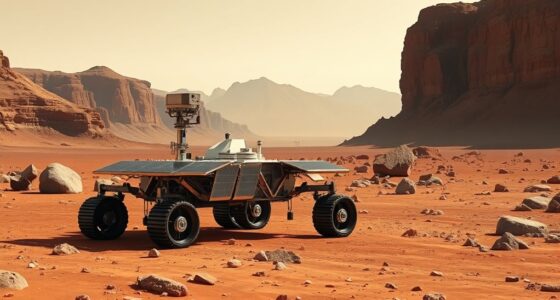
The agency announced the competition Sunday during a MAX POWER event at Kennedy Space Center Visitor Complex in Florida. Student teams are asked to develop concepts across power generation and storage, construction, life-support systems, surface mobility, communications networks, and astronaut safety. NASA describes the challenge as addressing real environmental and mission-design parameters for operations on the lunar surface.
The competition is designed for participants with varied academic and career interests. NASA says required deliverables will include work such as trade studies, concept proposals, and stakeholder briefings, which it describes as reflecting skills used in industry. The agency says students do not need prior specialized engineering or technical experience to participate, and that the challenge is intended to accommodate technical, vocational and other academic tracks.
NASA’s Office of STEM Engagement developed the challenge with the agency’s Moon Base Program. The Institute of Competition Sciences will administer it under a contract with NASA’s Center of Excellence for Collaborative Innovation, part of the Research and Technology Mission Directorate. NASA’s announcement puts the total prize amount at $1 million, but the supplied release does not specify how that money will be divided among teams or winners.
Student Ideas for Lunar Operations
The challenge gives students a structured way to work on problems NASA associates with a future human presence on the Moon, while also building experience in design, analysis and technical communication. Its six categories cover basic needs of a lunar outpost, from energy and life support to movement across the surface and crew safety.
NASA says it is building a Moon Base where astronauts will live, work and explore near the lunar South Pole. Concepts submitted through a competition are not necessarily selected for use or adopted as NASA hardware; the agency’s announcement presents the challenge as an opportunity to develop and consider new ideas. For participants, the stated value is both contributing concepts and gaining career-relevant skills connected to the space industry.
The agency also links a lasting human presence on the Moon to preparations for future crewed missions to Mars. That is NASA’s stated rationale for the broader program, not a guarantee that any particular student proposal will affect a mission design. The challenge’s immediate significance is more direct: it opens a national competition around practical design questions NASA says are relevant to lunar living and work.
Popular right now

Ninja Foodi 10-Qt DualZone Smart XL Air Fryer, 6-in-1, DZ550

Bose QuietComfort Earbuds (2nd Gen) – True Wireless Bluetooth Earbuds with Active Noise Cancellation

Dyson V15 Detect Cordless Vacuum
As an affiliate, we earn on qualifying purchases.
How the Challenge Is Organized
NASA describes the competition as multiphase and says it is part of its effort to cultivate technical skills for the future aerospace workforce. The announcement identifies the six design categories and the registration route, but does not set out the phases’ individual schedules or evaluation process. Interested teams are directed to register through the NASA STEM Gateway and consult the official competition site for details, eligibility requirements and rules.
NASA Administrator Jared Isaacman said students could contribute before graduating, pointing to creativity, teamwork and a willingness to tackle difficult problems as qualities the agency seeks. Moon Base Program manager Carlos García-Galán said student perspectives could help the program consider what explorers may need to live and work on the Moon. These statements describe NASA’s goals for the challenge; the release does not report that student concepts have already been incorporated into the program.
NASA’s Office of STEM Engagement designed the competition with the Moon Base Program. Its administration is contracted to the Institute of Competition Sciences through NASA’s Center of Excellence for Collaborative Innovation. This division of responsibilities means NASA set up the challenge in coordination with its lunar program, while an external organization will administer the competition.
Prize Details and Judging Still Pending
NASA’s announcement does not give a breakdown of the $1 million, explain how prizes will be allocated, or name the judging criteria and selection panel. It also does not specify how many teams may advance through the competition’s phases, what the required submissions will be at each stage, or when winners will be announced.
The agency says the challenge addresses authentic lunar environmental and mission-design parameters, but the release does not identify specific technical assumptions or explain whether winning proposals could be tested, funded further or used in Moon Base planning. Those points, along with full eligibility rules, are left to the official competition details. NASA’s announcement confirms the competition’s opening and registration deadline; it does not confirm that any student concept will become part of a lunar mission.
Teams Must Register by January
Teams interested in entering must register through NASA’s STEM Gateway by Jan. 25, 2027. NASA directs participants to moonbasechallenge.org for the complete competition details, eligibility requirements and official rules. Those materials are the source for deadlines and requirements beyond the registration date given in the agency’s announcement.
After registration, the competition will proceed through multiple phases, according to NASA, but the release does not provide a calendar for those stages. Further information on submissions, judging, awards and the selection of winning teams will be needed for participants to understand how their concepts will be evaluated and what the announced $1 million supports.
Key Questions
Who can enter NASA’s Moon Base Student Challenge?
NASA says the challenge is open to student teams at U.S. high schools and post-secondary schools. Participants should check the official rules for full eligibility requirements.
What kinds of solutions can students propose?
Teams can develop concepts in six categories: power generation and storage, construction, life support, surface mobility, communications networks and astronaut safety.
When is the registration deadline?
NASA says registration through its STEM Gateway is open until Jan. 25, 2027. The competition website has the official details and rules.
Does the $1 million go to one winning team?
The NASA announcement gives the competition’s total amount as $1 million, but does not say how the money will be divided or whether it will go to one team or multiple winners.
Will NASA use the winning designs for its Moon Base?
NASA says the challenge is intended to develop concepts relevant to lunar operations, but its announcement does not confirm that winning designs will be adopted, tested or used in Moon Base plans.
Source: nasa.gov