TL;DR

Prime made for students and young adults
- Fast, free delivery for dorm and study essentials
- Prime Video and Amazon Music included
- Member-only deals
Wood Mackenzie says leading sodium-ion battery manufacturers could reach cell-level cost parity with lithium iron phosphate (LFP) by late 2026. More than 70 GWh of sodium-ion supply agreements have been signed, but the batteries still have higher average upfront costs, and module- and system-level parity is not expected until after 2030.
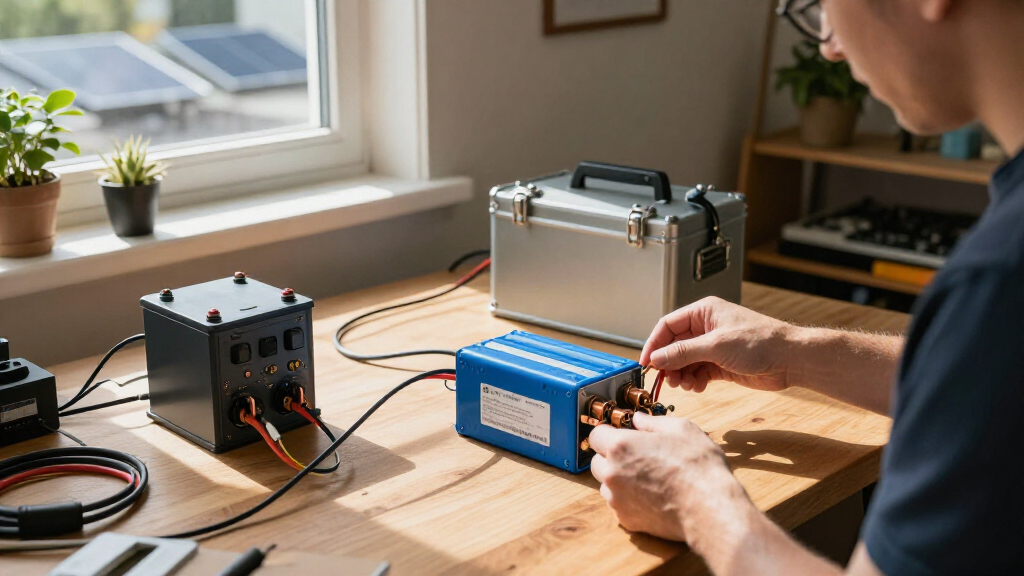
Sodium-ion battery cells could reach cost parity with lithium iron phosphate (LFP) cells by late 2026, according to a Wood Mackenzie analysis reported by pv magazine Global on November 6. The analysis says supply agreements already cover more than 70 GWh worldwide, but parity for battery modules and complete systems is not expected until after 2030.
The forecast concerns cell-level costs, not the total installed price of an energy storage project. Wood Mackenzie estimates the global average upfront cost of sodium-ion batteries at $229 per kWh, compared with about $200 per kWh for LFP. The firm says sodium-ion systems could nevertheless have a 21% lower total cost of ownership over a 20-year project life, largely because they may avoid capacity expansion cycles and incur lower operating costs. That is an estimate, not a reported outcome across operating projects.
The analysis covers markets in China, the United States, Germany and India and identifies stationary energy storage as the most promising emerging market for sodium-ion. China is leading commercialization. BYD plans to build 30 GWh of manufacturing capacity, while CATL aims to ship more than 1 GWh of sodium-ion batteries by the end of 2026. Agreements have been reported in China, the United States and Europe; India is described as being at an early commercial-validation stage.
Wood Mackenzie projects a learning rate of 18% to 20% in China for 2026–2035, reflecting the maturity of its industrial supply chain. Planned production capacity currently exceeds demand, the analysis says. That gap means announced factories and agreements do not by themselves establish how much capacity will be used or how quickly customers will adopt the chemistry.
Where Lower Lifetime Costs Could Matter
If the projected lifetime savings are borne out, sodium-ion could be competitive in stationary storage projects even before its upfront price matches LFP. The estimated advantage comes from fewer or no capacity expansion cycles over a 20-year project and lower operating costs; actual economics will depend on project design, operating conditions and battery performance over time. The analysis says the economics remain relatively stable for two- to four-hour storage, a range relevant to many grid storage applications.
Sodium-ion also offers a potential supply-chain alternative to batteries relying on lithium-based materials. Wood Mackenzie points to raw-material supply security, service life and a wider operating-temperature range as possible advantages. Stronger performance in cold conditions could reduce the need for additional thermal management in some settings. The report does not establish that every sodium-ion product will deliver these benefits or that the technology will displace LFP in projects now being developed.
Popular right now
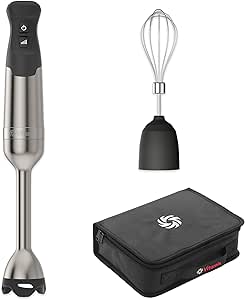
Vitamix 5-Speed Immersion Blender 3-Piece Bundle with Whisk and Storage Case

KitchenAid 5.5-Qt Bowl-Lift Stand Mixer, Porcelain White (KSM55SXXX)

KitchenAid Artisan 5-Qt Tilt-Head Stand Mixer – Almond Cream (KSM150PS)
As an affiliate, we earn on qualifying purchases.
Policy and Manufacturing Shape Adoption
Government policy is affecting the relative costs and investment case for battery chemistries. In China, a consumption tax on lithium-ion batteries was reintroduced in July 2026, while sodium-ion batteries were exempted through the end of 2028. LFP batteries became subject to a 2% levy in September 2026, with the rate scheduled to rise to 4% in September 2027, according to the source report.
In the United States, the report says tariffs of about 58% on energy storage cells imported from China, together with production tax credits under Section 45X of the Inflation Reduction Act, are encouraging domestic sodium-ion manufacturing. In Europe, carbon-footprint declaration requirements under the EU Battery Regulation may benefit supply chains less dependent on certain critical raw materials. India is supporting domestic manufacturing with a $1.25 billion incentive program and tariff exemptions for some manufacturing equipment.
These measures form part of the commercial setting for Wood Mackenzie’s cost forecast, but they do not guarantee adoption or parity in every market. The report expects 2030–2035 to be a decisive period for sodium-ion’s economic competitiveness. It also says LFP remains the most commercially mature option for energy storage projects currently under development with two- to four-hour durations.
“Sodium-ion batteries could achieve a 21% lower total cost of ownership over a 20-year project lifetime.”
— Wood Mackenzie, as summarized by pv magazine Global
Cell Parity Is Not System Parity
The cost-parity timeline is a Wood Mackenzie projection; the source material does not provide underlying model assumptions, company-level cost data or independent validation. It is also not yet clear how many of the more than 70 GWh covered by agreements will become delivered batteries, when deliveries will occur, or how much of the planned manufacturing capacity will be utilized. The reported supply-agreement total is not the same as installed operating capacity.
The projected 21% lifetime-cost advantage depends on assumptions about service life, operating expenses and avoided capacity expansion. The source does not specify how broadly those assumptions apply across projects. System-level cost parity is not forecast until after 2030, and LFP remains the more mature choice for current two- to four-hour projects. The relative impact of policy changes across markets, and the pace of commercial validation in India, also remain developing.
Capacity and Cost Forecasts to Watch
The near-term marker is whether leading manufacturers reach the projected cell-level parity by late 2026. Progress can be judged against actual production, shipments and realized prices, rather than announced capacity alone. CATL’s stated goal of shipping more than 1 GWh by the end of 2026 is one company milestone cited in the report; the source does not confirm that this target has been met.
Further evidence will be needed on the conversion of supply agreements into deliveries and operating projects, as well as on battery service life and full project costs. Wood Mackenzie identifies 2030–2035 as the period when sodium-ion’s broader economic competitiveness will be tested. Until then, the key distinction is between a projected fall in cell costs and demonstrated cost competitiveness at the module and system levels.
Key Questions
When could sodium-ion cells reach cost parity with LFP?
Wood Mackenzie forecasts late 2026 for cell-level parity among leading manufacturers. The estimate is a projection, and it does not mean complete storage systems will cost the same.
Are sodium-ion batteries cheaper than LFP today?
Not on the reported average upfront cost: sodium-ion is estimated at $229 per kWh, compared with about $200 per kWh for LFP. Wood Mackenzie projects lower total ownership cost over 20 years, but that depends on longer-term operating and replacement assumptions.
How much sodium-ion supply has been agreed?
The analysis reports more than 70 GWh in supply agreements worldwide. The source does not say how much has been delivered or installed.
When is module- or system-level parity expected?
Wood Mackenzie does not expect parity at the module and system levels until after 2030. LFP remains the most commercially mature option for current two- to four-hour storage projects, according to the analysis.
Source: pv-magazine.com