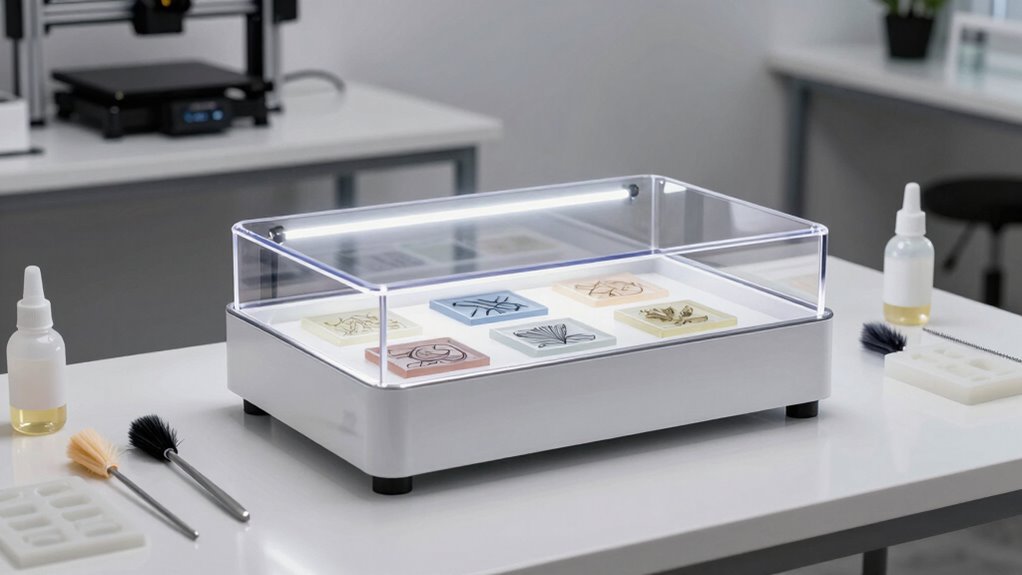

Before buying a wash and cure station, make certain it’s compatible with your resin type to prevent issues like incomplete curing or damage. Look for features like efficient cleaning methods and automated cycles to save time and improve results. Consider whether you prefer a combined unit or separate devices based on your workspace and workflow. Additionally, check for adjustable settings and user-friendliness to make your setup more effective. Continue exploring to discover how to choose the best station for your needs.

Prime made for students and young adults
- Fast, free delivery for dorm and study essentials
- Prime Video and Amazon Music included
- Member-only deals
Key Takeaways
- Ensure the station’s resin compatibility to prevent curing issues or damage.
- Check cleaning features like ultrasonic cleaning or sealed containers for effective resin removal.
- Consider workflow integration, such as combined washing and curing or separate units, to optimize space and efficiency.
- Look for adjustable settings and automation to support consistent, user-friendly operation.
- Evaluate additional factors like size, capacity, and ease of maintenance for long-term value.
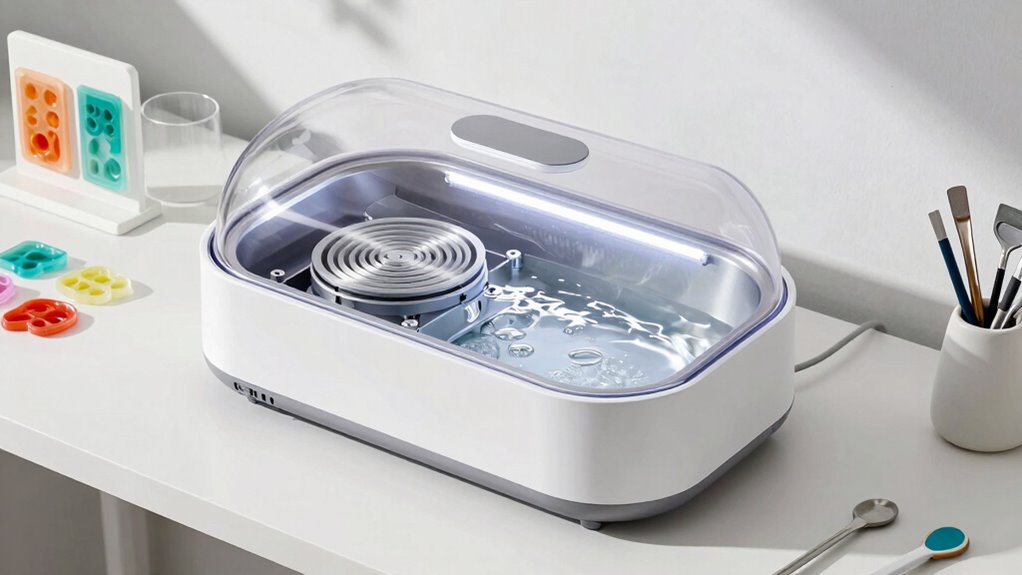
Have you ever wondered why a dedicated wash and cure station is indispensable for your 3D printing process? The answer lies in the importance of guaranteeing your printed models are free of residual resin and fully cured for maximum strength and detail. When choosing a station, one of the first things to contemplate is resin compatibility. Different resins have unique properties and curing requirements, so you need a station that supports the specific type you use. Some stations are versatile and accommodate a variety of resins, while others are tailored for particular brands or formulations. Selecting the right one ensures you won’t encounter issues like incomplete curing or damage to your models.
Choosing the right wash and cure station ensures optimal resin compatibility and prevents model damage.
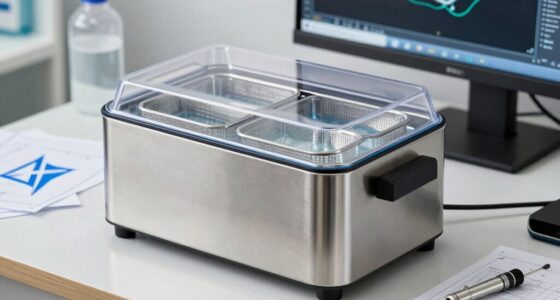
The cleaning process is another critical factor. After printing, your models are coated in uncured resin, which can be messy and hazardous if not handled properly. A good wash station simplifies this step by providing an efficient way to remove excess resin without risking damage or deformation. Look for features like ultrasonic cleaning or rinsing baskets, which can make the process faster and more thorough. Also, check whether the station includes a splash-proof design or a sealed container to contain resin fumes and drips. Proper cleaning not only improves the appearance but also prepares your models for the curing stage, guaranteeing a smooth and consistent finish. Additionally, understanding resin properties helps ensure you select the appropriate cleaning method and station features for your specific needs. Using the correct cleaning method tailored to your resin type can prevent potential issues such as surface tackiness or weak spots.
When evaluating a wash and cure station, think about its overall functionality and workflow integration. Some units combine both washing and curing in one compact device, saving space and reducing handling time. Others may require separate equipment, which can be less efficient. Consider your workspace, volume of prints, and the level of automation you prefer. Automated features, such as timed cycles and adjustable settings, help maintain consistency and save effort. Furthermore, workflow optimization can significantly enhance your efficiency and the quality of your prints. Incorporating compatible equipment and streamlined processes can help you achieve better results with less effort. Additionally, paying attention to the station’s compatibility and ease of use ensures that your investment remains effective and user-friendly over time.
As an affiliate, we earn on qualifying purchases.
Frequently Asked Questions
How Much Space Does a Wash and Cure Station Typically Require?
A wash and cure station typically requires about 1.5 to 2 square feet of space, but station dimensions can vary. You should measure your available area carefully to guarantee proper fit, allowing room for operation and airflow. Keep in mind that larger models may need more space for easy handling of printed objects. Always check the specific station’s dimensions and consider extra space for accessories or future upgrades.
Can I Use Any Resin With a Wash and Cure Station?
You can’t use any resin with a wash and cure station because of resin compatibility issues. Most stations are designed for specific resin types, so check the manufacturer’s recommendations to guarantee station versatility. Using incompatible resins can lead to poor curing, damage, or safety hazards. Always verify which resins are compatible with your station to ensure best results and maintain safety standards.
What Safety Precautions Should I Follow During Operation?
You should always prioritize safety during operation. Handle resin carefully, avoiding skin contact and inhalation of fumes, which can be harmful. Wear appropriate safety gear like gloves, goggles, and a mask to protect yourself. Guarantee proper ventilation in your workspace, and follow the manufacturer’s instructions. Regularly clean the station to prevent resin spills and accidents. These precautions help keep you safe while working with resin and the wash and cure station.
How Long Is the Typical Maintenance for These Stations?
You should plan for routine maintenance that typically takes about 15-30 minutes every few weeks. This includes thorough cleaning routines to prevent resin buildup and guarantee peak performance. Additionally, calibration procedures are essential periodically to maintain accuracy and consistency. Regular checks of the station’s components help catch potential issues early, prolonging its lifespan and assuring your prints stay precise and high-quality.
Are There Any Compatibility Issues With Different 3D Printer Brands?
You might encounter some printer compatibility issues with wash and cure stations, especially if your 3D printer brand isn’t widely supported. Make certain the station offers resin versatility to handle different resins used by various printers. Check compatibility details before buying. Most stations work well with popular brands, but some may require adapters or adjustments. Doing thorough research helps you choose a station that perfectly matches your printer’s specifications and resin needs.
As an affiliate, we earn on qualifying purchases.
Conclusion
Before you buy a wash and cure station, understanding its features and benefits helps you make an informed choice. These stations can increase your 3D printing efficiency and improve print quality. Did you know that the global 3D printing market is projected to reach $34 billion by 2024? Investing in the right wash and cure station not only streamlines your process but also elevates your printing results, keeping you ahead in this rapidly growing industry.
As an affiliate, we earn on qualifying purchases.
automatic resin wash and cure machine
As an affiliate, we earn on qualifying purchases.
As an affiliate, we earn on qualifying purchases.
Evergreen bestsellers Picks
bestsellers
As an affiliate, we earn on qualifying purchases.