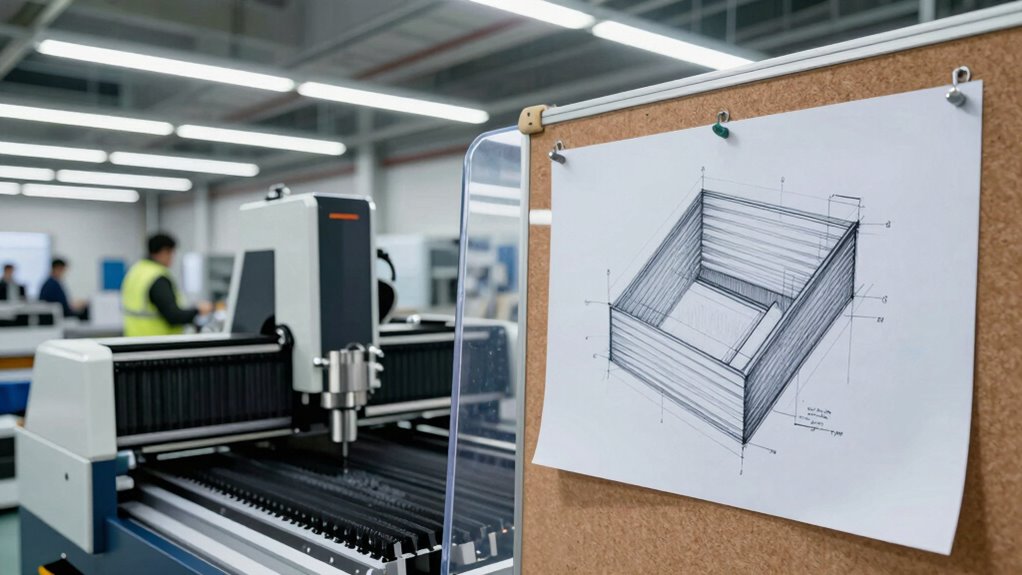

Geometric errors can sneak in at every stage of manufacturing, from sketching and design to material selection, cutting, machining, and assembly. Small discrepancies, misalignments, or material behavior like thermal expansion often go unnoticed initially but later cause fitting or performance issues. Poor quality control or inadequate inspection can let these errors slip through. To catch these issues early and prevent costly mistakes, it’s essential to understand where errors originate—and there’s more to uncover as you explore further.
Key Takeaways
- Errors often originate during initial design sketches due to incomplete or inaccurate specifications.
- Material selection mismatches can cause unforeseen deformation or dimensional changes during manufacturing.
- Cutting, machining, or assembly inaccuracies introduce misalignments and geometric deviations.
- Thermal effects and handling mistakes during manufacturing can lead to warping or dimensional inconsistencies.
- Insufficient or delayed quality control allows errors to persist unnoticed until final inspection.
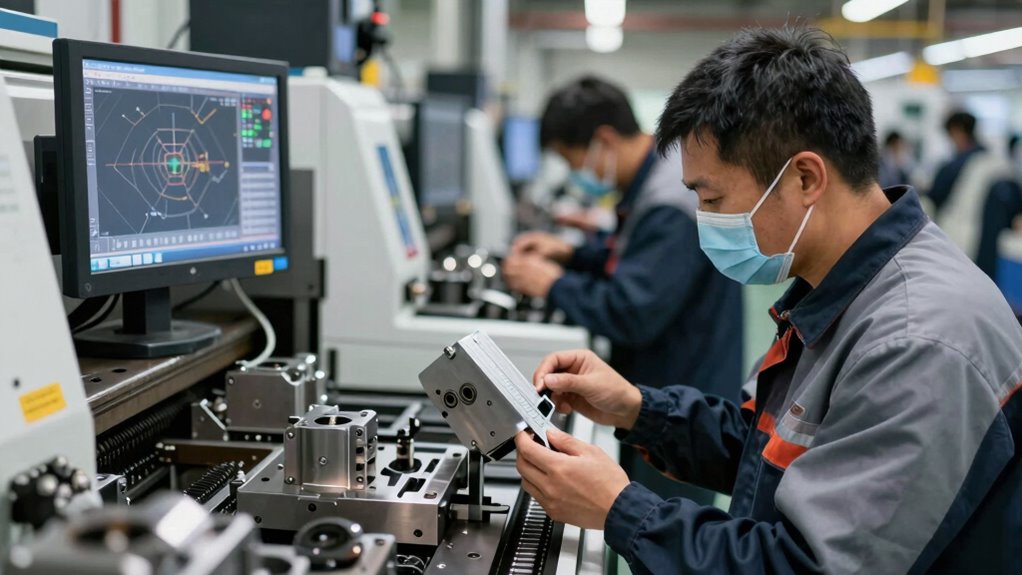
Turning a design idea into a finished product involves a complex but fascinating journey, starting with a simple sketch and ending on the shop floor. As you move from concept to creation, one of the most critical steps is guaranteeing that the chosen materials align with your design’s specifications. Material selection isn’t just about picking the right kind of metal, plastic, or fabric; it’s about understanding how those materials behave during manufacturing and in the final product. If you select materials without considering their properties—such as shrinkage, flexibility, or thermal expansion—you risk introducing geometric errors that can compromise quality. Proper material choice helps maintain dimensional accuracy, reduces rework, and guarantees your product performs as intended.
Choosing the right materials is crucial to ensure precision, quality, and optimal performance in your final product.
Once materials are selected, the focus shifts to quality control, which plays a pivotal role throughout the manufacturing process. From initial prototyping to mass production, you need to constantly verify that each component meets strict standards. Quality control isn’t a one-time check; it’s an ongoing process that catches deviations early. Small discrepancies in measurements or inconsistencies in material properties can lead to geometric errors, such as misalignments or warped parts. These issues often stem from overlooked factors like uneven heating, improper machining, or handling mistakes. Maintaining rigorous quality assurance helps you identify and correct these issues before they cascade into larger problems, saving time and costs down the line.
As your project progresses, you’ll find that geometric errors often sneak in during manufacturing, especially if earlier stages haven’t been carefully managed. Even minor variations—like slight miscalculations during cutting or assembly—can lead to inaccuracies in the finished product. These errors can be subtle but have significant impacts, causing parts not to fit properly or leading to structural weaknesses. That’s why continuous measurement and inspection are essential. Using precise tools and techniques ensures that each part adheres closely to your original design dimensions, minimizing the risk of errors slipping past unnoticed.
Throughout this journey, you must stay vigilant about how each decision affects the final outcome. Material properties influence how parts behave under stress, while quality control ensures that each piece maintains the intended dimensions. Recognizing where and how geometric errors can sneak in allows you to implement safeguards early on. Ultimately, the key to transforming your sketch into a flawless product lies in meticulous material selection, rigorous quality control, and ongoing attention to detail—each step reducing the chances of errors and ensuring your vision becomes reality on the shop floor. Understanding material behavior during manufacturing is crucial to preventing these errors before they occur.
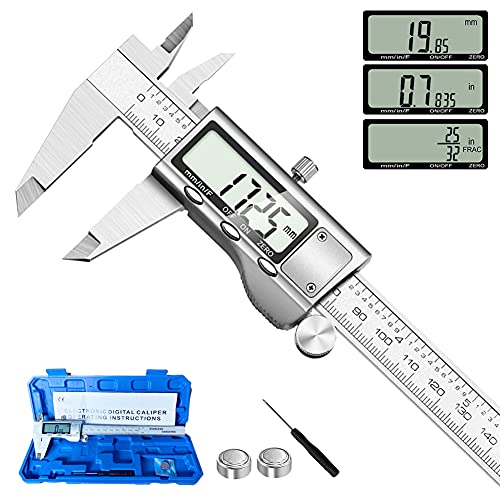
Digital Caliper Measuring Tool, Stainless Steel Vernier Caliper Digital Micrometer with Large LCD Screen, Easy Switch from Inch Metric Fraction, 6 Inch Caliper Tool for DIY/Household
【STAINLESS STEEL MATERIAL】The vernier caliper is made of high-strength stainless steel and is waterproof and dirt-proof. The service…
As an affiliate, we earn on qualifying purchases.
As an affiliate, we earn on qualifying purchases.
Frequently Asked Questions
How Do Geometric Errors Impact Overall Product Quality?
Geometric errors directly impact your product quality by causing inaccuracies in dimensions and fit. When you perform coordinate measurement, these errors can propagate through the manufacturing process, compounding issues. As errors build, they lead to defective parts, increased rework, and potential failures. To maintain high quality, you need to identify and correct geometric errors early, minimizing error propagation and ensuring your final product meets specifications.
What Are Common Sources of Geometric Inaccuracies During Manufacturing?
You often encounter geometric inaccuracies due to improper measurement techniques and inadequate calibration procedures. When you skip precise measurement methods, you risk capturing faulty data, leading to errors. Similarly, neglecting calibration guarantees your tools aren’t accurate, introducing deviations in dimensions. Regularly using proper measurement techniques and adhering to calibration procedures helps you minimize these common sources of geometric inaccuracies, guaranteeing your manufacturing process produces precise, high-quality components.
How Can CAD Software Help Detect Geometric Errors Early?
You can catch issues early by leveraging CAD software for validation, which acts as your first line of defense. It helps identify geometric errors during design, saving you from surprises on the shop floor. CAD tools also facilitate design optimization, ensuring your models meet specifications before manufacturing begins. By catching errors early, you avoid costly rework, making your process smoother and more efficient—truly hitting two birds with one stone.
What Role Does Operator Skill Play in Minimizing Errors?
Your operator skill plays a vital role in minimizing geometric errors. Through proper operator training and ongoing skill development, you become more adept at recognizing potential issues early in the process. Skilled operators can accurately interpret design data, handle equipment carefully, and troubleshoot problems promptly. This proactive approach reduces errors, improves overall quality, and guarantees that geometric precision is maintained from initial sketch to final product.
Are There Industry Standards for Acceptable Geometric Tolerances?
Think of industry standards as the guiding stars for geometric tolerances. You’ll find that they set acceptable limits despite material variability and the nuances of inspection techniques. While standards like ISO and ASME provide specific tolerances, it’s essential to understand that they’re not one-size-fits-all. You must tailor tolerances based on your material’s behavior and inspection methods to guarantee consistent quality and functionality in your parts.

Coordinate Measuring Machines (CMM): A Practical Guide to Machine Types, Probing Systems, Calibration Standards, GD&T, and Automated Inspection for Operators and Quality Engineers
As an affiliate, we earn on qualifying purchases.
As an affiliate, we earn on qualifying purchases.
Conclusion
You’ve seen how tiny geometric errors can slip in from the initial sketch all the way to the shop floor. These small mistakes are like cracks in a foundation—easy to overlook but capable of causing big problems down the line. By paying close attention at each step, you can catch errors early and keep your project on solid ground. Remember, the devil’s in the details, and catching them now saves headaches later.

Veemoon 1Set Thermal Expansion Measurement Tool Physics Experiment Kit for Learning for Elementary Science Curriculum and Reusable Engaging Heat Transfer
Diverse material selection: provides copper and plastic balls for a range of experiments,physical science teaching kit,thermal expansion apparatus
As an affiliate, we earn on qualifying purchases.
As an affiliate, we earn on qualifying purchases.

Weewooday 3 Pcs Metal Thickness Gauge Tool Wire Sheet Portable Stainless Steel Gage Welding Material Thickness Gauge Plated Size Inspection Tool
Portable: pulling this metal gauge tool out of your pocket to measure metal is quicker and easier than…
As an affiliate, we earn on qualifying purchases.
As an affiliate, we earn on qualifying purchases.