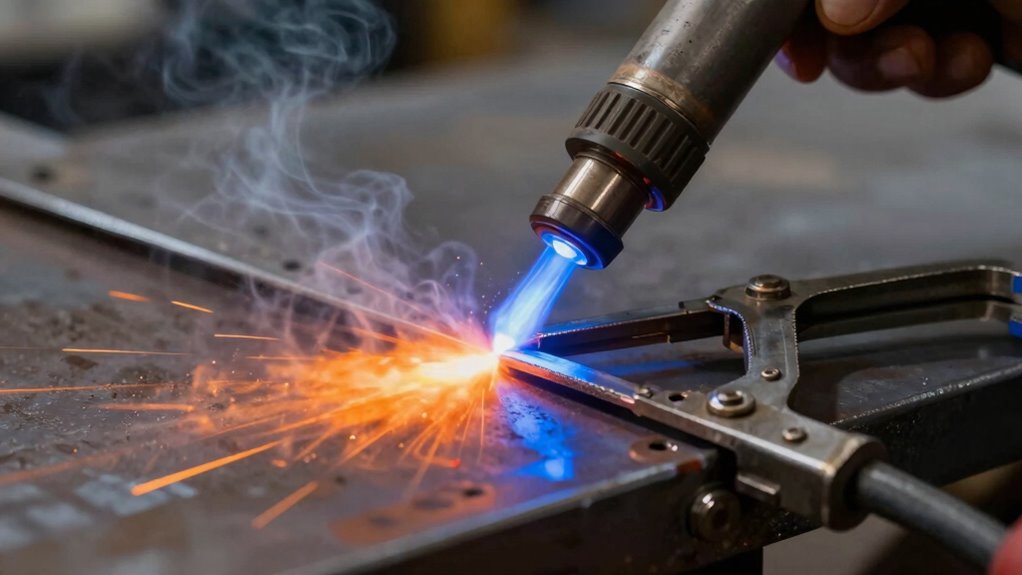

Proper grounding and dry air are essential for safe, precise plasma cutting because they guarantee electrical stability and prevent moisture-related issues. Good grounding minimizes electrical shocks and equipment malfunctions, while removing moisture from the air reduces electrode wear and ensures clean cuts. Increasing power alone won’t improve results and can even cause damage. Focusing on proper setup, maintenance, and airflow keeps your cuts consistent and high quality—if you wish to learn more, you’re in the right place.
Key Takeaways
- Proper grounding ensures electrical safety, reduces interference, and stabilizes the cutting process for cleaner, more precise cuts.
- Dry, filtered air prevents moisture-related malfunctions, electrode wear, and improves overall equipment longevity.
- Maintaining consistent air pressure and quality enhances cut stability, reduces contamination, and minimizes equipment damage.
- Excessive power does not improve cut quality; stable voltage and proper setup are more critical for reliable results.
- Regular maintenance of grounding connections and air filtration systems is essential for safe operation and optimal cutting performance.

Lotos Technology GC01 19' Ground Cable 10-25 Ground Clamp for Plasma Cutter LTP5000D LT5000D CT520D LTPDC2000D LTP6000 TIG Welder TIG140 and MIG Welder MIG140, Black, Normal Load
- Cable Length: 19 feet long ground cable
- Compatibility: Fits Lotos plasma cutters and welders
- Clamp Size: 10-25 ground clamp
As an affiliate, we earn on qualifying purchases.
As an affiliate, we earn on qualifying purchases.
Why Grounding Matters for Safe and Precise Plasma Cutting
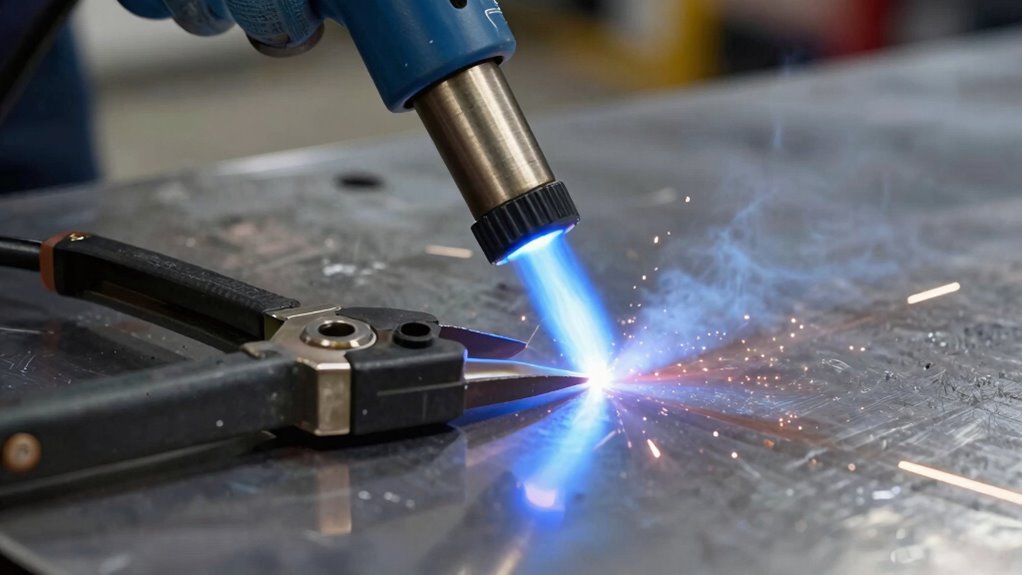
Proper grounding is essential for both safety and accuracy in plasma cutting. When you ensure your equipment is properly grounded, you minimize the risk of electrical shock, protecting yourself and others. Good grounding also helps prevent electrical faults that could damage your plasma cutter, extending its lifespan and maintaining optimal performance. Without proper grounding, stray electrical currents can cause malfunctions or short circuits, leading to costly repairs or replacements. Accurate cuts depend on a stable electrical circuit, which proper grounding provides. It also reduces electromagnetic interference that can disrupt the cutting process. By prioritizing proper grounding, you create a safer workspace, reduce downtime, and boost equipment longevity—all vital for efficient, professional plasma cutting. Additionally, understanding the contrast ratio of your equipment can help optimize cutting precision in various lighting conditions. Ensuring your electrical setup aligns with safety standards can further enhance both safety and cutting accuracy.

1/2" NPT Industrial Air Dryer for Compressor,3 Stage Air Compressor Water Separator System,Filter Oil Water Separator Dryer for Plasma Cutter and Paint Spray,Manual Drain
- Industrial Pressure Handling: Handles up to 240 PSI for industrial use
- Three-Stage Filtration: Removes 95-99.98% of contaminants
- High-Precision Filters: 5 micron and 0.01 micron filters
As an affiliate, we earn on qualifying purchases.
As an affiliate, we earn on qualifying purchases.
How to Keep Your Air Dry for Better Cuts and Equipment Longevity
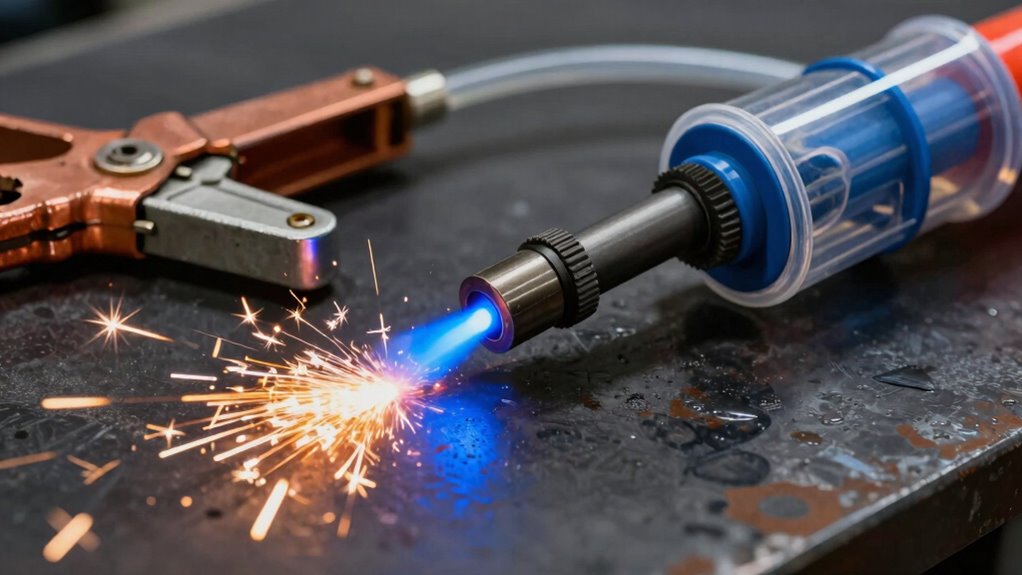
To get the best cuts and protect your equipment, you need to keep your air dry. Using proper air filtration, maintaining correct air pressure, and regularly draining moisture are key steps. Taking these actions will improve cut quality and extend your plasma cutter’s lifespan. Additionally, ensuring your environment has a healthy indoor air quality can help prevent moisture buildup and enhance overall equipment performance. Implementing a natural filtration system can further support moisture control by utilizing eco-friendly methods. Moreover, understanding the importance of vetted wave and wind techniques can help optimize air flow and reduce moisture-related issues in your setup. Proper air circulation also plays a vital role in maintaining dry air and preventing moisture accumulation within your system.
Use Proper Air Filtration
If moisture gets into your compressed air supply, it can cause serious problems during plasma cutting. Excess humidity can accelerate electrode wear, reducing your torch’s lifespan and increasing maintenance costs. It can also lead to inconsistent cuts and poor torch alignment, affecting overall quality. To prevent these issues, use proper air filtration systems designed to remove water and other contaminants from your compressed air. Regularly check and maintain your filters to ensure they’re functioning effectively. Clean, dry air helps keep your torch components in top shape, improves cut precision, and extends equipment life. Investing in quality filtration isn’t just about better cuts; it’s about protecting your tools and maintaining efficiency over time. Proper air filtration is crucial for peak plasma cutting performance, especially considering the importance of air quality control for reliable operation. Additionally, incorporating data analytics can help monitor and optimize your air system performance, ensuring consistent results and minimizing downtime. Implementing comprehensive filter maintenance routines can further safeguard your system against moisture-related issues.
Maintain Correct Air Pressure
Maintaining correct air pressure is essential for ensuring your plasma cutter operates efficiently and produces high-quality cuts. Too high or too low air pressure can cause rough cuts, increased wear, and damage to your equipment. To keep ideal air pressure, regularly check your compressor and perform proper compressor maintenance. Properly calibrated pressure settings prevent moisture from affecting your cut quality. Here’s a quick guide:
| Air Pressure Level | Ideal Range | Common Issue |
|---|---|---|
| Low | 60-70 PSI | Inconsistent cuts |
| Optimal | 80-90 PSI | Smooth cuts |
| High | 100+ PSI | Equipment stress |
| Maintenance Tip | Check daily | Ensure consistent pressure |
| Moisture Control | Use regulators | Prevent moisture buildup |
Stay vigilant with compressor maintenance and monitor air pressure for the best results. Regularly inspecting and maintaining your compressor helps ensure dry air supply, which is crucial for optimal plasma cutting performance. Additionally, using appropriate filtration systems can significantly reduce moisture and contaminants in your air line, enhancing cut quality and equipment longevity. Properly managing air pressure and moisture can also extend the lifespan of your plasma cutter and improve safety during operation. Furthermore, understanding how air quality impacts your equipment can help prevent costly repairs and downtime, especially as moisture and contaminants are common issues that compromise cutting precision and machine durability.
Regularly Drain Moisture
Regularly draining moisture from your air supply is essential because accumulated water can compromise cut quality and damage your equipment over time. Moisture buildup in your air lines can cause inconsistent cuts, increased wear on consumables, and corrosion inside your plasma cutter. By draining moisture consistently, you reduce the risk of moisture-related issues and ensure cleaner, more precise cuts. Additionally, dry air supports grounding safety by preventing moisture from creating unintended electrical paths that could cause shorts or sparks. Using carrier oils to dilute essential oils in aromatherapy can also help maintain equipment and skin safety. Properly managing moisture levels in your air system also helps prevent the formation of oxidation, which can impair equipment function and lead to costly repairs. Moisture control is a crucial aspect of preserving equipment longevity and ensuring safe operation. Neglecting to remove moisture can lead to equipment failure, safety hazards, and costly repairs. Make it a routine to drain moisture from filters and tanks after each use, keeping your air dry and your plasma cutter operating at peak performance.

NANPU 3/4" NPT Air Compressor Filter Dryer Regulator – Industrial 3-Stage
- Dry, Oil-Free Air: Removes water, oil, and moisture
- High-Pressure Regulator: Operates from 30 to 175 psi
- 5-Micron Filter: Removes bulk water, oil, rust
As an affiliate, we earn on qualifying purchases.
As an affiliate, we earn on qualifying purchases.
Does Increasing Power Improve Your Plasma Cut Quality?
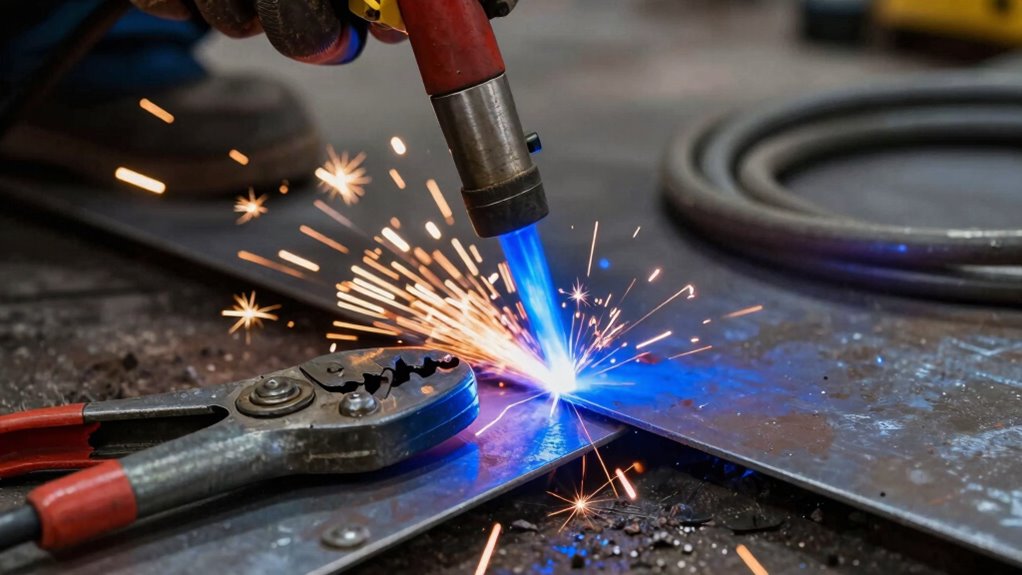
Increasing power alone doesn’t guarantee better cut quality; other factors matter just as much. Poor air quality can cause rough edges, and improper grounding risks safety and damage. To improve your cuts, focus on balanced power, clean air, and proper setup. Ensuring proper grounding is essential for safe operation and optimal performance. Additionally, using dry compressed air helps prevent moisture-related issues that can compromise cut quality. Maintaining air quality standards is crucial for consistent and precise cuts.
Power Isn’t Sole Solution
While boosting your plasma cutter’s power might seem like a straightforward way to improve cut quality, it doesn’t always deliver better results. Higher power can cause voltage instability, leading to inconsistent arcs and rough edges. Increasing power also accelerates electrode wear, reducing tool life and requiring more frequent replacements. Instead of simply turning up the dial, focus on maintaining stable voltage, which ensures a consistent arc and cleaner cuts. Proper grounding, dry compressed air, and consistent maintenance are more effective for improving quality than raw power. Overpowering your setup might seem tempting, but it can introduce more problems than it solves. Remember, controlling variables like voltage stability and electrode condition is key to achieving precise, high-quality plasma cuts. Voltage stability is critical for consistent performance and should be prioritized over merely increasing power. Additionally, understanding the importance of air quality can make a significant difference in your cut precision and safety. Ensuring the use of dry air prevents moisture-related disruptions and improves arc stability, ultimately enhancing the cut quality. Using proper grounding techniques can further improve electrical stability, leading to more consistent and cleaner cuts.
Air Quality Impacts Cut
Good air quality is essential for achieving clean, precise plasma cuts. Dust contamination from poor air can lead to unstable arcs and rough edges. Increasing power doesn’t always improve cut quality; instead, it can exacerbate dust issues if airflow regulation isn’t maintained. Proper airflow helps clear dust and debris, reducing contamination risks. Additionally, maintaining air quality standards is vital to ensure consistent and high-quality cuts.
Proper Grounding Ensures Safety
Proper grounding is essential for safe and effective plasma cutting. It helps protect you from electrical safety hazards and ensures the equipment functions correctly. Using proper grounding techniques, like connecting the ground clamp securely to a clean, conductive surface, minimizes the risk of electric shock. Without proper grounding, stray electrical currents can cause malfunctions or pose safety risks. Always verify that your plasma cutter is grounded according to manufacturer instructions and local electrical codes. Good grounding not only safeguards your health but also improves cut quality by providing a stable electrical circuit. Remember, increasing power won’t compensate for poor grounding; safety and performance depend on solid grounding practices. Prioritize proper grounding techniques to ensure a safer, more reliable plasma cutting experience.

Motor Guard M-30 1/4 NPT Submicronic Compressed Air Filter
- Pipe Size: 1/4 NPT
- Airflow Capacity: 45 CFM
- Filtration Rating: .01 micron
As an affiliate, we earn on qualifying purchases.
As an affiliate, we earn on qualifying purchases.
Step-by-Step: Setting Up Proper Grounding for Your Plasma Cutter
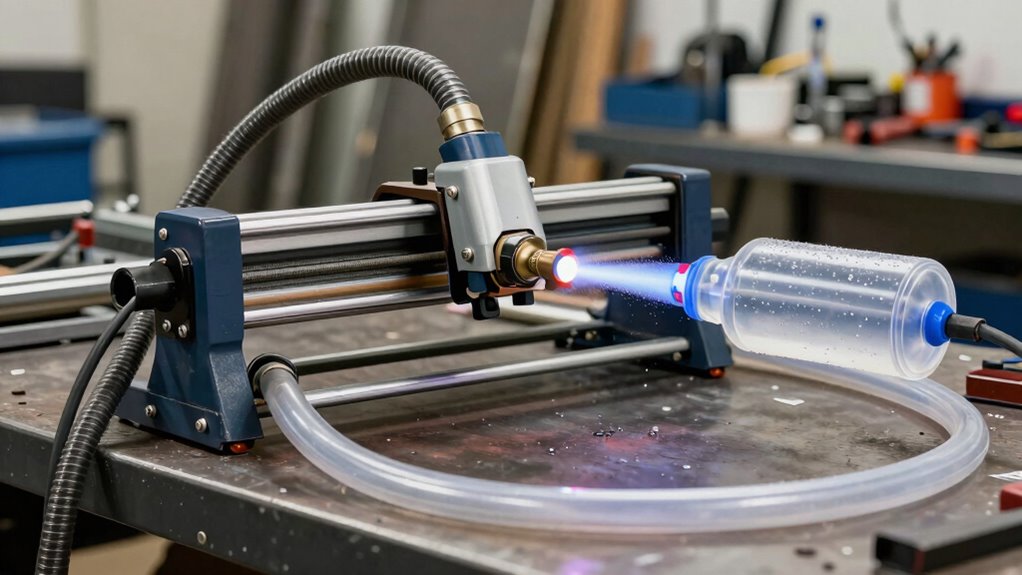
Setting up proper grounding is essential for safe and efficient plasma cutting. First, ensure your workpiece is securely grounded with a heavy-duty clamp connected to a clean, unpainted metal surface. Proper grounding prevents electrical faults that could cause uneven cuts or damage your torch. Next, check the torch alignment to ensure the electrode is centered and stable; misalignment can lead to uneven electrode wear and poor cut quality. Confirm that your ground clamp is attached close to your work area to minimize resistance. Use a dedicated grounding circuit if possible, and inspect all connections for corrosion or looseness. Maintaining correct grounding reduces the risk of electrical shock and guarantees consistent power delivery, which keeps your torch working properly and prolongs its lifespan.
How to Check and Maintain Dry Air in Your System
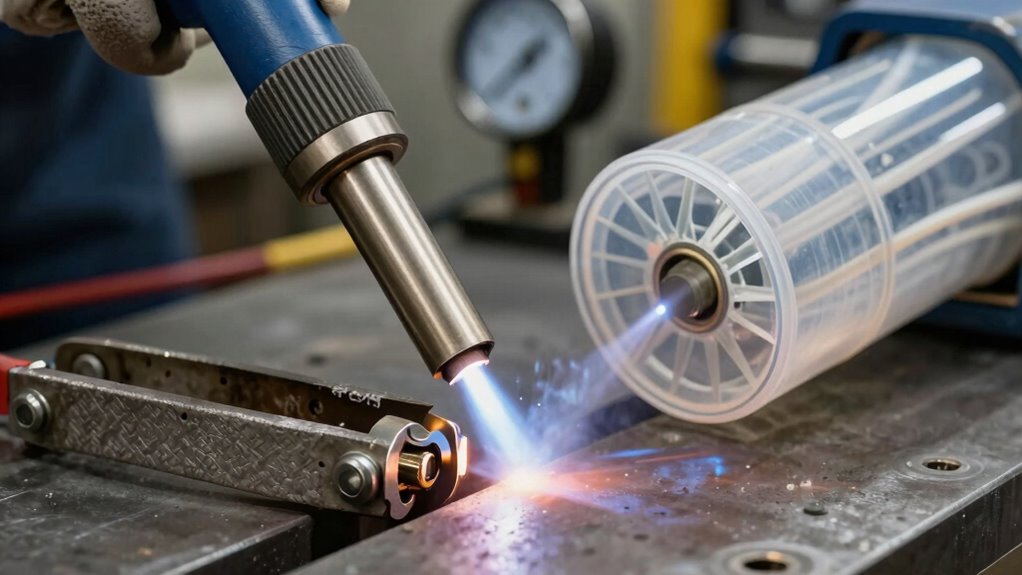
To guarantee your plasma cutter performs at its best, regularly checking and maintaining dry air in your system is essential. Start by inspecting your air compressor’s moisture control components, like filters and dryers, to prevent moisture buildup. Use a moisture indicator to monitor air quality before it reaches the torch. Drain moisture from the compressor tank daily to avoid water accumulation. Consider installing an inline desiccant dryer for extra dryness. Here’s a quick overview:
| Component | Function |
|---|---|
| Air Compressor | Supplies pressurized air |
| Moisture Filter | Removes water vapor from air |
| Desiccant Dryer | Ensures dry air for ideal cutting |
Maintaining these parts ensures dry air, preventing moisture-related issues during cutting.
Common Plasma Cutting Mistakes and How to Avoid Them
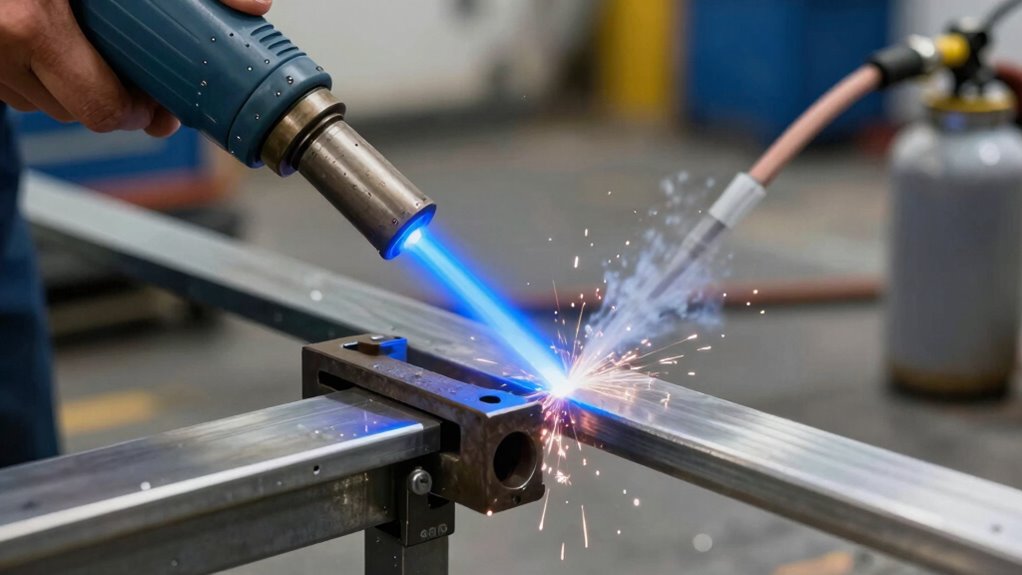
Many common plasma cutting mistakes stem from overlooking key details during setup and operation. One major error is neglecting electrode wear, which can cause poor cut quality and increased downtime. Regularly inspect and replace electrodes to maintain peak performance. Another mistake is using an incorrect cutting speed; moving too fast can result in rough edges, while moving too slow causes excessive dross and electrode wear. Find the right balance by adjusting your speed based on material thickness and plasma torch settings. Additionally, skipping proper grounding or ignoring air quality can lead to inconsistent results. Staying attentive to electrode condition and cutting speed ensures cleaner cuts and longer equipment life. Avoid these pitfalls to enhance your plasma cutting efficiency and quality.
How to Balance Power, Grounding, and Air Quality for Consistent Results
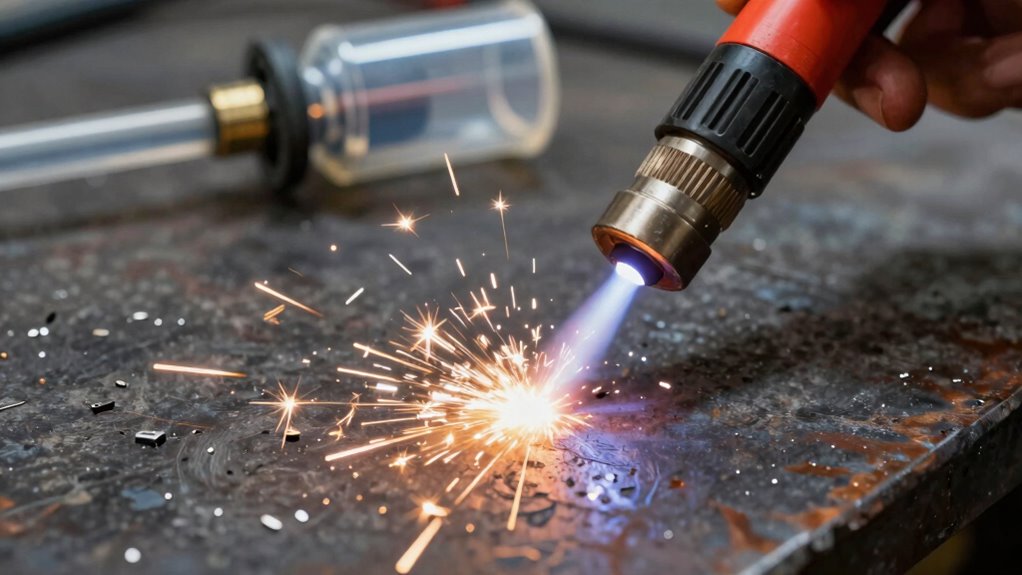
Achieving consistent plasma cutting results depends on effectively balancing power supply, grounding, and air quality. When these elements are optimized, you reduce electrode wear and maintain proper torch alignment. To do this effectively:
Consistently quality plasma cuts rely on balancing power, grounding, and clean air for optimal results.
- Use the correct power settings for your material thickness
- Ensure proper grounding to prevent electrical interference
- Maintain dry, clean air to prevent oxidation and improve cut quality
- Regularly check torch alignment for even cuts and reduced electrode wear
- Monitor air pressure to avoid inconsistent arc performance
Balancing these factors helps prevent issues like erratic cuts or increased electrode wear. Proper grounding minimizes electrical noise, while dry air ensures a stable arc. Adjust power based on material and electrode condition to sustain consistent results.
Frequently Asked Questions
How Does Grounding Prevent Electrical Shock During Plasma Cutting?
Grounding safety is vital in plasma cutting because it directs stray electrical currents away from you, preventing electrical shock. When you properly ground your equipment, it creates a safe path for excess electricity, reducing the risk of shock or electrocution. Without proper grounding, you may unintentionally become part of the electrical circuit, increasing danger. Always make certain your plasma cutter is correctly grounded to maintain safety during your cutting tasks.
What Are the Signs of Poor Grounding or Dry Air Issues?
You’ll notice electrical noise, arc instability, and inconsistent cuts when grounding is poor or the air is too moist. These signs indicate that your system isn’t properly grounded or that moisture is disrupting the dry air supply. You might also see erratic sparks or difficulty maintaining a steady arc. Addressing these issues promptly guarantees a stable, safe, and efficient plasma cutting process, preventing damage and ensuring quality results.
Can Improper Grounding Cause Inconsistent Cut Quality?
Yes, improper grounding can cause inconsistent cut quality. Poor grounding safety can lead to electrical interference, disrupting the plasma arc’s stability. When your system isn’t grounded correctly, you might notice uneven cuts, sparks, or erratic torch behavior. Confirming proper grounding minimizes electrical interference, maintains a stable arc, and results in cleaner, more precise cuts. Always double-check your grounding connections to avoid quality issues and ensure safe operation.
How Often Should I Test and Replace My Plasma Cutter’s Grounding Connection?
Think of your plasma cutter’s grounding connection as the heartbeat of safety—you need to verify it regularly. You should inspect the grounding connection every 1 to 3 months, depending on usage, and replace it if you notice any corrosion or looseness. Don’t forget to perform air filtration maintenance to keep dry, clean air flowing. Regular grounding inspections and air upkeep ensure consistent cuts and prevent costly downtime.
What Types of Dry Air Filters Are Most Effective for Plasma Cutting Systems?
You should choose high-quality air filtration systems like refrigerated or desiccant filters for your plasma cutter. Refrigerated filters effectively remove moisture, while desiccant filters absorb humidity from the air. Regular filter maintenance is vital; check and replace filters as recommended by the manufacturer to prevent moisture buildup and guarantee peak cutting performance. Proper air filtration keeps your equipment dry, reduces downtime, and extends the lifespan of your plasma cutter.
Conclusion
Mastering grounding and keeping your air dry are the secret weapons for flawless plasma cuts. Forget just cranking up the power—without these essentials, your results could turn into a disaster of epic proportions. By focusing on proper setup and maintenance, you’ll turn your plasma cutter into a precision powerhouse. Trust me, once you get these basics right, you’ll cut like a lightning bolt—fast, clean, and unstoppable.