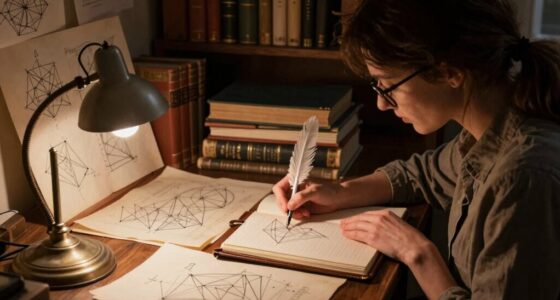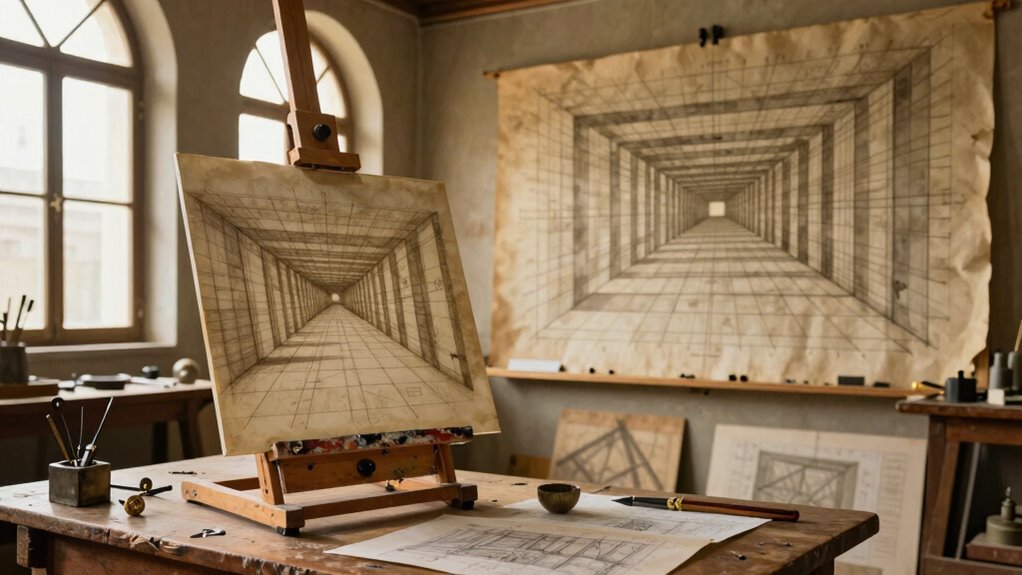

During the Renaissance, you see a fascination with perspective because artists and thinkers realized that accurate visual representation could reveal deeper truths about reality. They wanted to go beyond mere decoration and depict the world more realistically, using scientific techniques like linear perspective, vanishing points, and foreshortening. This obsession was driven by a desire for clarity, observation, and truth. If you keep exploring, you’ll discover how this focus transformed art and science forever.

Get school and study supplies delivered free — and shop member deals
- Fast, free delivery on millions of items
- Access to Prime Big Deal Days deals on October 6–7
- Prime Video, Amazon Music and more included
Key Takeaways
- Renaissance artists sought greater realism, driving the development of perspective techniques to accurately depict three-dimensional space on two-dimensional surfaces.
- Scientific exploration of human perception, light, and anatomy informed artistic methods, blending art and science.
- The cultural shift towards empirical observation and rational thought emphasized accurate visual representation.
- Mastery of perspective created more immersive, truthful artworks that reflected a deeper understanding of reality.
- The fusion of scientific principles with artistic practice revolutionized visual depiction and influenced broader intellectual pursuits.
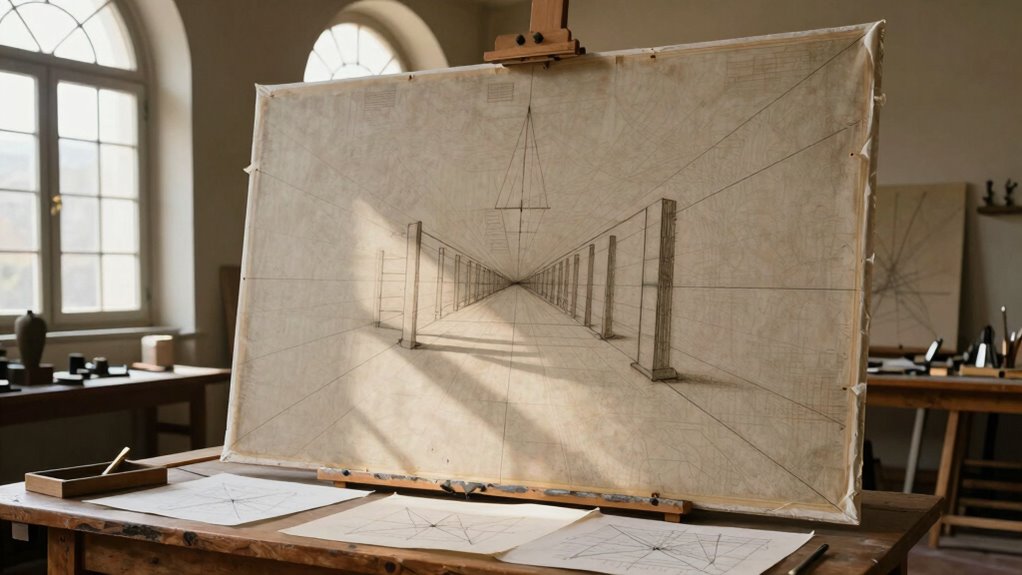
Have you ever wondered how artists during the Renaissance transformed the way we see the world? It wasn’t just about creating beautiful images; they sought to understand and depict reality more accurately than ever before. This shift was driven by a deep desire for artistic innovation combined with scientific exploration. Artists began experimenting with techniques that allowed them to represent three-dimensional space on a two-dimensional surface, fundamentally changing the art world. They realized that to achieve realism, they needed to grasp how human vision perceives depth, distance, and proportion. This pursuit of knowledge led to the development of perspective—an essential tool that bridged art and science.
During this era, artists didn’t just rely on intuition or tradition; they actively engaged in scientific exploration to refine their craft. They studied anatomy, light, and shadow, understanding how these elements influenced perception. By doing so, they could create more convincing representations of the world around them. The discovery of linear perspective, particularly articulated by Filippo Brunelleschi, marked a turning point. It provided a systematic way to depict space accurately, allowing viewers to feel as though they were looking into a real scene rather than a flat image. This technique required precise calculations and an understanding of geometry, showcasing how art and science became intertwined during the Renaissance. The integration of scientific principles into artistic practice exemplifies the interconnection between art and science.
Artists combined science and art, using perspective and geometry to create realistic, immersive representations of the world.
The obsession with perspective was fueled by a broader cultural shift that emphasized observation, empirical evidence, and rational thought. Artists saw the potential to elevate their work from mere decoration to a form of scientific inquiry. They experimented with vanishing points, horizon lines, and foreshortening, all of which created depth and realism. Additionally, the development of scientific methods during this period further supported their efforts. This obsession wasn’t just technical; it reflected a desire to depict the human experience more truthfully. As a result, Renaissance art became more immersive, engaging viewers in a way that previous styles hadn’t achieved. The influence of scientific exploration extended beyond art, impacting various fields and inspiring a new way of understanding the world. The Renaissance’s embrace of scientific principles ultimately helped lay the groundwork for modern scientific inquiry.
Your appreciation for Renaissance art deepens once you understand this fusion of artistic innovation and scientific exploration. The mastery of perspective transformed paintings into windows onto a more authentic world. It exemplifies how curiosity and a willingness to explore new ideas can revolutionize an entire field. When you look at a Renaissance masterpiece today, you’re witnessing the culmination of a centuries-long quest to see and represent reality with unprecedented clarity. This obsession with perspective, born from a blend of art and science, forever changed how we perceive and interpret visual truth.
Renaissance perspective art books
As an affiliate, we earn on qualifying purchases.
As an affiliate, we earn on qualifying purchases.
Frequently Asked Questions
How Did Perspective Influence Renaissance Architecture?
Perspective revolutionized Renaissance architecture by helping you create buildings with realistic depth and proportion. Famous architects like Brunelleschi used perspective innovations to design structures that appear more harmonious and three-dimensional. You can see this influence in iconic projects, where precise perspective guides the layout and details, making spaces feel more natural and engaging. This focus on perspective transformed architecture into a more artistic and scientifically grounded craft during the Renaissance.
What Materials Were Used to Create Perspective in Paintings?
You use materials like oil paints, tempera, and fresco to create perspective in paintings. Artists often sketch a linear grid to map out the scene, guiding proportions and spatial relationships. The vanishing point serves as the anchor where lines converge, enhancing depth. These tools allow you to convincingly depict three-dimensional space on a flat surface, making your artwork more realistic and immersive.
Did Non-European Cultures Adopt Renaissance Perspective Techniques?
Non-European cultures generally didn’t adopt Renaissance perspective techniques directly, but through cross-cultural exchange, some elements influenced their artistic innovation. For instance, Asian and Islamic artists developed their own methods of realistic representation, which sometimes paralleled Renaissance ideas. However, these cultures prioritized different aesthetics and concepts. Your understanding of this cross-cultural exchange shows how artistic innovation transcends borders, inspiring diverse approaches to depicting space and depth around the world.
How Did Perspective Affect Religious Art During the Renaissance?
Perspective revolutionized religious art during the Renaissance by enhancing realism and emotional impact. You see, it allowed artists to create a deeper symbolism evolution, making divine scenes more immersive and relatable. This artistic innovation enabled painters to depict spatial depth, guiding viewers’ focus and fostering a stronger spiritual connection. As a result, religious artworks became more compelling, reflecting new ways to interpret sacred stories through the sophisticated use of perspective.
Were There Any Controversies Surrounding the Use of Perspective?
Yes, there were controversies surrounding the use of perspective during the Renaissance. Some critics argued that techniques like optical illusions could mislead viewers or distract from spiritual messages. Others felt that artists’ focus on realistic artistic symbolism might overshadow divine truths. You might find that these debates reflect concerns about how perspective influences perception, emphasizing that while it enhanced realism, it also raised questions about the boundaries between art and illusion.
linear perspective drawing tools
As an affiliate, we earn on qualifying purchases.
As an affiliate, we earn on qualifying purchases.
Conclusion
So, as you step back and admire Renaissance art, you realize their obsession with perspective was like the original version of augmented reality—bringing depth and life to two-dimensional surfaces. They wanted to see the world in all its three-dimensional glory, much like how you crave immersive experiences today. That obsession with perspective wasn’t just about art; it was their way of making history’s first “VR” headset, opening your eyes to a whole new way of seeing the world.
As an affiliate, we earn on qualifying purchases.
As an affiliate, we earn on qualifying purchases.
Halloween Picks
halloween
As an affiliate, we earn on qualifying purchases.