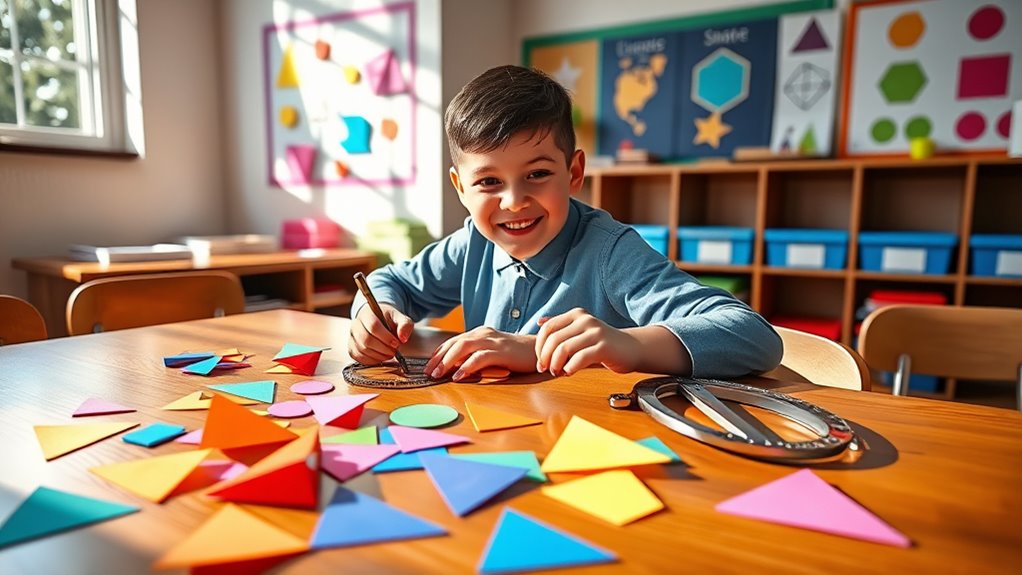

Making geometry fun is all about turning abstract concepts into hands-on activities and real-life experiences that spark your curiosity. Use everyday objects to build models, participate in puzzles, or explore structures around you. Connecting geometry to sports, architecture, or water parks makes learning exciting and practical, boosting your confidence. When you combine teamwork and interactive exploration, geometry becomes more than just formulas—it becomes a fascinating way to understand the world. Keep exploring to see how you can make it even more engaging.
Listen free for 30 days with Audible
Thousands of audiobooks and originals — cancel anytime.
As an affiliate, we earn on qualifying purchases.
Key Takeaways
- Incorporate hands-on activities like building models and puzzles to make geometry engaging and tangible.
- Connect geometric concepts to real-world scenarios such as sports, architecture, and daily life for relevance.
- Promote collaborative projects and group work to enhance understanding through shared learning.
- Use interactive exploration and physical movement to transform passive lessons into active experiences.
- Make learning fun by turning abstract topics into exciting discoveries through games, projects, and practical applications.
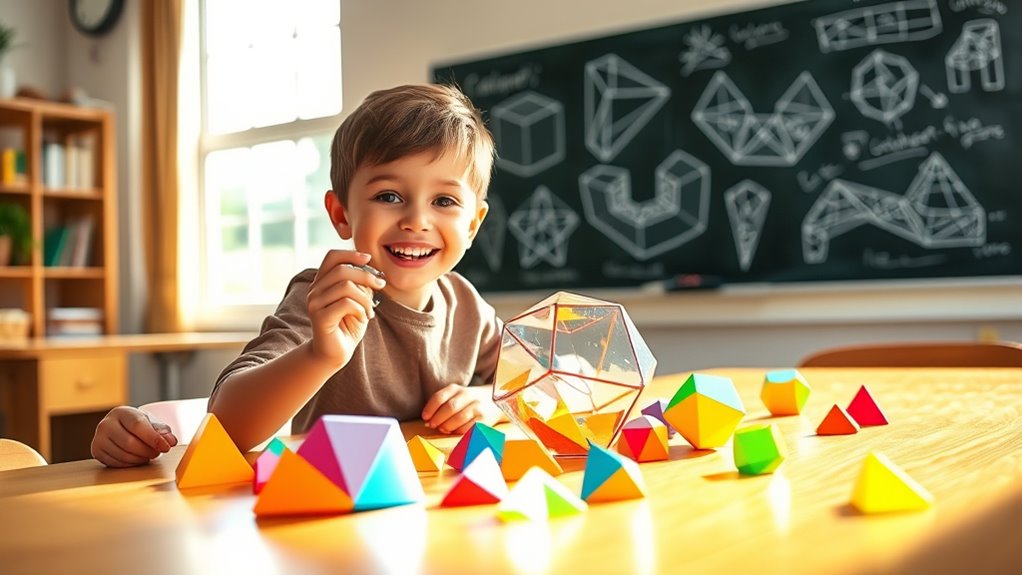
Many students find geometry challenging, but turning it into a fun experience can change that perspective entirely. When you start exploring geometry through interactive activities, you begin to see how concepts come alive beyond the classroom. Instead of just memorizing formulas or diagrams, you participate in hands-on projects, games, and puzzles that make learning engaging. For example, building models of angles or shapes with everyday objects helps solidify your understanding. These activities not only make the subject more interesting but also boost your confidence, showing you that geometry isn’t just about abstract figures—it’s about understanding the world around you. Engaging with water park attractions that incorporate geometric principles can also make the subject more tangible and fun.
Exploring geometry through hands-on projects and everyday objects makes learning fun and boosts confidence.
Using real-world applications is another powerful way to make geometry fun. When you see how geometric principles apply to everyday life, the subject becomes more relevant and less intimidating. Think about architecture—designing a house involves calculating angles, measuring distances, and ensuring stability, all based on geometric concepts. When you realize that the buildings you see every day are built using geometry, it sparks curiosity. Similarly, sports like soccer or basketball involve angles and trajectories, which you can analyze with simple geometric ideas. Connecting these concepts to things you encounter regularly makes learning more meaningful and helps you appreciate the practical side of geometry.
Interactive activities also encourage collaboration, making learning a shared adventure rather than a solitary task. Working with classmates on projects like creating scale models or solving spatial puzzles fosters communication and teamwork. These activities often involve visual and tactile elements, which can help you grasp difficult concepts more easily than through textbooks alone. Plus, when you see how geometry applies to real-world scenarios—like designing a park layout or programming a robot—you realize that these skills are useful beyond school. This perspective motivates you to engage more actively with the subject, understanding that learning isn’t just about grades but about developing useful skills.
Ultimately, transforming geometry into an enjoyable experience involves blending hands-on activities with real-life relevance. It’s about shifting from passive memorization to active exploration. When you participate in interactive projects and see how geometry influences everything from architecture to sports, your attitude shifts. You start to see the subject as a tool for understanding and shaping the world, not just a set of abstract rules. This approach makes learning more enjoyable and meaningful, inspiring you to explore deeper into the subject and discover its many fascinating aspects. Making geometry fun isn’t just a trick—it’s a way to open your curiosity and turn a challenging subject into an exciting journey of discovery.
geometry building kits for students
As an affiliate, we earn on qualifying purchases.
As an affiliate, we earn on qualifying purchases.
Frequently Asked Questions
How Can Teachers Incorporate Technology Into Geometry Lessons?
You can incorporate technology into geometry lessons by using interactive tools and virtual manipulatives. These resources help students visualize concepts, manipulate shapes, and explore geometric properties actively. Encourage students to solve problems using dynamic geometry software or online platforms, making learning more engaging. By integrating these tools, you make geometry more accessible and fun, fostering deeper understanding and enthusiasm for the subject.
What Are Some Common Misconceptions Students Have About Geometry?
You might notice students often have misconceptions about proofs, thinking they’re just formalities rather than logical reasoning tools. They also frequently make common geometric errors, like confusing angles or misapplying theorems. To address these, encourage hands-on activities and visual aids, helping students see the logic behind proofs. Clarifying these concepts improves understanding and reduces errors, making geometry more accessible and engaging for everyone.
How Does Geometry Apply to Real-World Situations?
Did you know that 80% of architects use geometry daily? You apply geometry in real life through spatial reasoning, helping you navigate and understand your environment. For example, geometric art can inspire design and creativity, and understanding angles and shapes is essential for building structures or solving problems. By recognizing how geometry connects to everyday tasks, you’ll see it as a powerful tool rather than just classroom theory.
What Are Effective Strategies for Students Struggling With Geometric Concepts?
If you’re struggling with geometric concepts, try incorporating interactive activities and visual aids into your study routine. Hands-on projects like building models or using dynamic geometry software can make abstract ideas tangible. Visual aids such as diagrams, charts, and 3D visuals help clarify complex topics. These strategies engage your senses and promote better understanding, making learning geometry more enjoyable and effective, ultimately boosting your confidence and mastery of the subject.
How Can Parents Support Their Child’s Interest in Geometry?
Think of yourself as the gardener nurturing curiosity. You can support your child’s interest in geometry by encouraging visual learning and hands-on activities. Provide them with shape puzzles, draw geometric figures together, or use everyday objects to explore angles and symmetry. These activities make abstract concepts tangible, sparking their enthusiasm. Your active involvement shows you value their learning journey, helping them see geometry as an exciting adventure rather than a chore.
As an affiliate, we earn on qualifying purchases.
Conclusion
By making geometry engaging, you open your full potential and see math as an exciting challenge rather than a chore. Imagine a student who turns a boring lesson into a creative project, like building 3D models of shapes. That student not only understands the concepts better but also develops confidence. So, next time you tackle geometry, think outside the box—your active approach can turn learning into an enjoyable adventure that sticks with you long after class ends.
As an affiliate, we earn on qualifying purchases.
As an affiliate, we earn on qualifying purchases.
Flea & tick season Picks
flea and tick prevention
As an affiliate, we earn on qualifying purchases.