Reframing a shape helps you see it from a new angle, revealing hidden patterns and connections that you might have missed. By rotating, flipping, or manipulating shapes, you challenge your default perceptions and open your mind to different possibilities. This mental flexibility speeds up problem-solving because it allows you to break through mental blocks and find solutions more quickly. Keep exploring these techniques, and you’ll discover even more ways to enhance your problem-solving skills.
Key Takeaways
- Reframing shapes reveals hidden patterns and connections that facilitate quicker problem identification.
- Changing perspective reduces cognitive biases, enabling more effective and creative solutions.
- Visualizing shapes from different angles helps identify simpler or more efficient approaches.
- Reframing breaks mental constraints, allowing for alternative configurations that resolve issues faster.
- It enhances mental flexibility, enabling rapid adaptation to new information or unexpected challenges.
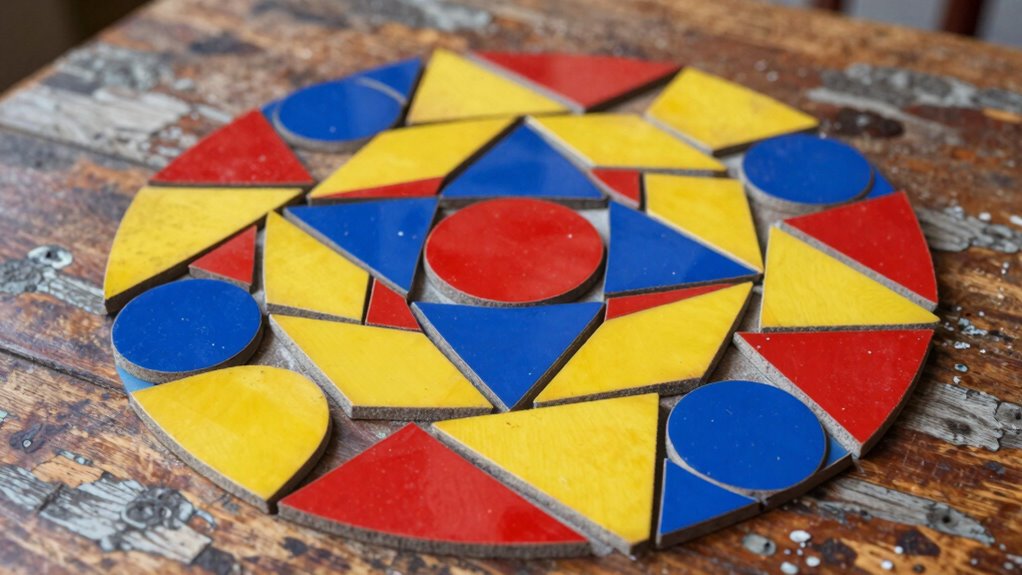
Reframing shapes can be a powerful strategy for solving complex problems, especially when the initial approach seems stuck. When you shift your perspective on a shape, you tap into your visual perception, allowing you to see patterns and connections that weren’t obvious before. Our brains are wired to interpret shapes in familiar ways, but by intentionally reframing, you challenge these default perceptions. This process enhances your cognitive flexibility—the ability to adapt your thinking and consider alternative solutions. When you approach a problem with rigid assumptions, you limit your options. Reframing helps you break free from these mental constraints, opening up new pathways to solutions.
Reframing shapes unlocks new perspectives, boosts flexibility, and opens pathways to innovative solutions.
Imagine you’re working on a puzzle or a geometric problem, and you hit an obstacle. Instead of forcing the shape into a solution that feels forced or unnatural, try viewing it from a different angle. Maybe rotate it, flip it, or think of it as part of a bigger picture. This simple act of manipulating the shape enhances your visual perception, making it easier to recognize patterns or symmetries you might have missed. As you do this, your brain exercises flexibility, shifting from a narrow focus to a broader view. This mental agility is vital for problem-solving because it allows you to adapt when things don’t work out as planned. Developing this skill of reframing shapes also trains your brain to become more adaptable in various situations, whether in work, daily life, or learning new skills. Over time, this practice sharpens your ability to see things differently, making you more resilient to mental blocks. Understanding visual perception can significantly boost your problem-solving strategies. Additionally, understanding how cognitive flexibility influences your thinking can help cultivate a mindset that embraces innovative solutions. Recognizing the role of mental adaptability in problem-solving can further enhance your capacity to overcome challenges with ease.
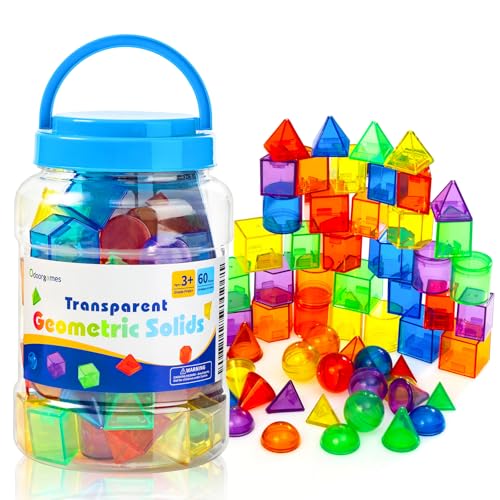
Odoorgames 60 Pieces 3D Shapes for Teaching, Light Table Manipulatives
- Translucent Toy Set: Vibrant, semi-transparent geometric shapes
- Light Table Compatibility: Enhances light, color, and shape interaction
- Sorting and Stacking: Includes 60 small, easy-to-handle shapes
As an affiliate, we earn on qualifying purchases.
As an affiliate, we earn on qualifying purchases.
Frequently Asked Questions
How Do I Know When to Reframe a Shape?
You should reframe a shape when you hit a mental block or the current perspective isn’t yielding solutions. Look for moments when perceptual shifts could spark new ideas. If you’re stuck or your approach feels limited, try changing the shape’s orientation or context. This shift often liberates creative insights, helping you see the problem differently and find faster, more effective solutions. Reframing keeps your thinking flexible and innovative.
Can Reframing Work for Complex or Irregular Shapes?
Reframing can definitely work for complex or irregular shapes, transforming your perspective to simplify the problem. A perspective shift lets you see these shapes in new ways, making them more manageable. Shape transformation isn’t just for simple forms; it helps untangle complicated designs just like a master sculptor reshapes marble. When you reframe, you open up solutions faster, turning chaos into clarity and making even the most intricate shapes easier to tackle.
What Tools Assist in Visualizing Shape Reframing?
You can use tools like CAD software, 3D modeling programs, or even sketching apps to assist in visualizing shape transformation. These tools help you manipulate the visual perspective, making complex or irregular shapes easier to reframe. By adjusting angles and perspectives, you gain a clearer understanding of the shape’s structure, enabling faster problem-solving through better visualization and more effective shape transformation strategies.
How Does Reframing Improve Problem-Solving Speed?
You might be surprised how quickly you can solve problems when you embrace reframing. By using creative visualization, you see shapes differently, revealing new perspectives. This boosts your cognitive flexibility, enabling you to adapt your thinking swiftly. As you shift your mental frame, solutions become clearer, and obstacles seem smaller. Reframing isn’t just a trick—it’s a powerful tool that accelerates your problem-solving, turning complex puzzles into manageable challenges almost instantly.
Are There Common Mistakes to Avoid When Reframing Shapes?
You should avoid common misconceptions that reframing shapes always leads to a solution. Reframing has limitations; it might oversimplify complex problems or cause you to overlook important details. Be cautious not to force a shape into a new perspective that doesn’t fit, as this can lead to confusion. Instead, stay flexible and open-minded, understanding when reframing helps and when it might hinder your problem-solving process.
![Jispring [100% Soft Silicone] Dementia Activities for Seniors, Tetris Puzzles with 20 Templates, Tile Matching Alzheimers Products for Elderly, Cognitive Memory Games for Adults, Anxiety Relief Gift](https://m.media-amazon.com/images/I/41u5+inz18L._SL500_.jpg)
Jispring [100% Soft Silicone] Dementia Activities for Seniors, Tetris Puzzles with 20 Templates, Tile Matching Alzheimers Products for Elderly, Cognitive Memory Games for Adults, Anxiety Relief Gift
- Material: 100% Food-Grade Silicone
- Safety: Non-Toxic and BPA-Free
- Purpose: Dementia and Senior Activities
As an affiliate, we earn on qualifying purchases.
As an affiliate, we earn on qualifying purchases.
Conclusion
Think of your problem like a tangled knot. Sometimes, you just need to reframe the shape — untangle it from a different angle — to see a clear path forward. By shifting your perspective, you discover solutions faster and more easily. Reframing isn’t just about changing shapes; it’s about transforming your approach. When you view problems from a new vantage point, you’ll find that the solution is often hiding just around the bend, waiting to be revealed.

Baby DJ Table Musical Piano Toys for Toddlers Boys Girls with Music & Light
- Multi-Functional Music & Light Table: LED number pad, DJ turntable, 24 piano keys
- Interactive Record & Playback: Record sounds, mix into songs, create music
- Early Development Musical Toy: Encourages movement, learning colors, shapes, numbers
As an affiliate, we earn on qualifying purchases.
As an affiliate, we earn on qualifying purchases.

LovesTown 209 PCS Shapes Wooden Pattern Blocks for Kids
- 209 Vibrant Wooden Blocks: Includes 209 pieces in 6 shapes
- 24 Design Cards with Levels: Progressive difficulty from beginner to advanced
- Sturdy Storage Bag: Includes a drawstring bag for easy storage
As an affiliate, we earn on qualifying purchases.
As an affiliate, we earn on qualifying purchases.