In geometry, you’ll learn about three main types of angles based on their size. An acute angle measures less than 90 degrees and looks sharp. A right angle is exactly 90 degrees, forming a perfect corner. An obtuse angle is more than 90 degrees but less than 180 degrees, appearing wider. Understanding these differences helps you analyze shapes and structures. Keep exploring, and you’ll discover even more about how angles work in various figures.

Prime made for students and young adults
- Fast, free delivery for dorm and study essentials
- Prime Video and Amazon Music included
- Member-only deals
Key Takeaways
- Angles are measured in degrees and classified as acute, right, or obtuse based on their size.
- An acute angle is less than 90 degrees, appearing sharp and narrow.
- A right angle measures exactly 90 degrees, forming a perfect corner.
- An obtuse angle is greater than 90 degrees and less than 180 degrees, appearing wider.
- Recognizing these angle types helps in understanding and constructing geometric shapes.
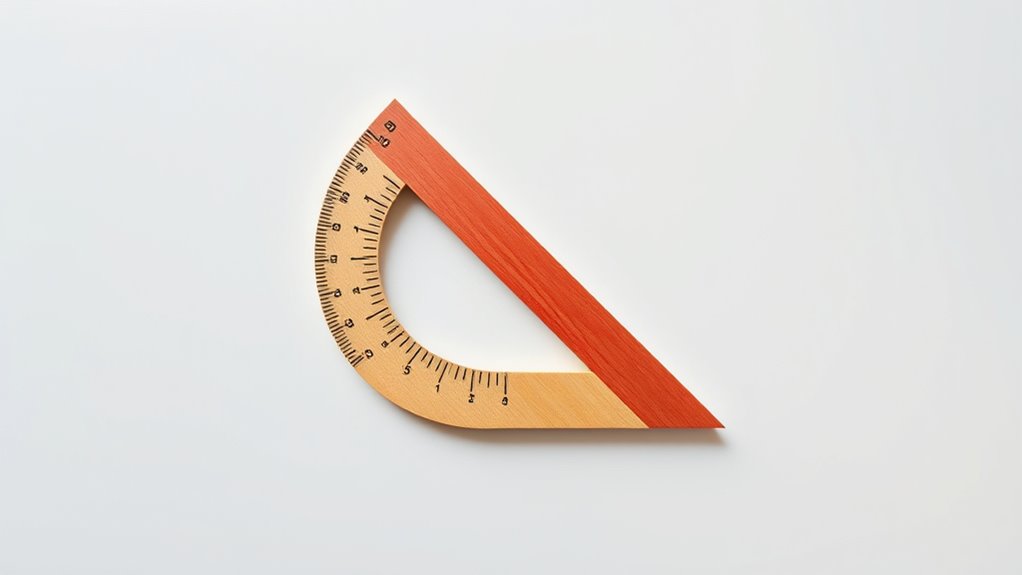
Have you ever wondered what shapes and sizes make up the world around you? At the core of understanding many geometric concepts is the idea of angles. When you look at a corner of a room, the hands of a clock, or the blades of a fan, you’re seeing angles in action. Angle classification helps you categorize these angles based on their size, which is determined through angle measurement. This process involves using a protractor or similar tool to find the precise degree of each angle, giving you a clear picture of how different angles compare and contrast.
Understanding the types of angles begins with knowing how they are classified. The main categories are acute, right, and obtuse angles. An acute angle measures less than 90 degrees. These angles are sharp and narrow, like the tip of a slice of pizza or the corner of a folded piece of paper. When you measure an acute angle, you’ll find that it’s smaller than a quarter turn, indicating its less-than-right size. These angles often appear in triangles and other geometric shapes, helping to define their properties and classifications.
Acute angles are less than 90 degrees and appear in many geometric shapes and everyday objects.
A right angle, on the other hand, measures exactly 90 degrees. It’s the perfect corner, like the intersection of two perpendicular lines or the corner of a square. When you use an angle measurement tool like a protractor, you’ll see that the markings align exactly at the 90-degree mark. Recognizing right angles is vital because they serve as the foundation for many geometric principles and constructions. They’re often used as reference points in shapes, ensuring that lines and angles are properly aligned and creating symmetry.
Obtuse angles are larger than 90 degrees but less than 180 degrees. They appear in various natural and man-made structures, such as the opening of a wide-angle lens or the angle of a ramp. When you measure an obtuse angle, it exceeds a right angle, indicating that the lines are more spread apart. These angles give shapes a more open and expansive look, often making figures appear less rigid and more dynamic. Additionally, understanding the contrast ratio of angles helps in visualizing how light and dark areas are rendered, which is important in fields like home theater projection and visual display design.
As an affiliate, we earn on qualifying purchases.
Frequently Asked Questions
How Can I Quickly Identify Different Types of Angles in Diagrams?
To quickly identify different types of angles in diagrams, focus on their measure. For angle classification, look at the size: acute angles are less than 90°, right angles are exactly 90°, and obtuse angles are more than 90° but less than 180°. When interpreting diagrams, carefully observe the markings or labels, and use a protractor if needed. Practice helps improve your diagram interpretation skills, making it faster to distinguish between angles.
Are There Real-World Examples of Acute, Right, and Obtuse Angles?
Imagine sunlight casting shadows at different angles; that’s a perfect way to see real-world examples of angles. Acute angles, like the corners of a slice of pizza, are sharp and small. Right angles appear in everyday structures, like the corners of a picture frame. Obtuse angles, like the opening of a door, are wide and more than 90 degrees. These angle applications help you recognize angles in everyday objects effortlessly.
What Tools Are Best for Measuring Angles Accurately?
You should use digital protractors or angle measurement apps for accurate angle measurement. Digital protractors provide precise readings with easy-to-read displays, making them ideal for detailed work. Angle measurement apps, available on smartphones, use your device’s sensors to measure angles quickly and conveniently. Both tools help you measure angles confidently, whether for craft projects, construction, or education, ensuring you get accurate results every time.
How Do Angles Relate to Other Geometric Shapes and Figures?
Angles are the building blocks that connect to other geometric shapes and figures like triangles, squares, and circles, creating a web of relationships. You’ll find angle relationships, such as complementary and supplementary angles, revealing how angles work within shapes. These relationships help you understand geometric shape angles better, as they define the structure, symmetry, and properties of each figure, turning simple lines into intricate, interconnected masterpieces.
Can Angles Change Their Type After Being Measured?
Angles can change their type through angle transformation, but only if the figure itself changes or if the angle is measured inaccurately. When you adjust the position of lines or shapes, the angle’s measurement might seem different, so measurement accuracy is vital. If the physical figure remains the same, the angle’s type stays constant. Always guarantee precise measurements to avoid misclassification of angles.
geometry angle measurement tools
As an affiliate, we earn on qualifying purchases.
As an affiliate, we earn on qualifying purchases.
Conclusion
Understanding the different types of angles helps you see the world more clearly. While some angles are straightforward, others might seem a bit tricky at first glance. But with a little practice and patience, you’ll find that these concepts become more familiar and easier to recognize. Remember, every angle has its place, just like every moment in learning. Embrace the journey, and you’ll discover that even the most complex ideas can become simple and enjoyable.
student geometry set with protractor and ruler
As an affiliate, we earn on qualifying purchases.
As an affiliate, we earn on qualifying purchases.
As an affiliate, we earn on qualifying purchases.
Evergreen bestsellers Picks
bestsellers
As an affiliate, we earn on qualifying purchases.