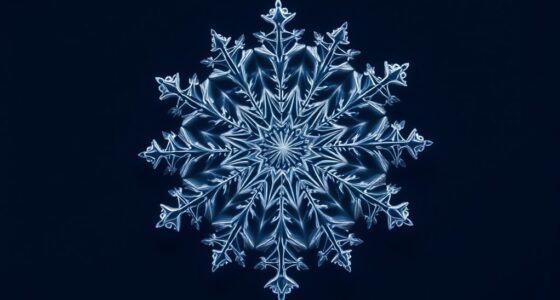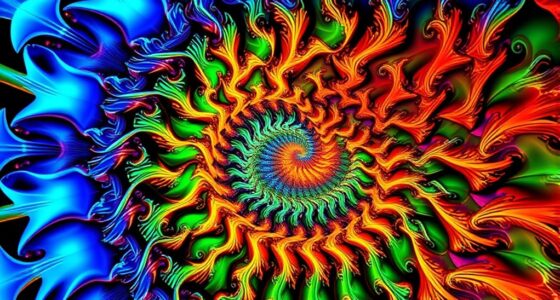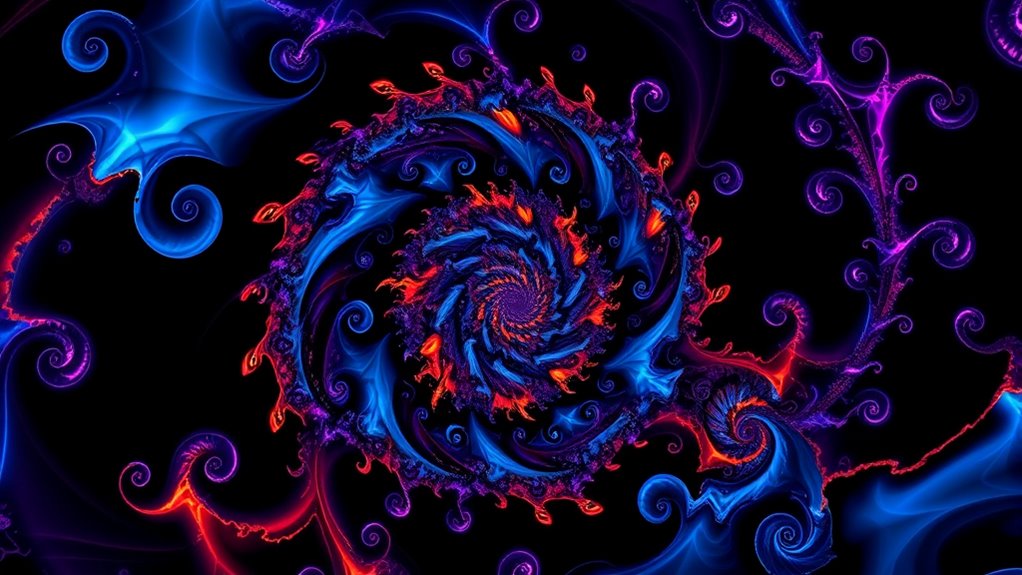
To create stunning fractal images, you start by choosing mathematical formulas like Mandelbrot or Julia sets. Using digital tools, you manipulate parameters such as colors, zoom levels, and iterations to generate intricate patterns. These algorithms produce self-repeating, complex designs that reveal new details as you zoom in. Combining mathematical understanding with artistic intuition allows you to craft mesmerizing visuals. Keep exploring, and you’ll uncover even more about the fascinating blend of math and art.
Key Takeaways
- Artists select mathematical formulas like Mandelbrot or Julia sets to generate recursive, self-similar patterns.
- Digital software simulates iterative processes, allowing precise manipulation and visualization of complex fractal designs.
- Color mapping and shading techniques highlight intricate details and enhance visual impact.
- Artists adjust parameters such as zoom levels and color schemes to explore different layers of fractal complexity.
- Continuous experimentation with formulas and settings combines mathematical understanding with artistic creativity.
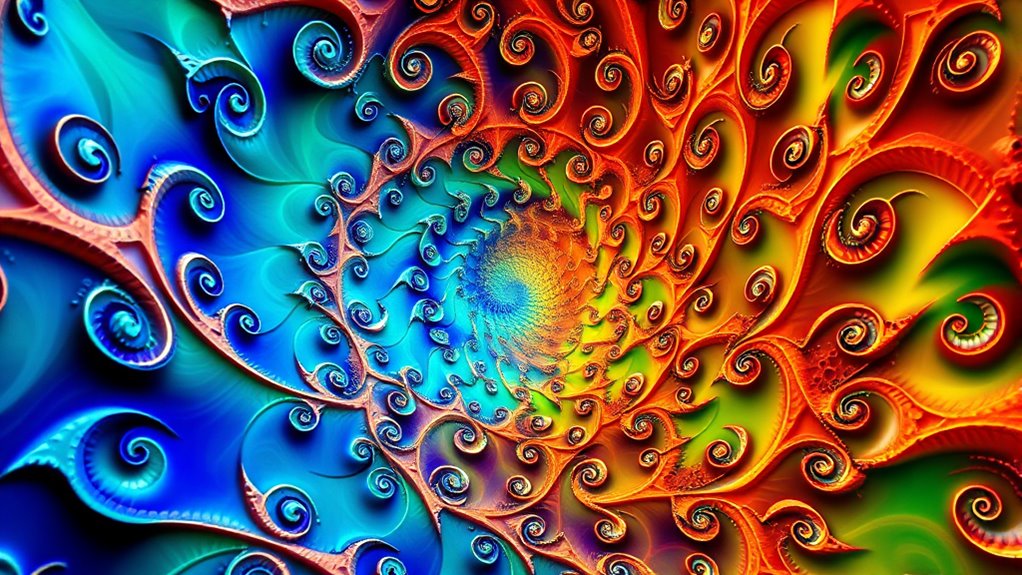
Fractal art is a mesmerizing form of digital creativity that uses mathematical algorithms to generate intricate, self-repeating patterns. At its core, this art form relies on mathematical complexity to produce images that seem both limitless and infinitely detailed. As you explore fractal creation, you’ll notice that understanding the underlying mathematics is essential. Fractals are generated through recursive processes, where simple formulas are repeated over and over, building complex structures that reveal themselves at every scale. These formulas often involve complex numbers and iterative functions, which give rise to the stunning visual diversity seen in fractal images. The use of computational algorithms allows for precise manipulation and exploration of these fractal patterns, enabling artists to push the boundaries of visual complexity. Digital rendering techniques play a pivotal role in transforming these mathematical formulas into visually captivating artworks. Once you’ve chosen a fractal formula, you can use specialized software to simulate the recursive process, rendering the pattern onto your screen. These tools allow you to manipulate parameters in real-time, adjusting colors, zoom levels, and detail levels to enhance the visual appeal. The digital rendering techniques are powerful because they enable artists to explore the fractal landscape at different depths, revealing layers of complexity that are impossible to perceive with the naked eye. This technological advantage makes it easier for you to experiment with variations and discover new, unique patterns.
Creating fractal art involves a careful balance between mathematical precision and creative intuition. You start by selecting a formula—such as the Mandelbrot set or Julia set—and then use digital tools to iterate and visualize the pattern. As you zoom into specific regions, the fractal’s self-similarity emerges, revealing an endless universe of shapes. Advanced rendering techniques, including color mapping and shading, help highlight the fractal’s intricate details, making each piece visually striking. These techniques also allow you to emphasize certain features, guiding the viewer’s eye across the composition.
The process is both analytical and artistic. You need a grasp of the mathematical complexity behind the fractals, but also an eye for aesthetics. By adjusting parameters and employing digital rendering techniques, you can create images that are not only mathematically fascinating but also visually compelling. This blend of science and art makes fractal creation a truly unique endeavor. With each adjustment, you deepen your understanding of the underlying mathematics while pushing the boundaries of visual creativity. The result is a stunning piece that celebrates the harmony between mathematical precision and artistic expression, capturing the infinite beauty hidden within complex formulas.
Frequently Asked Questions
What Software Tools Are Most Popular for Creating Fractal Art?
You’ll find that software preferences vary, but popular tools like Apophysis, Ultra Fractal, and Mandelbulb 3D stand out for creating fractal art. These digital tools comparison shows each offers unique features, from 2D to 3D fractal rendering. You should explore their interfaces and capabilities to see which aligns best with your style. Many artists appreciate their versatility, ease of use, and powerful customization options for crafting stunning mathematical images.
Can Beginners Easily Learn to Generate Fractal Images?
Yes, you can easily learn to generate fractal images as a beginner. The learning curve might seem steep at first, but with practice, you’ll develop your skills quickly. Many user-friendly software tools offer tutorials and presets that make skill development manageable. As you experiment and explore different formulas and parameters, you’ll see your ability grow, enabling you to create stunning fractal art even without prior experience.
How Long Does It Typically Take to Create a Complex Fractal Piece?
Time transforms as you tackle complex fractal pieces, typically ranging from hours to several days. Your creative process involves patience, precision, and persistent experimentation. The more intricate the image, the longer it takes, demanding dedication and an immersive exploration into detail. While beginners might spend extra time learning, seasoned artists can often craft mesmerizing fractals more swiftly, turning technical talent into stunning visual stories with steady, sustained effort.
Are There Any Ethical Considerations in Using Mathematical Algorithms?
When using mathematical algorithms in fractal art, you should consider algorithm bias and intellectual property. Bias can influence the outcomes, so guarantee your algorithms are fair and transparent. Respect intellectual property rights by crediting original algorithms or tools. Avoid using proprietary code without permission. Being aware of these ethical considerations helps you create responsible, original artwork that honors both mathematical integrity and legal standards.
How Do Artists Choose Color Schemes for Their Fractal Images?
You paint with your mind’s eye, choosing color schemes based on color harmony to create visual balance. You consider the emotional impact you want to evoke—calm, excitement, or wonder—and select colors accordingly. Bright, contrasting hues can energize the viewer, while softer shades foster tranquility. By experimenting with color palettes and observing how they interact within the fractal’s intricate patterns, you craft images that resonate deeply and captivate the audience.
Conclusion
As you step back from these intricate designs, you’ll see the chaos of mathematical formulas transform into mesmerizing beauty. It’s like gazing at a wild forest that also follows a hidden pattern, or a storm’s fury softened into delicate lace. Fractal art invites you to find harmony in complexity, proving that even the most chaotic equations can create breathtaking visual symphonies. In this space, mathematics and artistry dance together, shaping worlds both strange and stunning.