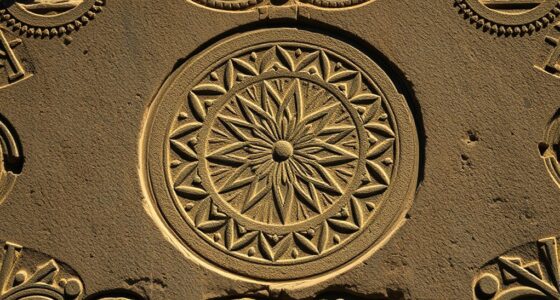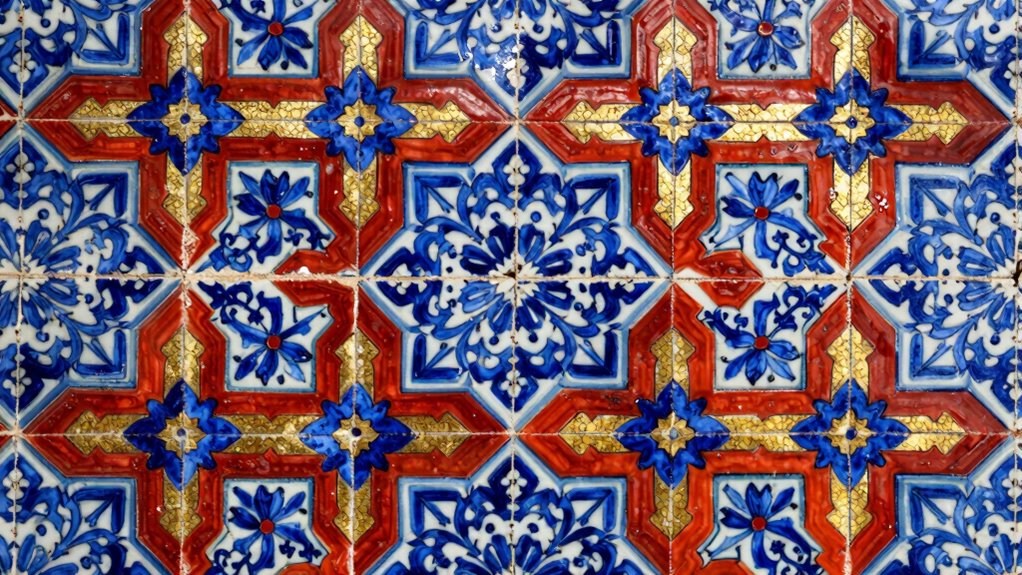

Repeating tiles show how cultures have shared artistic styles, technological skills, and symbolic meanings across centuries. Their patterns, colors, and motifs reflect influences from diverse traditions like Islamic, Chinese, and Moorish craftsmanship, revealing a history of cultural exchange. These tiles embody stories of trade, innovation, and mutual inspiration, connecting civilizations through art and architecture. Keep exploring to discover how these intricate designs tell a deeper story of interconnected human cultures.

Prime made for students and young adults
- Fast, free delivery for dorm and study essentials
- Prime Video and Amazon Music included
- Member-only deals
Key Takeaways
- Repeating tiles showcase the blending of artistic styles from diverse cultures, reflecting cross-cultural influence and exchange.
- Patterns and motifs on tiles symbolize shared spiritual and societal values across different civilizations.
- Technological advancements in tile-making indicate the transfer of craftsmanship and innovation between societies.
- The materials and techniques used in tiles reveal trade networks and regional resource sharing.
- Architectural symbolism in tile arrangements demonstrates interconnected beliefs and cultural dialogues across regions.
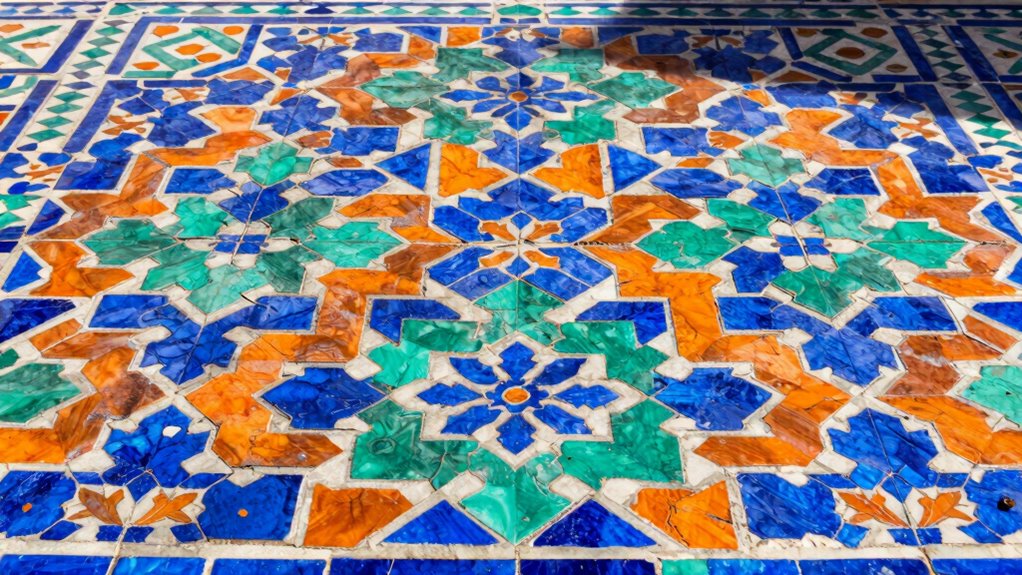
Throughout history, repeating tiles have served as more than just decorative elements—they’ve become symbols of cultural exchange. When you observe these tiles, you’re witnessing a visual dialogue that spans centuries and continents. Their patterns and colors carry stories of interactions between different societies, revealing how cultures shared ideas and aesthetics through trade, conquest, and migration. These tiles often embody architectural symbolism, where specific motifs and arrangements are embedded with meaning. For instance, geometric patterns may symbolize infinity or unity, reflecting philosophical or spiritual beliefs of the cultures that produced them. The repetition of these motifs isn’t accidental; it’s a deliberate design choice that emphasizes harmony, order, or divine perfection, making the tiles more than just decoration—they become a language of cultural values and beliefs.
Repeating tiles symbolize cultural exchange, embodying shared values, spiritual beliefs, and interconnected histories across civilizations.
As you explore the artistic influences embedded in repeating tiles, you’ll notice a blend of styles that highlight the interconnectedness of civilizations. The intricate Islamic mosaics, with their complex interlacing patterns and vibrant colors, draw inspiration from earlier Byzantine and Persian traditions. Similarly, Moorish tiles showcase a fusion of Arab, Berber, and Spanish artistic influences, illustrating a melting pot of cultures within the Iberian Peninsula. In Asia, Chinese porcelain tiles often feature delicate floral or mythological motifs, revealing influences from neighboring regions through trade routes like the Silk Road. These artistic influences aren’t isolated; they evolve as cultures adapt and incorporate new elements, creating a rich tapestry of design that speaks to cross-cultural exchange. Additionally, the technological exchanges in tile-making methods demonstrate how artisans shared skills, passed down knowledge, and collaborated across borders. Recognizing the technological innovations involved in tile production provides deeper insight into how craftsmanship evolved through intercultural collaboration. Furthermore, studying the materials used in tile-making can reveal trade networks and resource availability across different regions and eras. The evolution of color pigments used in tiles also showcases technological advancements that facilitated more vibrant and diverse designs, further facilitating intercultural influence.
When you analyze repeating tiles, you’re also uncovering layers of history embedded in their craftsmanship. The techniques used—such as glazing, firing, or carving—point to technological exchanges between societies. The spread of tile-making methods illustrates how artisans shared skills, passed down knowledge, and collaborated across borders. This exchange of artistic techniques and styles not only shaped the physical appearance of the tiles but also fostered a sense of interconnectedness among distant peoples. Each pattern, color choice, and construction method reflects a story of cultural dialogue, where artisans and societies influence one another, leading to the diverse and vibrant tile art we see today.
In essence, repeating tiles serve as more than decorative surfaces—they are concrete evidence of cultural exchange. They reveal how architectural symbolism and artistic influences transcend borders, weaving a narrative of shared history and mutual influence. When you study these tiles, you’re not just appreciating their beauty; you’re uncovering a visual history of human interaction, adaptation, and the timeless desire to connect through art and architecture.
As an affiliate, we earn on qualifying purchases.
Frequently Asked Questions
How Did Repeating Tiles Originate Historically?
Repeating tiles originated through ancient ceramic techniques, where artisans developed methods to create seamless, patterned surfaces. They used pigment sources like mineral-based dyes and natural oxides to achieve vibrant colors. These tiles spread across cultures via trade routes, blending artistic styles and techniques. You can see this history in the intricate, repeating patterns that reflect a shared appreciation for craftsmanship and cultural exchange, showcasing how technology and artistry evolved together over time.
Which Regions Have the Most Unique Tile Patterns?
You’ll find the most unique tile patterns in regions like Morocco, India, and Portugal, where regional diversity sparks vibrant artistic influences. These areas craft intricate, one-of-a-kind designs that stand out like colorful gems. Each pattern tells a story of local traditions, history, and cultural exchange, revealing a tapestry woven with centuries of artistic evolution. Exploring these tiles feels like walking through a living museum of creativity and cultural identity.
How Do Tiles Reflect Trade Routes and Economic Exchange?
You can see trade routes and economic exchanges through tile symbolism and artistic motifs. When tiles feature similar designs across regions, it indicates active trade and cultural sharing. These motifs often symbolize prosperity, protection, or spiritual beliefs, reflecting shared values. As you observe recurring patterns, you realize how artisans adapted artistic motifs from different cultures, revealing interconnected trade networks that facilitated the flow of goods, ideas, and artistic influences across vast distances.
Can Tile Patterns Indicate Social or Religious Influences?
Tile patterns are like silent storytellers, revealing social and religious influences through their designs. You’ll notice cultural symbolism woven into motifs, reflecting shared beliefs and values. Religious motifs, like sacred symbols or icons, echo spiritual devotion and societal hierarchy. These patterns act as visual language, exposing the beliefs and customs of the people who created them, allowing you to read their history and faith through the intricate artistry of each tile.
What Modern Technologies Are Used to Study Tile Origins?
You can use modern technologies like digital imaging and spectroscopic analysis to study tile origins. Digital imaging helps you examine intricate patterns and surface details with high precision, revealing manufacturing techniques. Spectroscopic analysis allows you to identify the chemical composition of glazes and pigments, helping you trace the geographical source of materials. These tools enable you to uncover historical trade routes and cultural exchanges embedded in tile production, providing a deeper understanding of their origins.
Chinese porcelain decorative tiles
As an affiliate, we earn on qualifying purchases.
As an affiliate, we earn on qualifying purchases.
Conclusion
So, the next time you see those mesmerizing repeating tiles, remember—they’re not just pretty patterns. They’re silent storytellers, revealing secrets of ancient cultures, epic trade routes, and daring explorers. These tiles hold the power to connect worlds, spark curiosity, and even rewrite history—all in a tiny, tiled mosaic. So, keep your eyes peeled. You’re walking through a vibrant tapestry of human exchange, and those little tiles might just be the universe’s most fascinating storytellers.
As an affiliate, we earn on qualifying purchases.
As an affiliate, we earn on qualifying purchases.
Fall Picks
fall essentials
As an affiliate, we earn on qualifying purchases.