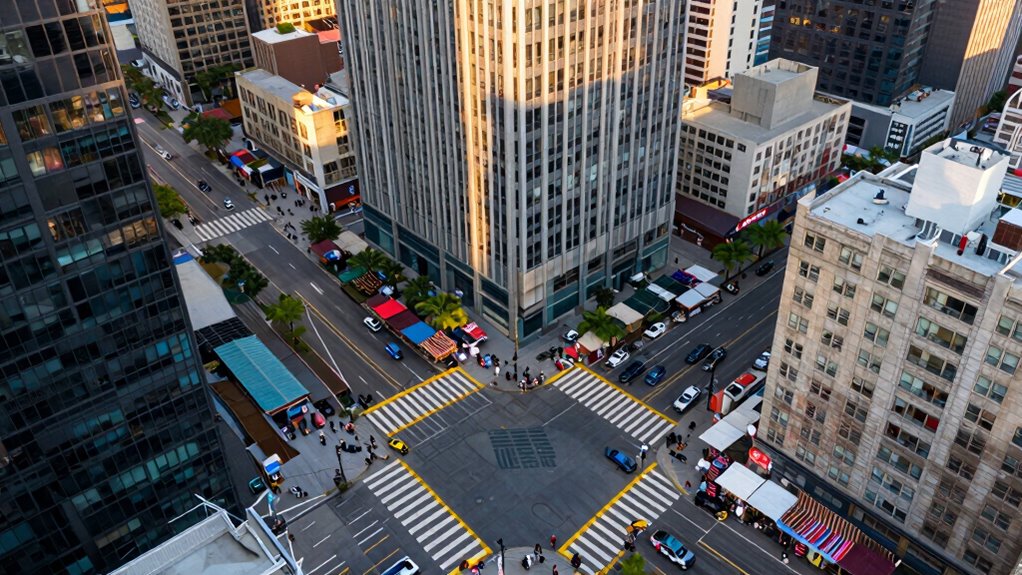

Urban street patterns reveal your society’s views on order by showing how it values hierarchy, efficiency, or community. Straight grid designs reflect a desire for clarity and fairness, while winding streets suggest organic growth and tradition. Wide boulevards symbolize authority, and narrow alleys emphasize intimacy. These patterns act as visual symbols of what your society prioritizes—control, cohesion, or resilience. Explore further to discover how these street choices shape your city’s unique identity.
Listen free for 30 days with Audible
Thousands of audiobooks and originals — cancel anytime.
As an affiliate, we earn on qualifying purchases.
Key Takeaways
- Grid patterns symbolize societal values of order, efficiency, transparency, and fairness in urban navigation.
- Winding or irregular layouts reflect cultural emphasis on tradition, organic growth, or social cohesion.
- Wide boulevards and grand avenues indicate societal hierarchy and authority.
- Narrow, winding alleys suggest community focus and social intimacy.
- Street materials and architectural styles convey cultural priorities of durability, beauty, and societal identity.

Have you ever wondered how the layout of city streets reflects a community’s cultural values? It’s more than just about convenience or aesthetics; street patterns reveal deep-seated ideas about order, hierarchy, and societal structure. When you walk through a city, the way the streets are arranged tells a story about its history and what its people prioritize. Historical influences shape these designs profoundly. For instance, grid patterns, common in many North American cities, originated from ancient Roman and Greek planning principles, emphasizing order and efficiency. These straight, intersecting roads symbolize clarity and uniformity, reflecting a culture that values progress and control. Conversely, winding or irregular street layouts often mirror older cities with organic growth, where streets adapted over time to natural landscapes or social needs, emphasizing adaptability over rigid order. The urban planning principles behind these patterns reveal much about a society’s approach to organization and control. Furthermore, the materials and textures used in street surfaces can also convey cultural ideas about resilience and aesthetic values. Recognizing the architectural styles associated with different street layouts can deepen our understanding of their cultural significance. Understanding the urban fabric helps us see how these patterns are interconnected and influence the overall character of a city.
Societal symbolism is embedded in how these patterns convey power, community, and harmony. Wide avenues and grand boulevards, like those in Paris or Washington D.C., aren’t just functional; they serve as symbols of authority and prestige. Their deliberate scale and prominence communicate societal values around hierarchy and influence. Narrow, winding alleys found in historic districts often evoke intimacy and community, highlighting a different set of cultural ideals—perhaps a focus on social cohesion or a more organic, less hierarchical society. Street patterns also reflect ideas about order in terms of accessibility and control. Highly ordered grids suggest transparency and fairness, making navigation straightforward, which can symbolize an egalitarian approach to urban life. In contrast, complex, less predictable street layouts might imply a society that values tradition, randomness, or the importance of local customs. Recognizing these symbols helps us understand the underlying cultural ideas that shape urban environments. These patterns are often the result of deliberate planning choices that echo societal values and historical context.
These influences continue to evolve, but the core idea remains: street patterns are a mirror of cultural ideas about order. They reveal what a society considers important—whether that’s efficiency, hierarchy, community, or resilience. When you observe a city’s streets, you’re witnessing a visual language shaped by historical influences and societal symbolism. This language communicates not just how a city functions, but what its people believe about order and their place within it. By understanding these patterns, you gain insight into the underlying cultural ideas that have shaped urban development over centuries. In the end, city streets aren’t just pathways—they’re a reflection of collective identity, history, and cultural values about how society should be organized and lived in.
As an affiliate, we earn on qualifying purchases.
Frequently Asked Questions
How Do Street Patterns Influence Community Interactions?
You notice that street patterns shape community interactions by directing pedestrian flow and defining public space. When streets are designed with walkability in mind, people feel encouraged to gather, socialize, and participate in community events. Conversely, complex or car-centric layouts can restrict access, reducing opportunities for interaction. Your experience shows that thoughtful street design fosters vibrant public spaces, making communities more connected and lively.
Are There Environmental Impacts Linked to Specific Street Layouts?
Street layouts can be a double-edged sword for the environment. When designed with green corridors, they act like arteries, helping stormwater management and reducing runoff. These patterns lower pollution, combat urban heat, and support biodiversity. On the flip side, poorly planned streets can lead to increased congestion, pollution, and habitat loss. So, your city’s street design directly influences ecological health and resilience, shaping a greener, more sustainable urban future.
How Do Street Designs Adapt to Modern Technological Needs?
You see street designs adapting to modern tech by incorporating smart infrastructure, which enhances traffic flow and safety through sensors and data collection. Digital mapping tools help city planners and drivers navigate efficiently, reducing congestion and emissions. These innovations guarantee streets meet contemporary needs, integrating technology seamlessly into urban environments. As a result, city layouts become smarter, more responsive, and better suited to the demands of digital connectivity and sustainable growth.
What Role Do Government Policies Play in Street Pattern Development?
Government policies, especially zoning regulations and planning strategies, shape street patterns considerably. You’ll see that these policies determine how land is used, influencing street layouts to promote order and efficiency. By setting rules for building locations, road types, and public spaces, authorities guide urban growth and guarantee that streets meet community needs while maintaining cultural values. Your city’s street pattern reflects these policies, balancing development with cultural ideas about order.
How Do Street Patterns Evolve With Urban Population Growth?
As urban populations grow, street patterns evolve to improve traffic flow and enhance aesthetic appeal. You might notice grid layouts becoming more complex or winding roads designed to reduce congestion and create visual interest. Cities adapt by adding new routes, pedestrian zones, or green spaces, reflecting cultural priorities for efficient movement and beauty. These changes help accommodate increasing populations while maintaining a sense of order and visual harmony in the urban landscape.
As an affiliate, we earn on qualifying purchases.
Conclusion
As you walk through different city streets, you can see how their patterns mirror the cultural ideas of order that shaped them—like threads woven into a vibrant tapestry. These designs aren’t just random; they tell stories of tradition, values, and social priorities. By understanding these patterns, you gain a deeper appreciation of how culture shapes our everyday environment, turning urban landscapes into living murals that reflect the soul of a community—an intricate dance of order and expression.
As an affiliate, we earn on qualifying purchases.
urban planning architectural models
As an affiliate, we earn on qualifying purchases.
As an affiliate, we earn on qualifying purchases.
Fall yard work Picks
leaf blowers
As an affiliate, we earn on qualifying purchases.