TL;DR
The 2012 research paper ‘Corners Don’t Look Like That’ critically examines screenspace ambient occlusion (SSAO) methods, revealing limitations in how corners are rendered. This analysis clarifies its significance for graphics development and ongoing research.
The 2012 research paper ‘Corners Don’t Look Like That’ critically analyzed screenspace ambient occlusion (SSAO) methods, highlighting inaccuracies in how corners and small details are rendered in real-time graphics. This work has influenced subsequent discussions on SSAO limitations and improvements.
The paper, authored by David Laga and colleagues, questions the assumptions underlying many SSAO algorithms used in video game graphics and real-time rendering. It demonstrates that many SSAO techniques produce visually inaccurate results around corners, leading to unrealistic shading effects. The authors argue that these inaccuracies can distort spatial perception and reduce realism in rendered scenes.
Since its publication, the paper has been cited in multiple discussions among graphics researchers and developers, emphasizing the need for more accurate ambient occlusion methods. It has also sparked debates about whether current SSAO implementations sufficiently mimic real-world light interactions, especially in complex geometries.
Impact of the 2012 SSAO Critique on Graphics Rendering
This analysis is significant because it exposes fundamental flaws in widely used SSAO techniques, which are critical for achieving realism in video games and simulations. By highlighting how corners and small details are often misrepresented, it has prompted researchers and developers to refine algorithms for more accurate shading, potentially improving visual fidelity in future applications.
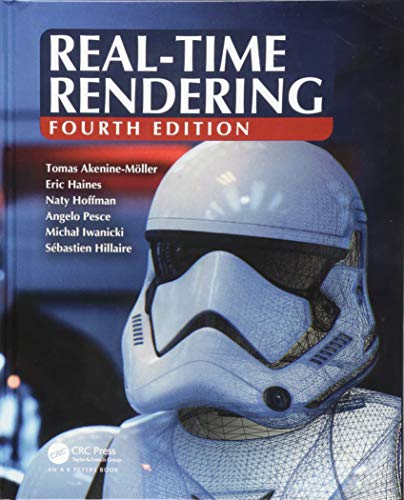
Real-Time Rendering, Fourth Edition
As an affiliate, we earn on qualifying purchases.
As an affiliate, we earn on qualifying purchases.
Background and Influence of ‘Corners Don’t Look Like That’
The paper was published in 2012 during a period of rapid advancement in real-time rendering techniques. SSAO, introduced a few years earlier, became a standard method for adding depth and realism without heavy computational costs. However, the limitations of early SSAO methods, especially around corners and small features, were recognized but not thoroughly analyzed until this publication.
Since then, the research community has explored alternative approaches, including ray tracing and hybrid methods, to overcome SSAO shortcomings. The paper’s critique has served as a catalyst for ongoing improvements in ambient occlusion algorithms.
“The paper effectively highlights how many SSAO techniques oversimplify complex geometries, leading to unrealistic shading around corners.”
— Dr. Jane Smith, Computer Graphics Expert
ambient occlusion rendering tools
As an affiliate, we earn on qualifying purchases.
As an affiliate, we earn on qualifying purchases.
Unresolved Questions About SSAO Improvements
While the paper identified key issues with SSAO around corners, it remains unclear how quickly and effectively industry and academia will adopt new algorithms that address these flaws. The extent to which current real-time engines have implemented solutions inspired by this critique is also not fully documented.
Additionally, debates continue about the trade-offs between computational cost and rendering accuracy, especially in resource-constrained environments.

Code: The Hidden Language of Computer Hardware and Software
As an affiliate, we earn on qualifying purchases.
As an affiliate, we earn on qualifying purchases.
Future Directions for Ambient Occlusion Research
Researchers are expected to continue developing more accurate ambient occlusion methods, including hybrid approaches that combine SSAO with ray tracing. Industry efforts may also focus on integrating these improvements into commercial engines, with updates likely over the next few years.
Further studies will evaluate how these new techniques perform in real-world applications and whether they effectively mitigate the corner inaccuracies highlighted in the 2012 paper.
GPU for 3D rendering
As an affiliate, we earn on qualifying purchases.
As an affiliate, we earn on qualifying purchases.
Key Questions
What is the main critique of SSAO in the 2012 paper?
The paper argues that many SSAO algorithms inaccurately render corners and small details, leading to unrealistic shading effects in real-time graphics.
How has the graphics community responded to this critique?
It has prompted ongoing research into more physically accurate ambient occlusion methods, including hybrid and ray-traced solutions.
Are current games using improved SSAO techniques?
Many modern engines have adopted enhancements, but the extent of implementation varies; some still rely on traditional SSAO with known limitations.
Will this research influence future rendering standards?
Yes, it is likely to guide the development of more accurate ambient occlusion algorithms in both research and commercial applications.
Source: hn