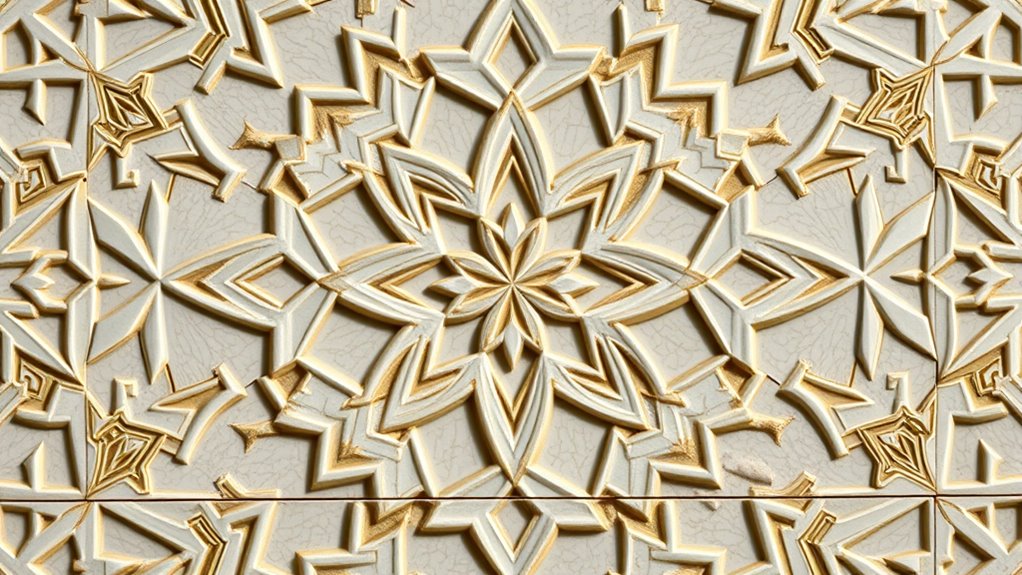

Islamic geometric art combines intricate patterns, symmetry, and mathematical precision to reflect divine harmony and spiritual meanings. You’ll notice how repeated shapes and precise calculations create harmonious designs that symbolize unity and balance. Calligraphy often weaves seamlessly into these patterns, enhancing their spiritual depth. These artworks go beyond decoration, embodying centuries of tradition rooted in faith and knowledge. If you continue exploring, you’ll discover how these patterns express interconnectedness and divine order in fascinating detail.

Prime made for students and young adults
- Fast, free delivery for dorm and study essentials
- Prime Video and Amazon Music included
- Member-only deals
Key Takeaways
- Islamic geometric art utilizes symmetry, repetition, and precise mathematical calculations to create harmonious and intricate patterns.
- Patterns often incorporate calligraphy, blending visual beauty with spiritual messages within geometric frameworks.
- Tile craftsmanship plays a vital role, with artisans meticulously assembling complex mosaic designs in architectural settings.
- The symbolism in geometric patterns reflects divine harmony, spiritual unity, and interconnectedness, embodying core Islamic values.
- Overall, these designs symbolize order and balance, demonstrating the cultural and spiritual significance of Islamic art.
Have you ever wondered how Islamic art creates such intricate and mesmerizing patterns? The secret lies in a sophisticated blend of geometric design, calligraphic integration, and expert craftsmanship. Islamic artists have mastered the art of transforming simple shapes into complex, harmonious patterns that seem to pulse with spiritual meaning. By focusing on symmetry, repetition, and precise calculations, they create visual illusions that draw you in and invite contemplation. Central to this artistry is the concept of unity—each pattern reflects a divine order, and understanding it requires appreciating the meticulous work behind the scenes. The mathematical principles and precise calculations involved are essential to achieving the seamless integration of pattern and meaning. One of the most remarkable features of Islamic geometric art is its calligraphic integration. Artists often weave elegant Arabic calligraphy into their patterns, not merely as decorative elements but as an extension of the design’s spiritual message. These calligraphic strokes are carefully embedded within the geometric framework, creating a seamless dialogue between text and shape. This integration elevates the artwork beyond mere decoration, transforming it into a visual expression of faith and divine harmony. When you look at these patterns, notice how the calligraphy complements the symmetry, guiding your eye across the design while reinforcing the spiritual significance embedded within the art.
Islamic patterns embody divine harmony through geometric precision, symmetry, and spiritual symbolism.
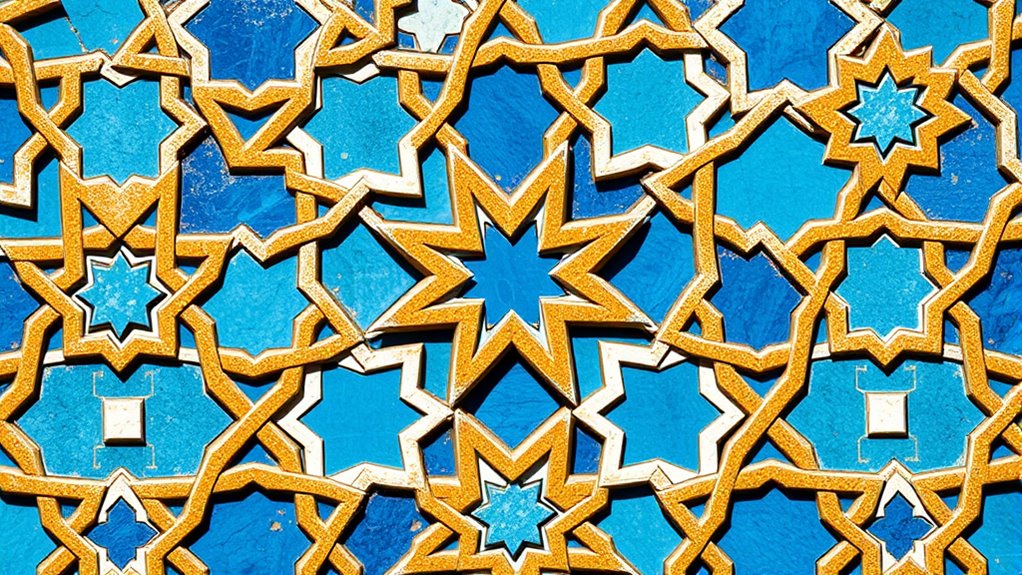
Tile craftsmanship plays a pivotal role in bringing Islamic geometric patterns to life, especially in architectural settings like mosques and palaces. Skilled artisans meticulously cut and assemble glazed tiles, ensuring each piece fits perfectly within the larger pattern. These tiles are not just functional; they are a canvas for complex geometric motifs that require precision and patience. The process involves detailed planning, often based on mathematical principles, to achieve the flawless repetition and symmetry that characterize Islamic tile work. As you admire these tiled surfaces, you’re witnessing the outcome of countless hours of craftsmanship, where every tile contributes to a larger, harmonious design. The craftsmanship is a tribute to the artisans’ dedication to both artistic excellence and spiritual expression.
In essence, Islamic geometric art is more than just beautiful patterns. It’s a reflection of a worldview that emphasizes order, balance, and divine unity. The calligraphic integration and tile craftsmanship are crucial components that elevate these designs from simple decoration to profound symbols of faith. When you observe these intricate patterns, you’re engaging with centuries of tradition rooted in mathematical precision and spiritual symbolism. Each pattern invites you to explore the interconnectedness of art, faith, and knowledge—reminding you that beauty in Islamic art is born from a deep understanding of harmony and divine design.
As an affiliate, we earn on qualifying purchases.
Frequently Asked Questions
How Do Islamic Artists Develop New Geometric Patterns Today?
Today, you develop new geometric patterns by embracing a fusion of digital techniques and traditional methods. You use software to experiment with innovative pattern synthesis, combining classic symmetry principles with modern technology. This approach allows you to create intricate, unique designs that respect cultural heritage while pushing artistic boundaries. By blending tradition and innovation, you keep Islamic geometric art vibrant and relevant in contemporary art and design.
What Tools Are Traditionally Used to Create Islamic Geometric Designs?
Imagine a master craftsman wielding tradition like a brush—traditional tools like compasses, rulers, and straightedges become your allies in geometric drafting. These tools help you craft precise, intricate patterns that reflect centuries of artistry. You draw circles, lines, and angles with careful precision, ensuring every symmetry and pattern aligns perfectly. This hands-on approach connects you to a rich history, transforming simple tools into gateways for creating timeless Islamic geometric designs.
How Does Islamic Geometric Art Influence Contemporary Design?
You influence contemporary design by blending traditional Islamic geometric patterns with modern elements. You incorporate calligraphy integration to add cultural depth and use modern materials like glass, metal, and synthetic composites to create innovative structures. This fusion results in visually striking artworks, architecture, and digital designs that reflect a rich heritage while appealing to today’s aesthetic preferences. Your work bridges past and present, inspiring new creative expressions rooted in timeless geometric harmony.
Are There Regional Differences in Islamic Geometric Pattern Styles?
Think of Islamic geometric patterns as a tapestry woven with regional influences and cultural variations that paint each area with its own artistic signature. You’ll notice that Middle Eastern designs often feature intricate star patterns, while North African styles embrace bold, earthy motifs. These regional influences shape the style and complexity of patterns, making each region’s cultural variations a unique brushstroke in the larger masterpiece of Islamic art.
What Symbolic Meanings Are Embedded in Specific Geometric Motifs?
You’ll find that specific geometric motifs carry rich symbolic meanings in Islamic art. For example, the eight-pointed star often symbolizes balance and harmony, while intricate tessellations represent infinity and the divine. Pattern symbolism emphasizes unity, order, and the interconnectedness of all creation. When you observe these motifs, you’re witnessing more than decoration; you’re engaging with a visual language that conveys spiritual and philosophical concepts deeply embedded in Islamic culture.
As an affiliate, we earn on qualifying purchases.
Conclusion
As you trace the intricate patterns and dance through endless symmetry, you discover that Islamic geometric art is a mirror of the universe’s harmony. Every line and shape weaves a story of divine order, inviting you to lose yourself in its mesmerizing rhythm. With each pattern, you feel the silent poetry of the cosmos whispering secrets in a timeless rhythm, reminding you that beauty and unity are woven into the very fabric of creation.
As an affiliate, we earn on qualifying purchases.
As an affiliate, we earn on qualifying purchases.
Fall Picks
fall essentials
As an affiliate, we earn on qualifying purchases.