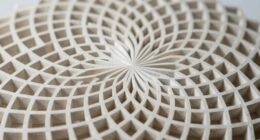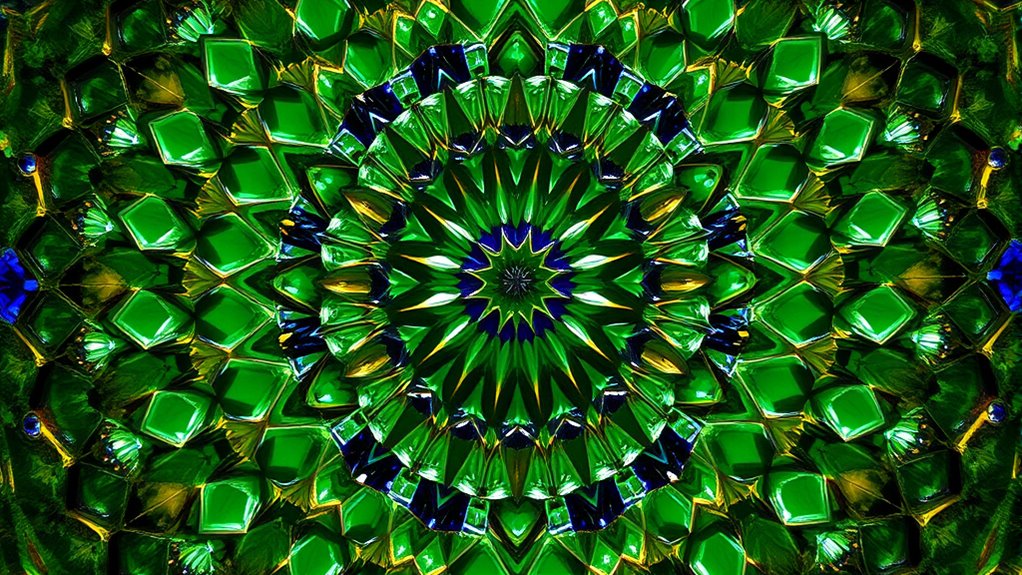
Symmetry and tessellations create mesmerizing art by using balanced, repeating patterns that draw your eye and evoke a sense of harmony. When shapes fit together perfectly without gaps or overlaps, they generate visual interest and a feeling of infinite repetition. These techniques tap into natural and mathematical principles, making artworks feel both intricate and soothing. Keep exploring, and you’ll discover how ancient and modern artists use these patterns to enchant and inspire.

Prime made for students and young adults
- Fast, free delivery for dorm and study essentials
- Prime Video and Amazon Music included
- Member-only deals
Key Takeaways
- Symmetry and tessellations create visual harmony and balance, making artworks naturally pleasing to the eye.
- Repeating patterns with symmetry generate a sense of order and predictability that captivates viewers.
- Tessellations mimic natural forms, connecting art to biological efficiency and structural beauty.
- Mathematical rules of symmetry ensure seamless pattern repetition, enhancing mesmerizing visual effects.
- Cultural symbols embedded in tessellations and symmetry deepen emotional impact and storytelling in art.
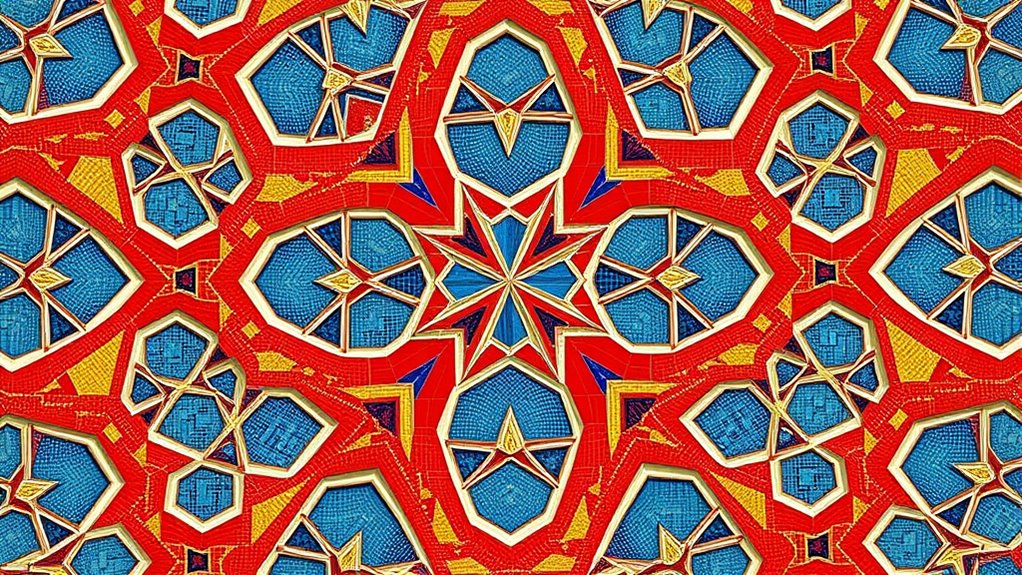
Symmetry and tessellations are fundamental principles in art that create visual harmony and intrigue. When you observe these patterns, you’re essentially witnessing the beauty of mathematical patterns at work. Artists and designers use symmetry to establish balance, making compositions feel stable and pleasing to the eye. Tessellations, on the other hand, involve repeating shapes that fit together perfectly without gaps or overlaps—creating a seamless, mesmerizing surface. These techniques aren’t just about aesthetics; they carry rich cultural symbolism, reflecting traditions and beliefs across different societies. For example, Islamic art often features intricate tessellations, symbolizing infinity and the divine, while Native American designs incorporate symmetrical motifs that represent harmony with nature. Recognizing these cultural symbols enhances your appreciation of how deeply embedded symmetry and tessellations are in human history.
Symmetry and tessellations reveal cultural symbolism and universal patterns in art and nature.
Additionally, understanding the materials used in creating tessellations, such as tiles or digital graphics, can deepen your appreciation for their durability and versatility in various mediums. When you delve into the world of mathematical patterns, you realize they’re more than just visual tricks. They follow specific rules, like rotational, reflective, or translational symmetry, which guarantee the pattern repeats consistently. This consistency gives your eye a sense of order and predictability, drawing you into the artwork’s rhythm. By manipulating these patterns, artists can evoke emotions, signify cultural values, or tell stories without words. For instance, the intricate tiling in Gothic cathedrals uses mathematical precision to create a sense of spiritual harmony. Your understanding of these patterns deepens as you see how they connect art with mathematics, revealing a universal language that transcends cultures.
Tessellations also serve as a bridge between art and nature, mimicking the way biological forms fit together in the natural world. When you look at honeycombs or certain flower arrangements, you see tessellations in action, demonstrating how these patterns are rooted in biological efficiency and structural stability. Artists harness this natural logic to craft captivating visual effects that seem alive and dynamic. This interplay between nature, mathematics, and cultural symbolism makes tessellations not just decorative but meaningful. They evoke a sense of interconnectedness, reminding you of the shared patterns that underpin both human creativity and the natural environment.
Ultimately, by exploring symmetry and tessellations, you reveal a deeper understanding of how art communicates across cultures and eras. These principles turn simple shapes into complex, mesmerizing works that resonate on emotional and symbolic levels. Whether used in ancient mosaics or modern digital art, their universal appeal lies in their ability to create order, evoke emotion, and connect us through the timeless language of patterns.
As an affiliate, we earn on qualifying purchases.
Frequently Asked Questions
How Do Artists Choose Between Different Types of Symmetry?
When choosing between different types of symmetry, you consider your aesthetic preferences and cultural influences. You might favor mirror symmetry for its harmony or rotational symmetry for dynamic movement. Cultural backgrounds often shape your choices, as certain symmetries hold symbolic meaning. You evaluate the mood or message you want to convey, selecting the symmetry that best aligns with your artistic vision and resonates with your audience’s cultural context.
Can Tessellations Be Found in Nature Beyond Art?
You’ll notice tessellations in nature beyond art, as they appear in natural patterns like honeycombs, turtle shells, and fish scales. These natural tessellations optimize space and strength, much like architectural designs that use symmetry for stability and beauty. Recognizing these patterns helps you appreciate how nature’s inherent symmetry creates mesmerizing, functional designs, blending seamlessly into environments and inspiring human art and architecture alike.
What Tools Do Artists Use to Create Complex Tessellations?
When creating complex tessellations, you can rely on digital software like Adobe Illustrator or specialized tessellation tools that help you design intricate patterns with precision. Geometric rulers and compasses are traditional tools that assist in sketching accurate shapes and maintaining symmetry. Combining these tools allows you to experiment freely, refine your designs, and produce mesmerizing tessellations that showcase your artistic skill and mathematical understanding.
How Does Symmetry Influence Viewer Emotions in Art?
Symmetry in art influences your emotional response by creating a sense of balance and stability, making images feel harmonious and pleasing to the eye. When you view symmetrical designs, your brain recognizes the visual harmony instantly, evoking feelings of calm and satisfaction. This emotional response draws you deeper into the artwork, as the balanced composition naturally guides your eye, making the experience more engaging and memorable.
Are There Cultural Differences in the Use of Tessellations?
You’ll notice that cultural differences shape how tessellations are used, reflecting regional styles and cultural motifs. In some cultures, intricate tessellations highlight spiritual beliefs or traditional stories, while others focus on geometric precision or abstract patterns. These regional variations create unique visual experiences, connecting viewers to their heritage. So, understanding these cultural motifs helps you appreciate how tessellations serve as a vibrant expression of diverse artistic identities worldwide.
As an affiliate, we earn on qualifying purchases.
Conclusion
By exploring symmetry and tessellations, you see how they turn simple shapes into mesmerizing art. Did you know that the famous artist M.C. Escher created over 200 tessellation prints? This shows just how powerful these patterns are in transforming basic forms into enthralling visuals. When you experiment with symmetry and tessellations, you discover endless creative possibilities, making every piece a mesmerizing masterpiece that draws viewers in and sparks their imagination.
As an affiliate, we earn on qualifying purchases.
digital tessellation pattern generator
As an affiliate, we earn on qualifying purchases.
As an affiliate, we earn on qualifying purchases.
Fall Picks
fall essentials
As an affiliate, we earn on qualifying purchases.