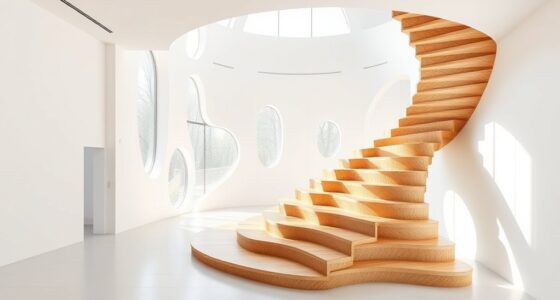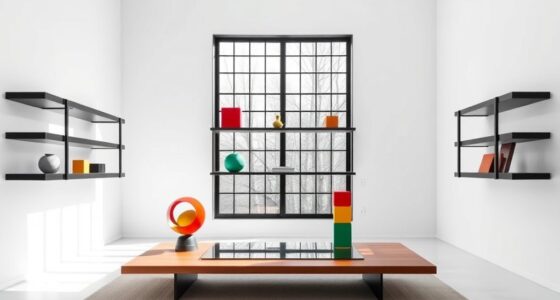
Fractal architecture draws inspiration from nature’s repeating patterns, creating structures that are both beautiful and efficient. By mimicking fractal geometry, you can design buildings with organic forms, optimized use of materials, and better environmental integration. These designs promote sustainability through resource-efficient materials and modular construction, while enhancing natural lighting and ventilation. If you continue exploring, you’ll discover how this innovative approach combines aesthetic appeal with ecological harmony, shaping the future of architectural design.
Get ready for Prime Big Deal Days — try Prime free
Exclusive member deals on October 6–7, plus fast free delivery. Cancel anytime.
As an affiliate, we earn on qualifying purchases.
Key Takeaways
- Fractal architecture mimics natural patterns and self-similarity, creating structures that are both organic and mathematically precise.
- Designs inspired by fractal geometry enhance aesthetic appeal and promote harmony with the environment through biomimicry.
- Use of sustainable, adaptable materials in fractal buildings reduces waste, improves structural efficiency, and supports ecological balance.
- Fractal patterns facilitate better natural ventilation, light distribution, and thermal regulation, increasing energy efficiency.
- This design approach fosters resilient, long-lasting structures aligned with nature’s principles of resource optimization.
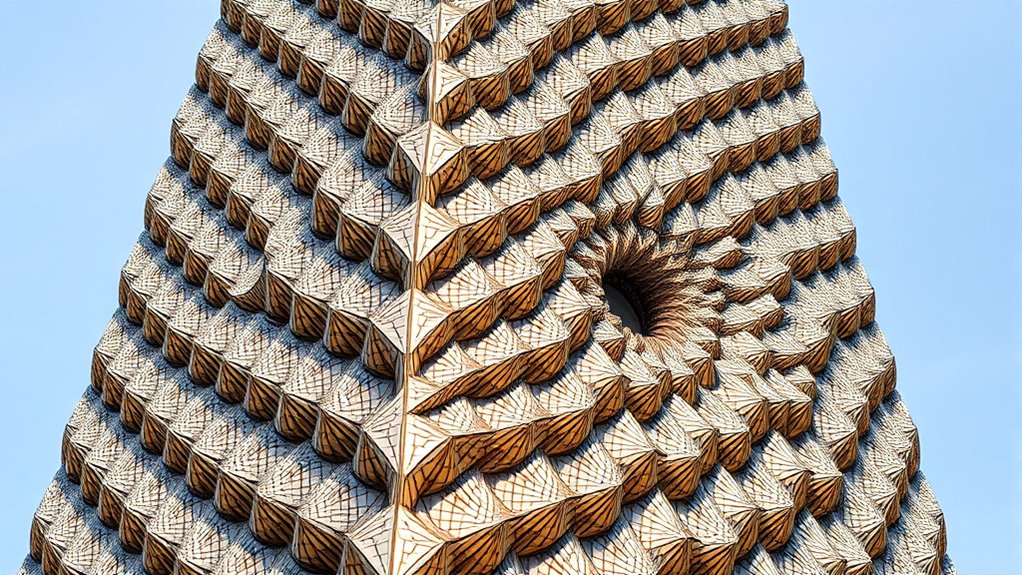
Have you ever noticed how some natural patterns repeat themselves at different scales, creating a sense of harmony and complexity? This phenomenon, known as fractal geometry, is what inspires fractal architecture. By mimicking these patterns, architects and designers craft structures that feel both organic and mathematically precise. These designs often resemble natural forms like branching trees, coastlines, or cloud formations, which are inherently fractal. When you incorporate fractal principles into architecture, you create buildings that resonate with the natural world’s intrinsic order, leading to a sense of beauty and balance. This approach isn’t just about aesthetics; it’s about fostering a deeper connection between humans and their environment through biomimicry design. By replicating natural fractals, you can develop sustainable building materials that are both functional and environmentally friendly. Additionally, understanding the role of contrast ratio in visual presentation can help architects optimize lighting and material choices for improved energy efficiency and aesthetic appeal.
Using fractal geometry in architecture encourages the development of sustainable building materials. These materials are often inspired by nature’s efficiency—materials that grow and adapt in ways that minimize waste and energy consumption. For example, some architects explore biomimicry design to create composite materials that mimic the strength and flexibility found in natural structures like shells or plant stems. These innovations lead to building components that are lightweight yet durable, reducing the overall carbon footprint of construction projects. As you integrate fractal-inspired patterns into building design, you’ll notice how these materials facilitate better natural ventilation, light distribution, and thermal regulation, all of which contribute to greener, more energy-efficient buildings. The repetition of fractal patterns also allows for modular construction, making it easier to reuse and recycle materials, aligning with sustainable practices.
Furthermore, fractal architecture emphasizes harmony with the environment by optimizing resource use. Because natural fractals naturally follow principles of efficiency, their architectural counterparts often require less material without sacrificing strength or functionality. When designing with fractals, you’re basically borrowing from nature’s playbook—creating structures that are resilient and adaptive. This approach promotes the use of sustainable building materials, such as recycled composites, bio-based insulation, and permeable surfaces that manage stormwater runoff effectively. The result is a built environment that blends seamlessly with its surroundings, conserving resources, reducing waste, and supporting ecological balance. As you explore fractal architecture, you tap into a design philosophy rooted in nature’s wisdom, leading to innovative, sustainable solutions that stand the test of time while respecting the planet’s limits.
sustainable modular building materials
As an affiliate, we earn on qualifying purchases.
As an affiliate, we earn on qualifying purchases.
Frequently Asked Questions
How Does Fractal Geometry Influence Sustainable Building Design?
Fractal geometry influences sustainable building design by enabling biophilic integration, which connects occupants with nature, enhancing well-being. It also promotes energy optimization through self-similar patterns that improve airflow, insulation, and natural lighting. By mimicking natural fractal forms, you can create buildings that are more efficient and environmentally friendly, reducing energy consumption and fostering harmony between the structure and its surroundings. This approach makes sustainability both functional and aesthetically appealing.
What Materials Are Best Suited for Fractal-Inspired Architecture?
Imagine the year is 1776, and you’re designing a structure. For fractal-inspired architecture, you want materials with excellent durability and aesthetic versatility. Steel and concrete are ideal choices—they’re strong, adaptable, and can be shaped into complex, repeating patterns. Glass also plays a role, offering transparency and visual appeal. These materials withstand the intricacies of fractal designs while maintaining structural integrity, helping your building stand the test of time.
Are Fractal Buildings Cost-Effective to Construct and Maintain?
Fractal buildings can be cost-effective, but it depends on your design and materials. Construction costs might be higher initially due to complex geometries and custom components, but innovative materials and modular methods can help. Maintenance expenses are often manageable if you choose durable, low-maintenance materials. Overall, investing in fractal-inspired architecture can save you money long-term by reducing energy use and enhancing durability.
How Do Fractal Designs Impact Occupant Well-Being?
Like a forest that soothes your soul, fractal designs boost your well-being by enhancing visual complexity and fostering biophilic integration. You’ll find that these intricate patterns mimic nature’s harmony, reducing stress and increasing comfort. The repetitive, self-similar structures create a sense of order and curiosity, encouraging positive mental states. By connecting you to natural principles, fractal architecture helps occupants feel more relaxed, energized, and mentally refreshed.
Can Fractal Architecture Adapt to Future Technological Advancements?
Yes, fractal architecture can adapt to future technological advancements through digital scalability and aesthetic versatility. You can incorporate new materials, smart systems, and innovative designs seamlessly, allowing your structures to evolve with emerging tech. This flexibility guarantees that your buildings remain functional and visually appealing over time, accommodating changes without extensive redesigns. By leveraging these qualities, fractal architecture stays relevant and forward-compatible, meeting the demands of future innovations efficiently.
biomimicry inspired construction materials
As an affiliate, we earn on qualifying purchases.
As an affiliate, we earn on qualifying purchases.
Conclusion
As you explore fractal architecture, you realize it’s like gazing into a mirror that reflects nature’s intricate patterns. These buildings don’t just stand—they dance with the chaos and order of fractal geometry, creating structures that are both mesmerizing and harmonious. Embracing this design approach, you’re not just constructing buildings—you’re carving out spaces that echo the universe’s beautiful complexity, turning urban landscapes into living works of art that grow and evolve like a mighty, branching tree.
energy-efficient natural lighting solutions
As an affiliate, we earn on qualifying purchases.
As an affiliate, we earn on qualifying purchases.
recycled composite building components
As an affiliate, we earn on qualifying purchases.
As an affiliate, we earn on qualifying purchases.
Fall yard work Picks
leaf blowers
As an affiliate, we earn on qualifying purchases.